Explore evidence-based group therapy options for addiction recovery and discover how peer support networks accelerate healing and long-term sobriety.


Group therapy options for addiction work because they connect you with people who understand your struggle firsthand. Isolation fuels addiction, but shared recovery breaks that cycle.
At Addiction Resource Center, we’ve seen how the right group setting transforms treatment outcomes. This guide walks you through finding the support network that fits your recovery journey.
What Types of Group Therapy Actually Work for Addiction
Peer Support Groups and 12-Step Programs
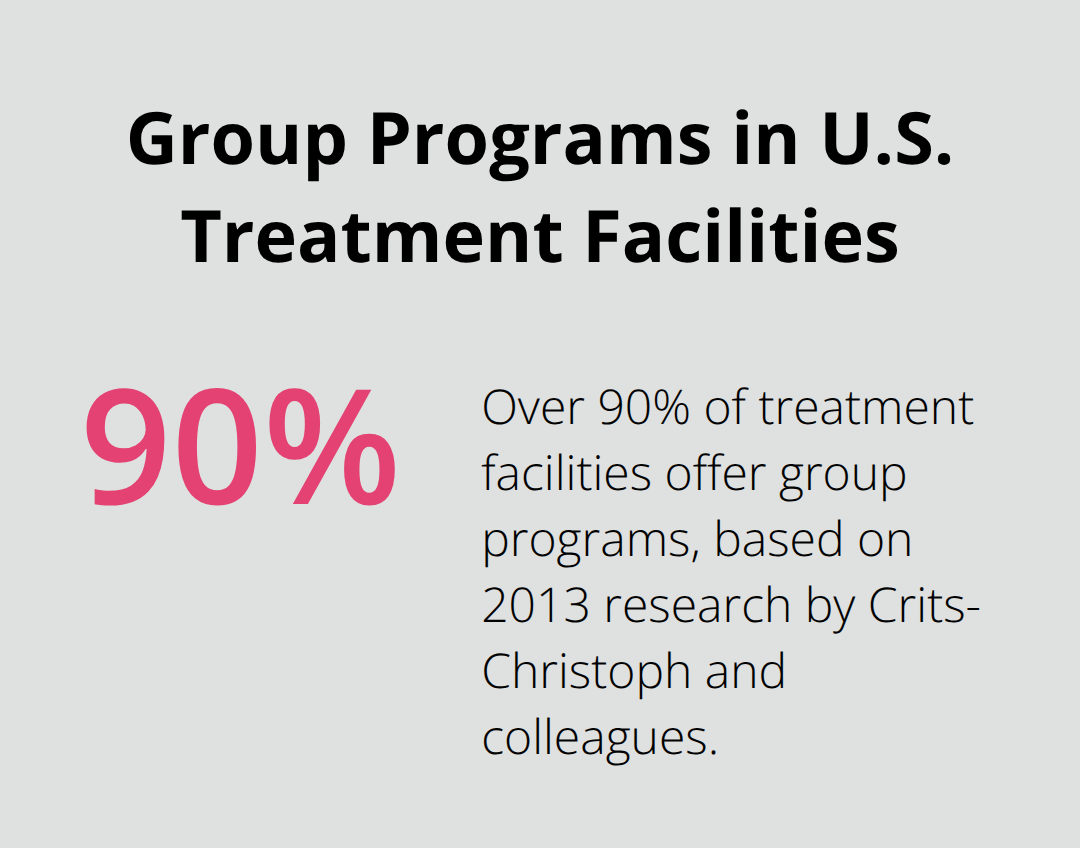
Peer support groups and 12-step programs dominate addiction treatment because they’re free, accessible, and built on decades of real recovery data. Over 90% of treatment facilities offer group programs, according to research from Crits-Christoph and colleagues in 2013, and for good reason-group therapy proves as effective as individual therapy for substance use disorders. The 12-step model, rooted in Alcoholics Anonymous philosophy, emphasizes abstinence and mutual accountability. These groups work best when you attend consistently and participate actively. The structure provides clear expectations: you show up, you share honestly, you support others. Meetings typically run 60 to 90 minutes, with 90 minutes being the most common length in treatment settings.
What makes peer support powerful is that you learn from people who’ve walked the same path and stayed sober, not just from a counselor’s advice.
Cognitive Behavioral Therapy Groups
Cognitive behavioral therapy groups take a different approach by targeting the thought patterns and behaviors that fuel addiction. Research from Wendt and Gone in 2017 found that CBT components rank as the second-most used framework in group settings, with clinicians using coping strategies and trigger identification as core tools. These groups teach you to recognize situations that tempt relapse and practice concrete responses before you face them. The structure is tighter than peer support groups-leaders guide discussions toward specific skills and goals rather than open sharing. You work through real scenarios and develop practical plans to handle high-risk situations.
Holistic and Specialized Group Therapy Models
Holistic and specialized group therapy models (equine therapy, adventure therapy, trauma-informed approaches) address what traditional talk therapy misses. Art and music therapy groups let you process emotions without relying solely on words, which matters if past trauma makes verbal sharing difficult. Wilderness treatment programs use nature-based activities to build group cohesion while developing coping skills. The research on these modalities continues to evolve, but participants report stronger engagement when they express themselves through creative or physical outlets rather than sitting in chairs talking.
Now that you understand the main group therapy models available, the next step involves matching these options to your specific recovery needs and circumstances.
Matching Your Recovery Goals to the Right Group Setting
Assess What You Actually Need
Picking a group therapy program based on convenience alone sets you up for failure. Location matters, but it shouldn’t override what actually addresses your recovery. Start by listing what you need: Are you fighting alcohol, opioids, or multiple substances? How long have you struggled with addiction? Do you have trauma, depression, or anxiety alongside your substance use? Do you need medical detox first, or are you ready for ongoing support? These answers determine which group model fits.
Someone in early recovery who battles triggers constantly needs CBT groups with structured coping skills training, not open peer support where people share stories. Someone isolated after years of addiction thrives in peer groups where connection itself becomes the healing mechanism. The 90-minute group sessions that dominate treatment settings work well for most people, but some facilities offer 60-minute or extended sessions over 120 minutes depending on your stage of recovery.
Research Programs and Ask the Right Questions
Research your local options through SAMHSA’s FindTreatment.gov, which lists vetted facilities and their specific group offerings. When you call programs, ask directly: Do your groups follow CBT, 12-step, holistic, or mixed models? Are groups open-enrollment where people drop in anytime, or closed where you start with a cohort? Open groups offer flexibility but less continuity; closed groups build stronger peer bonds but require commitment to start dates.
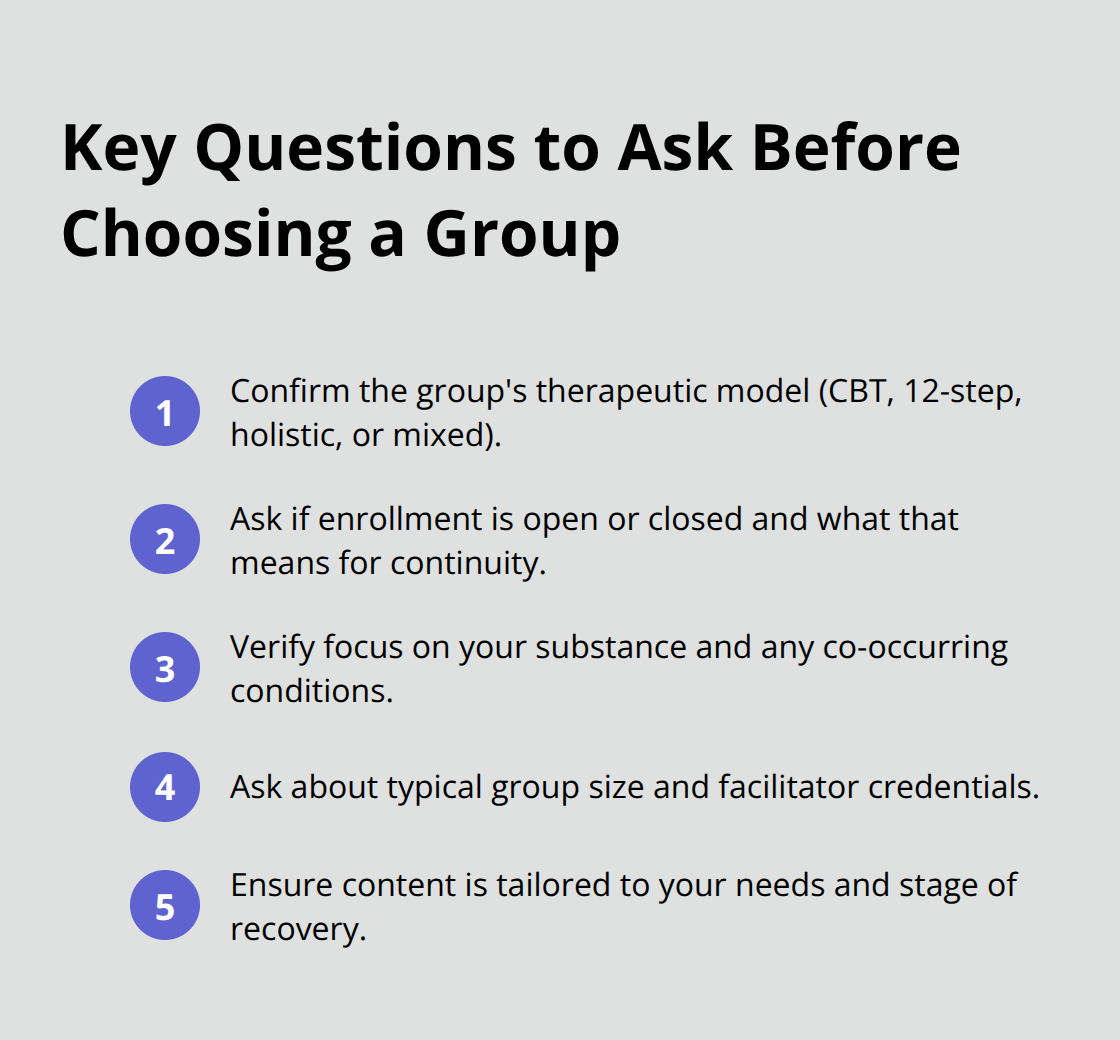
Verify whether groups address your specific substance and any co-occurring mental health conditions. A program offering excellent trauma-informed groups but only generic addiction education won’t serve someone whose trauma drives their substance use. Ask about group size, facilitator credentials, and whether the program tailors content to your needs.
Evaluate Accessibility and Group Culture
Accessibility determines whether you actually show up week after week. Groups meeting at times that conflict with work, childcare, or other obligations become excuses to skip. If you work standard hours, evening groups starting at 5 or 6 PM work best; if you’re unemployed or in residential treatment, daytime groups fit better. Some programs now offer telehealth group sessions, which removes transportation barriers and works well for people in rural areas where in-person options are limited.
Before committing, attend at least one meeting as an observer if the program allows it. You’ll sense whether the group culture matches you and whether the facilitator style feels supportive or confrontational. Trust that instinct. Walk away from any group that shames rather than supports.
Location Matters Less Than Quality
Geographic location matters less than you think if quality options are limited nearby. Many people travel 30 minutes to an hour for the right program because staying local but in the wrong group wastes months of recovery time. The investment in transportation pays off when you find a group that matches your recovery stage, addresses your specific substances and mental health needs, and creates an environment where you feel safe to participate.
Once you’ve identified programs that meet your needs and fit your schedule, the next step involves understanding how these groups actually support your long-term recovery beyond the initial weeks of treatment.
How Group Therapy Sustains Recovery Beyond the First Months
Accountability That Keeps You Committed
Group therapy’s real power emerges months into recovery when initial motivation fades and real life returns. The first 90 days feel manageable because structure surrounds you, but maintaining sobriety at month six, twelve, and beyond requires something deeper. Research from Marlatt and Dimeff on relapse prevention shows that people who stay connected to ongoing group support maintain abstinence at significantly higher rates than those who stop after formal treatment ends.
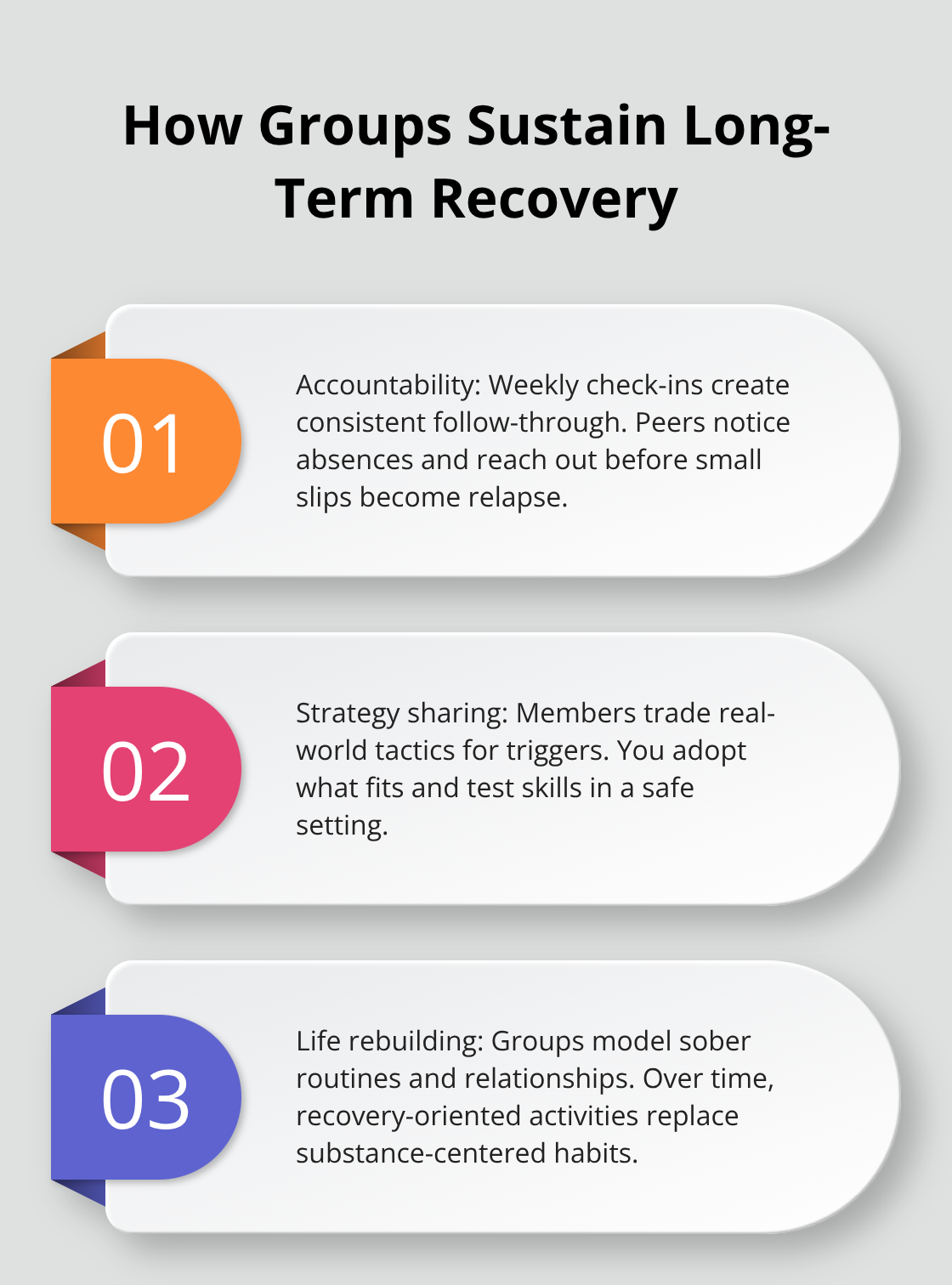
The accountability that groups create isn’t about shame or judgment-it’s about having people who notice when you miss a meeting and care enough to check in.
When you sit in a group weekly and share your struggles, those people know your triggers, your weak moments, and your reasons for staying sober. That knowledge creates invisible pressure to stay committed because you’ve made your recovery visible to others who depend on your presence. Groups also serve as early warning systems. Experienced group members recognize the signs that someone’s slipping before that person admits it to themselves-skipped meetings, vague answers about how the week went, sudden irritability. A good group member will pull you aside after the meeting and ask real questions. This peer intervention happens faster and feels more credible than a therapist’s observation because it comes from someone who’s been exactly where you are.
Learning Tested Strategies From Real Experience
Peer members share how they handled specific triggers-turning down drinks at a family dinner or managing cravings during stress-and you gain a tested strategy without painful trial and error. CBT-based groups have demonstrated efficacy as both a monotherapy and as part of combination treatment strategies. Groups expose you to diverse responses to similar problems, meaning you see multiple pathways through the same difficulty.
One person manages holiday pressure through alternative activities; another sets boundaries with family members before events start. You take what fits your personality and circumstances. This variety matters more than any single therapeutic technique because real recovery requires flexibility. The group becomes your laboratory for testing approaches before you face high-risk situations alone.
Rebuilding a Life That Doesn’t Need Substances
Long-term sobriety depends on building a life that doesn’t need substances, and groups directly support that work. Peer support groups encourage members to develop interests, rebuild relationships, and create routines that replace the structure addiction once provided. Someone in your group might mention returning to a hobby they abandoned, and you realize you could do the same. Another person talks about repairing their relationship with their child, which inspires you to contact family you’ve avoided.
These aren’t formal treatment goals assigned by a therapist-they’re organic suggestions that feel possible because they come from people navigating identical challenges. The group becomes your social infrastructure for recovery, replacing the relationships and environments that once centered on substance use with connections built on mutual support and shared commitment to staying sober. This transformation happens gradually, through repeated exposure to others who model what sustained recovery actually looks like.
Sustaining Long-Term Sobriety Through Group Support
Group therapy options for addiction work because they address what isolation cannot: connection, accountability, and practical strategies tested by people who’ve stayed sober. Over 90% of treatment facilities offer group programs because research consistently shows group therapy performs as well as individual therapy for substance use disorders, and in many cases outperforms it by reducing relapse intensity and building stronger long-term recovery networks. The benefits extend beyond the treatment phase-groups provide accountability that keeps you committed when motivation fades at month six or twelve, offer tested coping strategies from real people who’ve handled your exact triggers, and rebuild your social life around recovery instead of substances.
Finding your support network starts with honest assessment of what you need: your substance, your recovery stage, any co-occurring mental health conditions, and your schedule. Research programs through SAMHSA’s FindTreatment.gov, ask specific questions about group models and facilitator credentials, and attend a meeting before committing. Trust your instinct about group culture, since quality matters more than proximity-traveling for the right program beats staying local in the wrong one.
Choosing group therapy options for addiction means choosing to stop struggling alone. We at Addiction Resource Center offer personalized addiction therapy and substance abuse counseling designed to match your specific recovery needs, whether you’re beginning treatment or strengthening your long-term recovery network. Contact us today to explore how our outpatient addiction treatment programs can support your recovery journey.