You may be holding a new prescription after surgery, looking at the bottle and wondering, “What is this going to feel like?” Or maybe you've noticed someone you love getting sleepier, more irritable, or less steady on their feet while taking Percocet. Both situations are common, and both can feel unsettling. Percocet can help with …


You may be holding a new prescription after surgery, looking at the bottle and wondering, “What is this going to feel like?” Or maybe you've noticed someone you love getting sleepier, more irritable, or less steady on their feet while taking Percocet. Both situations are common, and both can feel unsettling.
Percocet can help with pain. It can also create risks that people don't always expect, especially in everyday moments like driving, walking down stairs, getting up too fast, or trying to care for children while feeling foggy. That's where many people get confused. They hear “side effects” and think nausea or constipation. They don't always hear enough about slowed reaction time, confusion, falls, or dangerously slowed breathing.
This guide explains the effects of Percocets in plain language. It covers what the drug does in the brain, what short-term and long-term use can look like, how misuse and overdose happen, what withdrawal feels like, and when it's time to get help.
Table of Contents
- Understanding Percocet Use and Its Common Questions
- What Is Percocet and How Does It Affect the Brain
- The Immediate Physical and Cognitive Effects of Percocet
- Long-Term Effects and the Path to Dependence
- The Dangers of Percocet Misuse Overdose and Interactions
- Understanding Percocet Withdrawal and Addiction
- How to Find Help and Begin Recovery in Yuba City
Understanding Percocet Use and Its Common Questions
A lot of people start Percocet for a reason that makes sense. A dental procedure. A back injury. Recovery after surgery. They're trying to sleep, move, and function with less pain. Then questions start coming up fast.
“How sleepy is too sleepy?”
“Can I drive?”
“Why does my loved one seem different?”
“Am I dependent, or just taking it as prescribed?”
Those aren't dramatic questions. They're responsible ones.
Percocet has a double identity. It's a prescription pain medication, and it's also a drug with real potential to affect breathing, thinking, mood, and safety. That doesn't mean everyone who takes it will develop addiction. It does mean that people deserve honest information early, before a near miss on the road, a fall in the bathroom, or an accidental extra dose from another acetaminophen-containing product.
Many people aren't asking only, “What are the side effects?” They're really asking, “What can I still do safely today?”
That's an important distinction. Someone may technically know that Percocet can cause drowsiness, but still not realize that getting up at night without turning on the light could become a fall risk. A parent may not realize that confusion and slowed reaction time can affect tasks like bathing a child or responding to an emergency.
Here's the practical approach: pay attention to how the medication affects the body, not just whether the pain is lower. If someone seems unusually hard to wake, more unsteady, mentally foggy, or slower than usual, those changes matter.
What Is Percocet and How Does It Affect the Brain
Percocet is a combination medication. It contains oxycodone, which is an opioid, and acetaminophen, which is a non-opioid pain reliever. Those two ingredients work differently, and understanding that clears up a lot of confusion.
Two ingredients with two jobs
Think of Percocet as a two-part pain system.
Oxycodone works mainly through the brain and nervous system. A simple way to picture it is as a dimmer switch on pain signals. It attaches to μ-opioid receptors, which changes how the brain perceives pain. That's why pain can feel more distant, less sharp, or easier to tolerate.
Acetaminophen also helps with pain, but it isn't an opioid. It adds to the pain-relieving effect in a different way. That's one reason Percocet can feel stronger than taking acetaminophen alone.
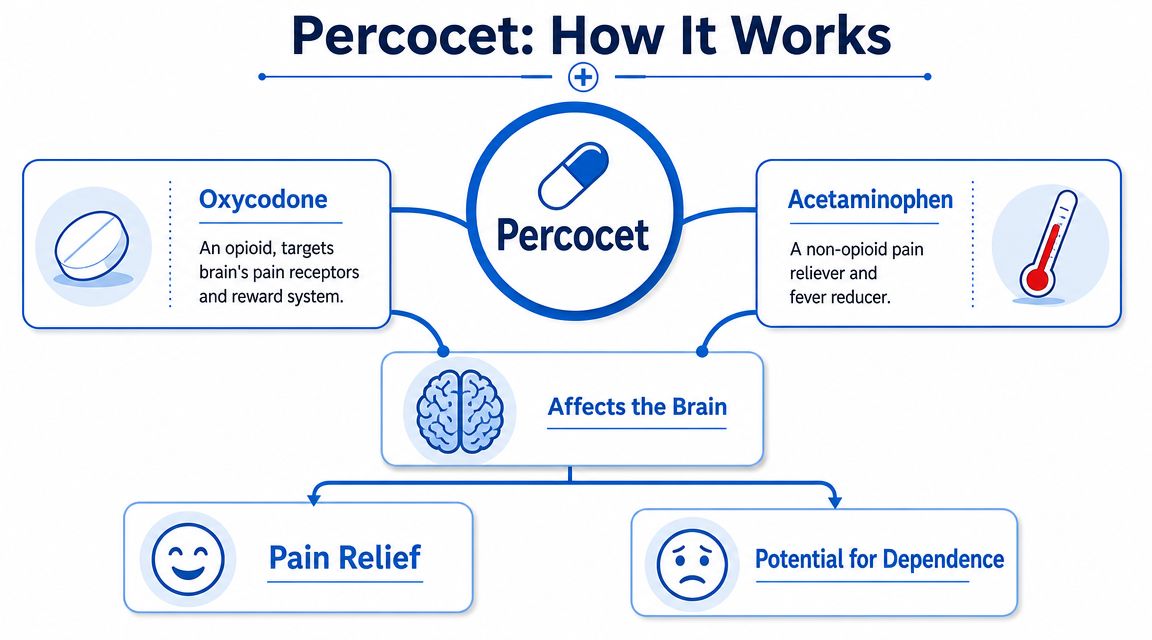
The U.S. Food and Drug Administration states in the Percocet prescribing information that clinically important effects are driven by oxycodone's μ-opioid agonism plus acetaminophen's analgesic contribution, and expected effects include analgesia, sedation, euphoria, and respiratory depression.
Why it can feel calming and risky at the same time
Many readers find this confusing: If a medication reduces pain and helps someone feel relaxed, why is it also dangerous?
Because the same opioid action that dampens pain can also slow other body functions. Sedation doesn't happen in a separate lane. It's part of the same drug effect. In some people, that can mean feeling pleasantly calm. In others, it can mean becoming groggy, confused, or too sleepy to function safely.
The FDA warning matters here. The same label notes that serious toxicity can progress to apnea, circulatory depression, respiratory arrest, and death in overdose.
Practical rule: If a medication changes pain, mood, alertness, and breathing at the same time, you can't judge safety by pain relief alone.
That's also part of why the effects of Percocets can become complicated. A person may believe, “It's prescribed, so it must be safe,” while missing the fact that a prescribed medication can still become risky if the dose is too high, if it's mixed with other sedating substances, or if the person's body responds strongly to it.
The Immediate Physical and Cognitive Effects of Percocet
The short-term effects of Percocet include both the reasons people take it and the problems that can follow right behind those benefits. Pain may ease. The body may relax. Some people feel sleepy, lightheaded, or mentally slowed.
What people often feel soon after taking it
Some effects are expected and can still interfere with normal life.
- Pain relief: The intended effect. Pain may feel dulled or more manageable.
- Sedation or relaxation: Some people feel calm or heavy-limbed.
- Euphoria: A pleasant or warm feeling can happen in some users.
- Physical side effects: Nausea, constipation, and slowed breathing can occur.
- Mental slowing: Attention, reaction time, and judgment may feel “off,” even if the person doesn't realize it in the moment.
The practical problem is that short-term effects rarely arrive with a label. Someone may say, “I'm fine,” while walking more slowly, forgetting simple steps, or drifting in and out of alertness.
How side effects turn into daily safety problems
That gap between feeling “mostly okay” and being safe is where many accidents happen.
GoodRx notes in its overview of common Percocet side effects that Percocet can cause dizziness, low blood pressure, and falls, and also flags severe mood changes and slowed breathing. The same discussion highlights how drowsiness and confusion can translate into real functional risks.
Here's what that can look like in ordinary life:
- Driving: Drowsiness, confusion, and slower reaction time can make braking, merging, and judging distance less safe.
- Using machinery or tools: Someone who feels mildly sleepy may still be too impaired to use power tools, kitchen equipment, or work equipment safely.
- Walking unassisted: Dizziness and low blood pressure can make stairs, showers, and nighttime bathroom trips riskier.
- Caring for children or older adults: Mental fog and sedation can interfere with supervision, lifting, and responding quickly.
- Working at heights or on ladders: A small balance change can become a major injury risk.
A common misunderstanding is that “drowsy” only means falling asleep. It can also mean slowed thinking, poor balance, delayed responses, or that floaty feeling people get when standing up too fast.
If someone wouldn't trust themselves to do a task after two drinks, they also shouldn't assume they can do it safely while feeling sedated on Percocet.
Mood changes can add another layer. Some people become irritable, emotionally flat, or unusually agitated. Others seem withdrawn or detached. Family members often notice this before the person taking the medication does.
The important question isn't just “What side effects are listed?” It's “How are those effects changing what I can safely do today?”
Long-Term Effects and the Path to Dependence
When Percocet use stretches from days into weeks or longer, the body can start adapting to the medication. That adaptation can happen even when someone began with a legitimate prescription and never intended to misuse it.
Tolerance physical dependence and addiction are not the same thing
Tolerance means the original dose may not feel as effective over time. A person may notice the medication doesn't seem to relieve pain the way it once did, or that the sedating effect feels weaker.
Physical dependence means the body has adjusted to the presence of the drug. If the medication is reduced too quickly or stopped suddenly, withdrawal symptoms can appear.
Addiction is different. It involves compulsive use despite harm. A person may keep taking the drug even as it affects health, relationships, work, or safety. That behavioral pattern matters. Dependence can occur without addiction, and that distinction helps reduce a lot of shame.
Long-term use can also create burdens that aren't always obvious at first. Constipation may become persistent. Daily functioning may start revolving around dose timing. Some people find that pain, mood, and sleep all begin to feel harder to manage without the medication.
Percocet effects short-term vs long-term
One part of long-term risk comes from the fact that Percocet contains acetaminophen as well as oxycodone. The Drug Enforcement Administration warns in its oxycodone fact sheet that extended or chronic use of oxycodone products containing acetaminophen may cause severe liver damage.
That means the effects of Percocets aren't only about opioid dependence. There's also a separate liver-injury risk built into the combination product.
| Short-Term Effects | Long-Term Consequences |
|---|---|
| Pain relief | Tolerance, with the medication feeling less effective over time |
| Relaxation or sedation | Physical dependence, with withdrawal if use stops abruptly |
| Drowsiness or confusion | Ongoing functional problems at work, home, or while driving |
| Constipation | Chronic bowel problems that become harder to ignore |
| Dizziness or unsteadiness | Repeated fall risk, especially in older adults |
| Temporary symptom control | Severe liver damage risk from chronic or excessive acetaminophen exposure |
The body can adapt quietly. People often notice dependence only when they try to cut back and feel much worse than expected.
This is one reason medical guidance matters. A person who has been taking Percocet regularly shouldn't assume that stopping suddenly is the safest or simplest option.
The Dangers of Percocet Misuse Overdose and Interactions
A common high-risk situation starts subtly. Someone takes Percocet for pain, feels sleepy but assumes rest will fix it, then adds a cold medicine, a drink, or an extra dose when relief does not last long enough. What looks like a small decision can turn into a breathing emergency, a fall on the way to the bathroom, or a dangerous drive home.
That practical risk gets missed in many discussions about Percocet. Drowsiness, slowed reaction time, and confusion are not just side effects on a list. They can affect stairs, childcare, cooking, work tasks, and driving in ways that put both the person and other people in danger.
What misuse means
Misuse includes any use that falls outside safe medical directions, even if the person is trying to treat pain rather than get high.
Common examples include:
- Taking more than prescribed: This may happen after tolerance develops, after a painful flare, or because the medication also creates a calming effect.
- Using someone else's prescription: The same dose can affect two people very differently depending on age, body size, other medications, and health conditions.
- Combining it with other sedating substances: Alcohol, benzodiazepines, sleep medications, and other opioids can intensify sedation and slow breathing.
- Missing the acetaminophen overlap: Percocet already contains acetaminophen, so adding cold medicine or another pain reliever can raise the total dose faster than many people expect.

Two overdose dangers in one medication
Percocet carries two separate overdose risks because it contains two active ingredients.
The first is oxycodone, the opioid component. The National Institute on Drug Abuse explains in its opioids overview that oxycodone can reduce breathing to life-threatening levels, and overdose can cause severe brain injury or death. In day-to-day terms, this often begins with someone becoming so sleepy, slowed, or confused that they cannot respond normally or protect their own airway.
The second is acetaminophen toxicity. This danger can be harder to spot because people often associate overdose only with the opioid part. Acetaminophen has its own ceiling for safe use, and clinicians strongly discourage going above 3,000 mg per day of acetaminophen. A person may exceed that limit without realizing it if they mix Percocet with over-the-counter cold or pain products.
Warning signs of overdose or severe toxicity can include:
- Very slow or shallow breathing
- Extreme drowsiness or inability to stay awake
- Confusion or unresponsiveness
- Pinpoint pupils
- Blue or gray lips
- Collapse or coma
These signs need urgent action. If a person cannot stay awake, is hard to rouse, or is breathing slowly, it is safer to treat the situation as an overdose than to wait and hope they sleep it off.
Interactions that raise the danger
Mixing Percocet with other depressants increases risk because these substances can stack their effects. A useful comparison is putting more and more weight on the same brake pedal. Breathing, alertness, balance, and judgment can all slow down at once.
Alcohol is a major concern. Benzodiazepines such as Xanax or Valium, sleep medications, muscle relaxers, and other opioids can also make sedation deeper and breathing slower. Someone may still be standing, talking, or insisting they are fine while their level of medical risk is rising.
This is one reason ordinary activities can become unsafe long before a full overdose happens. A person who is drowsy or mentally foggy may drift across lanes, miss a step, leave the stove on, or fall while getting out of bed. Families often picture overdose as a sudden collapse. In real life, it often looks like progressive slowing, increasing confusion, and a person who seems impossible to fully wake.
Public health data also show how serious opioid overdose remains. Verified reports describe a sharp rise in the U.S. opioid overdose death rate over the last decade.
If overdose is suspected, call emergency services right away. If naloxone is available, use it. If the person stops breathing or breathing becomes very slow, every minute matters.
People dealing with more than one medication issue at the same time may also benefit from learning how supervised tapering works in other drug classes. This overview of Paxil withdrawal help in Florida offers a helpful example of why medication changes are safer with clinical support.
Understanding Percocet Withdrawal and Addiction
For many people, the hardest moment comes when they try to stop and discover their body is no longer neutral about it. That doesn't mean they're weak. It means the nervous system has adapted.
Why stopping suddenly can feel overwhelming
Withdrawal often feels like the body is sounding alarms all at once. People may describe anxiety, restlessness, sweating, body aches, stomach upset, insomnia, and intense cravings. Emotionally, it can feel raw and discouraging.
That's why quitting “cold turkey” often goes badly. The distress can be strong enough that people return to use just to make the symptoms stop. A medically supervised taper or detox plan can make this safer and more manageable.

Withdrawal guidance matters across medication types. For readers who are also dealing with antidepressant discontinuation, this overview of Paxil withdrawal help in Florida can be useful for understanding why supervised medication changes are often safer than abrupt stopping.
Addiction is a medical condition not a character flaw
Addiction goes beyond physical dependence. It involves repeated use despite consequences, powerful cravings, loss of control, and a life that starts narrowing around the substance.
Several factors can make addiction more likely. A personal or family history of substance use problems matters. So do depression, anxiety, trauma, chronic stress, and unstable environments. None of those factors make someone hopeless. They mean treatment should address the whole person, not just the pill.
Recovery usually starts getting easier when people stop asking, “Why can't I just have more willpower?” and start asking, “What kind of treatment does my brain and body need?”
That shift is important. Addiction is treatable, and people improve every day with the right support.
How to Find Help and Begin Recovery in Yuba City
When someone is worried about Percocet use, they often wait for absolute certainty before reaching out. They want proof that things are “bad enough.” Most of the time, they already have enough information to ask for help.

Signs it is time to reach out
You don't need to wait for a catastrophe. It's time to talk with a professional if any of these sound familiar:
- You're taking more than prescribed: Even occasional extra doses are a sign that pain control or dependence may be shifting.
- Daily life feels less safe: You've had near falls, driven while drowsy, or felt too foggy to trust yourself.
- Stopping feels hard: You try to cut back and feel sick, panicky, or unable to sleep.
- Someone close to you is worried: Family members often notice sedation, mood changes, or impairment before the person using the medication does.
- You're mixing substances: Alcohol, sleep aids, or anti-anxiety medications raise risk fast.
Getting evaluated early usually creates more options, not fewer.
Local treatment options and what to expect
In Yuba City, people can look for care that matches the severity of what they're dealing with. Some need medically supervised detox with medication-assisted treatment. Others need a structured residential program. Some are stable enough for an Intensive Outpatient Program, either in person or by telehealth, while continuing parts of daily life.
A strong program should offer more than symptom management. It should help people understand triggers, build coping skills, address co-occurring mental health needs, and create an aftercare plan that doesn't disappear the moment treatment ends.
If you want a sense of what recovery support can look like, this short video gives helpful context:
Families should also know that asking questions doesn't commit anyone to one level of care. A call can be the first honest conversation about what's going on, what risks are present, and what next step makes sense.
If you're ready to talk with someone who understands substance use, withdrawal, detox, MAT, residential rehab, and outpatient care, contact Addiction Resource Center LLC. They serve adults in Yuba City and Northern California with compassionate, down-to-earth support, including medically supervised detox, residential treatment through Ona Treatment Center, and in-person or telehealth IOP. You can reach them 24/7 by phone or text at 530-625-7910, visit them at 1002 Live Oak Blvd., Suite A, Yuba City, CA, and ask about most major insurance plans and TRICARE.