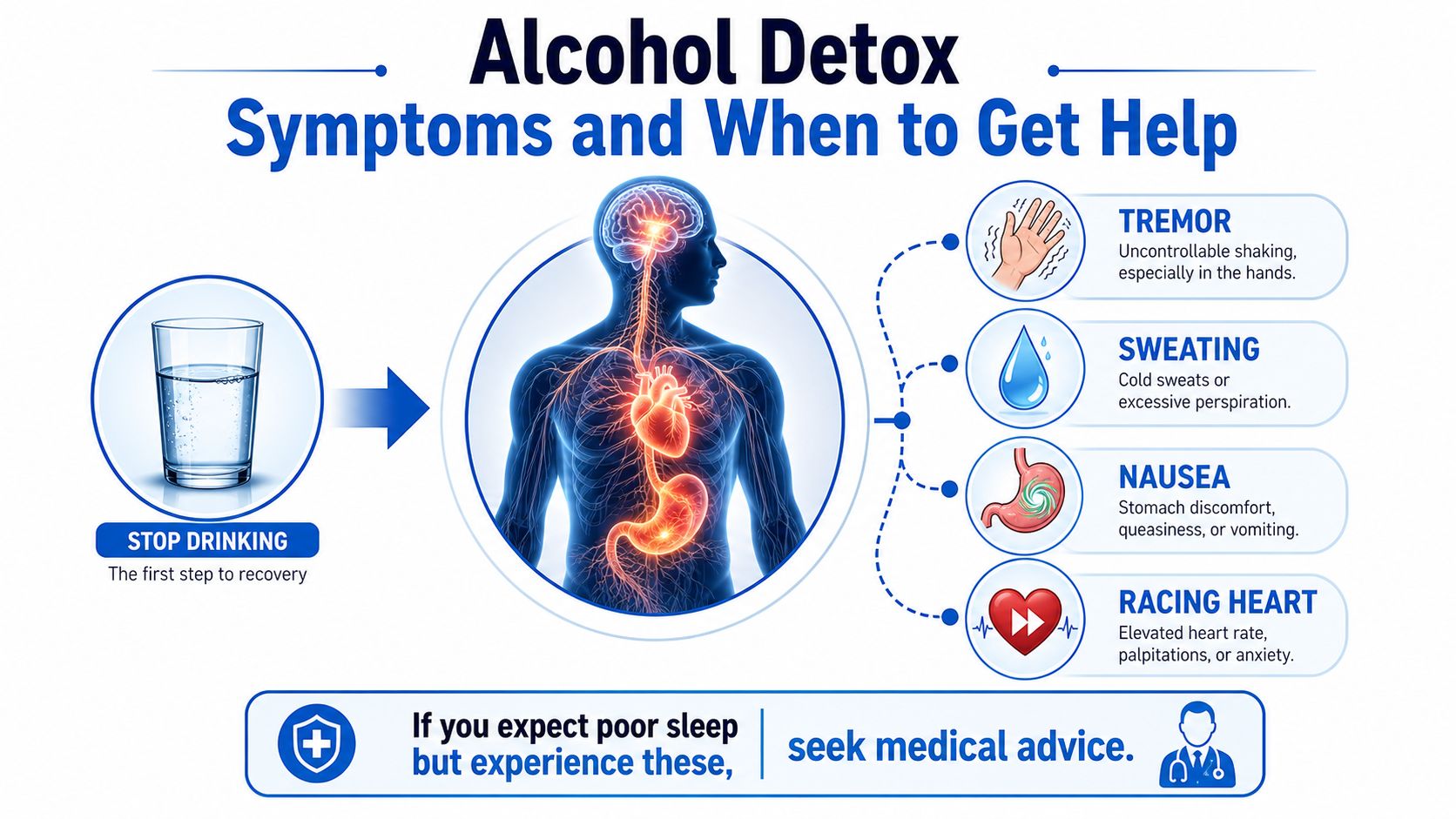
You stop drinking after months of daily use, expecting an uncomfortable night and poor sleep. Instead, your hands begin to shake, your shirt is damp with sweat, your stomach turns, and your heart seems to race. You may wonder whether this is just a bad hangover or the beginning of something more serious. Alcohol detox …

You stop drinking after months of daily use, expecting an uncomfortable night and poor sleep. Instead, your hands begin to shake, your shirt is damp with sweat, your stomach turns, and your heart seems to race. You may wonder whether this is just a bad hangover or the beginning of something more serious.
Alcohol detox symptoms can start after alcohol levels fall and may progress quickly. Alcohol withdrawal is the brain and body reacting to the sudden absence of a substance that has been slowing nervous-system activity. Common early symptoms include anxiety, insomnia, tremor, sweating, nausea, palpitations, and increased blood pressure. More severe withdrawal can involve seizures, hallucinations, and delirium tremens.
This guide focuses on symptom combinations and escalation patterns, not isolated warning signs. A mild tremor alone doesn't tell you how the next several hours will unfold. Tremor paired with confusion, hallucinations, a past withdrawal seizure, or serious illness creates a much higher safety concern.
Table of Contents
- Alcohol Detox Symptoms and When to Get Help
- Understanding How Alcohol Withdrawal Begins
- Alcohol Detox Symptoms by Severity and Timeline
- Risk Factors That Can Complicate Alcohol Detox
- Treatment and Levels of Medical Supervision
- When Alcohol Detox Requires Emergency Care
- Planning Safer Recovery After Detox
Alcohol Detox Symptoms and When to Get Help
A person who drinks every day may wake up feeling shaky and assume another drink is the only way to settle their body. If they stop instead, early withdrawal can appear within 6 to 24 hours after the last drink, according to the National Center for Biotechnology Information clinical reference. The first signs may resemble anxiety or a severe hangover, but sweating, a racing heart, nausea, rising blood pressure, and visible tremor indicate that the nervous system is becoming overactive.
Alcohol withdrawal symptoms are common among people with alcohol use disorder. Major clinical references estimate that about half of people with alcohol use disorder develop withdrawal symptoms, and the syndrome can move from mild discomfort to a medical emergency.
Why the pattern matters
Consider two situations. In the first, someone has mild anxiety, a headache, and a slight tremor but remains alert, can drink fluids, and has no history of complicated withdrawal. That person still needs prompt clinical guidance, because symptoms can change, but a clinician may determine that a lower level of monitoring is appropriate.
In the second, the person has the same tremor but is disoriented, sees things that aren't present, vomits repeatedly, or previously had a withdrawal seizure. Those combinations require urgent assessment. Confusion, hallucinations, seizure activity, fainting, breathing problems, severe agitation, or inability to stay awake require emergency help.
Safety rule: Don't try to predict safety at home based on how mild symptoms look right now.
Risk can increase with heavy or prolonged drinking, previous withdrawal, older age, pregnancy, liver or heart disease, dehydration, infection, injury, or other substances and medications. Medical supervision may include frequent vital-sign checks, fluids, thiamine, symptom-directed medication, and a calm environment. Longer-term medication-assisted treatment can support recovery, but it doesn't replace urgent care for acute withdrawal.
If someone is having a seizure, don't restrain them or put anything in their mouth. Move dangerous objects away, protect their head if possible, and call emergency services. Tell dispatchers when the person last drank, what symptoms appeared, whether they have had withdrawal complications before, and whether they used other substances.
Understanding How Alcohol Withdrawal Begins
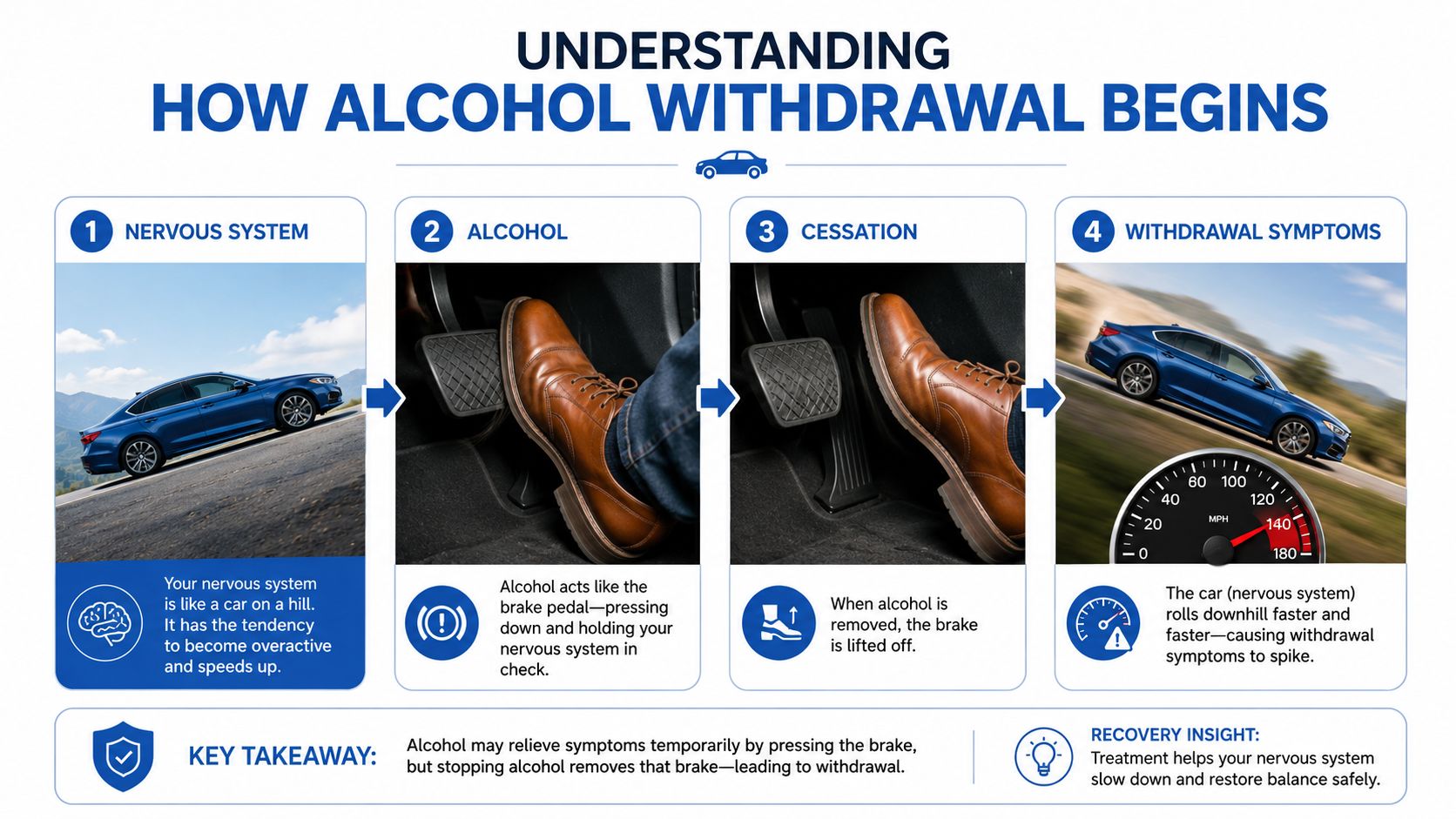
Think of the nervous system as a car on a hill. Alcohol functions like sustained pressure on the brake. With regular heavy drinking, the brain adapts to that slowing effect by adjusting its own balance between calming and activating signals.
When alcohol use stops or falls sharply, the foot comes off the brake before the brain has had time to readjust. The nervous system can surge into an overactive state. That helps explain why someone may develop tremor, sweating, anxiety, headache, nausea, insomnia, palpitations, and high blood pressure as alcohol levels decline.
At the chemical level, chronic alcohol exposure can reduce inhibitory GABA signaling and increase excitatory NMDA signaling. After cessation, that imbalance contributes to central nervous system hyperexcitability, which can produce autonomic symptoms such as a fast heartbeat, sweating, and high blood pressure, along with gastrointestinal distress, hallucinations, seizures, or delirium. The clinical explanation is detailed in this review of alcohol withdrawal mechanisms and management.
What changes the risk
The exact course depends on drinking pattern, physical health, prior withdrawal, and other vulnerabilities. A person's last drink, a meal, hydration, or a few hours of sleep can't guarantee a safe course. Withdrawal can begin earlier than expected, overlap across stages, or intensify after symptoms initially seem manageable.
A medical assessment matters especially when withdrawal occurs alongside vomiting, dehydration, infection, injury, pregnancy, liver disease, heart problems, or use of sedating medications. Clinicians can determine whether the person needs outpatient observation, a structured detox program, or hospital-based care.
Detoxification manages the immediate withdrawal period. It isn't the same as treatment for alcohol use disorder, which addresses cravings, triggers, relationships, mental health, and relapse prevention. For a calm, practical overview of the immediate process, readers can also use this guide to alcohol withdrawal as a starting point for questions to raise with a clinician.
The following video offers another plain-language explanation of what happens in the nervous system:
Seeking supervised care isn't a moral judgment or a failure of willpower. It's a safety decision made because the brain and body may need support while they regain balance.
Alcohol Detox Symptoms by Severity and Timeline
Timing provides useful clues, but it doesn't act as a safety guarantee. A classic clinical timeline describes minor symptoms at 6 to 12 hours, hallucinosis at 12 to 24 hours, withdrawal seizures at 24 to 48 hours, and delirium tremens at 48 to 72 hours after cessation, as summarized by the American Academy of Family Physicians.
The pattern matters most when symptoms appear together. Tremor with sweating and insomnia may represent early withdrawal. Tremor with confusion, hallucinations, severe agitation, collapse, or seizure activity represents a different level of concern, even if the tremor itself looks familiar.
| Stage and Timing | Common Symptoms | Safety Response |
|---|---|---|
| Early, about 6 to 12 hours | Anxiety, irritability, headache, insomnia, nausea, vomiting, sweating, tremor, palpitations, and elevated blood pressure | Contact a clinician promptly, especially after heavy or prolonged drinking, or if prior withdrawal has been complicated |
| Evolving, about 12 to 48 hours | Increasing tremor, marked anxiety or agitation, worsening nausea, autonomic overactivity, hallucinations, and possible seizures | Use supervised medical assessment. A seizure or new hallucination requires emergency evaluation |
| Severe, about 48 to 72 hours, sometimes later | Severe confusion, disorientation, vivid hallucinations, extreme agitation, fever, heavy sweating, and major changes in heart rate or blood pressure | Call emergency services. Delirium tremens is a medical emergency |
| Longer recovery period | Sleep disruption, anxiety, low mood, fatigue, or cravings may continue after acute physical symptoms improve | Arrange ongoing addiction and mental health care rather than relying on detox alone |
The American Academy of Family Physicians withdrawal guidance emphasizes structured symptom scoring, frequent vital-sign checks, and supervised detox for people with heavy daily use, previous withdrawal seizures, or mental-status changes. Clinicians may use symptom assessment tools to track changes, but no score replaces attention to confusion, hallucinations, seizure activity, unstable vital signs, or serious medical illness.
Hallucinations occur in a minority of symptomatic people. Clinical reviews estimate hallucinations in about 2% to 8% of symptomatic individuals, withdrawal-related seizures in about 10% of symptomatic individuals, and delirium tremens in under 5% of people withdrawing from alcohol, according to the AAFP clinical reference linked above. Another recent review reports seizures in up to 15% and delirium tremens in about 3% to 5% of hospitalized or clinically significant withdrawal cases, with untreated delirium tremens carrying mortality as high as 50%. These figures describe population patterns, not an individual prediction.
Don't wait for the expected hour or stage if symptoms are worsening. A person who becomes confused, sees or hears things, can't keep fluids down, loses consciousness, or has a seizure needs immediate medical attention.
For a practical explanation of what supervised detox may involve, see this detox process guide.
Risk Factors That Can Complicate Alcohol Detox
The amount someone drinks matters, but it isn't the only factor. Risk reflects the interaction between alcohol exposure, previous withdrawal, physical health, and available support. Someone with a complicated medical history may face danger even if they believe their current symptoms are manageable.
Combinations that deserve prompt assessment
Heavy daily or prolonged drinking can raise concern, particularly when combined with repeated past detox attempts. A prior withdrawal seizure or delirium tremens episode is especially important because it signals that the person's nervous system has previously reacted severely.
Other factors that can complicate withdrawal include:
- Previous withdrawal complications: A history of seizures, delirium, or severe confusion should be disclosed before stopping alcohol.
- Medical vulnerability: Liver disease, heart rhythm problems, infection, injury, dehydration, and significant malnutrition can make withdrawal harder to manage.
- Pregnancy or older age: These circumstances warrant individualized medical advice rather than an unsupervised attempt.
- Other sedating substances: Benzodiazepines, opioids, and alcohol can all affect the central nervous system. Combining them can increase the danger of excessive sedation and breathing problems.
- Limited observation: Living alone, lacking transportation, or having no reliable person who can recognize changes makes home monitoring less safe.
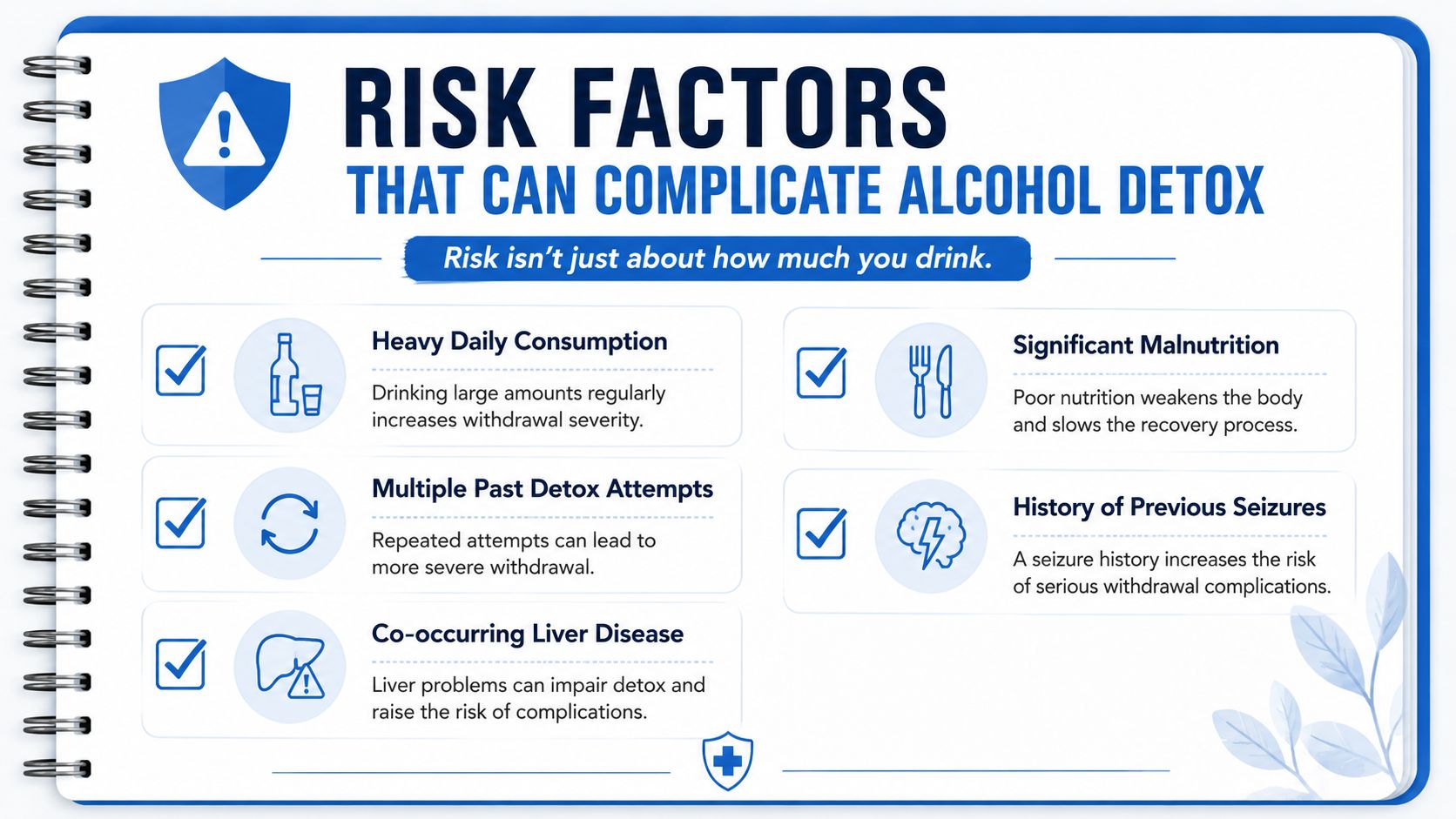
A person doesn't need to wait for hallucinations or a seizure before asking for help. Tremor plus repeated vomiting may create dehydration. Tremor plus a history of withdrawal seizures may justify monitored detox before severe symptoms begin. Confusion plus sedative medication raises a different concern, because it may be difficult for family members to tell whether the person is experiencing withdrawal, intoxication, medication effects, or another medical emergency.
Before stopping alcohol, write down: the last drink, the usual drinking pattern, past withdrawal symptoms, seizures or delirium, medical conditions, prescribed medications, and other substances used.
Recent clinical guidance emphasizes structured risk assessment, including tools such as PAWSS, rather than treating detox as one-size-fits-all. A clinician can combine that assessment with current symptoms, vital signs, medical history, and the person's home environment to recommend a safer level of care.
Treatment and Levels of Medical Supervision
Medical supervision should match risk, not personal preference alone. A person with mild symptoms, stable health, reliable support, and no history of complicated withdrawal may be assessed for ambulatory monitoring. Someone with worsening symptoms, significant medical illness, prior seizures, or mental-status changes may need residential or hospital-based care.
| Supervision Level | Best Suited For | Monitoring and Medications |
|---|---|---|
| Outpatient monitoring | Carefully selected people with lower assessed risk and dependable support | Scheduled clinical checks, symptom tracking, hydration and nutrition guidance, and prescribed medication when appropriate |
| Intensive outpatient care | People who can remain safely outside a facility but need frequent treatment and accountability | Regular clinical visits, therapy, recovery planning, and coordination with medical providers |
| Residential detox or rehabilitation | People who need a structured, substance-free setting and continuous support without acute hospital intervention | On-site observation, nursing or clinical support, symptom-directed medication, and transition planning |
| Inpatient hospital care | People with seizures, delirium, unstable vital signs, serious illness, severe confusion, or high risk for complicated withdrawal | Frequent or continuous monitoring, emergency evaluation, fluids, medication management, and treatment of medical complications |
How medication fits
Benzodiazepines remain first-line medication for alcohol withdrawal management. Clinicians may use symptom-triggered protocols, fixed schedules, or another individualized approach. The choice depends on symptoms, liver function, age, previous withdrawal, and the treatment setting. Patients shouldn't borrow, share, or self-adjust these medications.
Clinicians may use adjunctive medicines for selected symptoms or complications. Anticonvulsants can have a role in some plans, beta-blockers may address certain autonomic symptoms, and antipsychotics may be considered for specific severe psychiatric or perceptual symptoms. These medicines don't replace the primary withdrawal plan or emergency monitoring when seizures or delirium are present.
Thiamine replacement and nutritional support are also important clinical considerations, particularly when malnutrition is present. Fluids and electrolyte management may be needed when vomiting or dehydration affects the person's condition.
The right question isn't, “Can I tolerate this at home?” It's, “What level of observation and medical treatment matches my risk?” A detailed level-of-care assessment guide can help families prepare for that conversation with a treatment provider.
When Alcohol Detox Requires Emergency Care
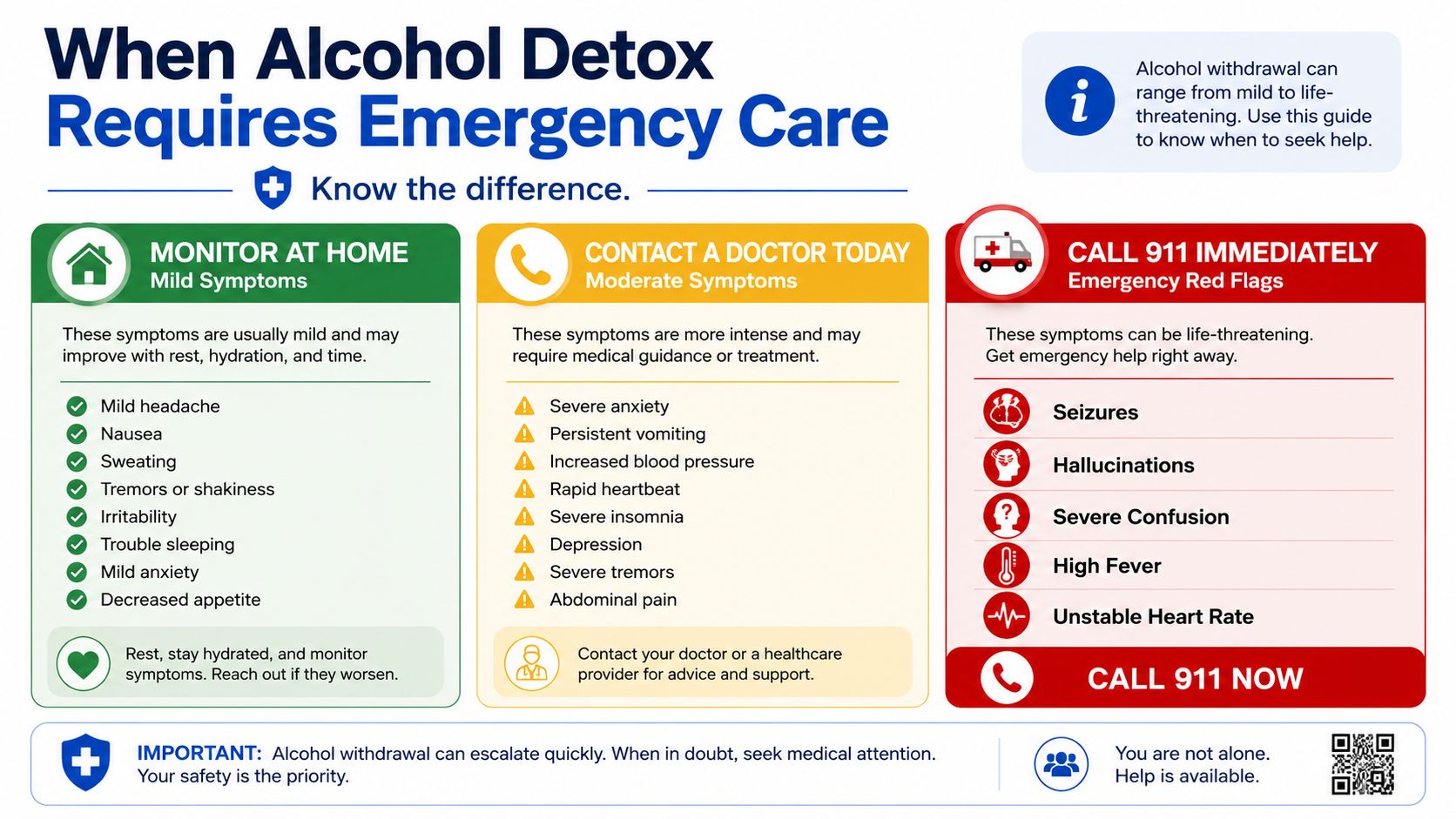
Use a simple action hierarchy. Mild symptoms still deserve medical advice, moderate symptoms require same-day contact, and red-flag combinations require emergency services.
Monitor while arranging guidance
A person with mild anxiety, headache, insomnia, slight tremor, or mild nausea may be able to wait briefly for professional instructions only if they remain alert, can drink fluids, have no serious medical symptoms, and have a reliable adult nearby. This isn't permission to detox alone or to delay care if the pattern changes.
Contact a clinician the same day when symptoms are intensifying, vomiting interferes with hydration, sweating and palpitations are pronounced, anxiety becomes severe, or the person has a history of heavy or prolonged drinking. Tell the clinician that alcohol withdrawal is possible and provide the last drink time.
Call emergency services immediately
Call 911 for:
- Seizures: Especially repeated seizures, injury, breathing difficulty, or a seizure that doesn't stop quickly.
- Hallucinations: New visual, auditory, or tactile experiences, particularly with tremor or agitation.
- Severe confusion: Disorientation, inability to recognize people, extreme restlessness, or rapidly changing awareness.
- Dangerous physical signs: High fever, chest pain, fainting, loss of consciousness, irregular heartbeat, or breathing problems.
- Inability to stay awake: Unresponsiveness or unusual sleepiness, especially after alcohol, opioids, benzodiazepines, or other sedating substances.
Tell dispatchers exactly what changed. Give the last drink time, usual drinking pattern, current symptoms, prior withdrawal seizures or delirium, medical conditions, medications, and any other substances involved.
Don't drive someone who is confused, seizing, fainting, or difficult to wake unless emergency professionals tell you to do so. Keep the person away from stairs and other hazards, stay with them, and follow dispatcher instructions.
Families seeking urgent guidance can review this resource on emergency addiction treatment, but a seizure, severe confusion, hallucination, breathing problem, or loss of consciousness calls for 911 rather than an online information search.
Planning Safer Recovery After Detox
Detox ends the immediate withdrawal crisis, but it doesn't resolve the reasons alcohol became difficult to control. A safer recovery plan begins before discharge and connects medical care, therapy, medication options, practical support, and relapse prevention.
Schedule follow-up with a primary care clinician or addiction medicine provider. Ask whether medications such as naltrexone or acamprosate may be appropriate, taking liver health, kidney health, other medications, and treatment goals into account. Medication decisions belong with a qualified prescriber.
A useful aftercare plan can include:
- Clinical follow-up: Review sleep, mood, cravings, nutrition, medical conditions, and any lingering withdrawal symptoms.
- Therapy: Connect with a therapist experienced in alcohol use disorder and co-occurring mental health concerns.
- Peer support: Explore mutual-help groups or other recovery communities that fit the person's beliefs and schedule.
- Family involvement: Agree on warning signs, transportation plans, emergency contacts, and boundaries around alcohol at home.
- Relapse prevention: Identify triggers, create a response plan for cravings, and arrange care before a lapse becomes a return to sustained drinking.
Loved ones should watch for renewed drinking, isolation, worsening depression or anxiety, missed appointments, medication misuse, and statements suggesting hopelessness. Repeated stop-and-start cycles can expose a person to withdrawal again, so early support matters.
Addiction Resource Center LLC offers medically supervised detox with medication-assisted treatment, residential rehabilitation through a partner facility, and intensive outpatient care in person or through telehealth for adults seeking structured support. Visit Addiction Resource Center LLC to ask about detox options, ongoing treatment, or guidance for a family member.