Recovery often has a quiet hour that catches people off guard. Group is over. The house is finally still. Your phone is in your hand, your thoughts are getting louder, and the old urge to escape starts sounding practical again. Families see this too. Their loved one may be doing well in treatment, then unravel …


Recovery often has a quiet hour that catches people off guard. Group is over. The house is finally still. Your phone is in your hand, your thoughts are getting louder, and the old urge to escape starts sounding practical again. Families see this too. Their loved one may be doing well in treatment, then unravel in the gap between sessions, at bedtime, or after a hard conversation.
Adult coloring books can help in those moments. They aren't a replacement for counseling, medication-assisted treatment, group therapy, or recovery support. They are a simple tool that can make those supports easier to use. Adult coloring books became widely popular in the early 2010s, and coverage since then has tied them to mindfulness, stress relief, and anxiety reduction, with findings such as reduced anxiety after brief structured coloring sessions and strong appeal among adult buyers, especially women and millennials, as summarized by Healthline's review of adult coloring benefits.
In recovery work, I think about tools in one practical way. Can someone use it in detox, in residential treatment, in IOP, and at home without a lot of setup? Coloring often passes that test. It gives restless hands something to do, lowers the pressure to “perform” emotionally, and creates a pause before an impulse turns into a decision.
Table of Contents
- 1. Stress Reduction and Anxiety Management
- 2. Improved Focus and Mindfulness Practice
- 3. Emotional Expression and Processing
- 4. Improved Sleep Quality and Relaxation
- 5. Development of Healthy Coping and Grounding Skills
- 6. Increased Self-Esteem and Sense of Accomplishment
- 7. Enhanced Social Connection and Community Building
- Adult Coloring Books: 7-Benefit Comparison
- Integrate Coloring into Your Recovery Plan Today
1. Stress Reduction and Anxiety Management
For many clients, the first useful thing about coloring isn't creativity. It's nervous system management. When someone is coming off substances, stepping into residential care, or trying to stay regulated between IOP sessions, they need a coping skill that is simple, repeatable, and doesn't ask much from a tired brain.
Dataintelo estimates the adult coloring book market reached an estimated $1.8 billion in 2025, with a projection to $3.2 billion by 2034 at a 6.6% CAGR, and the same market report ties that growth to demand for low-cost stress-relief tools. That matters in recovery because the best coping tools are often the ones people will keep using. In the same report, a 2024 study in Art Therapy is described as finding that 20 minutes of structured coloring reduced anxiety scores by up to 47% in adult participants.

Why this matters in detox and early stabilization
In detox, people often need something to do with agitation, fear, and waiting. Coloring works best here when expectations stay low. No one needs to make art. The point is to settle the body enough to get through the next stretch safely.
In residential treatment, I like coloring as a bridge skill. A client can color before group, after a hard family call, or during downtime that might otherwise fill with spiraling thoughts. In telehealth IOP, it gives people a concrete tool they can reach for at home without needing privacy, technology, or a long attention span.
Practical rule: Use coloring before distress peaks, not only after it becomes overwhelming.
A few conditions matter:
- Keep supplies visible: Colored pencils, gel pens, and a simple book work better than a complicated art setup.
- Pair it with breathing: Slow exhale breathing while coloring usually works better than coloring while scrolling.
- Choose structure over blank pages: Mandalas, patterns, and clearly defined spaces are often more calming than open-ended drawing.
What doesn't work? Using coloring as avoidance all day. If someone uses it to dodge group, skip trauma work, or avoid sleep, it's no longer helping recovery.
2. Improved Focus and Mindfulness Practice
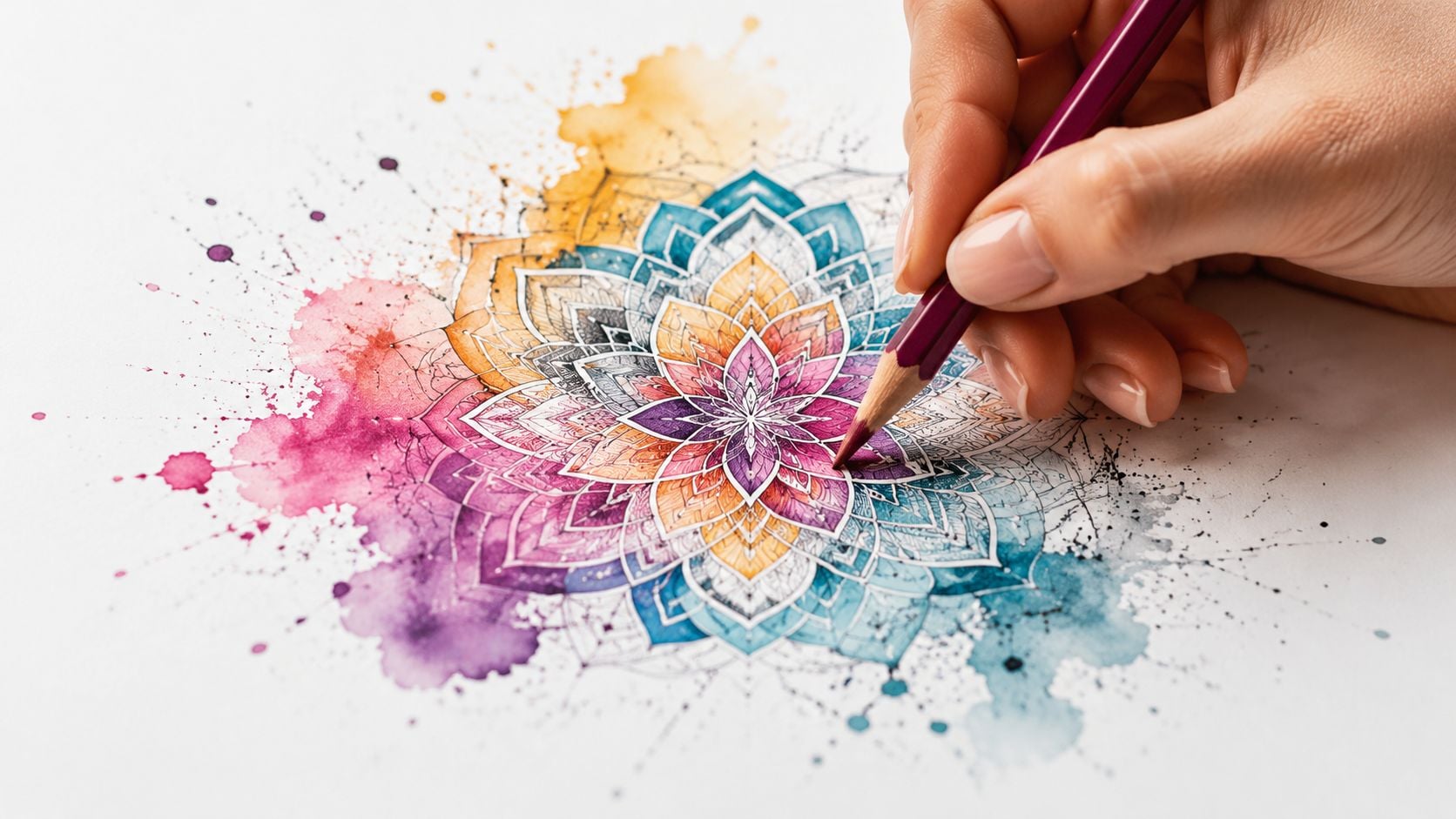
Many people in early recovery say, “I can't meditate.” Often that's true, at least at first. Sitting with racing thoughts can feel unbearable. Coloring gives mindfulness some structure. Your eyes track shape and pattern, your hands stay occupied, and your attention has somewhere to land.
Analysts tracking the category describe non-store and e-commerce as the fastest-growing distribution channel for adult coloring books, and they position the category around stress relief, mindfulness, and digital detox. That last point is especially relevant in recovery. A phone can be useful, but it can also become a pipeline to triggers, conflict, comparison, and impulsive behavior. A paper-based activity creates a cleaner break.
A structured form of mindfulness
In residential treatment, this can fit naturally into a schedule. Ten or twenty quiet minutes before a psychoeducation group can help someone arrive more settled and more present. In IOP, coloring before logging into telehealth can improve readiness in a practical way. You're less scattered when the session starts.
Coloring also helps with attentional drift. Instead of telling yourself “don't think about using,” you redirect attention to line, color, pressure, and pace. That's more realistic. Recovery usually gets stronger when clients replace attention, not when they try to overpower every thought.
Some clients do better with coloring than breath-only meditation because the page gives the mind a job.
A few ways to use it well:
- Start simple: Large shapes and repeated patterns are better when concentration is weak.
- Use it before demanding tasks: Coloring before therapy, step work, or a family session can improve mental settling.
- Keep the practice finite: A short, contained session is easier to repeat than an open-ended one.
What doesn't work is turning coloring into perfectionism. If someone keeps restarting pages, obsessing over mistakes, or becoming frustrated by staying inside the lines, the activity may need to be simplified.
3. Emotional Expression and Processing
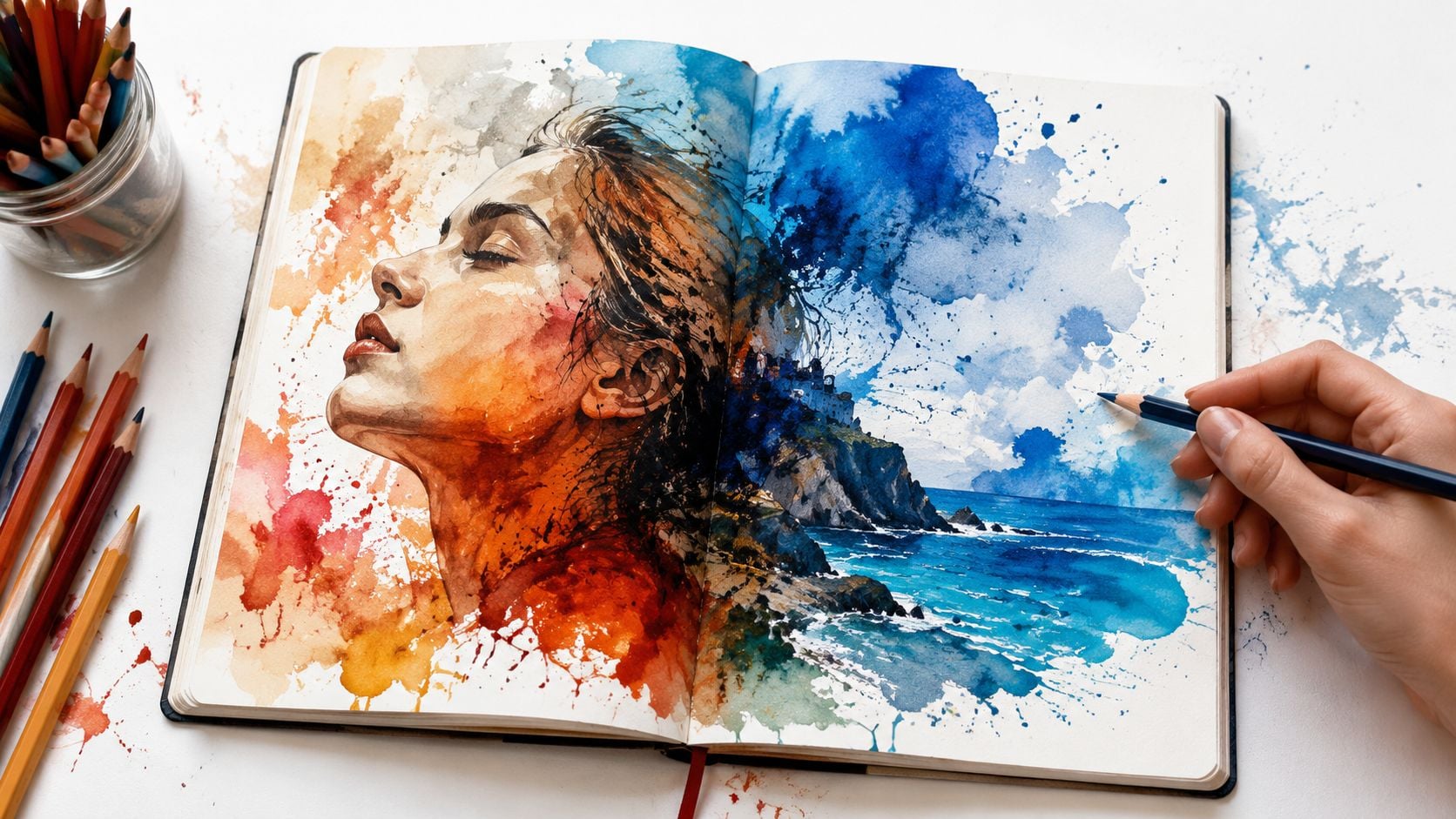
Recovery brings up emotion fast. Some people feel anger they numbed for years. Others feel grief, shame, or fear long before they can talk about it clearly. Coloring can offer a useful middle ground between “say everything” and “shut it down.”
This isn't magic, and it isn't a substitute for trauma-informed counseling. It is a softer entry point. A client who can't yet explain what happened at court, in childhood, or in a damaged relationship may still be able to choose dark, heavy colors, leave a page half finished, or move from sharp contrast to calmer tones over time.
When words are hard to find
In residential care, I've seen coloring help clients prepare for individual sessions. A counselor doesn't need to interpret the page like a test. The page gives them something concrete to ask about. “What felt good here?” “Where did you get stuck?” “What were you feeling while you used these colors?” Those questions are often easier than “Tell me everything.”
For family members, this matters too. Loved ones often push for verbal honesty before the person in recovery has enough regulation to give it. Coloring can lower pressure. It allows emotional contact without forcing a full disclosure on demand.
A few practical uses stand out:
- Bring pages to counseling: A finished or unfinished page can start a session when someone feels shut down.
- Notice patterns without overreading them: Repeated choices may reflect mood, but they aren't diagnoses.
- Use themed books carefully: Nature, geometric, and abstract designs are usually safer than imagery that could feel activating.
The trade-off is important. Coloring helps expression, but it doesn't automatically create insight. People still need therapeutic support to connect emotion with behavior, triggers, and recovery choices.
4. Improved Sleep Quality and Relaxation
Sleep disruption is common in recovery. Detox can throw off the body clock. Residential treatment can feel unfamiliar. In outpatient care, nighttime is often when cravings, loneliness, and regret get louder. That's why a realistic evening routine matters.
Mayo Clinic Health System, as summarized in the broader coverage already noted earlier, describes coloring as a mindfulness activity that helps the brain stay in the present moment and can reduce stress-related symptoms such as depression and anxiety. In practice, that present-moment focus is what many people need before bed. Not stimulation. Not another argument by text. Not one more hour of doomscrolling.
A better wind-down routine
Coloring works best for sleep when it's used as part of a clear sequence. Dim lights. Put the phone away. Make tea if that's already part of the routine. Then color for a short, defined period. The body starts learning that this sequence leads toward rest.
In residential settings, evening coloring can be a healthy replacement for the old pattern of using substances to shut the mind off. In telehealth IOP, it can mark the transition from work and family stress into nighttime recovery. For people on MAT or adjusting to new medications, this kind of non-pharmaceutical calming routine can sit alongside medical care without adding another dependency risk.
Evening coloring should feel quieter than daytime coloring. Simple patterns, softer colors, lower stimulation.
A few practical boundaries help:
- Avoid energizing content: Intricate pages are fine, but highly intense or disturbing imagery can backfire at night.
- Set an end point: Stopping at a planned time protects sleep better than staying up to finish the page.
- Keep it separate from bed if possible: Color in a chair or at a table, then move to bed when you're ready to sleep.
What doesn't work is using coloring to avoid sleep altogether. If bedtime anxiety turns into hours of restless activity, the routine needs adjustment.
5. Development of Healthy Coping and Grounding Skills
Coloring often earns its place in a real recovery plan. People don't relapse because they forgot that sobriety matters. They relapse because a trigger hits, distress spikes, and they don't get enough space between urge and action. Grounding skills create that space.
A neutral review from Life University's discussion of adult coloring and stress tools makes an important point that I appreciate as a clinician. The practical question isn't just whether coloring sounds calming. It's when coloring is useful and when another coping skill is more effective. That's exactly how it should be used in treatment.
A short grounding video can help some people pair the skill with breath and body awareness:
Where coloring fits in a relapse prevention plan
Coloring is especially useful for moderate distress. If someone is restless, craving, ashamed, lonely, or keyed up after an argument, coloring can interrupt escalation. It gives the senses something neutral to engage with. The hands move. The eyes focus. Time passes without adding harm.
But trade-offs matter. Coloring is usually not the best first-line tool when someone is in acute panic, actively unsafe, or dissociating heavily. In those moments, they may need direct support, a call to staff, a sponsor, a counselor, or emergency care depending on the situation.
Here is where coloring tends to work best in recovery care:
- In IOP between sessions: It fills the vulnerable gap when stress hits at home and the next appointment isn't until tomorrow.
- In aftercare planning: It becomes a named coping skill tied to specific triggers, such as evenings alone or conflict with family.
- In craving management: It can buy time while an urge rises and falls, especially when combined with calling someone safe.
Recovery tools don't need to be dramatic to be effective. They need to be available when the urge shows up.
What doesn't work is treating coloring as the whole plan. It should sit next to relapse prevention, accountability, therapy, and community.
6. Increased Self-Esteem and Sense of Accomplishment
Substance use disorders leave a lot of people with a damaged relationship to themselves. They don't just feel bad about what happened. They often stop trusting themselves to start things, finish things, or do anything well. That loss of confidence shows up in treatment more than families sometimes realize.
Coloring gives a visible finish line. One page completed. One choice followed through. One small task done without chaos attached to it. That matters because recovery is built from repeated experiences of doing what you intended to do.
Small wins matter in recovery
This benefit is especially strong in residential treatment, where people are rebuilding daily structure from the ground up. A client may not yet feel ready to repair a marriage, return to work, or manage finances. But they can complete a page today. That small success isn't trivial. It's often one of the first clean experiences of competence they've had in a while.
The business side of the category also suggests this isn't a passing novelty. Research and Markets reports a global adult coloring book market of USD 151.23 million in 2024 with a projection to USD 320.45 million by 2030 at a 9.56% CAGR, alongside another model projecting USD 152.57 million in 2025 to USD 266.04 million by 2031 at a 9.71% CAGR. For clients, the takeaway is simple. Supplies, formats, and access are likely to remain easy to find, which helps make the practice sustainable.
A few ways to strengthen the self-esteem side:
- Finish before escalating difficulty: Completion helps confidence more than abandoning a page that's too hard.
- Share selected work in treatment: Let a counselor, mentor, or peer notice the follow-through.
- Track consistency, not artistic talent: The win is showing up and staying with the task.
What doesn't help is comparing your pages to someone else's. Recovery isn't an art contest.
7. Enhanced Social Connection and Community Building
Addiction isolates people. Even when they were rarely alone, many were cut off emotionally, hiding, lying, or defending themselves. Recovery asks them to reconnect, but direct vulnerability can feel threatening at first. Group coloring offers a softer way in.
The social side of coloring is easy to underestimate. People sit at the same table, pass pencils, comment on color choices, and settle into conversation without the pressure of eye contact the entire time. For clients who freeze in process groups or feel ashamed in new settings, that matters.

Low-pressure connection in treatment settings
In residential treatment, group coloring can create community during downtime that might otherwise turn into gossip, withdrawal, or conflict. In IOP, it can help a group warm up before deeper discussion. In telehealth care, even showing pages on camera or sharing photos with permission can add human contact beyond words on a screen.
This also helps families. Loved ones often want healthy activities they can do together without forcing a heavy conversation every minute. Coloring can be that bridge. It allows companionship while trust is still being rebuilt.
A few good uses in group settings:
- Offer choice: Nature scenes, mandalas, affirmations, and abstract designs appeal to different people.
- Keep sharing optional: The point is connection, not performance.
- Use it as a start, not a substitute: Once people settle, deeper group work often becomes easier.
The limit is straightforward. Coloring can support community, but it won't repair relationships by itself. Honest communication, accountability, and boundaries still do that work.
Adult Coloring Books: 7-Benefit Comparison
| Activity | 🔄 Implementation (complexity) | ⚡ Resources (requirements) | 📊 Expected outcomes (results/impact) | 💡 Ideal use cases (tips) | ⭐ Key advantages (quality) |
|---|---|---|---|---|---|
| Stress Reduction and Anxiety Management | Low, easy to integrate into sessions or home routines | Minimal, coloring books, pencils, quiet space | Short-term reduction in anxiety, lower heart rate/cortisol | Use during peak stress, combine with breathing, 15–30 min daily | Immediate calming effect; non‑pharmaceutical; no dependency |
| Improved Focus and Mindfulness Practice | Low–Moderate, benefits with regular practice and structure | Minimal, varying complexity designs, time allocation | Gradual improvement in attention, impulse control, reduced rumination | Start with simple designs, progress complexity, use before counseling | Makes mindfulness accessible; supports cognitive rehab |
| Emotional Expression and Processing | Moderate, best when paired with therapist interpretation | Low, materials plus clinician time for discussion | Externalizes emotions; creates therapy prompts; aids disclosure | Use as preparatory tool for sessions; keep a coloring journal | Safe non‑verbal outlet; facilitates therapeutic dialogue |
| Improved Sleep Quality and Relaxation | Low, requires consistent evening routine | Minimal, warm lighting, calming palettes, supplies | Better sleep onset and reduced bedtime arousal for mild insomnia | Color 30–60 min before bed; avoid stimulating imagery | Medication‑free sleep aid; compatible with MAT |
| Development of Healthy Coping and Grounding Skills | Low, immediate deployment but needs habit formation | Low, portable "emergency" kits; brief mentor training | Rapid grounding during cravings; supports relapse prevention | Prepare kits for car/work, practice in calm times, combine with grounding exercises | Portable, sensory grounding tool; directly redirects impulses |
| Increased Self‑Esteem and Sense of Accomplishment | Low, easy to add; amplified with recognition | Minimal, supplies and display space | Boosts confidence via tangible achievements; motivates engagement | Display work, share with counselors, progress to harder designs | Builds small wins and intrinsic motivation; supports identity repair |
| Enhanced Social Connection and Community Building | Moderate, needs facilitation and group logistics | Low–Moderate, shared supplies, space, facilitator | Increased peer bonding, reduced isolation, stronger group cohesion | Schedule regular group sessions, vary designs, share completed work | Low‑pressure socialization; fosters therapeutic community |
Integrate Coloring into Your Recovery Plan Today
The value of coloring in recovery isn't that it's trendy or artistic. It's that it can meet real needs across the full continuum of care. In detox, it can help someone get through agitation, waiting, and fear without reaching for an old escape. In residential treatment, it can support structure, emotional regulation, and readiness for therapy. In IOP, including telehealth, it can fill the risky hours between sessions with a healthy, concrete coping skill. In aftercare, it can remain a simple part of relapse prevention long after the intensity of treatment changes.
That doesn't mean coloring works for everyone in the same way. Some people love it right away. Some find it childish until they try it in a difficult moment and realize it helps. Others need a different grounding tool entirely. That's normal. Recovery plans should be individualized, not forced. The practical question is always the same. Does this help you stay present, lower distress, and make a safer next choice?
Among the many coloring books for adults benefits, the most important one may be this: it gives people another way to pause. A pause before using. A pause before exploding in anger. A pause before shutting down emotionally. In treatment, those pauses matter because they create room for every other intervention to work better.
If you or someone you love is struggling with alcohol or drug use, it helps to have a team that looks at the whole picture. Addiction Resource Center LLC serves adults in Yuba City and Northern California with medically supervised detox and MAT, residential rehabilitation through Ona Treatment Center in Browns Valley, in-person and telehealth IOP, counseling, recovery mentoring, and individualized aftercare planning. The program is built for real life. Compassionate support, accountability, privacy, and practical coping skills all matter.
If you're ready to explore down-to-earth recovery strategies, including small tools that make difficult moments more manageable, call or text Addiction Resource Center at 530-625-7910. Sometimes the next right step isn't complicated. It's getting support and building a plan you can use.
If you want compassionate, practical help for substance use or co-occurring mental health needs, Addiction Resource Center LLC offers medically supervised detox with MAT, residential rehab through its partner facility, in-person and telehealth IOP, and individualized aftercare planning for adults 18+ in Yuba City and Northern California. Their multidisciplinary team supports clients and families with down-to-earth care, privacy, and clear next steps. You can reach them anytime by phone or text at 530-625-7910 to ask questions, verify insurance, schedule a tour, or get guidance for a loved one.