You may be sitting at your kitchen table with your phone in your hand, searching late at night after another hard day. Maybe you're trying to figure out if treatment means disappearing from work, telling everyone your business, or putting your whole life on pause. Maybe you're a parent, spouse, or adult child trying to …

You may be sitting at your kitchen table with your phone in your hand, searching late at night after another hard day. Maybe you're trying to figure out if treatment means disappearing from work, telling everyone your business, or putting your whole life on pause. Maybe you're a parent, spouse, or adult child trying to help someone you love, and every website seems full of terms that sound clinical and confusing.
That moment is more common than people think. The desire to get help often shows up before the system makes sense. You know something needs to change. You just don't know what an Intensive Outpatient Program is, whether you qualify, what paperwork you need, or how insurance fits into it.
An Intensive Outpatient Program, often called an IOP, can be a practical middle ground. It gives you more structure than standard outpatient counseling, but it doesn't require living at a facility. For many people, that's what makes treatment feel possible.
Table of Contents
- Introduction You're Ready for Change Now What
- What Is an Intensive Outpatient Program
- Decoding the Core IOP Admission Requirements
- Understanding Your Commitment What IOP Expects from You
- How to Prepare for Intake and Overcome Common Barriers
- Start Your Recovery at Addiction Resource Center
Introduction You're Ready for Change Now What
People often think the hardest part is admitting they need help. In reality, the next part can feel just as hard. You finally decide to reach out, then you're hit with new questions. What level of care do I need? Will they expect detox first? Can I still go to work? Will insurance approve it?
A lot of families assume “outpatient” means one short counseling session a week. Then they hear “intensive outpatient” and worry it means something close to hospitalization. Neither assumption is quite right. That's why understanding intensive outpatient program requirements matters so much. The requirements aren't random rules. They help determine whether this level of care matches what you need right now.
If you're in Northern California and trying to make sense of your options, it helps to think about the process in plain language. A legitimate IOP is built around structure, safety, and a treatment plan that fits the person, not just the diagnosis. The details can sound formal, but the underlying question is simple: Will this program give you enough support to make real progress while you continue living at home?
Getting assessed for treatment isn't about proving you're “bad enough.” It's about finding the level of care that gives you a real chance to stabilize and stay engaged.
Some people come to IOP after detox or residential treatment. Others start there because they need more than weekly therapy but don't need round-the-clock supervision. Families often feel relief when they realize there's a middle option.
What Is an Intensive Outpatient Program
You might be picturing a parent who has to get the kids to school, clock in for work, and still find a way to get help by the end of the day. That is exactly where intensive outpatient treatment often fits. It gives a person more support than weekly counseling without asking them to live at a facility.
Treatment levels work a lot like school schedules. Residential care is closer to living on campus. Standard outpatient care is closer to one class a week. An Intensive Outpatient Program, or IOP, works more like a part-time course load with regular attendance, clear expectations, and steady support while you keep living at home.
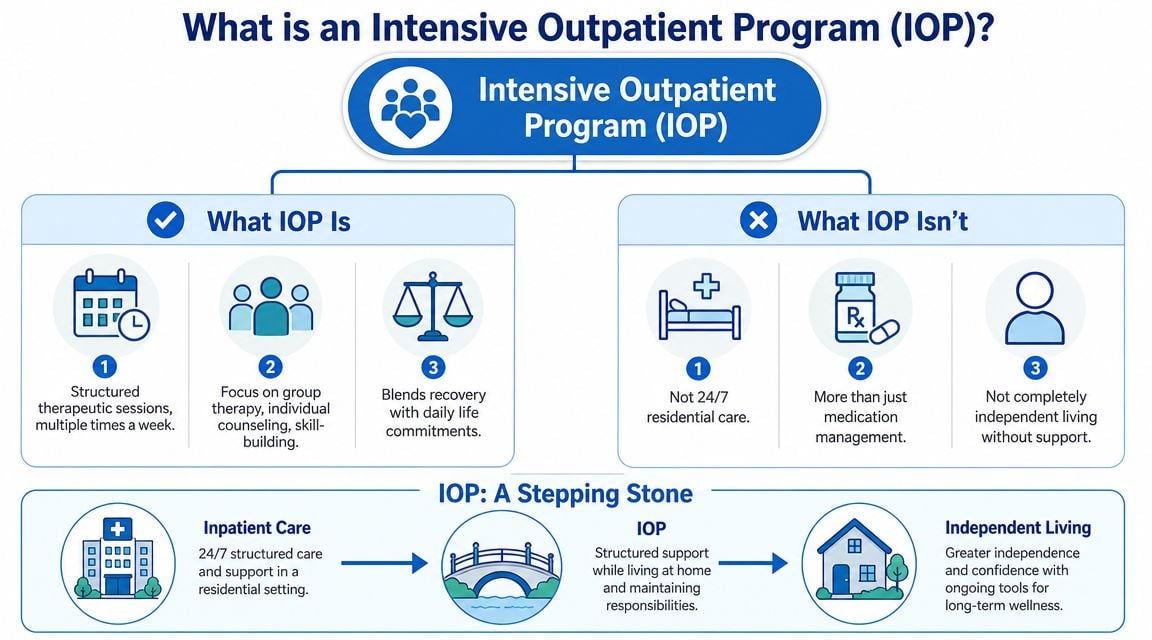
What IOP is
An IOP is a structured treatment program for people who need more than occasional outpatient visits. The schedule usually includes several treatment sessions each week, often in a mix of group therapy, individual counseling, recovery education, and family support when appropriate. Some programs also include medication support or coordination with outside medical providers.
The key idea is consistency. You are not checking in once in a while and trying to piece recovery together on your own. You are following a treatment plan with enough contact each week to build momentum, practice skills, and catch problems early.
At Addiction Resource Center LLC, that practical side matters. Many clients need care that fits around jobs, parenting, court requirements, or transportation limits. An IOP is often the level of care that makes treatment possible without putting the rest of life on hold.
What IOP is not
IOP does not mean 24-hour supervision. You return home after programming, so the program must make sense for someone who can stay safe outside treatment hours with the right support.
It also does not mean a few informal meetings. A real IOP includes multiple services working together, not one repeated appointment. SAMHSA describes intensive outpatient treatment as a level of care that gives people scheduled, coordinated services while they continue living in the community, as outlined in this overview of intensive outpatient treatment from SAMHSA's treatment improvement guidance.
That distinction helps families ask better questions. Are there set treatment hours? Is there an individualized plan? Are mental health needs, relapse risk, and home stress all being addressed together? Families who use records in more than one language may also need clear translated paperwork. In those cases, Translators USA, LLC's medical translation services can support accurate communication around care.
Why this level of care works for many people
IOP fills the middle ground that many adults need. A person may need real structure, but still have to keep a job, care for children, attend school, or sleep in their own bed. That is why this level of care is so common in addiction treatment.
Research has also shown that IOP can help people reduce substance use and improve functioning, with outcomes that are often comparable to inpatient or residential care for appropriate patients, according to this review of intensive outpatient treatment research.
For many families, that is a relief. It means getting help does not always require stepping away from daily life completely. It means there may be a workable option here, one that supports recovery while also dealing with real barriers like work schedules, childcare, transportation, and the day-to-day demands that do not disappear just because someone is ready for treatment.
Decoding the Core IOP Admission Requirements
A lot of families call expecting a checklist with a simple yes or no at the end. Intake is usually more like a map. The goal is to see whether IOP fits safely into your life and gives you enough support to make real progress.
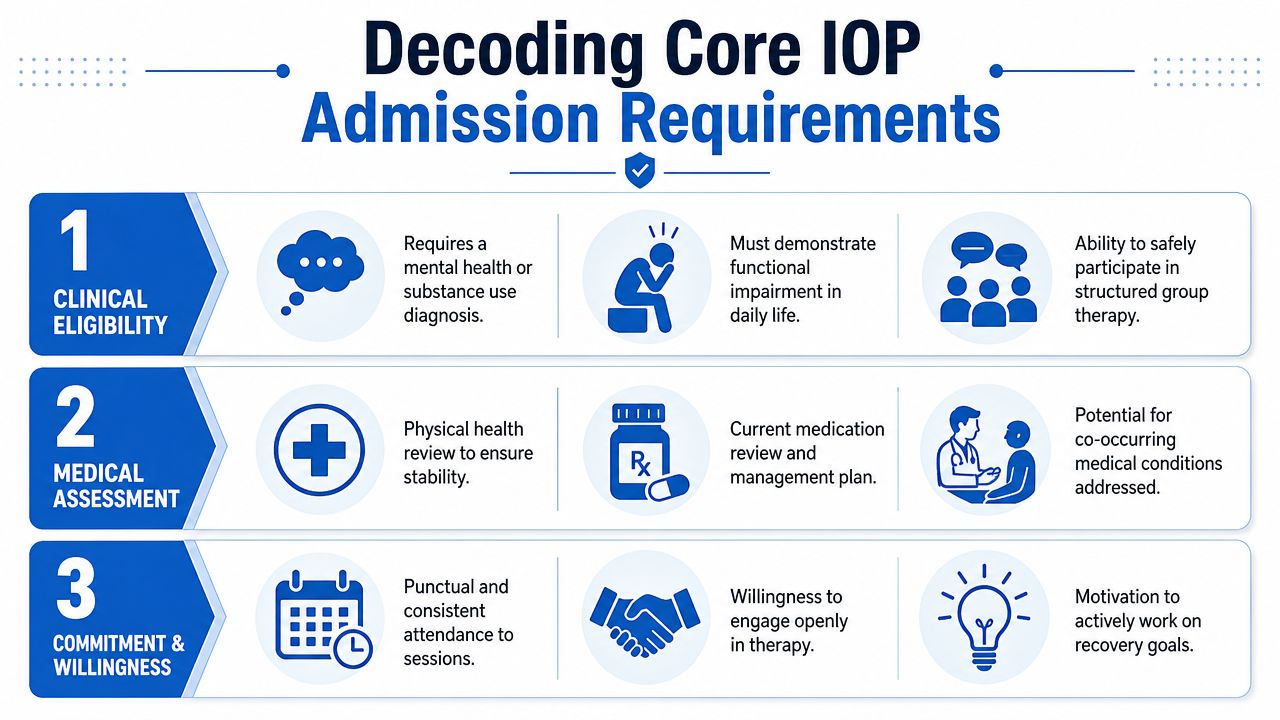
Why programs ask so many questions
An IOP is not just extra therapy sessions stacked on a calendar. Independent payer guidance describes it as a structured set of services that may include a biopsychosocial assessment, individual therapy, group therapy, psychoeducation, and discharge planning for people with complex DSM-5 diagnoses, with progress tied to day-to-day functioning, according to these IOP performance specifications.
That is why the questions can feel wide-ranging. The intake team is trying to see the whole picture, the way a mechanic checks more than one part before saying a car is road-ready. Substance use, anxiety, depression, sleep, home stress, work demands, medical concerns, legal pressure, and past treatment all affect whether IOP is the right level of care and what support should be built into the plan.
A careful assessment is a good sign. A program should be able to explain why IOP fits, not just offer a spot.
What the intake process usually includes
The first step is often a phone call that feels more practical than formal. A staff member may ask what is happening right now, whether there are immediate safety concerns, what substances are involved, and what parts of your weekly routine need protection, such as work shifts, school hours, or childcare pickup.
Then comes the fuller assessment, during which the clinical team gathers enough detail to make a sound recommendation. Common questions include:
Current substance use
What are you using, how often, and when did you last use?Mental health symptoms
Are depression, anxiety, trauma symptoms, mood changes, or other concerns showing up too?Daily life impact
Is substance use affecting work, parenting, school, sleep, relationships, finances, or legal stability?Treatment history
Have you tried counseling, detox, residential treatment, medication-assisted treatment, or peer support before?Ability to participate
Can you attend regularly, join group sessions, and stay engaged in treatment?
Families often pause at the phrase medical necessity. In plain English, it means the clinical team has to show that standard outpatient care would likely be too little support, while a higher level of care is not needed right now. That decision protects safety and helps match the person to the right amount of structure.
At Addiction Resource Center LLC, this step also helps staff start problem-solving early. If work hours, transportation, or childcare could interfere with treatment, bring that up during intake. Those details are part of placement planning, not side issues.
What paperwork you may need
The paperwork is usually basic. It helps to gather what you can before the appointment, but missing one item does not always stop the process.
A typical intake packet may include:
| Item | Why it helps |
|---|---|
| Photo ID | Confirms identity and records |
| Insurance card | Helps verify benefits and authorization rules |
| Medication list | Shows what you're taking now |
| Emergency contact | Supports safety planning |
| Prior treatment information | Helps the team understand what has or hasn't worked |
One small tip can save stress. Write down medication names, past treatment dates, and recent events before the call. Anxiety makes details harder to remember, especially when a family is trying to get help quickly.
How insurance and authorization work
Insurance can feel like the most confusing part of admission. In practice, a provider often helps verify benefits and determine whether authorization is needed, so you are not left trying to interpret policy language alone.
Medicare sets technical standards for what counts as IOP. The patient must need at least 9 hours of therapeutic services per week, be under a physician's care, and be able to participate in active treatment. Programs that are mainly social or recreational do not meet that standard, as noted earlier in the article.
For families, the takeaway is simple. A legitimate IOP has to document real clinical need, clear treatment goals, and a level of structure that matches the person's condition. That is also why the questions, records, and insurance checks can feel detailed. They are part of building a treatment plan that is appropriate, supportable, and realistic for daily life.
Understanding Your Commitment What IOP Expects from You
Monday morning starts with school drop-off. By afternoon, there is work, a pile of texts, and the usual thought that treatment may be one more thing you cannot fit in. That is a very common fear. IOP works best when it becomes part of your weekly structure, like a class you attend or a medical appointment you protect, because recovery gets stronger through repetition.

Showing up matters
As noted earlier, IOP includes a meaningful weekly time commitment and a structured treatment plan. In plain language, it is more involved than standard outpatient care. You are not expected to figure that out alone. The program sets the schedule with you, and your job is to protect that time as consistently as possible.
Attendance is not about checking a box. It works more like physical therapy after an injury. One session can help, but steady practice is what rebuilds strength. In IOP, each group, skill exercise, and counseling session builds on the last one.
A typical commitment often includes:
Regular attendance
You are expected to attend the sessions on your treatment plan, arrive on time, and stay for the full session when possible.Planning around treatment
Work hours, parenting duties, school demands, and court obligations often need to be arranged around care. This is one reason many families ask about evening options or ways to adjust routines early.Staying in contact
If you are sick, running late, or hit with a real conflict, tell the team. A quick call gives staff a chance to help problem-solve instead of guessing what happened.
For some clients at Addiction Resource Center LLC, this is the first big shift. Recovery stops being something you hope to get to and becomes time set aside on purpose.
Participation matters too
Many new clients worry that participation means talking nonstop or sharing painful details right away. It usually does not work like that. Good IOP care builds trust first, then asks for more honesty and effort as you get steadier.
Still, IOP is active treatment. You will be asked to join discussions, practice coping skills, look at patterns that keep pulling you off course, and work toward clear goals. Depending on your plan, that can include individual sessions, family work, relapse prevention, and medication support when appropriate.
The most successful IOP clients aren't the ones who say everything perfectly. They're the ones who keep showing up, keep telling the truth, and stay willing to be coached.
Some programs also use drug screening, sobriety checks, or other accountability tools. Used well, these are safety tools, not punishments. They help the team spot risk early, respond quickly, and adjust care before a setback becomes a crisis.
A simple way to picture the commitment is this: the program brings the map, the structure, and the clinical support. You bring your time, your honesty, and your willingness to keep practicing even on hard weeks. That partnership is what turns treatment from an appointment into real change.
How to Prepare for Intake and Overcome Common Barriers
It often starts like this. A person decides they need help, then immediately hits a wall of practical questions. Who will watch the kids? What do I tell work? What if insurance says no? That pile of questions can make one phone call feel much bigger than it is.
Intake does not require a perfect plan. It requires a starting point.

A good intake is a lot like the first visit with a new doctor. You are not expected to solve everything before you arrive. You bring the basic facts, describe what has been going on, and let the team help sort out what needs attention first.
A simple intake prep checklist
Before you call, gather a few basics:
Your insurance card
Staff can use it to check benefits and explain what your plan may cover.A short list of current concerns
Write down the substances involved, mental health symptoms, recent setbacks, and what feels most urgent right now.Your medications
Include prescriptions, over-the-counter medications, and anything you use regularly.Your schedule limits
Note work hours, school pickup times, childcare windows, court dates, or any other fixed responsibilities.One clear sentence about why you are calling
Simple is enough: “I need help, and I want to know what level of care fits my situation.”
That sentence helps more than many families expect. When nerves are high, having a few words ready can keep the call from stalling.
Work, childcare, and transportation problems
These barriers are common, and they are real. Many people are not avoiding treatment. They are trying to hold daily life together while asking for help.
Start by turning each barrier into a planning question. That shift can make the problem feel smaller and more workable.
| Barrier | Better question to ask |
|---|---|
| Work schedule | Which treatment hours can I protect every week without risking my job? |
| Childcare | Who can cover care during sessions, even temporarily? |
| Transportation | What is my backup ride if the first plan falls through? |
| Privacy fears | How should the program contact me, and what messages feel safe? |
If work is the main concern, ask about session times before deciding IOP cannot fit. If childcare is the issue, make a short list of possible helpers, even for the first two weeks. If transportation is unreliable, ask about ride support, public transit options, telehealth availability, or whether another level of care would fit better.
This part often feels messy. That is normal. Intake staff should help you work through logistics, not just ask clinical questions.
What to know about virtual IOP
Virtual IOP can remove some of the biggest obstacles. A parent may be able to attend from home. Someone with a long commute may avoid hours on the road. A person trying to protect work time may have more flexibility.
Still, virtual care is not a simple yes-or-no option. Clinical fit and insurance coverage are separate questions. A program may offer telehealth, but your plan may cover only certain formats, providers, or facility types. Earlier federal guidance in this article also explains that Medicare coverage rules for IOP do not treat every virtual arrangement the same as in-person care.
This short video gives another plain-language look at the intake and treatment process:
Ask both questions before you enroll: “Is this level of care right for me?” and “Is this format covered by my insurance plan?”
At Addiction Resource Center LLC, that practical step matters. The program offers IOP in person and through telehealth, along with detox, medication-assisted treatment, and other levels of care. For a family trying to balance recovery with work, childcare, or transportation limits, having more than one treatment format can make the first step easier to take.
Start Your Recovery at Addiction Resource Center
It is 8:10 p.m. The kids are finally settled, work starts early tomorrow, and you are staring at your phone thinking, “I need help, but I do not know what to do first.” That moment is more common than you may think. The first step does not have to be dramatic. It just has to be clear.
Start with one simple action. Call and ask for an intake conversation, insurance verification, or a tour. You do not need to have every answer ready before you reach out. Intake works a lot like a front desk and a roadmap in one place. The team helps sort out what level of care fits, what paperwork you may need, and what practical obstacles need attention first.
As noted earlier in this article, a legitimate intensive outpatient program follows clinical and billing standards. For you, the practical takeaway is simple. The program should offer real treatment on a consistent schedule, keep clear records, and base care on clinical need rather than convenience alone. That protects you and helps avoid confusion later with insurance, scheduling, and treatment planning.
A lot of families ask the same first-round questions, and they are good ones to ask right away:
Can I use insurance?
Addiction Resource Center LLC accepts many major insurance plans and welcomes TRICARE beneficiaries.Can I keep working or caring for family?
Ask what session times are available and whether telehealth or in-person care fits your situation.What if I need more than IOP?
Say that plainly during the call. If detox, residential care, or medication-assisted treatment makes more sense first, intake should help identify that.Can I call for my spouse, child, or parent?
Yes. Family members often make the first call and help gather information.
Barriers like childcare, transportation, and work hours can make treatment feel out of reach. Treat those issues like intake topics, not private problems you have to solve alone. A parent may need evening options. Someone without reliable transportation may need to ask about telehealth. A person worried about missing shifts may need help choosing a schedule that protects income while still giving treatment enough time to work.
Here is the direct contact information:
| Contact option | Information |
|---|---|
| Phone or text | 530-625-7910 |
| Address | 1002 Live Oak Blvd., Suite A, Yuba City, CA |
| What to ask for | Free confidential insurance verification or a tour |
Keep the call small and honest. You can say, “I think I need help, but I am not sure what level of care fits,” or “I want treatment, but I have work and childcare to figure out.” That is enough to begin.
Addiction Resource Center LLC offers confidential guidance for adults and families seeking help with substance use treatment in Yuba City. You can call or text 530-625-7910 to ask about program options, insurance verification, or setting up a tour.