Rebuild trust after addiction with proven strategies to restore family relationships and reconnect with loved ones.


Addiction breaks the bonds that hold families together. Broken promises, financial betrayal, and emotional neglect create deep wounds that don’t heal overnight.
The good news is that rebuilding trust after addiction is possible. At Addiction Resource Center, we’ve seen families reconnect and grow stronger through consistent action, honest communication, and professional support.
How Addiction Damages Family Trust
Broken Promises and Financial Betrayal
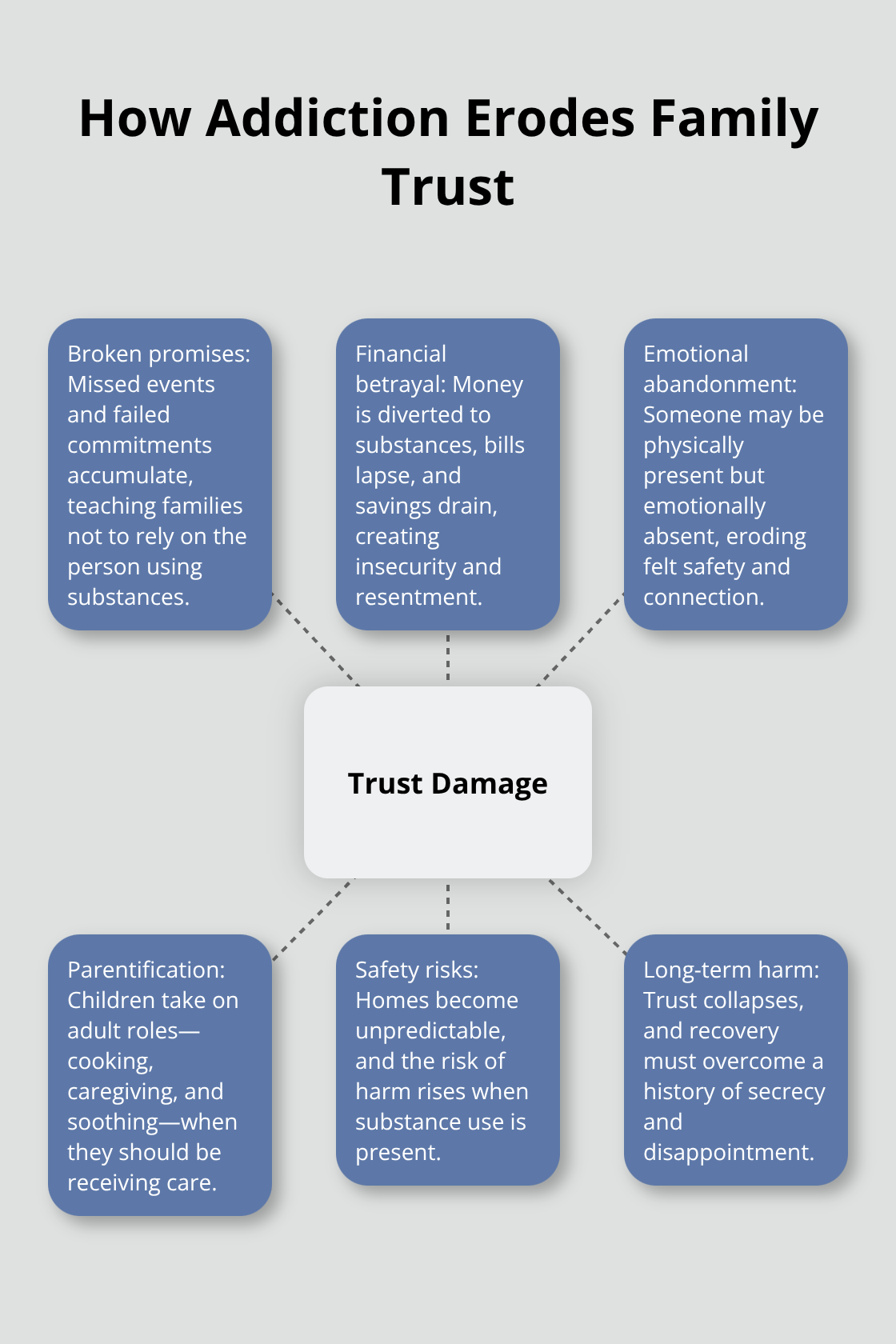
Addiction creates a pattern of broken promises that accumulates over time, and families experience this as a slow erosion of confidence. When someone struggles with substance use, they miss important events, fail to follow through on commitments, and prioritize their addiction over family needs. Financial betrayal often accompanies this pattern-money disappears for drugs or alcohol, bills go unpaid, and savings drain away.
The National Survey on Drug Use and Health reports that more than 5.1 million people aged 12 and older misused prescription stimulants in 2021, and many of these individuals were parents or partners responsible for household finances. The damage extends far beyond money. Family members stop believing what they hear because past promises have been broken repeatedly. They begin to expect disappointment, which makes rebuilding trust extraordinarily difficult later on.
Emotional Abandonment and the Cost to Children
Emotional abandonment happens when a parent or partner is physically present but mentally absent due to substance use. Children in homes with parental substance use disorders face specific developmental risks. More than 8 million children under 18 live with at least one adult who has a substance use disorder, according to data from the U.S. Department of Health and Human Services.
These children often become parentified-they take on adult responsibilities to fill the gap left by their struggling parent. They cook meals, manage siblings, or provide emotional support when they should be receiving it. The home becomes unpredictable and unsafe. One parent might be intoxicated, creating an environment where a child cannot relax or feel secure.
Safety Threats and Long-Term Harm
In Ohio specifically, excessive alcohol use contributed to over 5,700 deaths from 2016 to 2021, illustrating the broader destruction addiction causes in families. Safety concerns extend beyond emotional neglect. Children in households with parental substance use are about three times more likely to experience physical or sexual abuse.
These documented outcomes shape how family members view the person in recovery and why trust must be actively rebuilt through demonstrated change, not words alone. The wounds run deep, and the path forward requires more than apologies-it demands consistent action and professional guidance to address the harm that addiction inflicted.
How to Rebuild Trust Through Action and Honesty
Start small and verifiable Your Commitments
Rebuilding trust after addiction requires more than good intentions. It demands consistent behavior over months and years, transparency about your recovery journey, and the willingness to accept that family members will test your reliability before they believe in your change. Trust rebuilds in small increments, not dramatic gestures.
When you commit to attending recovery meetings, show up on time to family obligations, and follow through on minor promises before tackling major ones, you create a pattern that contradicts years of broken commitments. If you say you’ll call at 6 p.m., call at 5:55 p.m. If you commit to being home for dinner, arrive 10 minutes early. These actions sound trivial, but they directly counter the pattern of unreliability that addiction created.
Make Consistency Your Default, Not Your Exception
Research on family recovery emphasizes that consistency matters more than perfection. One missed commitment after months of reliability can trigger doubt, so accountability must become automatic, not occasional. Your family members need to see that your sobriety isn’t fragile or dependent on their praise. They need proof that recovery is your priority, separate from their approval.
This means you attend therapy or support groups even when family relationships feel stable, maintain financial transparency (by sharing bank statements or budgets if requested), and stay honest about cravings or difficult days without using those struggles as excuses for past behavior. Your family needs visibility and honesty to feel safe again, especially after years of addiction-related secrecy.
Answer Questions Directly and Without Defensiveness
Transparency also means you answer questions directly. If a family member asks where you were, provide a straightforward answer without defensive explanations. If they want to know about your recovery plan, share it in detail. This openness signals that you have nothing to hide and that you respect their need for reassurance.
Many people in recovery make the mistake of assuming that silence or privacy will rebuild trust faster. It does the opposite. Families with histories of addiction need visibility and honesty to feel safe again.
Enforce Boundaries Consistently and Without Resentment
Set clear household boundaries and enforce them consistently. If drugs or alcohol are prohibited in your home, that rule applies to everyone, including yourself and visitors. If financial decisions require discussion, discuss them before spending money. If certain topics trigger conflict, establish how you’ll address them calmly. Boundaries aren’t punishments; they’re structures that protect the family environment and demonstrate your commitment to change.
When you violate a boundary you’ve set, acknowledge it immediately, explain what led to the breach, and adjust your approach. This shows accountability and prevents the old pattern of denial or minimization. Family members may test your boundaries intentionally to see if you’re serious. Someone might offer you a drink to observe your response, or they might ask you to bend a rule you established. Your consistent refusal, without anger or resentment, proves that your recovery is genuine.
Understand That Trust Takes Years to Rebuild
This process takes time. Research suggests that rebuilding trust can take two to five years depending on the severity of damage and the consistency of recovery efforts. Some relationships heal faster; others require longer. The timeline isn’t something you control, but your actions are. Focus on what you can do today, tomorrow, and every day after. As you demonstrate sustained change, your family members will gradually shift from skepticism to cautious belief, and eventually to genuine trust. Professional support can accelerate this process and address the deeper wounds that addiction created.
Professional Support for Family Healing
Family therapy Creates Space for Honest Conversation
Family therapy addresses the specific damage addiction creates in relationships, and it works better than waiting for time and consistency alone to heal wounds. A trained therapist creates a neutral space where family members express hurt without fear of escalating conflict, and where the person in recovery hears the full impact of their addiction without becoming defensive. Research indicates that family-based interventions produce stronger outcomes than individual treatment alone because they target the relational patterns that addiction damaged.
A therapist helps you identify enabling behaviors, establish healthy communication patterns, and process grief over lost time and broken trust. When choosing a family therapist, look for someone with specific training in addiction recovery and family systems work. Verify they hold credentials like Licensed Marriage and Family Therapist (LMFT) or Licensed Professional Counselor (LPC), and confirm they have direct experience treating families affected by substance use disorders.
Credentials and Coordination Matter
Many therapists coordinate with your addiction treatment provider to ensure consistent messaging and support across your recovery. This coordination prevents conflicting advice and strengthens the overall treatment approach. Ask potential therapists about their experience with addiction-affected families and how they communicate with other providers on your treatment team.
Therapists trained in Motivational Interviewing and harm-reduction approaches help reduce resistance to treatment and meet families where they are rather than imposing rigid expectations. These evidence-based methods respect the complexity of recovery and acknowledge that change happens at different speeds for different people.
Support Groups Reduce Isolation and Teach Practical Skills
Support groups designed for family members address a different but equally important need: they reduce isolation and normalize your experience. Al-Anon and Nar-Anon groups bring together people who live or lived with someone struggling with addiction, and they teach practical strategies for setting boundaries, stopping enabling behaviors, and protecting your own mental health. These groups operate on the principle that you cannot control another person’s recovery, only your response to it.
Attending a group weekly gives you access to people who understand the specific pain of addiction-affected families without judgment or stigma. Members share real strategies that work in their own homes and relationships, offering practical wisdom that complements professional therapy.
Addiction Specialists Bring Specialized Knowledge
When searching for an addiction specialist to work with your family, prioritize programs accredited by the Joint Commission (JCAHO), which signals consistent quality standards and evidence-based treatment practices. Ask whether the program offers family sessions as part of standard care, whether they provide education about recovery timelines and relapse risk, and how they communicate progress with family members.
The combination of individual therapy for the person in recovery, family therapy, and support groups for family members creates a comprehensive approach that addresses trust-building from multiple angles simultaneously. This multi-layered strategy targets the relational damage that addiction caused and provides each family member with tools and support tailored to their specific role in the recovery process.
Committing to Consistent Action for Lasting Trust
Rebuilding trust after addiction demands consistent action over months and years, not dramatic gestures or perfect behavior. You must show up reliably, communicate honestly about your recovery journey, maintain financial transparency, and honor the boundaries you’ve established with your family. When setbacks occur, you respond with honesty rather than shame, demonstrating that relapse risk is part of recovery and that you take active steps to prevent it.
Your family members will gradually shift from skepticism to cautious hope as they witness sustained change in your actions and commitments. They learn to stop enabling, protect their own mental health, and recognize that they cannot control your sobriety. This transformation happens through support groups, therapy, and time spent observing genuine change unfold in your daily life.
At Addiction Resource Center, we provide personalized addiction therapy and substance abuse counseling designed to help individuals and families navigate recovery together. Your family’s future depends not on perfection but on consistent effort, honest communication, and the willingness to repair what addiction damaged.