Explore holistic addiction treatment options that address mind, body, and spirit for lasting recovery and improved wellbeing.


Addiction doesn’t exist in isolation-it affects your body, mind, and spirit all at once. That’s why holistic addiction treatment options focus on healing the whole person, not just treating the symptoms.
At Addiction Resource Center, we believe recovery works best when we address every dimension of your life. This approach leads to stronger, more lasting results.
What Holistic Addiction Treatment Actually Means
Holistic addiction treatment addresses the biological, psychological, social, and spiritual factors that drive substance use. This isn’t vague philosophy-it’s a structured approach grounded in how addiction actually works. Research shows three in four people with substance use disorder experience trauma, yet traditional treatment often ignores this connection entirely. A whole-person framework recognizes that your body’s nutritional deficiencies, your brain’s reward system dysfunction, your unprocessed trauma, and your lack of meaningful relationships all contribute to addiction. Treating only one dimension leaves the others to fuel relapse. Recovery requires addressing every area simultaneously, which is why personalized plans must tackle physical health, mental resilience, emotional processing, and social reintegration together.
Your Body Needs Specific Nutritional Support
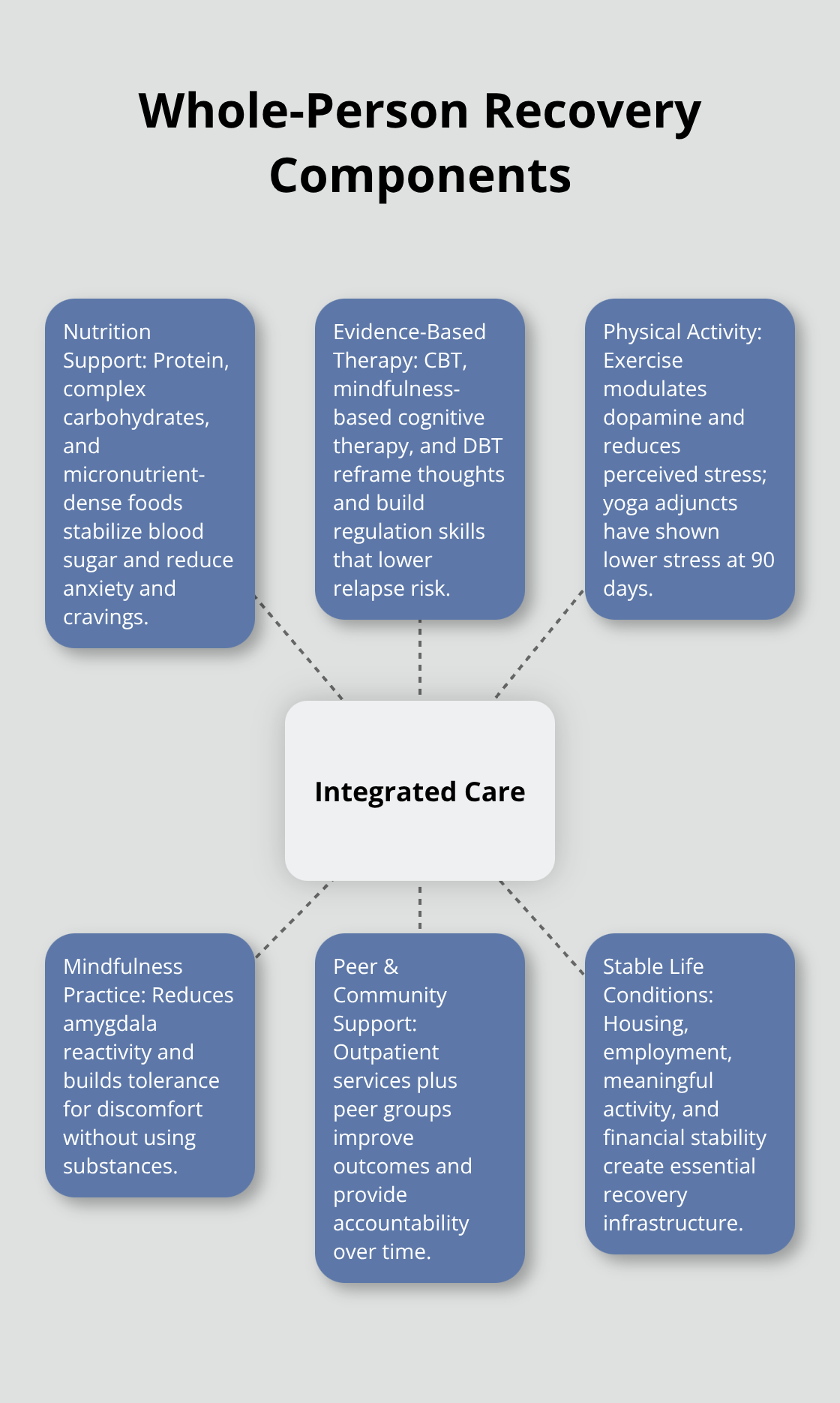
Addiction depletes critical nutrients-B vitamins, zinc, magnesium, and omega-3 fatty acids-that your brain needs to regulate mood and manage cravings. Many people entering recovery have years of poor nutrition behind them, which directly impacts energy, sleep quality, and emotional stability. Omega-3 supplementation shows measurable benefits for mood regulation and reduces cravings intensity. Structured meal planning that emphasizes protein, complex carbohydrates, and micronutrient-dense foods stabilizes blood sugar, which directly reduces anxiety and compulsive behaviors. Regular physical activity compounds these benefits-exercise modulates dopamine pathways and reduces perceived stress, making it a legitimate recovery tool rather than optional wellness activity. Your physical recovery and emotional recovery connect directly; they’re not separate processes.
Mental Health and Emotional Processing Are Non-Negotiable
Cognitive behavioral therapy and mindfulness-based cognitive therapy reduce relapse rates by approximately 50 percent in people with co-occurring mental health disorders. These approaches teach you to identify thought patterns that trigger cravings and develop concrete alternatives before urges escalate. Mindfulness meditation specifically reduces amygdala reactivity-the brain region driving fear and stress responses-which means regular practice literally rewires how your nervous system responds to triggers.

Dialectical behavior therapy helps you build distress tolerance and emotional regulation skills that prevent the shame-craving-use cycle. Your emotional wounds require active treatment, not passive time.
Community and Purpose Create Lasting Change
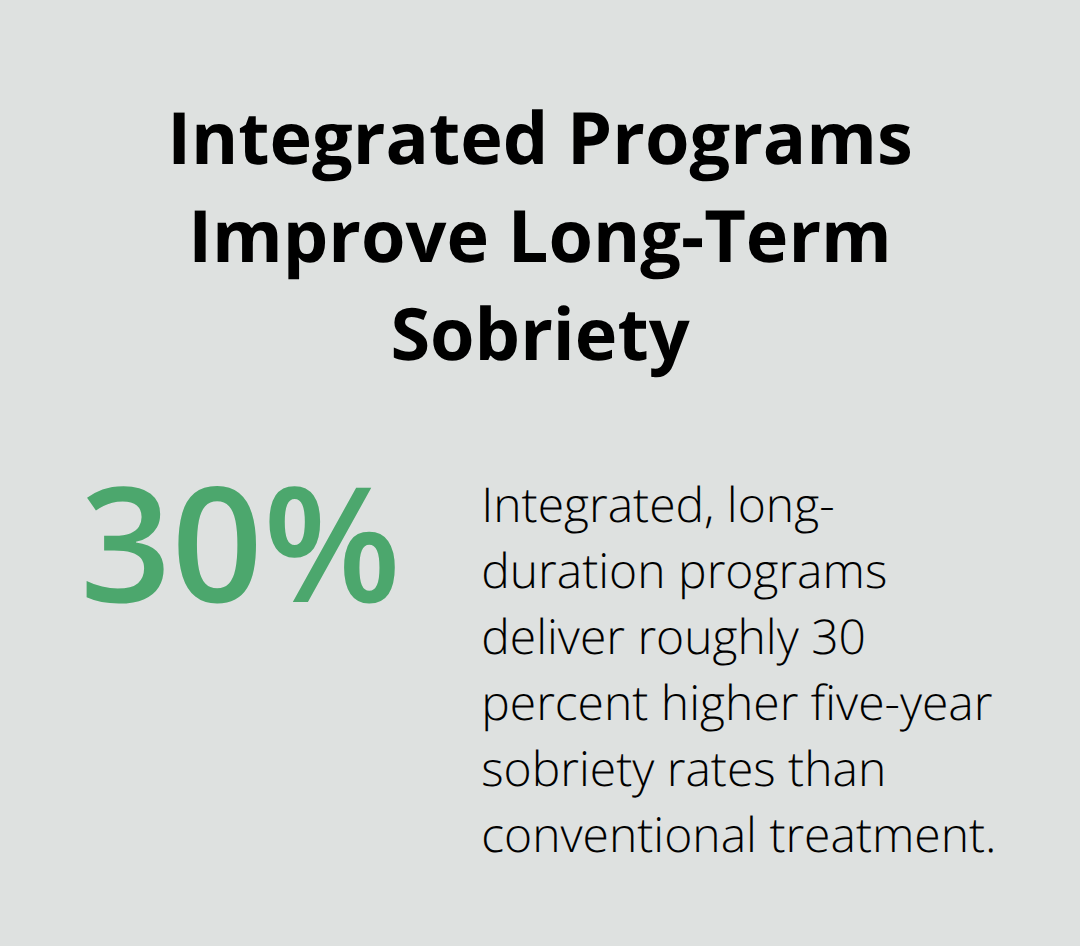
Isolation fuels addiction; meaningful connection sustains recovery. Research on continuing care programs shows that combining professional outpatient services with peer support groups produces better short and mid-term outcomes than either approach alone. A Norwegian continuing care study found that programs combining physical activities, consistent social engagement, and stable housing created environments where participants maintained abstinence and improved mental health simultaneously. This matters: long-duration programs that actively design multiple interventions produce roughly 30 percent higher sobriety rates at five years compared to conventional treatment. Spiritual or purpose-driven components-whether religious practice, volunteer work, or creative pursuits-give recovery direction beyond just avoiding substances. Your social environment and sense of purpose form recovery infrastructure, not luxuries.
Evidence-Based Methods Work Best When Integrated
The most effective recovery plans don’t rely on single interventions. Instead, they combine nutrition support, physical activity, evidence-based therapy, and community connection into one coordinated system. When you address your body’s nutritional needs while simultaneously processing trauma through therapy and building meaningful relationships, each component strengthens the others. This integrated approach explains why programs that treat the whole person consistently outperform those that focus narrowly on abstinence alone. The next section examines the specific evidence-based methods that form the foundation of whole-person recovery.
Evidence-Based Holistic Treatment Methods
Cognitive behavioral therapy and mindfulness-based practices form the scientific backbone of modern addiction recovery, not because they sound good, but because they measurably reduce relapse. Mindfulness-Based Cognitive Therapy reduces relapse rates in people with co-occurring mental health disorders, according to NIH-level research. This works because these approaches rewire how your brain responds to cravings-mindfulness meditation specifically reduces amygdala reactivity, the brain region that drives stress and fear responses. When you practice mindfulness regularly, you literally change neural pathways in your prefrontal cortex and hippocampus, which means you’re not fighting cravings with willpower alone; you’re building biological capacity to tolerate discomfort without using. Cognitive behavioral therapy teaches concrete skills: you identify the exact thoughts that trigger urges, then practice specific mental responses before cravings escalate into relapse. This isn’t abstract psychology-it’s technical training for your mind. The reason these methods work is they address the actual mechanisms driving addiction rather than treating addiction as a character flaw.
Mindfulness and Cognitive Behavioral Therapy Rewire Your Brain
Mindfulness meditation reduces amygdala reactivity-the brain region that drives stress and fear responses. Regular practice literally changes neural pathways in your prefrontal cortex and hippocampus, which means you build biological capacity to tolerate discomfort without using substances. Cognitive behavioral therapy teaches you to identify the exact thoughts that trigger urges, then practice specific mental responses before cravings escalate into relapse. This technical training for your mind addresses the actual mechanisms driving addiction rather than treating addiction as a character flaw.
Nutrition and Exercise Serve as Medical Interventions
Addiction depletes your brain of critical neurotransmitters and depletes your body of essential nutrients like B vitamins, zinc, magnesium, and omega-3 fatty acids. Omega-3 supplementation produces measurable improvements in mood regulation and reduces cravings intensity. Structured meal plans emphasizing protein, complex carbohydrates, and micronutrient-dense foods directly stabilize blood sugar, which eliminates the energy crashes that fuel anxiety and compulsive behaviors. Regular physical activity modulates dopamine pathways and reduces perceived stress more effectively than many pharmaceutical interventions-exercise literally changes your brain chemistry. A 2018 study examining yoga as an adjunct to medication-assisted treatment for opioid use disorder found significantly lower perceived stress at 90 days. This matters because stress is the primary trigger driving relapse; when you reduce stress through physical activity and proper nutrition, you remove the biological foundation that addiction thrives on. Programs that fail to address physical recovery ignore half the battle.
Community Connection Sustains Recovery Over Time
Isolation kills recovery; meaningful connection sustains it. Research shows combining professional outpatient services with peer support groups produces better outcomes than either approach alone. A Norwegian continuing care study demonstrated that programs combining physical activities, consistent social engagement, and stable housing created environments where participants maintained abstinence while simultaneously improving mental health. Long-duration programs that actively design multiple interventions produce roughly 30 percent higher sobriety rates at five years compared to conventional treatment. This reveals the hard truth: recovery isn’t something you achieve in 30 days-it’s something you build over years through consistent engagement with people and activities that matter. Group therapy and community support networks aren’t optional add-ons; they’re infrastructure. Without them, relapse becomes statistically probable rather than preventable.
How These Methods Work Together
The most effective recovery plans don’t rely on single interventions. Instead, they combine nutrition support, physical activity, evidence-based therapy, and community connection into one coordinated system. When you address your body’s nutritional needs while simultaneously processing trauma through therapy and building meaningful relationships, each component strengthens the others. This integrated approach explains why programs that treat the whole person consistently outperform those that focus narrowly on abstinence alone. The next section examines how personalized treatment plans translate these evidence-based methods into your specific recovery path.
How We Implement Holistic Recovery
Recovery plans fail when they treat addiction as a single problem requiring a single solution. Personalized treatment frameworks address the specific combination of factors driving your addiction, not a generic template applied to everyone. This starts with comprehensive assessment: identifying your nutritional deficiencies, assessing your trauma history, evaluating your mental health conditions, mapping your social support gaps, and determining your spiritual or purpose-driven needs. Someone struggling with opioid addiction and depression requires a fundamentally different treatment structure than someone with alcohol addiction and untreated PTSD.
The assessment phase determines which evidence-based therapies work best for your neurobiology, which physical recovery interventions address your specific deficiencies, and which community connections will sustain your long-term engagement. These elements then coordinate into a single coherent plan where your nutrition protocol, therapy schedule, exercise program, and peer support network reinforce each other rather than compete for your attention. This coordination matters because research shows that longer engagement in treatment produces better outcomes, and integrated programs keep people engaged because each component directly addresses a real problem you experience daily.
Personalized Assessment Drives Treatment Design
Your specific addiction profile determines your treatment structure. Someone with opioid addiction and depression needs different interventions than someone with alcohol addiction and untreated PTSD. Comprehensive assessment identifies your nutritional deficiencies, trauma history, mental health conditions, social support gaps, and spiritual needs.
This information shapes which evidence-based therapies work best for your neurobiology and which physical recovery interventions address your specific deficiencies. The assessment phase also reveals which community connections will sustain your long-term engagement and prevent isolation.
Coordinated Interventions Strengthen Each Other
Effective treatment plans integrate nutrition support, physical activity, evidence-based therapy, and community connection into one system. Your nutrition protocol, therapy schedule, exercise program, and peer support network reinforce each other rather than compete for your attention. When you address your body’s nutritional needs while simultaneously processing trauma through therapy and building meaningful relationships, each component strengthens the others. Research shows that longer engagement in treatment produces better outcomes, and integrated programs keep people engaged because each component directly addresses a real problem you experience daily.
Ongoing Support Prevents Relapse Through Continuous Adaptation
Relapse prevention requires treating recovery as an ongoing process, not a destination you reach after 30 or 90 days. Your triggers will change as you rebuild your life, so your treatment plan must evolve accordingly. Continuous stress management through mindfulness and physical activity, maintained social connection through group therapy and peer networks, and regular progress monitoring with adjusted interventions when your needs shift form the foundation of sustained recovery. Counseling transitions into maintenance sessions that keep you connected to your therapist and alert to early relapse warning signs. Community support groups provide accountability and normalization of struggle that clinical settings cannot replicate alone.
External Conditions Create Recovery Infrastructure
Research identifies stable housing, employment, meaningful activity, and financial stability as critical for sustained recovery. Without addressing these environmental factors, your internal recovery work becomes fragile. Navigating housing resources, connecting with vocational training, and building employment networks extends your recovery infrastructure far beyond therapy sessions. Your recovery depends on both internal psychological work and external life stability working together.
Conclusion
Whole-person recovery works because it addresses the biological, psychological, social, and environmental factors that actually drive addiction. Programs combining evidence-based therapy, physical wellness, community connection, and stable housing produce roughly 30 percent higher sobriety rates at five years compared to conventional treatment-this represents the difference between sustained recovery and cycling through relapse. Holistic addiction treatment options that target your whole life, not just your substance use, generate measurably better outcomes because they eliminate the conditions that addiction thrives on.
Starting recovery means accepting that your addiction did not develop from a single cause, so your recovery requires addressing multiple dimensions simultaneously. This begins with honest assessment of what actually drives your use-trauma, untreated mental health conditions, nutritional depletion, social isolation, or lack of meaningful purpose-then moves into a coordinated plan where your therapy, nutrition, physical activity, and community connections work together. The first step is reaching out to professionals who understand that recovery is a whole-person process.
We at Addiction Resource Center understand the complex nature of addiction and provide personalized substance abuse counseling and addiction therapy programs tailored to your specific needs. Our experienced team offers compassionate outpatient addiction treatment combined with mental health support to address your physical health, emotional resilience, and social reintegration as one integrated system. Contact us today to begin your journey toward a healthier, happier life.