Explore what outpatient addiction treatment programs involve, from assessment to aftercare, and find the right path to recovery for your needs.


Starting an outpatient addiction treatment program can feel overwhelming. You might wonder what happens on your first day, how sessions are structured, or what support you’ll actually receive.
At Addiction Resource Center, we’ve guided thousands through this process. This guide walks you through each stage of outpatient treatment so you know exactly what to expect.
Your First Addiction Assessment
What Happens During Your Initial Evaluation
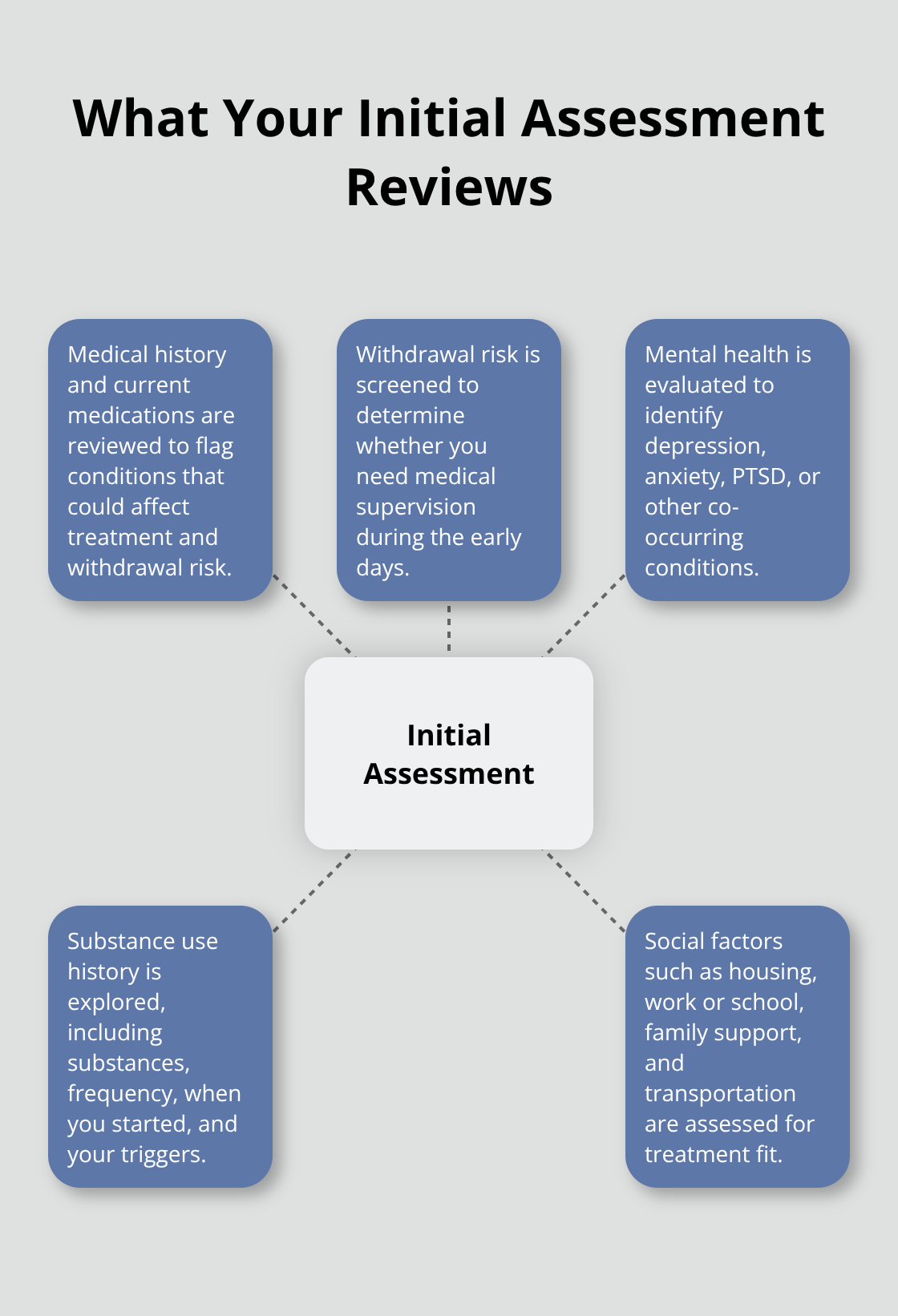
Your first appointment at an outpatient program sets the foundation for everything that follows. This initial assessment typically lasts 90 minutes to two hours and covers three critical areas that determine your treatment path. The clinician asks detailed questions about your medical history, current medications, and any physical health conditions that could affect treatment. They screen for withdrawal risk, which matters because outpatient programs need to know if you require medical supervision during the early days. Mental health evaluation is equally thorough-the assessment identifies depression, anxiety, PTSD, or other conditions that commonly co-occur with addiction.
Why Addressing Both Addiction and Mental Health Matters
Research on dual diagnosis treatment shows that addressing both addiction and mental health simultaneously produces better outcomes than treating them separately. You’ll discuss your substance use history in depth, including what you use, how often, when you started, and what triggers your use. This isn’t about judgment; it’s about understanding the specific patterns that led you here. The clinician will ask about your living situation, work or school commitments, family support, and access to transportation-practical factors that directly affect whether outpatient treatment will work for you.
How Your Treatment Plan Gets Built
Based on this assessment, the treatment team creates a personalized plan tailored to your situation, not a generic template. If you have stable housing and a supportive family, your plan looks different from someone managing homelessness or domestic violence. If you work full-time, sessions get scheduled around your job. If you have untreated anxiety, the plan incorporates therapy that addresses both your substance use and anxiety simultaneously.
The plan specifies your treatment intensity-whether you need Partial Hospitalization Program level care, Intensive Outpatient Program (9–20 hours weekly), or standard outpatient (less than 9 hours weekly). It identifies which medications might help, such as naltrexone for alcohol use disorder or buprenorphine for opioid dependence. It establishes your counseling frequency, group therapy participation, and whether family sessions make sense given your circumstances. Most importantly, the plan includes relapse prevention strategies specific to your triggers and your environment.
Your Active Role in Treatment Planning
This plan isn’t a document that sits in a file-you receive a copy and review it regularly with your treatment team as circumstances change. Your input shapes how the plan evolves. As you progress through treatment, the team adjusts your schedule, therapy focus, and support services based on what actually works for you. This flexibility means your outpatient program adapts to your life, not the other way around. With your assessment complete and your plan in place, you’re ready to understand what your daily treatment schedule will actually look like.
The Daily Structure of Outpatient Addiction Treatment
Individual Counseling and Therapy Work
Outpatient programs structure your week around three core activities: individual therapy, group sessions, and medical oversight. The exact schedule depends on your treatment intensity level. If you’re in an Intensive Outpatient Program, you attend sessions 9 to 20 hours per week, typically three to five days weekly with sessions lasting three to four hours. Standard outpatient involves fewer than nine hours weekly, often one or two appointments.
Your individual counselor uses cognitive behavioral therapy to identify thought patterns that trigger substance use, then teaches you practical skills to interrupt those patterns before they lead to relapse. This isn’t talk therapy where you discuss your feelings for an hour-it’s structured, goal-focused work. A typical session starts with reviewing your past week: what situations tempted you, how you handled stress, whether you attended group meetings.
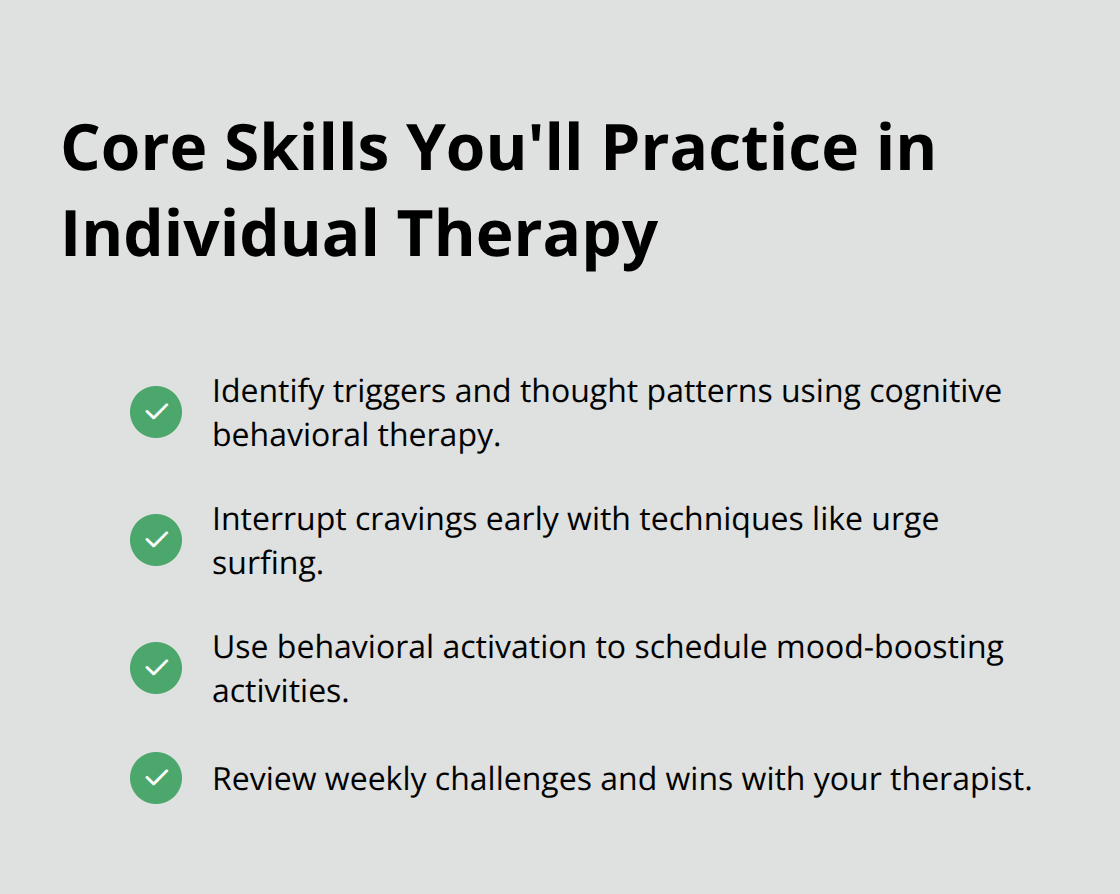
Your therapist might teach you a specific technique like urge surfing, where you observe cravings without acting on them, or behavioral activation, where you schedule activities that naturally reduce depression or anxiety. Between sessions, you complete worksheets or homework assignments that reinforce what you learned.
Group Meetings and Peer Support
Group meetings happen at least twice weekly in most programs and serve a different purpose than individual therapy. These sessions bring eight to fifteen people together to share experiences, problem-solve challenges, and build accountability. Peer support reduces isolation and strengthens motivation-when you hear someone describe a struggle you faced and watch them overcome it, your own recovery feels more possible.
Groups also normalize the addiction experience in ways that individual therapy cannot. You’ll encounter people weeks into recovery alongside those with months of sobriety, creating a natural mentoring dynamic.

This peer interaction becomes one of the most valuable aspects of outpatient treatment.
Medical Monitoring and Medication Management
Medication management runs parallel to your therapy work. If you’re prescribed buprenorphine for opioid dependence or naltrexone for alcohol use disorder, your prescriber monitors your progress through regular check-ins and periodic drug screening. Medical staff assess whether your dosage is working, whether side effects are manageable, and whether your mental health or physical health has changed.
These appointments typically happen monthly but may be more frequent early in treatment. Blood work screens for liver function if you’ve used alcohol heavily or for other health markers depending on your substance use history. This medical component distinguishes addiction treatment from general counseling-your prescriber watches for complications and adjusts your care based on measurable outcomes rather than intuition.
As you move through these daily structures-individual sessions, group work, and medical care-your treatment team identifies which tools and resources will support your specific recovery needs. The next section explains the substance abuse counseling techniques, mental health services, and relapse prevention strategies that your program makes available to you.
Tools and Resources Available in Outpatient Programs
Evidence-based counseling techniques That Address Your Brain’s Response to Addiction
Outpatient programs succeed when they deploy specific, evidence-based counseling techniques matched to how your brain responds to addiction triggers. Cognitive behavioral therapy remains the backbone of most programs because it directly addresses the thought-action cycle that drives relapse. Your therapist identifies automatic thoughts like “I’ve already failed, so I might as well use” and teaches you to interrupt that chain before it leads to behavior. Contingency management, another proven approach, uses immediate rewards to reinforce abstinence-some programs offer vouchers or privileges when drug screens come back negative. The matrix model, developed specifically for stimulant addiction, combines behavioral strategies with education about addiction as a brain disease, and motivational enhancement therapy focuses on resolving ambivalence about recovery by exploring your own reasons for change rather than having reasons imposed on you.
Research shows that people who complete treatment have better outcomes, yet fewer than 43 percent finish their programs. This statistic underscores why outpatient settings matter-you apply these techniques in real life immediately, not in an isolated facility. Your daily environment becomes your practice ground.
Integrated Mental Health Support From Day One
Addiction rarely exists alone. Dual diagnosis treatment produces better outcomes than treating conditions separately, so your program should screen and treat depression, anxiety, PTSD, or other conditions from day one rather than referring you elsewhere. Some programs offer integrated services where your counselor and psychiatric provider communicate directly about your medications and therapy goals, while others coordinate with outside providers.
This integrated approach means your treatment team addresses both your substance use and your mental health simultaneously. Your prescriber and therapist work together rather than in separate silos, which accelerates your progress and prevents gaps in care.
Relapse Prevention Planning That Reflects Your Actual Life
Aftercare planning starts months before you complete active treatment-your team identifies which peer support groups fit your lifestyle, whether 12-step programs like Alcoholics Anonymous or alternative groups like SMART Recovery align with your values, and what ongoing therapy or check-ins you’ll need. Relapse prevention planning gets specific: you and your counselor map your exact triggers, the warning signs that precede relapse, and concrete action steps for each scenario.
If stress triggers your use, you plan specific stress management activities. If certain people enable your use, you develop strategies to limit contact or handle interactions differently. This specificity matters far more than generic relapse prevention lectures-you build a personal relapse response plan that reflects your actual life, not a theoretical one.
Final Thoughts
Recovery doesn’t end when your active treatment phase concludes. The aftercare planning that starts early in your outpatient addiction treatment program creates a bridge to long-term sobriety, whether you continue with peer support groups, ongoing therapy, or regular check-ins. Your treatment team helps you build the structure that keeps you grounded after you complete active care.
We at Addiction Resource Center understand that addiction is complex and recovery requires personalized care. Our team of experienced professionals delivers compassionate substance abuse counseling and mental health support tailored to your specific needs. We’re committed to helping you every step of the way toward a healthier life.
If you’re ready to start treatment, contact Addiction Resource Center to schedule your assessment. Our admissions team answers your questions, verifies your insurance, and gets you started quickly-recovery is possible, and it begins with one conversation.