Improve your health by understanding liver recovery after quitting substances and discover practical steps to support healing and long-term wellness.


Your liver is remarkably resilient. After you quit using substances, it begins healing almost immediately, and the timeline for recovery can be faster than you might expect.
At Addiction Resource Center, we’ve seen firsthand how liver recovery after quitting transforms people’s health. This guide walks you through what happens in your body, the nutrition and lifestyle changes that matter most, and how medical support accelerates your healing.
How Your Liver Heals After Quitting
Your liver starts repairing itself within days of your last drink or drug use. Research from Alcohol Research: Current Reviews shows that abstinence triggers the liver’s regenerative capacity, enabling recovery of a substantial portion of its mass and function even after years of heavy use. In heavy drinkers consuming 60 grams or more daily, fatty liver develops in over 90 percent of cases, but two to three weeks of abstinence can completely resolve this fatty buildup. Within about one month of stopping, liver enzymes like ALT, AST, and GGT often normalize, and metabolic markers including insulin resistance, blood pressure, and cholesterol improve. The speed of your recovery depends heavily on how much and how long you drank or used drugs, your age, weight, and whether you have other health conditions.

If you have cirrhosis or severe liver scarring, recovery moves slower and remains less complete, but abstinence still prevents further damage and can improve remaining function.
Cellular Repair Happens Fast
At the cellular level, your liver restores normal function almost immediately. Animal studies show that receptor-mediated endocytosis-the process your liver uses to filter toxins-bounces back within days. The Golgi apparatus, which packages proteins your liver needs, reassembles quickly. Your gut barrier, which chronic alcohol damages through increased intestinal permeability and allows toxins to leak into your bloodstream, restores itself within about three weeks of abstinence. This matters because your damaged gut has fueled liver inflammation. As your gut heals, endotoxemia markers drop, signaling that your liver experiences less inflammatory stress. Your liver also reactivates autophagy, the cellular cleanup process that clears out fatty deposits. These changes happen in parallel, which is why people often notice increased energy and clearer skin within weeks-your body literally detoxifies itself as your liver regains function.
How Damage Level Affects Recovery
Fatty liver and early-stage inflammation can reverse almost completely with abstinence. If you have alcoholic hepatitis, inflammation and liver cell death slow dramatically once you stop drinking, though some scarring may persist. Fibrosis-the buildup of scar tissue-can stabilize and sometimes improve, but established cirrhosis creates permanent scarring that cannot fully reverse. The extent of your recovery depends on how much damage existed before you quit. A FibroScan is a non-invasive diagnostic device used to measure liver scarring, which helps your doctor determine whether you have advanced fibrosis or cirrhosis and set realistic recovery expectations and monitoring frequency. If you have compensated cirrhosis (meaning your liver still functions adequately), abstinence can improve your condition over time. If you have decompensated cirrhosis with signs like fluid buildup or confusion, recovery is more limited, and your doctor may recommend cancer surveillance with ultrasound every six months. Regardless of your starting point, stopping all alcohol use remains the single most effective intervention for halting further damage and enabling whatever healing is possible.
What Comes Next in Your Recovery
Your liver’s healing capacity sets the foundation for the broader lifestyle changes that accelerate recovery. Nutrition, exercise, sleep, and stress management work together with abstinence to support your liver’s regeneration and prevent complications.
Nutrition and Lifestyle Changes to Support Liver Health
Your nutritional choices directly determine how fast your liver repairs itself. The Mediterranean diet stands out as the most evidence-based eating pattern for liver recovery because it combines antioxidant-rich foods, healthy fats, and lean proteins that your liver uses to rebuild damaged tissue.
Foods That Accelerate Liver Repair
Fatty fish like salmon and mackerel contain omega-3 fatty acids that reduce liver inflammation, while leafy greens such as spinach and kale provide glutathione and vitamin E, both critical for cellular repair. Berries, citrus fruits, and other vitamin C sources combat oxidative stress that alcohol and drugs create. Whole grains like brown rice and quinoa supply B vitamins your liver needs to process toxins, and lean proteins give your body the amino acids required for hepatocyte regeneration.
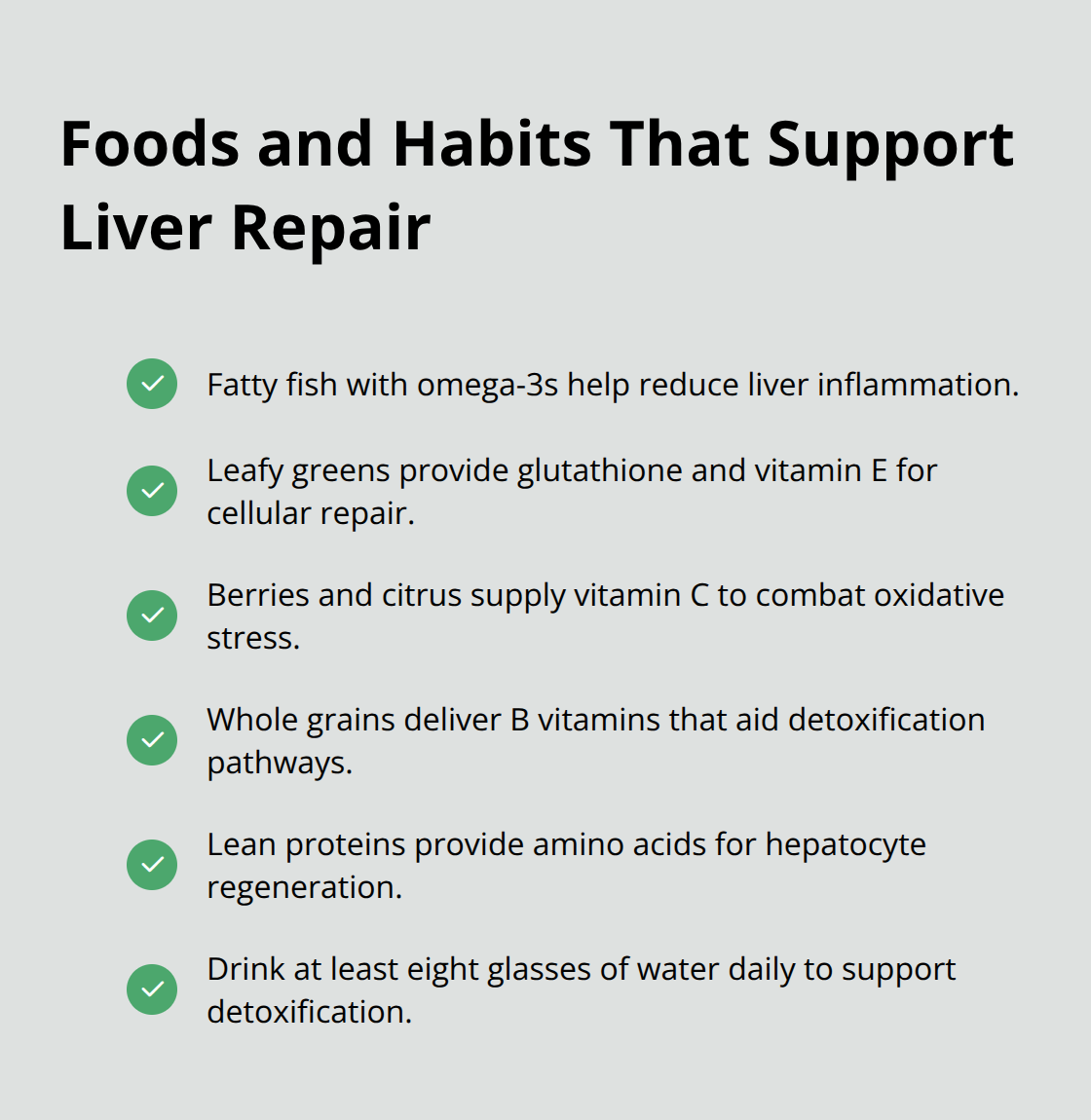
Hydration matters as much as food. You should drink at least eight glasses of water daily because dehydration slows your liver’s detoxification process. Replace sugary drinks and processed foods entirely, as obesity drives metabolic dysfunction-associated fatty liver disease, which may become increasingly prevalent. A registered dietitian can tailor a nutrition plan to your specific liver condition, whether you have fatty liver, hepatitis, or cirrhosis, because calorie and protein needs vary significantly based on disease stage.
Exercise Reduces Liver Fat and Inflammation
Physical activity accelerates liver healing by boosting circulation and reducing fatty deposits. Moderate exercise like walking or swimming for thirty minutes most days improves insulin sensitivity and lowers inflammation markers that damage your liver. Weight loss represents the most effective treatment for metabolic fatty liver disease, so you should combine regular movement with proper nutrition to create measurable results within weeks.
Sleep and Stress Control Healing Speed
Sleep quality matters equally because poor sleep elevates cortisol, which triggers inflammation and slows tissue repair. Try seven to nine hours nightly and establish a consistent bedtime routine because your liver performs most of its detoxification and regeneration during deep sleep stages. Stress management through mindfulness, yoga, or therapy reduces the inflammatory cascade that compounds liver damage.
These three elements work together, not separately. When you prioritize all three simultaneously, you produce better recovery outcomes than focusing on just one. Your next step involves understanding how medical professionals monitor this healing process and adjust your care plan as your liver function improves.
Medical Support and Tracking Your Liver Recovery
Your liver’s healing depends on accurate medical monitoring because what feels good internally doesn’t always match what’s happening at the cellular level. Liver enzyme tests reveal the true progress of your recovery and guide adjustments to your treatment plan.
How Liver Enzyme Tests Track Your Progress
Within two to four weeks of abstinence, your ALT, AST, and GGT levels typically drop significantly, signaling that inflammation is subsiding and liver cells are repairing themselves. These three enzymes serve as your primary recovery markers: ALT and AST indicate hepatocyte damage, while GGT reflects oxidative stress and bile duct inflammation. Your healthcare provider should order baseline tests immediately after you quit and then retest every four to eight weeks during your first year of recovery because the rate of improvement varies dramatically based on how much damage existed before you stopped.

If you have fatty liver, expect your enzymes to normalize within one month. If you have alcoholic hepatitis or fibrosis, recovery takes longer and requires more frequent monitoring. Your doctor may also order a complete metabolic panel to track kidney function, blood sugar, and nutritional status because substance use damages multiple organ systems simultaneously.
Advanced Imaging and Non-Invasive Testing
Transient elastography, sometimes called FibroScan, measures liver stiffness and scarring without requiring a biopsy. This non-invasive test helps your provider determine whether you have advanced fibrosis or cirrhosis and establish realistic recovery expectations. If imaging shows cirrhosis, you’ll need ultrasound screening for liver cancer every six months because cirrhotic livers have significantly elevated cancer risk. These tests aren’t optional-they’re your roadmap for understanding whether your body is actually healing or whether complications are developing silently.
Specialist Care Accelerates Recovery
Working with a hepatologist or gastroenterologist who specializes in liver disease accelerates your recovery because they understand which interventions work for your specific stage of liver damage. General practitioners often miss early-stage cirrhosis or misinterpret enzyme patterns, leading to delayed intervention. A specialist reviews your complete drinking or drug-use history, orders appropriate imaging and non-invasive fibrosis testing, and adjusts your nutrition and medication plan as your liver function improves.
Hepatitis Testing and Treatment
If you have hepatitis B or C (which affects roughly 50 percent of people with alcohol-related liver disease), early antiviral treatment prevents progression to cirrhosis. Hepatitis C now has highly effective oral medications with cure rates exceeding 95 percent when started early. Hepatitis B responds to oral antiviral therapy that suppresses viral replication and stabilizes liver function. Many people don’t know they carry these infections until screening reveals them after they quit drinking, making testing essential.
Coordinated Treatment for Optimal Outcomes
Substance abuse treatment and medical monitoring work best when they happen in parallel. Your counselor and your doctor need to communicate about your progress, medication interactions, and nutritional needs so your treatment plan stays coordinated. If withdrawal symptoms emerge or your liver function declines unexpectedly, your treatment team adjusts your approach immediately rather than waiting for your next scheduled appointment. This integrated approach produces measurably better outcomes than managing addiction and liver disease separately.
Final Thoughts
Your liver recovery after quitting isn’t a solo effort-the biological healing happens automatically once you stop drinking or using drugs, but your choices about nutrition, exercise, sleep, and medical care determine how complete that recovery becomes. Within weeks, your liver enzymes normalize and inflammation drops. Within months, fatty deposits clear and cellular function restores. The extent of your recovery depends on the damage you had before quitting, but abstinence stops further deterioration regardless of your starting point.
The long-term benefits extend far beyond liver health. People who maintain sobriety report sustained energy increases, clearer thinking, better digestion, and freedom from the health anxiety that active addiction creates. Your cardiovascular system stabilizes, your bones strengthen, and your risk of liver cancer drops dramatically. These improvements compound over years, transforming not just your physical health but your relationships, work performance, and sense of control over your life.
Professional support accelerates your recovery because specialists understand both addiction and liver disease simultaneously. Contact Addiction Resource Center today to connect with counselors and medical professionals who tailor substance abuse treatment programs to your specific needs and liver condition. Your liver is waiting to heal, and professional guidance makes that healing faster and more complete.