Explore how psilocybin therapy for addiction can support recovery through clinical research, safety guidelines, and practical treatment steps.

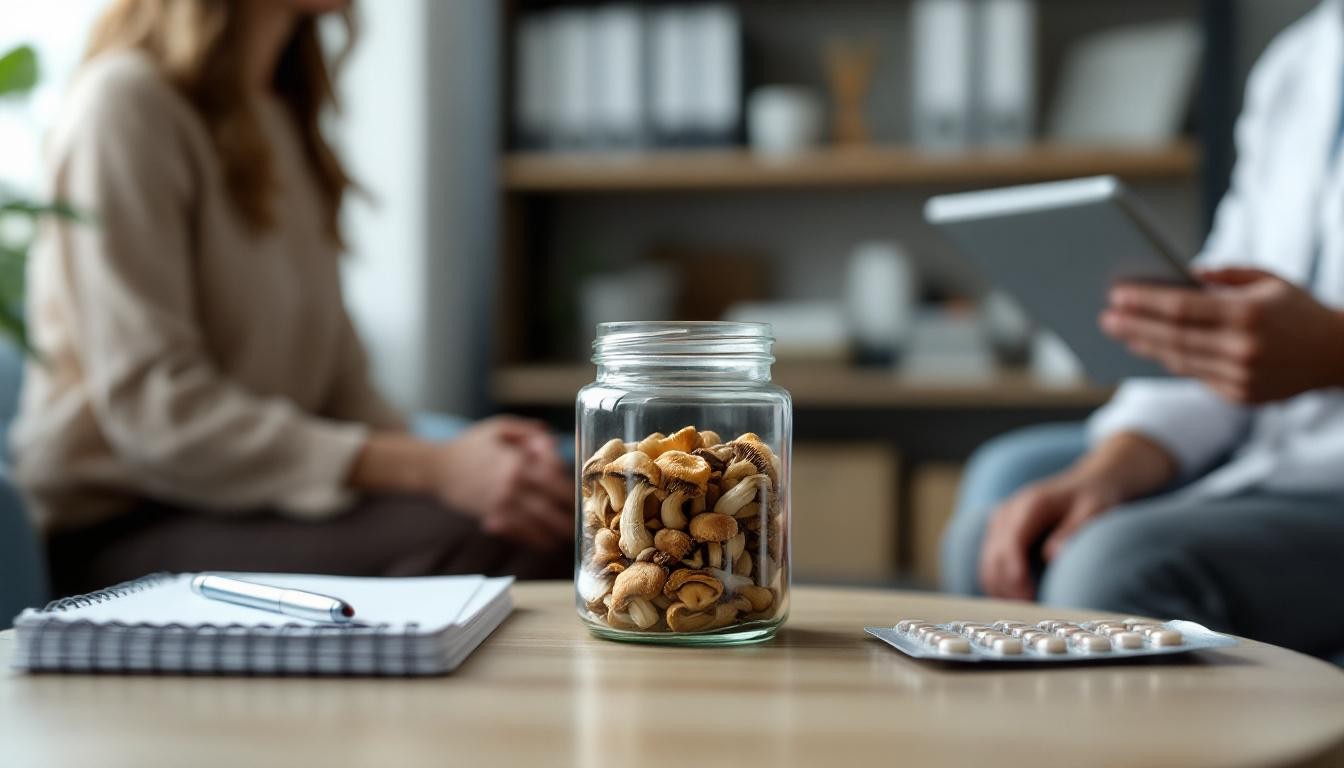
Psilocybin therapy for addiction is moving from fringe treatment to legitimate clinical option. Recent studies show promising results for people struggling with substance use disorders who haven’t responded to conventional approaches.
At Addiction Resource Center, we’re seeing growing interest in this emerging therapy. This guide walks you through what psilocybin-assisted treatment involves, how it works alongside traditional recovery programs, and what you need to know before considering it.
Understanding How Psilocybin Works in Addiction Recovery
What Psilocybin Is and How It Affects Your Brain
Psilocybin is a naturally occurring compound found in certain mushroom species. Your body converts it to psilocin once ingested, which binds to serotonin receptors in your brain, particularly the 5-HT2A receptor. This interaction fundamentally alters how your brain processes information and emotion. Brain imaging shows measurable changes in neural activity patterns that persist even after the drug wears off. Research from Johns Hopkins and Imperial College London demonstrates that psilocybin creates a window of neuroplasticity-your brain becomes temporarily more flexible and open to rewiring itself. For someone stuck in addiction patterns, this temporary shift matters enormously because it allows your mind to break free from deeply entrenched thought loops that typically resist change.
Real Results from Clinical Trials
The research on psilocybin for addiction is no longer theoretical. A 2022 randomized controlled trial published in JAMA Psychiatry followed 95 people with alcohol use disorder. Those who received psilocybin-assisted psychotherapy reduced their heavy drinking days by an average of 13.9 days over 32 weeks compared to those receiving placebo with therapy. For tobacco addiction, the data is even stronger. A Johns Hopkins study found that after psilocybin-assisted therapy, 67% abstinence at one year was achieved. Another tobacco trial reported similar results.

These results substantially exceed what most conventional treatments achieve. The World Health Organization reports that 39.5 million people globally meet criteria for substance use disorders, yet traditional approaches fail a majority of patients. Relapse rates exceed 65% for alcohol and opioid disorders within 12 months after standard treatment, which explains why alternative approaches deserve serious attention.
Legal Status and Your Access Options
Psilocybin remains a Schedule 1 controlled substance at the federal level, meaning it is illegal to possess or distribute outside of research settings in most places. However, the landscape is shifting. Oregon became the first state to legalize psilocybin-assisted therapy, launching its regulated psilocybin services program where licensed facilitators now provide supervised sessions. A handful of other jurisdictions have decriminalized psilocybin or created pathways for clinical research. The FDA granted breakthrough therapy designation to psilocybin-assisted psychotherapy for treatment-resistant depression in 2018 and major depressive disorder in 2019, signaling that federal agencies recognize the therapeutic potential. If you want legitimate psilocybin therapy, your realistic options are participating in an approved clinical trial or traveling to a jurisdiction where it is legal. Most trials are free or low-cost because they are research studies. The cost barrier exists primarily in states where private clinics have opened-some charge $3,000 to $5,000 per session, which is prohibitive for most people. Insurance does not cover psilocybin therapy yet, though that may change as more evidence accumulates and regulatory status shifts. Understanding these legal and financial realities shapes what you can actually access right now, which is why the preparation phase of psilocybin-assisted therapy requires careful planning and professional guidance.
What Happens During Psilocybin-Assisted Therapy
The Preparation Phase: Screening and Readiness Assessment
Psilocybin-assisted therapy is not a single session where you take a pill and expect results. The clinical model consists of three distinct phases, and success depends entirely on how seriously you approach each one. The preparation phase typically spans 2 to 8 weeks before your actual therapy session.

During this time, trained clinicians conduct thorough screening to identify whether you are a suitable candidate. This screening is not perfunctory-it includes detailed psychiatric evaluation because psilocybin is contraindicated for people with active psychosis, uncontrolled bipolar disorder, or certain cardiovascular conditions.
You will discuss your substance use history, past trauma, current medications, and family psychiatric history. This matters because some antidepressants interact with psilocybin, and stopping them abruptly creates its own risks. The screening also assesses your motivation and readiness for change, which research shows predicts better outcomes. You will attend multiple preparatory sessions where therapists explain what to expect, address your fears directly, and establish rapport. Research on therapeutic alliance in psilocybin-assisted therapy shows that your relationship with your therapist and your genuine commitment to change are strong predictors of positive outcomes.
The Guided Therapy Session: What Occurs During Treatment
The actual therapy session typically lasts 4 to 8 hours and occurs in a carefully designed clinical setting. You receive an oral dose of psilocybin, usually between 20 and 30 mg depending on body weight and individual factors, under direct medical supervision. The environment is critical-comfortable furniture, soft lighting, calming music, and eye masks are standard because the physical setting directly influences your psychological experience. Two trained facilitators remain present throughout the session to provide emotional support and manage any acute anxiety.
During the experience, you focus inward rather than interact extensively, though therapists intervene if you become distressed. Neuroimaging from trials shows that psilocybin decreases connectivity within the default mode network and increases global brain connectivity, creating the window of opportunity that makes lasting change possible.
Integration: Translating Experience Into Lasting Change
After the session wears off, the real work begins. Integration sessions over the following weeks translate your experience into lasting behavioral change. This is where psilocybin therapy succeeds or fails. Integration involves structured conversations with your therapist about what you experienced, how it shifted your perspective on your addiction, and what concrete changes you will make. Research indicates that meaningful or mystical experiences during the session predict better long-term abstinence, but only when followed by rigorous integration work.
Without integration, the experience fades and relapse risk remains high. Most clinical programs include 8 to 12 integration sessions, though this varies. You may also engage in journaling, mindfulness practices, and participation in support groups. The entire process from screening through final integration typically spans 4 to 6 months, and it demands consistent effort and honesty about your struggles. This foundation of preparation, guided experience, and structured integration sets the stage for combining psilocybin therapy with the evidence-based addiction programs that form the backbone of sustainable recovery.
Combining Psilocybin Therapy with Traditional Treatment
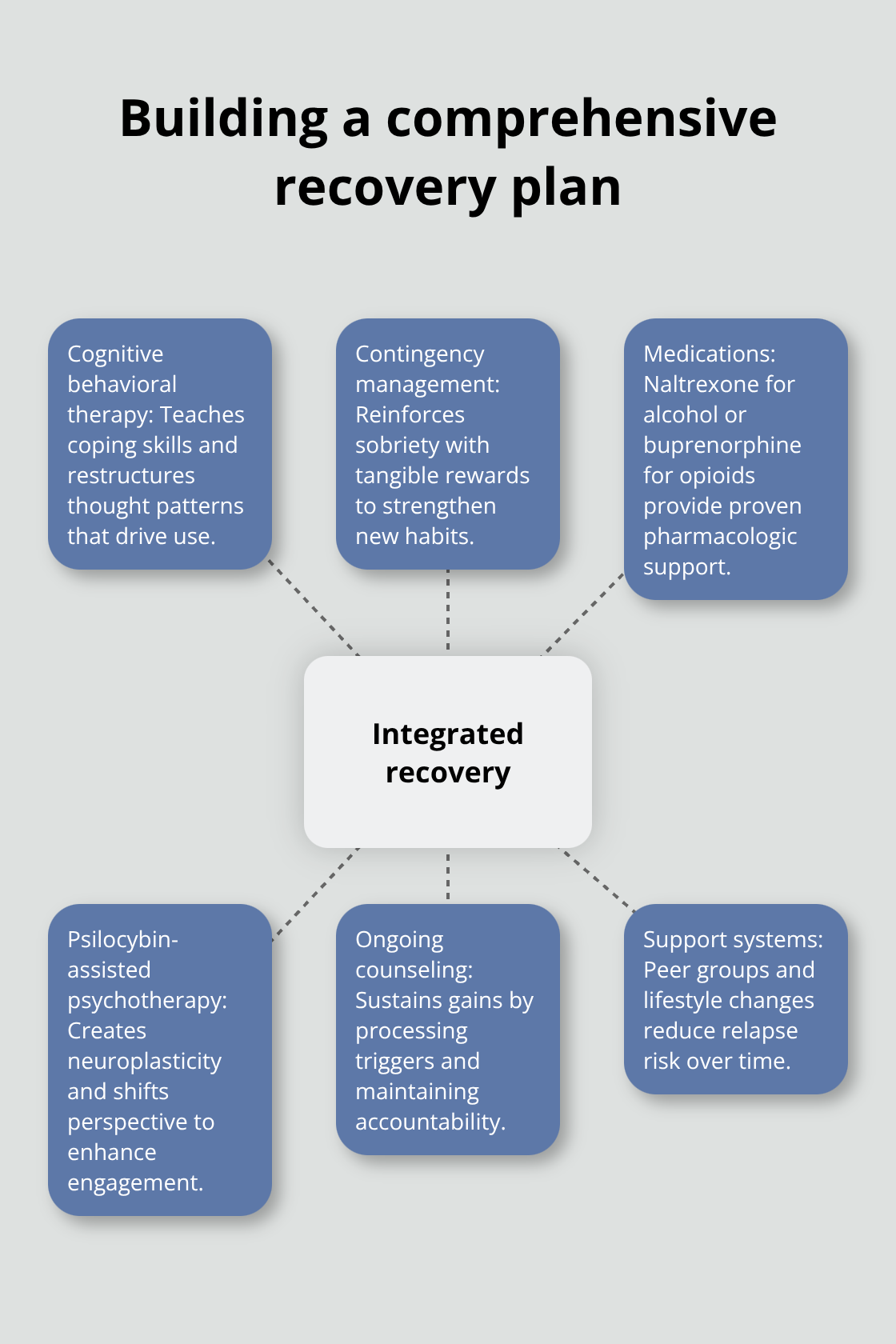
Psilocybin therapy is not a replacement for evidence-based addiction treatment-it is an addition to it. This distinction matters enormously because relapse prevention depends on layering multiple therapeutic approaches rather than relying on any single intervention. Cognitive behavioral therapy, contingency management, and approved medications like naltrexone for alcohol use disorder or buprenorphine for opioid addiction remain the foundation of effective recovery. Psilocybin-assisted psychotherapy amplifies what these treatments accomplish by creating neuroplasticity and shifting your psychological perspective on addiction, but it does not eliminate the need for ongoing counseling, behavioral strategies, or pharmacological support when appropriate.
How Psilocybin Complements Evidence-Based Programs
A 2022 randomized trial in JAMA Psychiatry found that psilocybin reduced heavy drinking days by 13.9 days over 32 weeks when combined with structured psychotherapy. The researchers did not isolate psilocybin as standalone treatment. Most clinical psilocybin programs incorporate psychotherapy integration throughout 62.5 percent of sessions, meaning the therapy component is intentionally woven throughout your care. This means if you pursue psilocybin-assisted therapy, you must simultaneously maintain or establish traditional addiction treatment. Stopping counseling sessions or discontinuing medications because you participated in psilocybin therapy is counterproductive and increases relapse risk significantly.
Coordinating Your Treatment Team
Your therapists and counselors need to communicate directly about your psilocybin treatment so they can adjust your overall plan accordingly. Some medications interact with psilocybin, and certain psychiatric conditions require careful monitoring before and after your therapy session. Your addiction counselor should know the dosage, timing, and expected outcomes so they can reinforce insights from the psilocybin experience during regular counseling sessions. Substance abuse treatment programs that understand psychedelic-assisted therapy and can integrate it into your existing recovery plan are rare, which is why finding the right treatment provider requires intentionality and research into their experience with multimodal approaches.
Building Your Comprehensive Recovery Plan
Building your comprehensive recovery plan means identifying which evidence-based treatments address your specific substance use pattern and then determining whether psilocybin-assisted therapy could meaningfully augment those treatments. For alcohol use disorder, the strongest evidence supports psilocybin-assisted psychotherapy combined with motivational enhancement therapy or cognitive behavioral therapy. For tobacco addiction, psilocybin shows particular promise, with 38% achieving sustained smoking cessation after using psychedelics, but this still requires ongoing behavioral support and sometimes nicotine replacement therapy during the transition period. For opioid use disorder, cocaine use disorder, and methamphetamine addiction, the evidence remains preliminary and inconsistent, which means psilocybin therapy is not yet a reliable component of treatment for these substances.
Your recovery plan should specify concrete milestones: when you will start traditional counseling, when your psilocybin-assisted therapy will occur relative to other treatments, how many integration sessions you will complete, and what measurable outcomes you are targeting. Research from Johns Hopkins and clinical practice guidelines emphasize that candidate factors predicting better outcomes include genuine motivation, readiness to change, strong therapeutic alliance with your treatment team, and absence of severe uncontrolled psychiatric conditions. If you struggle with active psychosis, severe bipolar disorder, or unmanaged trauma, address those conditions first through conventional mental health treatment before pursuing psilocybin therapy.
Sustaining Recovery Beyond the Therapy Window
A comprehensive recovery plan includes ongoing support after your psilocybin sessions end-most relapse occurs months after initial treatment concludes, so your plan must extend beyond the therapy window. Support groups, continued counseling, peer accountability, and lifestyle changes that reinforce your commitment to sobriety form the practical backbone of sustained recovery. Psilocybin creates the window of opportunity; your consistent effort in traditional addiction treatment seals that window closed against relapse.
Final Thoughts
Psilocybin therapy for addiction represents a meaningful option for people whose recovery has stalled with conventional approaches, but it is not a shortcut and it is not for everyone. The evidence is clearest for alcohol and tobacco use disorders, where clinical trials demonstrate measurable reductions in heavy drinking days and sustained smoking abstinence rates that exceed standard treatment outcomes. These results depend entirely on three conditions: rigorous screening to confirm you are medically and psychiatrically suitable, integration of psilocybin therapy into a comprehensive treatment plan that includes evidence-based counseling and behavioral support, and your genuine commitment to the difficult work of sustained recovery.
Before you pursue psilocybin-assisted therapy, understand that you must pass screening for contraindications like active psychosis, uncontrolled bipolar disorder, or cardiovascular conditions that make the experience unsafe. You need access to a qualified clinical program with trained facilitators and integration therapists, which currently means either enrolling in an approved research trial or traveling to a jurisdiction where it is legal. The entire process from screening through integration spans four to six months and demands consistent effort, with most people unable to afford private clinics charging thousands per session since insurance does not yet cover this treatment.
Psilocybin therapy works because it creates temporary neuroplasticity that allows your brain to break free from entrenched addiction patterns, but that window closes without rigorous follow-up. Your recovery depends on what you do after the therapy session ends: continuing counseling, maintaining behavioral strategies, and building a life that reinforces sobriety rather than undermines it. If you are considering psilocybin therapy for addiction as part of your recovery, start by connecting with an addiction treatment provider who understands multimodal approaches-visit Addiction Resource Center to explore how comprehensive outpatient addiction treatment can support your journey toward lasting recovery.