Explore how sober living homes for couples support joint recovery with structure, community accountability, and lasting sobriety together.


Addiction and substance abuse often strain relationships, but recovery doesn’t have to mean doing it alone. Sober living homes for couples offer a structured environment where both partners can heal together while maintaining accountability and support.
At Addiction Resource Center, we recognize that couples facing addiction need specialized care that addresses both individual recovery and relationship health. This guide walks you through what to expect, the real advantages, and how to find the right facility for your situation.
What Couple-Focused Sober Living Actually Means
Sober living homes for couples are residential environments where both partners live substance-free while rebuilding their relationship and maintaining recovery. Unlike inpatient rehab, which typically lasts 28 to 90 days, sober living provides a longer transition period-most residents stay between 5 to 8 months, according to research on recovery outcomes. This extended timeframe matters because it allows couples to practice sobriety in daily life without the intensity of medical supervision. The primary rule across all couple-focused homes is absolute abstinence from drugs and alcohol, enforced through random drug testing and regular attendance at support meetings like Alcoholics Anonymous or other peer groups. Residents typically pay rent ranging from $500 to $5,000 per month, maintain employment or attend school, complete household chores, and follow curfews.
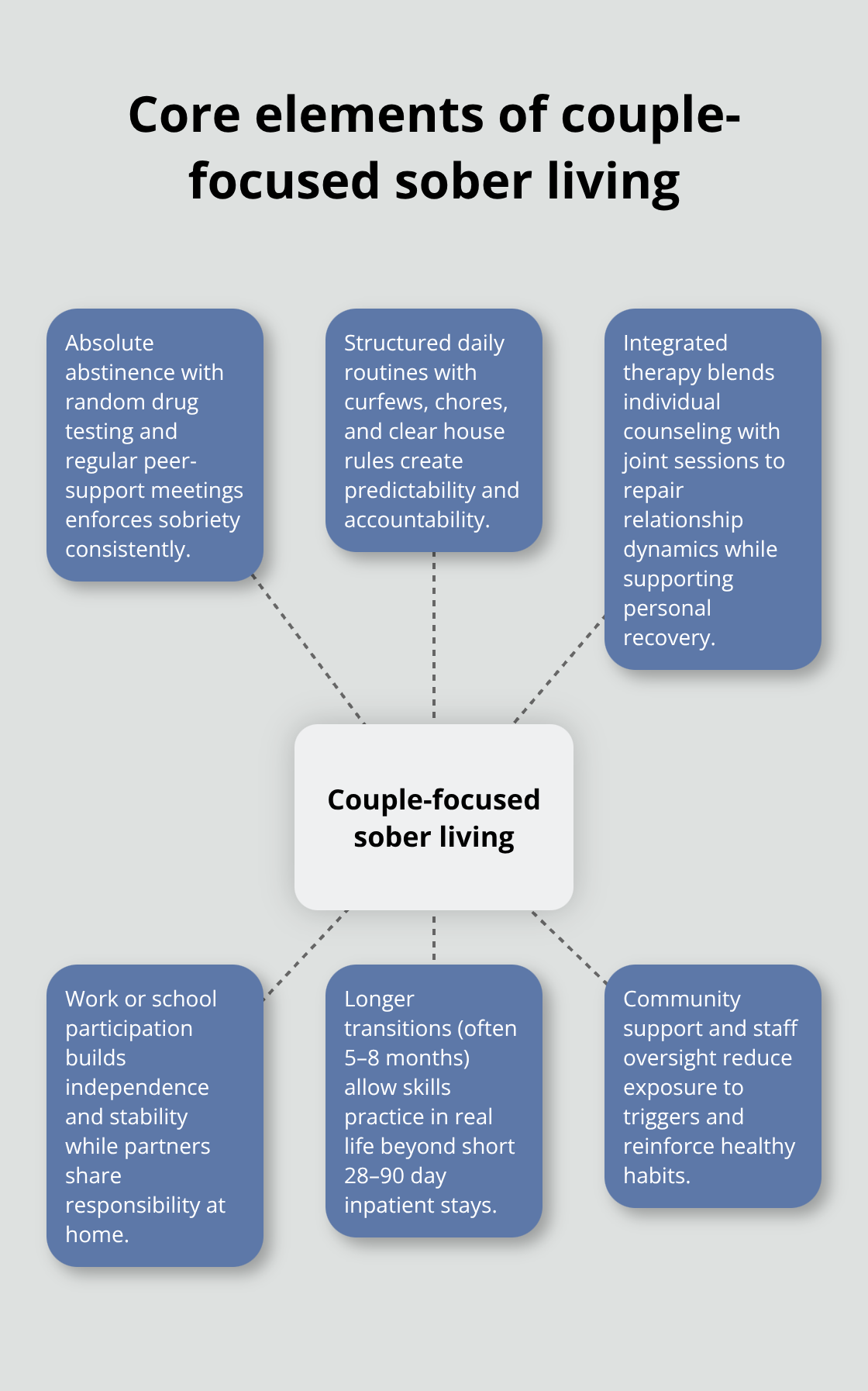
What separates couple-focused homes from traditional facilities is the deliberate pairing of recovery work-both partners attend individual therapy while also participating in joint counseling sessions designed to address relationship dynamics that either contributed to addiction or were damaged by it.
Why Couples Need Different Support Than Individuals
Standard sober living homes operate on the assumption that isolation from triggers accelerates recovery. For couples, that isolation becomes complicated because your partner is simultaneously your greatest support system and a potential trigger. Couple-focused facilities acknowledge this reality by structuring programs that teach healthy boundaries, communication skills, and mutual accountability within the same residence. Research from Ethos Recovery, which operates an all-male sober living home in West Los Angeles, shows that residents who stay longer than a year report reduced depression and anxiety alongside improved family relations and employment outcomes. The structured environment prevents couples from enabling each other’s relapse while creating daily opportunities to practice sober routines together-cooking meals, managing finances, attending work or school, and handling conflict without substances. This matters because couples who recover separately often struggle to reconnect when one partner has progressed further in sobriety than the other. Living together in a structured setting levels that playing field and forces both people to address relationship issues head-on rather than postponing difficult conversations until discharge.
How Structure Prevents Relapse Risk
Couple-focused homes remove external triggers by physically separating residents from dealers, using friends, and environments associated with active addiction. Residents cannot leave at will; curfews are enforced, visitors are screened, and phone or internet access may be restricted to minimize contact with people or situations that could derail recovery. This controlled environment is not punishment-it’s preventative. Data shows that relapse risk drops significantly after the first year of sobriety. The structure of sober living homes bridges the gap between that vulnerable early period and long-term stability. Counselors tailor treatment plans specifically for couples, incorporating joint activities that promote mutual accountability while maintaining individual recovery work. The daily routine-chores, meals, meetings, therapy appointments-creates predictability that reduces stress and anxiety, two major relapse triggers for people in recovery. These practical elements form the foundation that allows couples to move forward into the advantages section, where we explore how shared recovery actually strengthens both individual healing and relationship bonds.
Why Couples Stay Sober Together Better Than Apart
Shared Responsibility Creates Real Motivation
Recovering alongside your partner in a sober living home fundamentally changes how both of you approach sobriety. When couples share the same residential space under structured rules, they cannot avoid difficult conversations or postpone addressing relationship damage caused by addiction. This forced proximity, paired with professional guidance, accelerates healing in ways that separate recovery cannot match. One partner cannot progress to a more advanced stage of sobriety while the other lags behind because both residents follow the same daily schedule, attend the same support meetings, and work with counselors on joint recovery goals. This alignment prevents the common problem where one person feels abandoned or resentful when their partner recovers faster or slower.
Couples living together in sober homes experience what researchers call mutual accountability, meaning both partners have skin in the game. If one person violates house rules or tests positive for substances, both face consequences including potential eviction. This shared responsibility creates real motivation to support each other’s sobriety because failure is not an individual problem but a shared one. These outcomes stem directly from practicing daily life sober together-managing finances, cooking meals, resolving conflicts without substances, and rebuilding trust through consistent behavior over months rather than days.
Professional Counseling Works on Two Levels
Professional counseling in couple-focused homes operates on two distinct levels that individual therapy cannot replicate. Individual sessions address personal trauma, mental health issues, and individual recovery needs, while joint sessions focus specifically on relationship dynamics that either contributed to addiction or were damaged by it. Counselors teach couples concrete communication techniques for handling disagreements, setting healthy boundaries that prevent enabling, and recognizing early warning signs of relapse in each other. These skills are not theoretical; residents practice them immediately in their shared living space.

When one partner feels triggered or stressed, the other can recognize it and offer support or encourage attendance at an additional support meeting. Financial planning happens jointly in many programs, with counselors helping couples create budgets and employment plans that support long-term stability after discharge. Sober living facilities typically cost between $500 to $5,000 per month depending on location and amenities, and couples often split costs, reducing individual financial burden. Most health insurance does not cover housing costs, but many facilities offer payment plans or sliding-scale fees based on income.
Environmental Reset Removes Addiction Triggers
The structure of couple-focused homes removes couples from the environments where they used together, eliminating the specific triggers and routines that reinforced their addiction cycle. Living in a new location with unfamiliar neighborhoods, new routines, and a peer community of people committed to sobriety creates genuine separation from past patterns without requiring the couple to separate from each other. This environmental reset matters because couples who recover in the same location where they used face constant reminders of their addiction-specific streets, stores, or social circles that trigger cravings. Sober living homes physically interrupt that pattern while keeping both partners together to support each other through the transition.
The daily structure also prevents couples from falling back into old relationship patterns that enabled substance use. Shared meals, household responsibilities, and mandatory meeting attendance create new routines that neither partner controlled before. These practical elements form the foundation for understanding what to look for when selecting the right facility, which determines whether a couple-focused home will actually support your specific recovery needs and relationship dynamics.
Finding the Right Sober Living Home for Your Recovery as a Couple
Evaluate Whether the Facility Truly Supports Couples
Selecting a sober living home for couples requires assessing specific factors that directly impact whether the facility will support your recovery goals and relationship health. The most critical decision point is whether the facility explicitly welcomes couples and has structured programs designed for joint recovery rather than simply housing two individuals under the same roof. Many traditional sober living homes discourage couples from living together or require them to maintain separate rooms with restricted interaction, which undermines the relationship-focused recovery model that makes couple-based programs effective.
When you contact a facility, ask directly whether they offer couple-specific programming, joint counseling sessions with trained relationship therapists, and staff experience managing couples in early recovery. Red flags include homes with no written house rules, staff who cannot explain their approach to couple dynamics, or facilities that treat couples as a logistical problem rather than a recovery opportunity.
Assess the Physical Environment and Location
The physical environment matters significantly for your recovery success. Visit the facility in person and assess whether common areas encourage interaction and support, whether bedrooms provide adequate privacy, and whether the neighborhood itself supports recovery with access to employment, grocery stores, public transportation, and healthcare. A location far from your previous using environment is preferable because it removes geographic triggers and prevents accidental encounters with people or places tied to your addiction.
Research shows that environmental change supports long-term sobriety when combined with structured programming. The neighborhood you choose affects your daily routines and your exposure to relapse triggers, so do not underestimate location importance.
Understand Costs and Payment Options
Cost transparency must be established before admission because financial stress is a major relapse trigger for couples trying to rebuild stability. Typical monthly rent ranges from $500 to $5,000 depending on location, amenities, and included services like meals or utilities, but you need itemized breakdowns of exactly what is covered and what costs extra.
Health insurance rarely covers housing costs, though some plans may cover therapy or counseling services separately through outpatient providers, so verify your coverage before applying. Ask whether the facility offers payment plans, sliding-scale fees based on income, or connections to scholarships and charitable assistance programs-many reputable homes do.
Clarify Length of Stay and House Policies
Length of stay directly correlates with success rates; homes that encourage stays of 6 months or longer produce better outcomes than shorter-term programs, so clarify expectations around minimum stay and what happens if one partner needs to leave early. Before admission, request written policies on what happens if one person violates house rules, whether the facility offers second chances for genuine sobriety violations, and how they handle relationship conflicts that arise during residence.
Plan for Life After Discharge
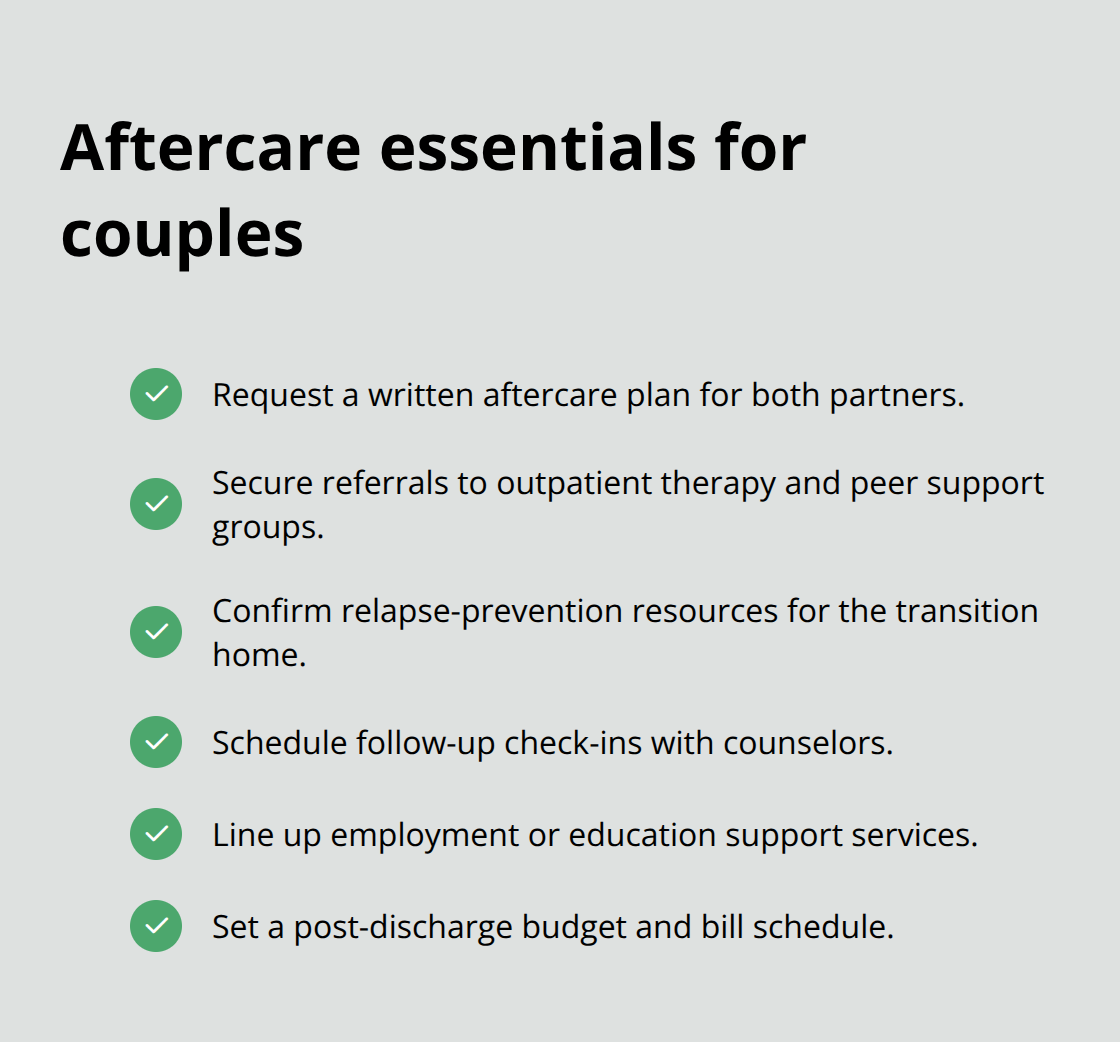
Ask about aftercare planning-how the facility prepares couples for independent living after discharge, whether they provide referrals to ongoing therapy or support groups, and what resources they offer to prevent relapse during the transition home. Couples who have clear discharge plans and connections to continued professional support maintain sobriety at significantly higher rates than those who leave with no follow-up structure.
Strengthening Your Relationship and Sobriety Together
Sober living homes for couples work because they address a reality that individual recovery cannot: addiction damages relationships, and healing those relationships strengthens sobriety. Couples who stay in these environments practice recovery together daily, learning to communicate without substances, rebuild trust through consistent behavior, and support each other through early sobriety’s inevitable challenges. The structure removes external triggers while professional counseling addresses the relationship dynamics that either contributed to addiction or were damaged by it.
Couples who remain in sober living homes for couples for six months or longer report improved family relations, reduced depression and anxiety, and better employment stability. They learn concrete skills like boundary-setting and financial planning that extend far beyond discharge, and they avoid the common problem where one partner progresses faster in recovery while the other feels abandoned. Most importantly, they establish routines and habits that become the foundation for long-term stability.
Taking the next step means contacting facilities that explicitly support couples, visiting in person, and asking direct questions about their approach to relationship recovery. Verify costs upfront, clarify house policies, and confirm that aftercare planning is part of their discharge process. We at Addiction Resource Center understand that recovery works best when both partners commit to the same goal, and we offer personalized addiction therapy and substance abuse counseling designed to support your specific recovery needs-contact us today to discuss how we can support your recovery journey.