Learn how interpersonal group therapy for addiction helps you build recovery skills and rebuild relationships with others.


Addiction doesn’t thrive in isolation-it feeds on shame and secrecy. When you sit in a room with others fighting the same battle, something shifts.
At Addiction Resource Center, we’ve seen interpersonal group therapy for addiction transform lives because it combines professional guidance with the raw power of peer connection. This blog post walks you through exactly how group therapy works, why it works, and how to find a program that fits your recovery.
What Interpersonal Group Therapy Actually Does
Interpersonal group therapy for addiction rests on a straightforward premise: substances mask relational pain. When someone drinks or uses drugs, they often medicate discomfort that stems from how they connect with others-conflict, rejection, loneliness, or unmet needs. Interpersonal group therapy addresses this directly. Instead of treating addiction as an isolated brain problem, it treats it as a relationship problem. The therapy happens in real time, in a room with peers, where members learn to sit with uncomfortable emotions and work through them together rather than numbing them.
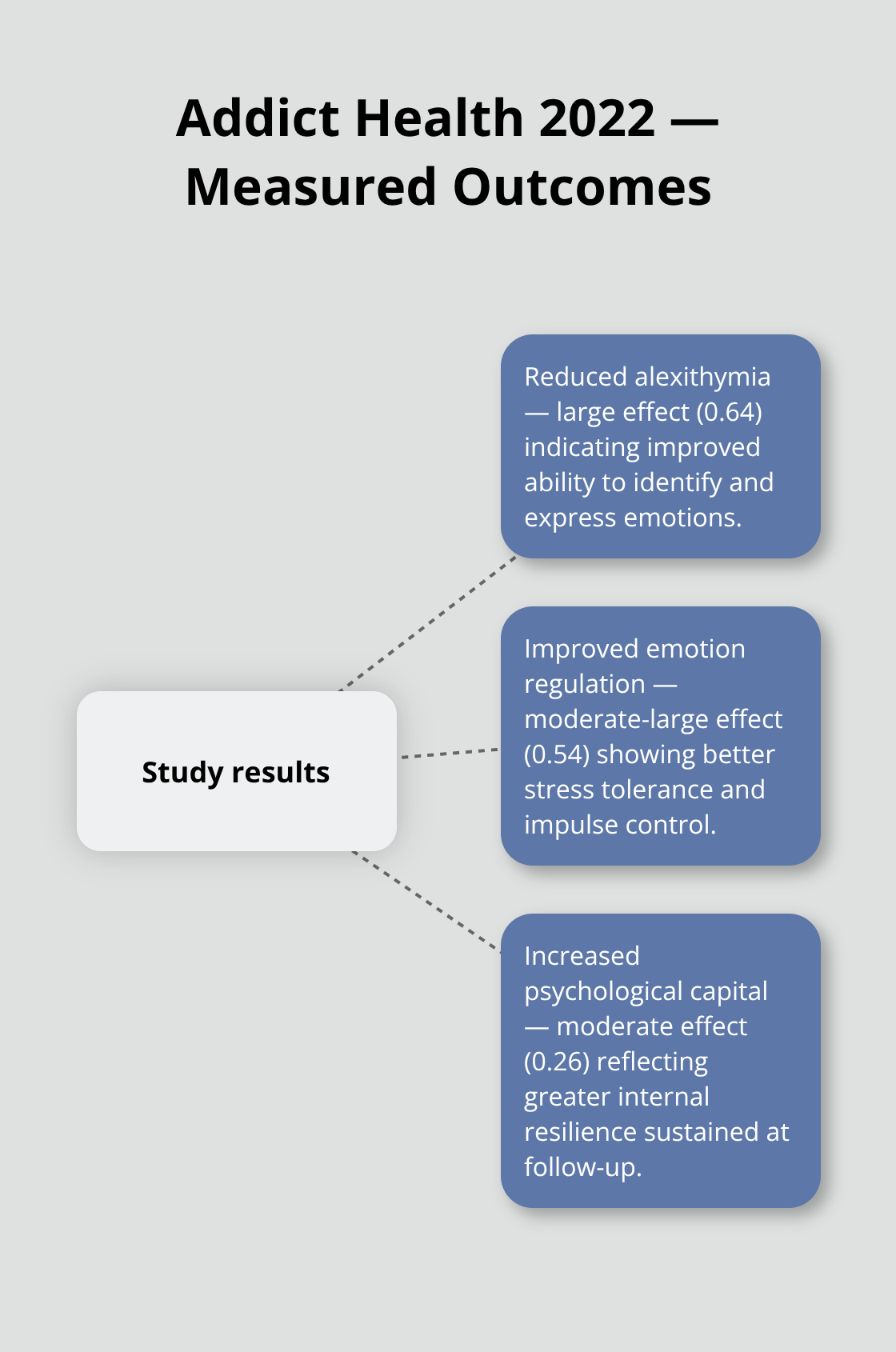
Research from the Addict Health 2022 study showed that group members who received interpersonal therapy for 12 sessions reduced alexithymia with a large effect size of 0.64, improved emotion regulation with an effect size of 0.54, and increased psychological capital with gains sustained at six-week follow-up. These aren’t theoretical improvements-they translate to people who actually tolerate stress without reaching for a substance.
How tension becomes treatment
What separates this from sitting in a circle and talking about feelings is the therapist’s approach. The therapist maintains what’s called a light touch, intervening mainly to clarify how members relate to one another rather than controlling what gets discussed. When tension arises in the group-and it will-that tension becomes the treatment itself. Someone feels dismissed by another member, calls it out, receives feedback, and learns to navigate conflict without withdrawal or aggression.
The Interpersonal Relapse Prevention approach frames relapse prevention as restoring healthy relationship patterns through this experiential work. Members set relational goals within the group and transfer those skills to outside interactions. A 12-week program in early recovery typically involves addressing resistance, using constructive feedback, and guiding discussions through interpersonal conflicts as they emerge.
The power of group attunement
Group attunement-where leaders focus on how members relate to one another-becomes the core healing mechanism. This focus on relational dynamics (rather than individual symptom management) shifts how people recover. Individual therapy cannot replicate this. One-on-one work with a therapist helps, but it doesn’t expose you to the friction and feedback that rewires how you relate to others. The group itself becomes the laboratory where new relationship skills develop and old patterns surface for examination.
How Interpersonal Group Therapy Works in Practice
Building Trust Through Structure and Consistency
Trust does not materialize because a therapist declares the space safe. It builds through repeated, structured interactions where people experience being heard without judgment and witness others do the same. The first sessions of interpersonal group therapy feel uncomfortable for most people-silence stretches, eye contact wavers, vulnerability feels risky. That discomfort is intentional. Therapists create consistency through regular meeting times, clear confidentiality agreements, and transparent group norms. When members show up week after week and witness peers share difficult truths without shame, the nervous system begins to relax.
The Addict Health 2022 study tracked 12 weekly sessions of 90 minutes each, and participants completed the full program because the structure reduced uncertainty. Practical safety comes from knowing exactly when the group meets, how long it runs, and what to expect. A therapist might start early sessions with structured check-ins where each person shares one thing from the past week in two minutes. This format gives anxious members a predictable framework and prevents dominant voices from controlling airtime.
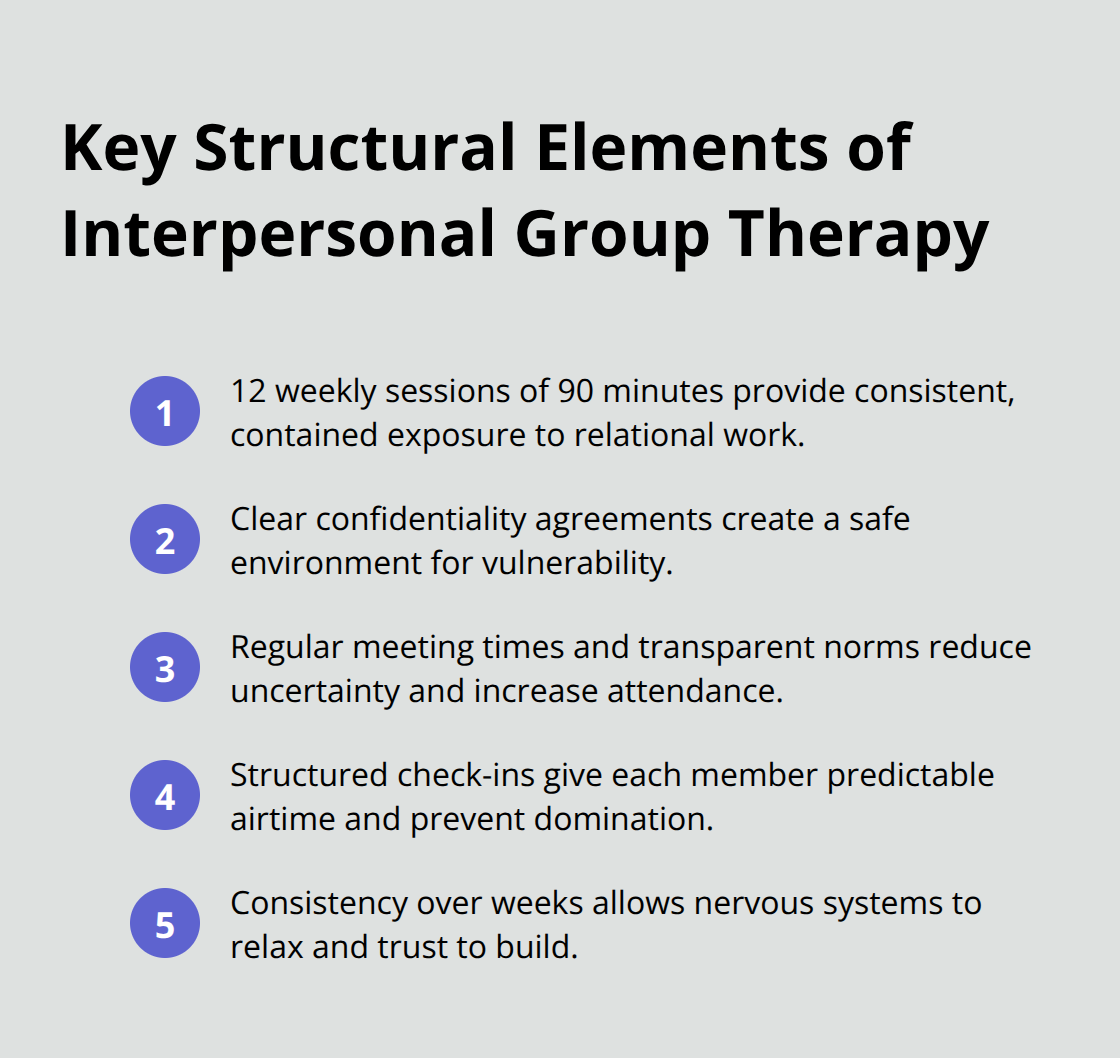
Confidentiality must be non-negotiable-members need explicit assurance that what they share stays in the room. Some programs use written confidentiality agreements that everyone signs. Others have the therapist review the rule at the start of each session. Without this foundation, people protect themselves by staying surface-level, and the therapy stalls.
How Interpersonal Feedback Rewires Relational Patterns
The actual work happens when someone expresses frustration toward another group member, and instead of the therapist swooping in with interpretation, they pause and ask the person receiving feedback what they heard. That moment-where someone learns to sit with criticism, clarify their intent, and respond without defensiveness-rewires the relational patterns that fueled substance use.
A therapist trained in interpersonal process groups (as outlined by Irvin Yalom’s model) watches three simultaneous dynamics: how individual members behave, how they interact with each other, and how the group functions as a whole. When tension surfaces, the therapist might say, “I notice Sarah just challenged Michael, and Michael went quiet. What happened for you, Michael?” This focuses attention on the relational process rather than the content of the argument. Members practice tolerating discomfort in real time instead of leaving the room or numbing.
Over 12 weeks, people develop emotional tolerance they transfer directly to daily life-they can now handle disagreement with a partner, frustration at work, or rejection without reaching for substances.
The Therapist’s Role as Facilitator, Not Expert
The therapist maintains a light touch, resisting the urge to fix conflict or protect members from friction. The therapist’s role shifts from expert to facilitator, pointing out patterns and creating space for members to discover solutions together. This approach demands specialized training; therapists cannot simply apply general group facilitation skills. The difference between a skilled interpersonal group therapist and an untrained facilitator determines whether the group becomes a healing environment or devolves into venting sessions.
As weeks progress and people acclimate to the structure, the framework loosens and deeper work emerges. Members set relational goals within the group and transfer those skills to outside interactions. The group itself becomes the laboratory where new relationship skills develop and old patterns surface for examination. What separates this from sitting in a circle and talking about feelings is the therapist’s focus on how members relate to one another rather than controlling what gets discussed. When tension arises in the group-and it will-that tension becomes the treatment itself. Someone feels dismissed by another member, calls it out, receives feedback, and learns to navigate conflict without withdrawal or aggression.
This relational focus (rather than individual symptom management) shifts how people recover. One-on-one work with a therapist helps, but it does not expose you to the friction and feedback that rewires how you relate to others. The group attunement-where leaders focus on how members relate to one another-becomes the core healing mechanism. Understanding these dynamics prepares you to recognize what to look for when you evaluate a program.
What People Actually Gain From Group Therapy
Interpersonal group therapy produces measurable shifts that extend far beyond the therapy room.
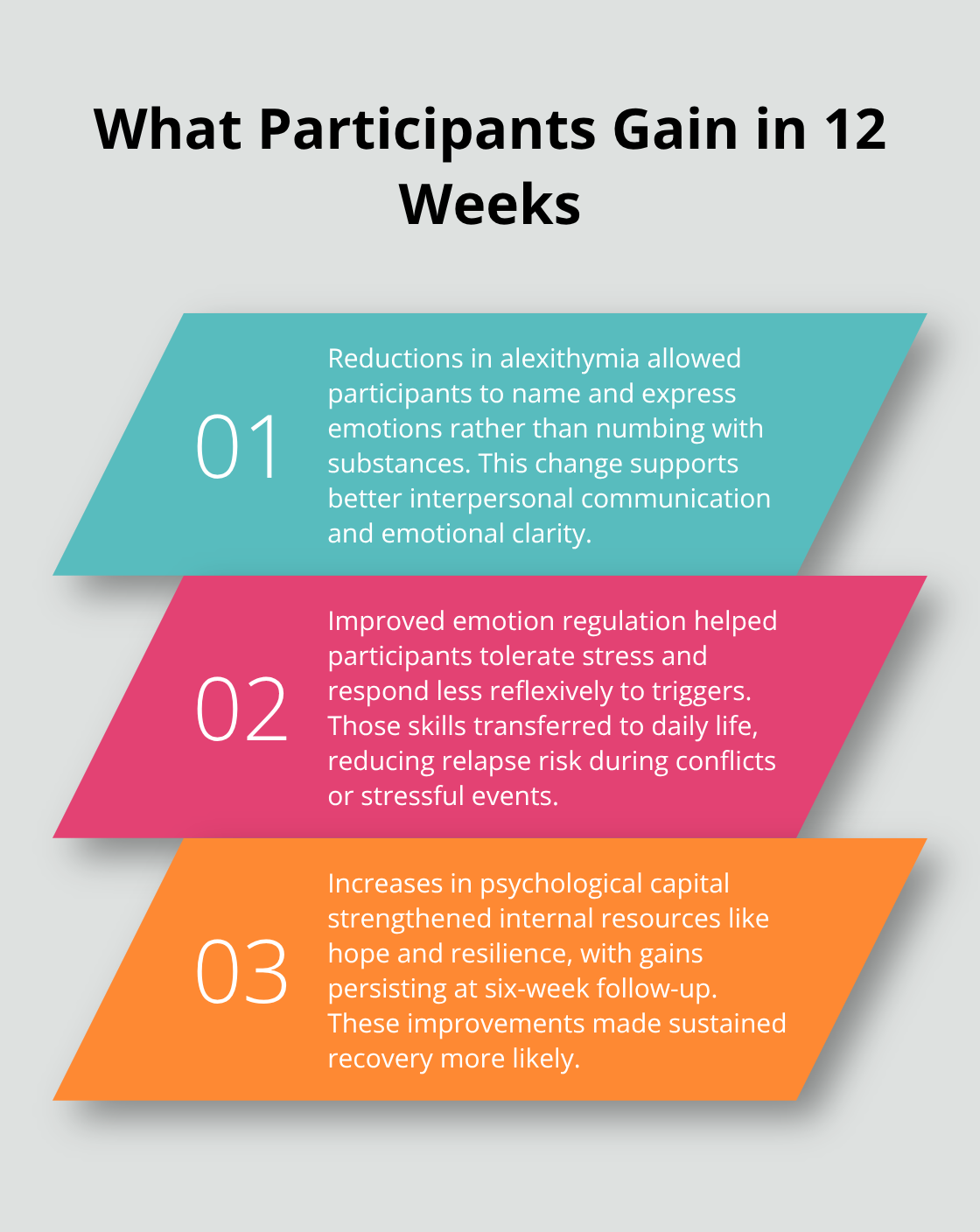
The Addict Health 2022 study tracked 50 male substance abusers across 12 weekly sessions and found that participants showed significant reductions in alexithymia-the inability to identify and express emotions-with an effect size of 0.64. Group members left sessions with greater emotional clarity and the ability to name what they felt instead of self-medicating when feelings became unbearable. Emotion regulation improved with an effect size of 0.54, and these gains persisted at the six-week follow-up, indicating that skills transferred into daily life. Psychological capital-the internal resources people draw on to handle adversity-increased with a moderate effect size of 0.26. These metrics translate to real outcomes: someone who can sit in traffic without rage, receive criticism without shame spiraling into relapse, or handle rejection without isolating.
How Peer Connection Replaces Isolation
The SAMHSA Treatment Improvement Protocol notes that group therapy can be as effective as individual therapy for substance abuse, and in many cases more beneficial because peers understand the struggle in a way therapists cannot, even with decades of training. Witnessing others move through recovery stages creates hope that feels real, not manufactured. When you watch someone two months sober handle a conflict without using, your brain registers possibility. The group becomes a mirror where members see themselves reflected in others’ progress and setbacks.
Accountability That Comes From Peers
The accountability that emerges naturally in groups operates differently than external pressure. Members commit to each other, not to a treatment plan or a court order. Someone notices when you miss a session and asks where you went. Someone calls out defensive patterns you’ve run for years. Someone celebrates when you set a boundary with a family member who has always controlled you. This peer accountability has teeth because it comes from people who’ve also failed, relapsed, and climbed back up.
Sustained Recovery Through Relational Repair
Long-term sobriety outcomes improve when people stay connected to group work beyond the initial 12-week program. Research from Project MATCH, a major study comparing addiction treatment approaches, found that relapse remains common, but relapse-prevention groups-which operate on interpersonal principles-showed sustained benefit versus no treatment at all. Substances filled a relational void, and recovery must rebuild how people connect. Sitting alone at home after treatment ends, isolation creeps back. Members who continue attending groups or transition to ongoing interpersonal work maintain the relational skills that keep them sober. A person who learned to tolerate conflict in group sessions now handles workplace tension without self-medicating. Someone who practiced receiving feedback without shutting down can now have difficult conversations with a partner. The group becomes an external structure that prevents the relational deterioration that typically precedes relapse (and relapse prevention becomes relational repair). For those seeking treatment, programs that integrate interpersonal group therapy as a core component-rather than an optional add-on-show better retention and lower dropout rates. The structure, the peers, and the focus on how people relate to one another create conditions where recovery actually sticks.
Why Interpersonal Group Therapy is Essential for Recovery
Interpersonal group therapy for addiction works because it treats the relational wounds that substances mask. The research shows that people who engage in structured group work develop measurable improvements in emotional awareness, stress tolerance, and psychological resilience that persist weeks after treatment ends. These gains matter because they translate to real life-someone who learns to sit with conflict in a group session can now handle disagreement with a partner without numbing, and someone who practices receiving feedback without shutting down can have difficult conversations at work.
What accelerates recovery in group settings is the combination of structure, peer accountability, and the therapist’s focus on how members relate to one another. Individual therapy helps, but it cannot replicate the friction and feedback that rewires relational patterns. When tension arises in a group and members work through it together, they develop emotional tolerance that no one-on-one session can fully provide, and the peers understand the struggle in ways therapists cannot.
Finding a program means looking for one that integrates interpersonal group therapy for addiction as a core component rather than an optional add-on. Programs with trained facilitators who maintain a light touch, create consistent structure, and focus on relational dynamics show better retention and lower dropout rates. Addiction Resource Center can help you find the right fit and take the next step toward sustained sobriety.