Explore effective TMS addiction treatment options. Learn about treatment types, benefits, and how to choose the right program for recovery success.

TMS addiction treatment offers a breakthrough approach for people struggling with substance use disorders. This non-invasive therapy uses magnetic pulses to target specific brain regions involved in addiction.
We at Addiction Resource Center see growing interest in TMS as traditional treatments fall short for many patients. Finding the right provider requires careful research into credentials, equipment, and treatment protocols.
What Makes TMS Effective for Addiction Recovery
Transcranial magnetic stimulation delivers targeted magnetic pulses to the dorsolateral prefrontal cortex, a brain region that controls decision-making and impulse control. The magnetic coils generate focused fields that stimulate nerve cells without surgery or anesthesia. High-frequency pulses at 10-20 Hz increase brain activity in areas compromised by addiction, while low-frequency stimulation at 1 Hz reduces overactive regions. This precise approach helps restore normal dopamine function in the brain’s reward pathways.
Research Shows Strong Results for Substance Use Disorders
Clinical studies demonstrate TMS reduces cravings across multiple substance types. A meta-analysis by Jansen found TMS decreased substance cravings across various addiction types. The Casula study tracked 42 participants with gambling and cocaine disorders, showing sustained craving reduction that lasted 24 weeks after treatment. Real TMS produced statistically significant decreases in craving intensity compared to sham treatments (p<0.001), with active participants who maintained lower craving levels while control groups returned to baseline within 12 weeks.
TMS Addresses Multiple Addiction Types
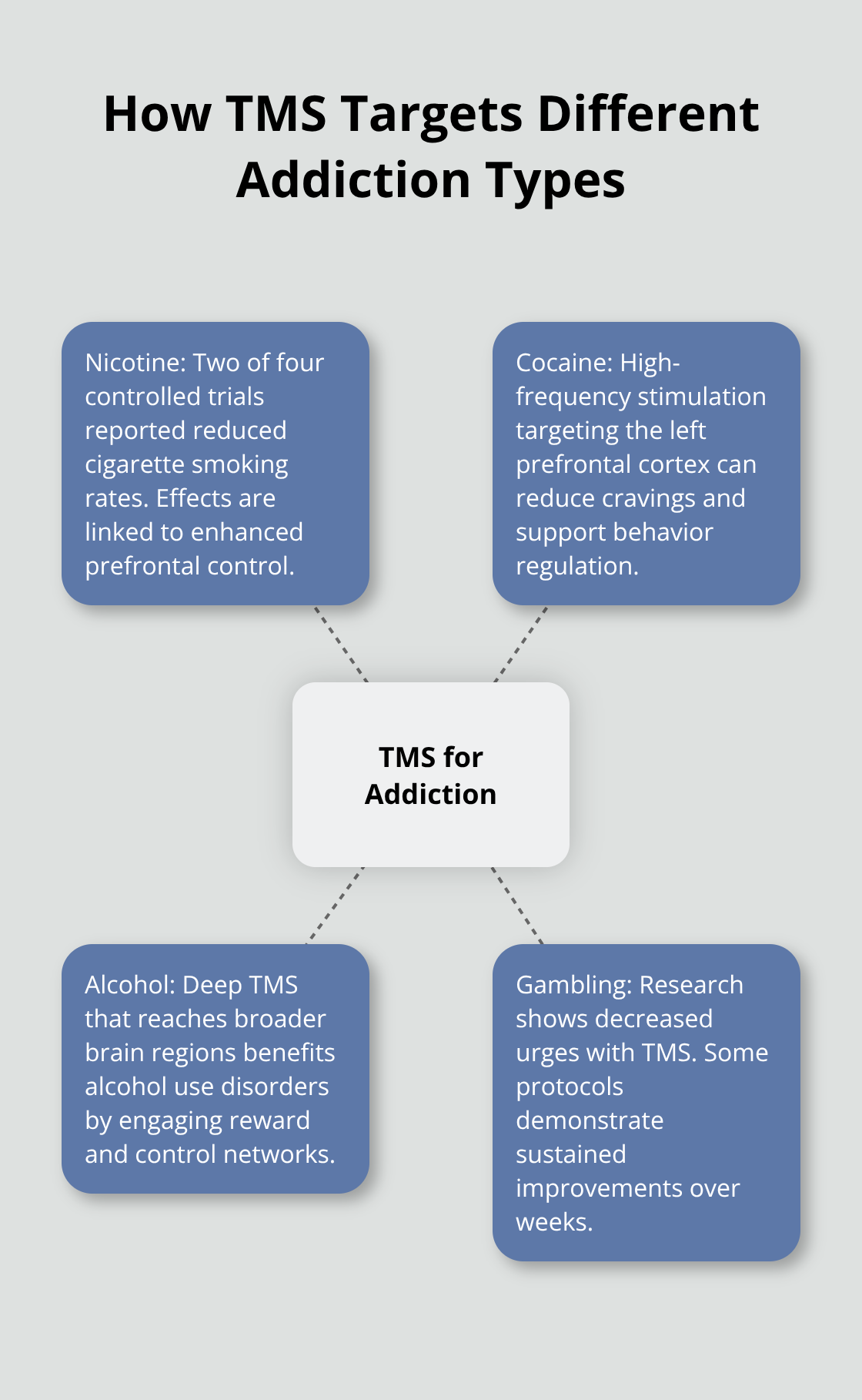
TMS shows effectiveness for nicotine addiction, with two out of four controlled trials that reported reduced cigarette smoking rates. Cocaine use disorders respond well to high-frequency stimulation that targets the left prefrontal cortex. Alcohol use disorders benefit from deep TMS protocols that reach broader brain regions. Research indicates gambling addiction also responds to TMS intervention, with participants who showed decreased urges to gamble.
Treatment Protocols and Session Structure
Treatment protocols typically involve 5-20 sessions over 2-6 weeks, with each session that lasts 3.5-20 minutes (depending on the stimulation type and target condition). The FDA has approved TMS for major depression and smoking cessation when other treatments fail. Most studies focus on high-frequency rTMS pulses directed at the DLPFC, though newer coil technologies like deep TMS coils aim for deeper brain stimulation. Once you understand how TMS works, the next step involves finding qualified providers who can deliver this specialized treatment safely and effectively.
How Do You Choose the Right TMS Provider
Selecting a qualified TMS provider requires thorough investigation of practitioner credentials and facility standards. Look for psychiatrists or neurologists with specific TMS certification from organizations like the Clinical TMS Society, which requires medical degrees for doctors or master’s degrees in psychology for other practitioners. Board-certified physicians with at least two years of TMS experience show better treatment outcomes than newly trained practitioners. Verify that providers have treated your specific addiction type, as cocaine addiction protocols differ significantly from nicotine or gambling disorder approaches. Request patient outcome data and success rates for your condition-reputable providers should readily share this information.
Equipment Standards Matter More Than Facility Appearance
FDA-approved TMS machines from manufacturers like Neuronetics, Brainsway, or Magstim represent the gold standard for treatment. Avoid providers who use non-FDA approved devices or experimental equipment. Deep TMS coils reach broader brain regions and show superior results for addiction compared to standard figure-eight coils. Modern facilities should offer MRI-guided targeting for precise coil placement, which improves treatment effectiveness.
Insurance Coverage Varies Dramatically Between Providers
Most policies cover depression-related TMS but require pre-authorization for addiction treatment. Contact your insurance directly rather than rely on provider estimates, as coverage determinations change frequently. Out-of-pocket costs range from $300-500 per session, with complete treatment protocols that cost $6,000-15,000 (depending on session frequency and duration).
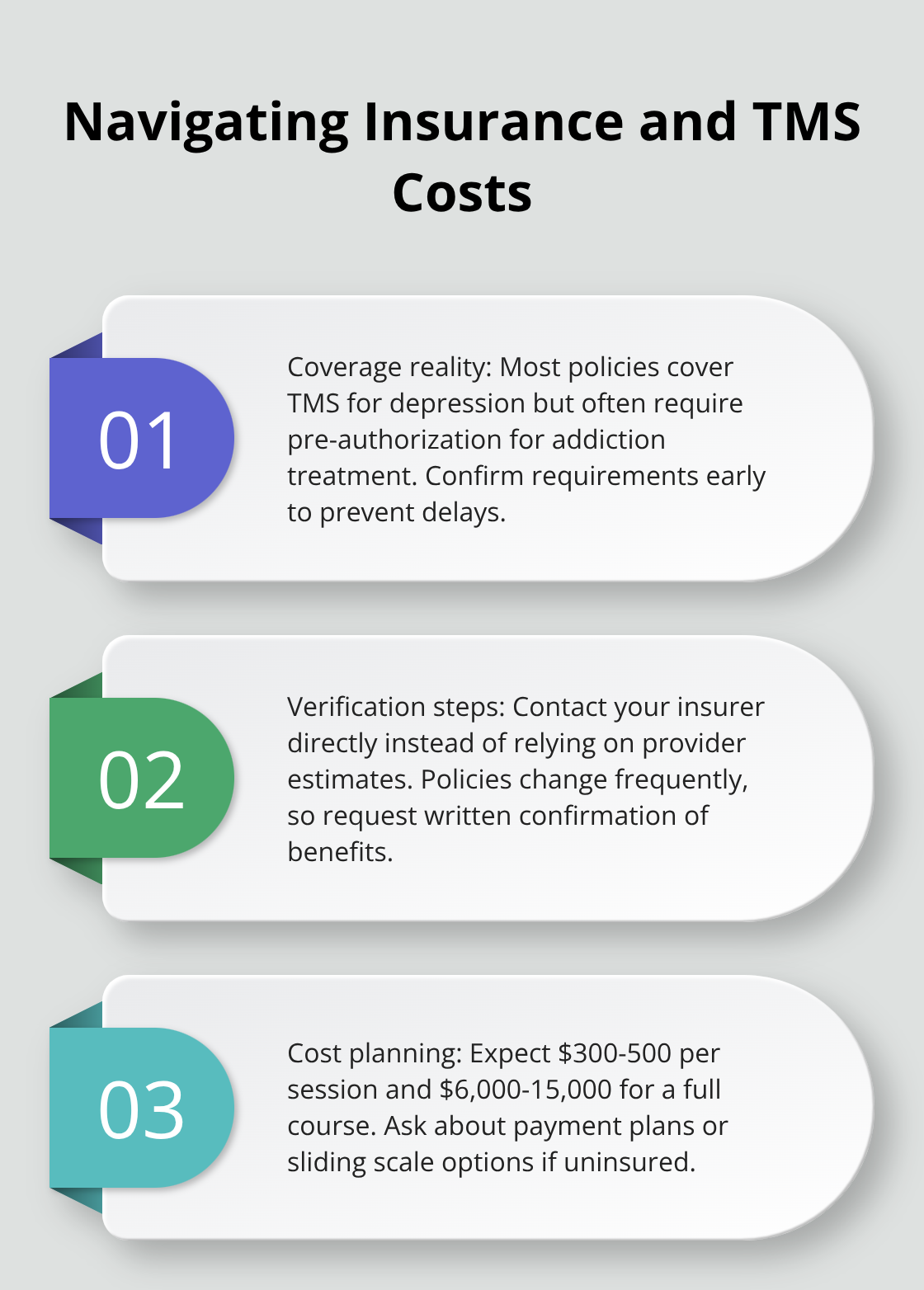
Some providers offer payment plans or sliding scale fees for uninsured patients.
Safety Protocols Separate Quality Providers from Others
Quality providers conduct comprehensive medical evaluations before treatment begins. They screen for metal implants, seizure history, and medications that might interfere with TMS. Professional facilities maintain detailed treatment logs and monitor patients for side effects throughout the process. Ask about emergency protocols and staff training in seizure management, though serious complications remain rare.
Once you identify potential providers who meet these standards, the next step involves understanding what happens during actual TMS treatment sessions.
What Happens During Your TMS Treatment Journey
Your TMS treatment begins with a comprehensive medical evaluation that takes 1-2 hours. The provider reviews your addiction history, current medications, and conducts neurological tests to identify any contraindications like metal implants or seizure disorders. Brain mapping follows, where technicians use MRI guidance or motor threshold testing to locate optimal coil placement on your dorsolateral prefrontal cortex. Treatment planning involves selecting stimulation parameters specific to your addiction type – cocaine disorders typically require 10 Hz frequency, while gambling addiction responds better to 20 Hz protocols. The provider creates a personalized schedule based on severity, with most patients who receive 10-20 sessions over 2-6 weeks.
Treatment Sessions Follow a Structured Protocol
Each TMS session lasts 3.5-20 minutes depending on your specific protocol. High-frequency treatments for cocaine addiction average 37 minutes (including setup time), while standard depression protocols run shorter at 19 minutes. You remain awake and alert throughout treatment, experiencing a tapping sensation on your scalp as magnetic pulses stimulate brain tissue. Most providers schedule daily sessions Monday through Friday, though some intensive programs offer twice-daily treatments. The Casula study used 5 daily sessions over two weeks, which showed that concentrated schedules produce faster results than extended timelines.
Side Effects Peak Early Then Diminish Rapidly
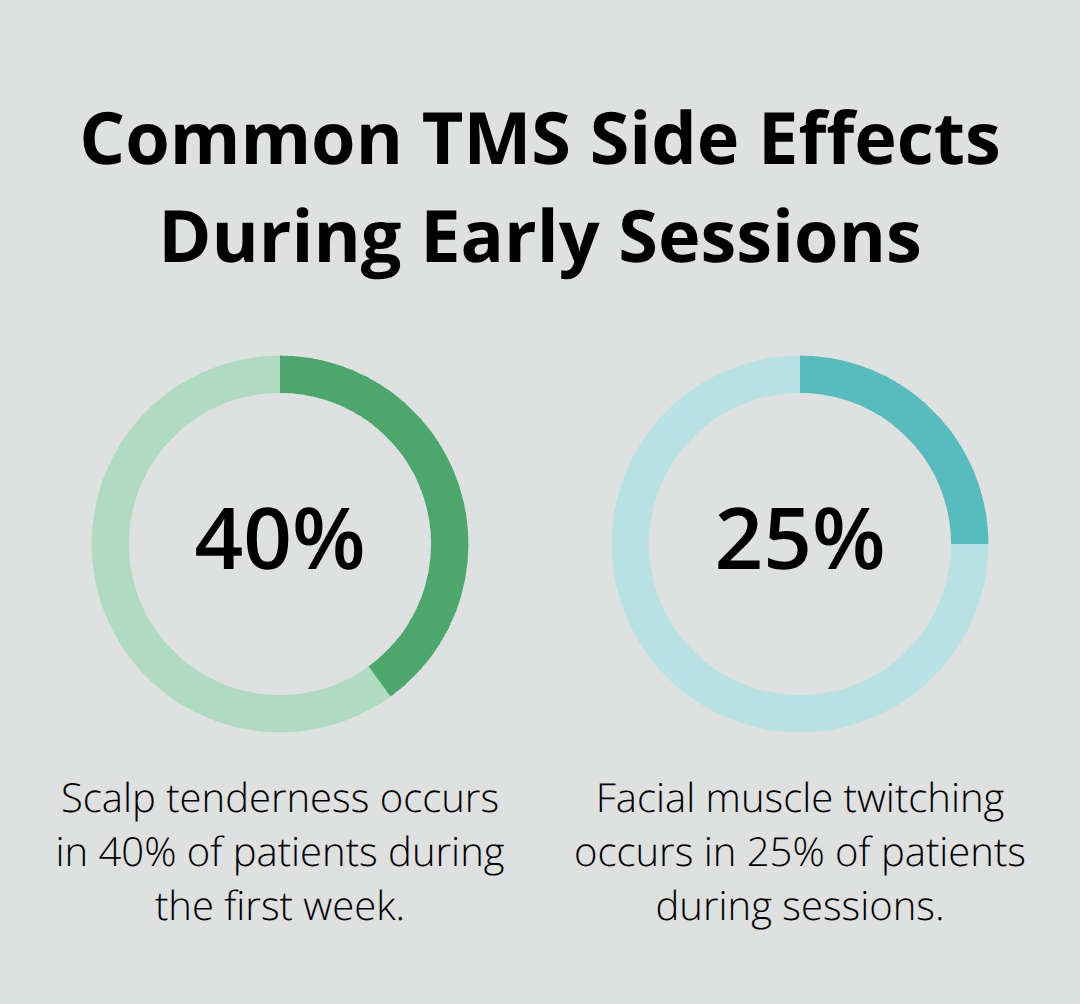
Headaches affect 50-60% of patients during the first week but typically resolve by session 5-7. Scalp tenderness occurs in 40% of cases and responds well to over-the-counter pain relievers taken 30 minutes before treatment. Facial muscle twitching happens in 25% of patients but indicates proper coil placement rather than complications.
Serious side effects remain extremely rare, with seizure risk below 0.1% when safety protocols are followed (though proper screening prevents most complications). Most patients return to normal activities immediately after each session, though providers may recommend avoiding driving for 2-4 hours if you experience dizziness.
Recovery Timeline Varies Between Addiction Types
Craving reduction typically begins after 8-12 sessions, with peak benefits that occur 2-4 weeks post-treatment according to multiple clinical studies. Treatment outcomes show varying response patterns across different addiction types, with some patients who report decreased urges within the first week. Gambling addiction requires longer treatment protocols but produces sustained results that last 24 weeks or more. The brain continues to adapt for several weeks after treatment ends, which means improvements may continue even after your final session.
Final Thoughts
TMS addiction treatment success depends on provider credentials, FDA-approved equipment, and protocols that match your specific addiction type. Board-certified physicians with TMS certification and two years of experience produce better outcomes than newly trained practitioners. Deep TMS coils and MRI-guided brain targeting represent current best practices for addiction recovery.
Professional TMS therapy provides significant advantages over experimental approaches. Clinical studies show sustained craving reduction that lasts 24 weeks, with 50-60% of patients who experience meaningful improvement. The non-invasive nature allows you to resume normal activities immediately after each session (while targeted brain stimulation addresses the neurological basis of addiction).
Your treatment journey starts with comprehensive medical evaluation and insurance verification. Most protocols require 10-20 sessions over 2-6 weeks, with costs that range from $6,000-15,000 for complete treatment. We at Addiction Resource Center provide comprehensive outpatient addiction treatment services in Yuba City, with personalized therapy programs and mental health support to complement innovative treatments like TMS. Contact qualified providers who specialize in your specific addiction type to begin your recovery process.