Discharge planning is a structured, individualized transition process that begins before a person leaves treatment and continues into aftercare, with the aim of reducing relapse risk and coordinating ongoing support. Evidence from older adults shows that individualized discharge planning can reduce hospital stays by just under one day and prevent about three unscheduled readmissions per …

Discharge planning is a structured, individualized transition process that begins before a person leaves treatment and continues into aftercare, with the aim of reducing relapse risk and coordinating ongoing support. Evidence from older adults shows that individualized discharge planning can reduce hospital stays by just under one day and prevent about three unscheduled readmissions per 100 patients (Cochrane review).
The treatment program may be ending, but recovery isn't. A person may be sitting in the parking lot with a bag in the trunk, a family member waiting behind the wheel, and no clear answer to the most important question: “What happens when we get home?” In addiction care, that uncertainty can affect medication continuity, cravings, housing, appointments, transportation, and the ability to respond when something starts to go wrong.
A thoughtful plan turns discharge into a supported handoff, not an abrupt stop.
Table of Contents
- What Discharge Planning Means in Addiction Care
- The Core Components of a Strong Discharge Plan
- The Discharge Planning Timeline From Intake to Aftercare
- Who Is Involved in the Multidisciplinary Team
- How Individualized Plans and Aftercare Work in Practice
- Common Misconceptions That Undermine Recovery
- Key Takeaways and Next Steps for Patients and Families
What Discharge Planning Means in Addiction Care
A person has completed a 30-day residential program. Their belongings are packed. Their family is relieved, nervous, and unsure whether to ask too many questions or not enough. The person may feel proud of finishing treatment while also fearing the first evening without a treatment team nearby.
Discharge planning matters. In addiction care, it means creating a practical, individualized bridge between structured treatment and everyday life. The process considers the person's substance use history, mental health, medications, living environment, transportation, relationships, work, and likely triggers. It starts during intake, develops throughout treatment, and continues as outpatient and community providers take over.
A discharge plan isn't just a folder of phone numbers or a final conversation at the door. It should answer concrete questions:
- Where will the person stay tonight?
- Who will provide the next level of care?
- Which medications continue, and who prescribes them?
- What should the person do when cravings rise?
- Who can the family call with concerns?
- What happens if an appointment is missed?
- Which warning signs require urgent help?
Hospital discharge planning often focuses on medical stability, medication reconciliation, follow-up, and communication with the next provider. Those controls remain important in addiction treatment, but substance use disorders bring added challenges. Recovery unfolds over time, relapse can occur after a period of stability, and the person may need continuing medication, counseling, peer support, or a safer living environment.
Practical rule: A discharge plan should be usable on a difficult day, not merely accurate on the day it's written.
Research describes discharge planning as an individualized process that assesses health and social-care needs, coordinates follow-up, and improves continuity between settings. Reviews associate stronger plans with fewer medication discrepancies, better patient satisfaction, and modestly fewer readmissions, especially when medication support and post-discharge follow-up are combined (evidence review on discharge planning).
In addiction care, continuity is the central concern. The person shouldn't have to restart their story with every new provider or figure out the next step while experiencing cravings, anxiety, depression, or family conflict. A warm handoff gives the receiving provider the information needed to continue care, while giving the person a real connection before the treatment program ends.
The Core Components of a Strong Discharge Plan
A useful way to understand discharge planning is to think of a relay race. The residential team carries responsibility during treatment, then passes it to outpatient clinicians, peer supports, family, and the person in recovery. A list of referrals is like pointing toward the next runner without handing over the baton.
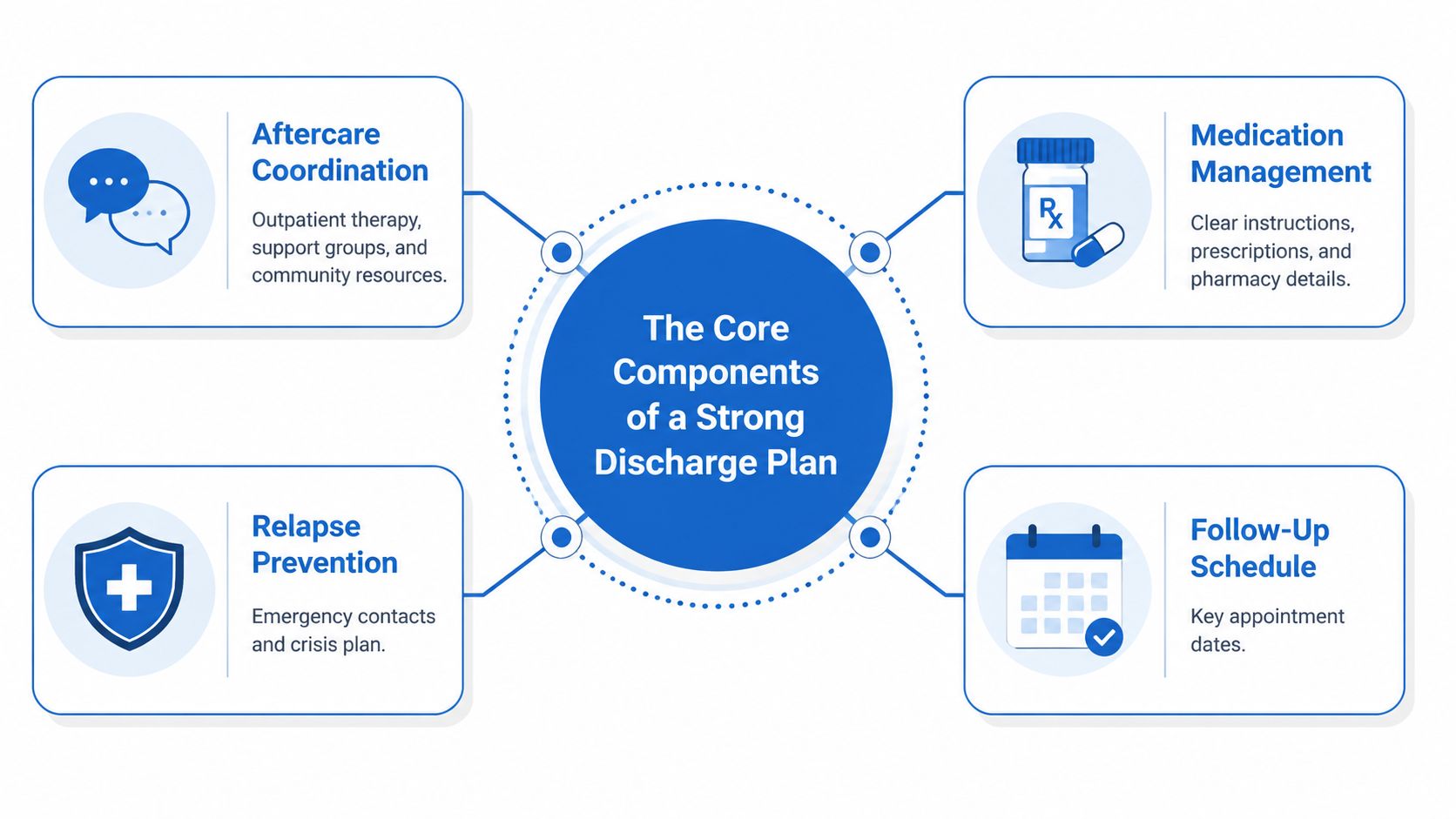
Aftercare coordination
Aftercare gives the person a place to continue clinical work after residential or detox services end. It may include outpatient therapy, an intensive outpatient program, support groups, recovery coaching, primary care, psychiatric care, or community recovery resources.
The referral should identify what service is next, where it happens, when it begins, and who confirmed the connection. “Call this number” leaves too much work with someone who may already be overwhelmed. A warm handoff might involve a treatment counselor speaking directly with the receiving clinician or helping the person complete the first intake.
Relapse prevention
Relapse prevention turns general encouragement into specific actions. The person and counselor identify triggers, such as contact with a using peer, conflict at home, loneliness, payday, pain, or an untreated mental health symptom. They then match each trigger with a coping response, a support contact, and an escalation step.
A written crisis plan should name who to call, where to go, and what to do if cravings become difficult to manage. It should also address how family members can respond without taking over the person's recovery.
Medication management
Medication instructions need to be clear enough to follow outside a clinical setting. The plan should name the medication, dose, timing, prescriber, pharmacy, refill process, and steps to take if a dose is missed or side effects occur.
Medication reconciliation is a recognized transition-safety control, alongside written follow-up instructions, communication with outpatient providers, and patient education using teach-back (AHRQ discharge safety guidance). In addiction care, medication continuity may be central to stabilizing recovery, so the person shouldn't leave without knowing who will manage ongoing prescriptions.
Referrals and practical support
Housing, transportation, employment, medical care, identification documents, benefits, childcare, and peer support can determine whether a plan works. A case manager might help arrange sober housing, confirm transportation to an appointment, or connect the person with a community resource.
When providers must send referral forms or clinical information, organizations may also need a secure workflow for transmitting protected health information. A resource on secure faxing for healthcare from FaxZen can help teams think through safer referral communication.
These components are connected. Therapy can't carry the whole plan if the person has nowhere safe to live. Medication instructions won't help if the pharmacy is unreachable. A crisis plan loses value if no one knows who responds. Strong discharge planning makes the pieces work together.
The Discharge Planning Timeline From Intake to Aftercare
Discharge planning usually develops in phases, but the timing must reflect the person's clinical and social situation. A person with stable housing, an available outpatient provider, and reliable transportation may move through the transition differently from someone managing severe cravings, co-occurring mental health needs, or homelessness.
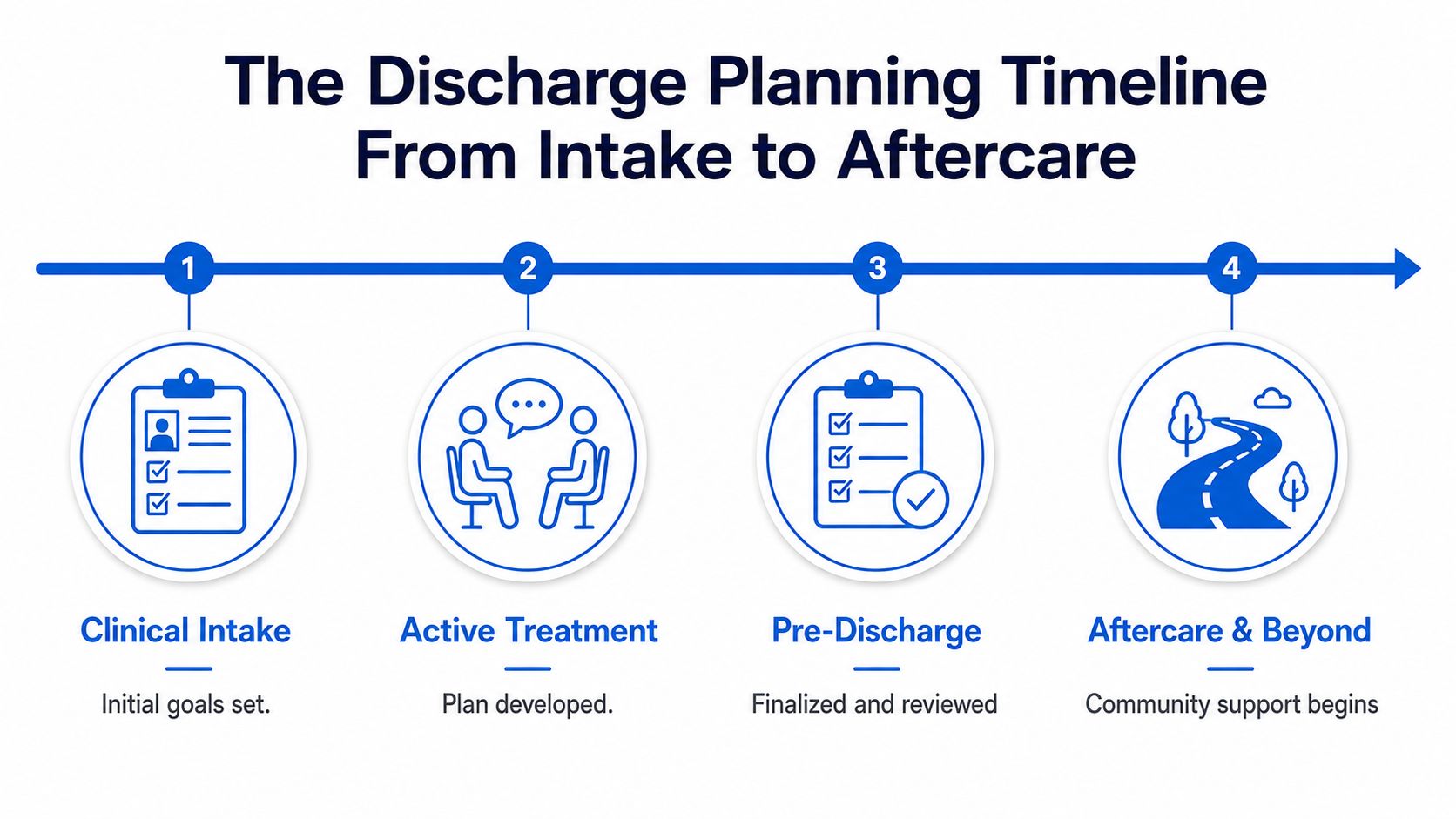
Clinical intake
At intake, the team gathers information about substance use, withdrawal risk, medical history, mental health, medications, safety concerns, family support, housing, and treatment goals. The team doesn't need every aftercare detail finalized immediately, but early assessment can reveal barriers that require time to address.
The person and clinicians begin identifying what a safe transition may require. That could include medication follow-up, psychiatric care, a structured outpatient level, peer support, or sober housing.
Active treatment
During treatment, the counselor observes progress and tests whether the person can use coping skills outside one-on-one conversations. The team can begin contacting aftercare providers, discussing family involvement, and reviewing practical obstacles while therapy continues.
The appropriate next level of care depends on clinical needs and functioning, not only on how long someone has stayed in a program. A structured level of care determination guide can help families understand why treatment intensity may change as recovery needs change.
Pre-discharge preparation
As discharge approaches, the team confirms medications, appointments, transportation, housing, emergency contacts, and communication with receiving providers. The patient and family should review the plan together, using teach-back when instructions are complex. The person should be able to explain what happens next in their own words.
Aftercare and beyond
The day of discharge marks the beginning of shared responsibility. The person follows the plan, family members provide agreed support, and outpatient providers assume continuing clinical duties. The plan should be reviewed when circumstances change, such as a missed appointment, medication concern, return to use, housing disruption, or worsening mental health.
The evidence base supports discharge planning as a long-standing transition process. A 2022 Cochrane review included studies conducted from 1990 to 2019, and pooled evidence found a small reduction in hospital length of stay plus fewer unscheduled readmissions (Cochrane review).
The video below offers another way to think about transition planning and continuity of care.
Who Is Involved in the Multidisciplinary Team
Discharge planning works best when each person knows their responsibility. The primary counselor may understand the person's triggers and progress, while the medical provider manages medication continuity. A case manager may solve housing or transportation barriers that neither clinician can fix alone.
| Team Role | Primary Contribution |
|---|---|
| Primary counselor | Tracks clinical progress, identifies relapse risks, and helps build coping and crisis plans |
| Medical provider or psychiatrist | Reviews medications, manages ongoing prescriptions, and coordinates medical or psychiatric follow-up |
| Case manager | Arranges referrals, housing resources, transportation, benefits, and practical services |
| Peer recovery specialist | Offers lived-experience support, encouragement, and connection to recovery communities |
| Family or chosen support person | Helps with agreed home-based support, observes concerns, and participates in planning when the patient consents |
| Receiving outpatient provider | Accepts the handoff, confirms the next appointment, and continues treatment after discharge |
| Patient | Makes decisions, practices the plan, communicates concerns, and identifies support preferences |
The patient remains central. Team members can recommend services, but the plan must reflect what the person understands, accepts, and can realistically use. A plan built without the patient may look complete while failing in daily life.
Warm handoffs connect these roles. The counselor might introduce the patient to an outpatient therapist. The medical provider might send medication information to the next prescriber. The case manager might confirm the housing placement and transportation route. A peer specialist might attend the first community meeting with the person.
Families often need education, too. They should know which support they can provide, which responsibilities belong to clinicians, and what to do if the person shows signs of crisis. Families seeking structured recovery support can review recovery coaching services as one possible part of a broader plan.
The difference between coordinated care and a stack of referrals is ownership. Every important task should have a named person or organization responsible for completing it.
How Individualized Plans and Aftercare Work in Practice
Consider Maya, a fictional composite patient created to illustrate clinical planning. She has completed residential treatment after years of alcohol and prescription opioid misuse. She also experiences depression, has missed psychiatric appointments in the past, and plans to return to a home where her partner drinks heavily. Her mother is supportive but lives in another town, and Maya doesn't currently have reliable transportation.
A generic plan might give Maya an outpatient referral, a medication list, and information about support groups. An individualized plan asks harder questions. What will happen when her partner drinks? How will she reach the pharmacy? Who will notice if depression worsens? Will returning home expose her to alcohol before she has practiced responding to that trigger?
Turning risks into specific decisions
Maya and her counselor identify evening isolation, arguments with her partner, and access to prescription medication as major risks. Her relapse prevention plan includes a scheduled evening support meeting, a list of people she can call, a place where she can spend the night if home becomes unsafe for recovery, and clear instructions for responding to rising cravings.
Her medical provider confirms which addiction-treatment medication continues after discharge, reviews dosing and side effects, identifies the prescribing clinician, and checks how refills will be handled. The plan also connects her with a psychiatric provider for depression follow-up rather than treating mental health as a separate issue.
The case manager helps compare sober housing and home-based options. Because Maya's home environment is uncertain, the team doesn't assume that returning home is automatically the best choice. They discuss transportation assistance, telehealth where appropriate, and how her mother can participate with Maya's permission.
The family conversation is concrete. Maya's mother learns how to support appointments and encourage help-seeking without monitoring every action. The team clarifies whom to call for medication questions, worsening depression, or an immediate safety concern.
Aftercare as a living process
Maya begins with a structured outpatient schedule, individual therapy, peer support, and regular medication follow-up. The plan includes confirmed appointment dates rather than only provider names. Her counselor also identifies a first check-in after discharge so the team can learn what is working and what isn't.
If transportation improves and symptoms stabilize, some services may become less frequent. If depression worsens, cravings increase, or housing becomes unsafe, the plan may need to become more structured. That flexibility is the point of individualized care.
Families can also review aftercare planning guidance for questions to raise with a treatment team. A strong plan doesn't promise that recovery will be effortless. It creates clear responses for predictable problems and makes it easier to ask for help early.
Common Misconceptions That Undermine Recovery
“Discharge planning is paperwork”
Paperwork can document a plan, but it doesn't create continuity by itself. A usable plan includes communication, confirmed appointments, medication instructions, crisis contacts, and practical support. CMS guidance emphasizes bundling discharge education, medication reconciliation, follow-up, and screening for social needs, while AHRQ connects unmet housing, employment, psychosocial, and community-resource needs with readmissions (CMS readmissions guide).
“Finishing treatment means the hard part is over”
Leaving a structured setting can bring new pressure. The person may face old relationships, stress, access to substances, work demands, family conflict, and fewer immediate clinical supports. The transition plan should prepare for that change instead of treating discharge as proof that support is no longer needed.
“One plan should work for everyone”
Recovery plans differ because people differ. Substance use patterns, mental health symptoms, medications, housing, family relationships, culture, transportation, and motivation all affect what someone can use. A referral that works for one person may be inaccessible or unsafe for another.
“Rehab means stopping medication”
Medication decisions belong with the qualified medical provider. Addiction treatment medication may continue after residential care, and stopping or changing it without medical guidance can disrupt continuity. The discharge plan should state what continues, what changes, who prescribes it, and what the person should do with concerns.
“A completed checklist means the transition is complete”
A living plan has named contacts, scheduled follow-up, reviewed goals, and accountability. It changes when the person's needs change. The team should ask whether the person attended the appointment, obtained medication, reached safe housing, and knows what to do when cravings or symptoms increase.
The question isn't whether a document exists. The question is whether the person can use it at home, under stress, with the resources available.
Key Takeaways and Next Steps for Patients and Families
Discharge planning in addiction care is a coordinated transition from treatment into continuing recovery support. It begins before the person leaves, but it doesn't end when the paperwork is signed. The plan should connect relapse prevention, medication management, referrals, therapy, peer support, family involvement, and crisis response into one understandable path.
The strongest plans answer both clinical and practical questions. They explain what the person needs to do, who will help, when the next contact occurs, and what happens if the first plan stops working. That matters because social barriers can make even a clinically sound plan difficult to follow. Housing instability, transportation gaps, medication costs, and limited health literacy all need direct attention rather than hopeful assumptions.
Three actions to take this week
- Request the current plan: Ask the treatment team for a copy of the draft or final discharge plan. Read it with the patient and mark anything unclear, missing, or unrealistic.
- Identify the handoff coordinator: Ask which person will contact the outpatient therapist, medical provider, psychiatrist, housing program, or peer support service. Confirm whether the receiving provider has accepted the referral.
- Confirm the first follow-up: Before discharge, identify the first appointment or check-in, how it will happen, and what to do if transportation, scheduling, or symptoms interfere. Include a 30-day check-in date so the plan has a defined point for review.
Families can ask additional questions without taking control of the person's recovery. Who manages medication refills? What signs suggest a need for urgent help? What should happen after a return to use? Which information can the treatment team share, and what requires the patient's consent? Clear answers reduce confusion for everyone.
A family doesn't need to solve every future problem before discharge. It does need a realistic first step, a way to reach support, and an agreement about what happens when circumstances change.
Recovery planning isn't about predicting every difficulty. It's about making sure the next helpful person is already identified.
If you're looking for help coordinating detox, residential treatment, medication support, intensive outpatient care, or aftercare, visit Addiction Resource Center LLC to learn about available options. Their team can discuss practical transition questions with adults and families in a confidential, supportive setting.