You may be searching for a medication assisted treatment clinic because someone you love is experiencing withdrawal, cravings, or repeated opioid use, and you don't know what happens after the front door. The uncertainty can feel as frightening as the treatment itself. Will staff judge the patient? Will the first dose cause discomfort? Can a …

You may be searching for a medication assisted treatment clinic because someone you love is experiencing withdrawal, cravings, or repeated opioid use, and you don't know what happens after the front door. The uncertainty can feel as frightening as the treatment itself. Will staff judge the patient? Will the first dose cause discomfort? Can a family member come inside? How long will the appointment take?
A MAT clinic should answer those questions clearly. Treatment typically combines an approved medication with medical monitoring, counseling, and practical recovery support. The first visit isn't a test of character. It's an assessment designed to identify immediate risks, choose a safe starting plan, and give the patient a realistic next step.
Table of Contents
- Walking Into a MAT Clinic for the First Time
- What Medication Assisted Treatment Actually Does
- Buprenorphine Methadone and Naltrexone Compared
- Intake Induction and Ongoing Monitoring
- Retention and Real Outcomes Over Time
- How to Choose the Right MAT Clinic
- Insurance and Tricare Coverage for MAT
- Common Questions and Misconceptions About MAT
Walking Into a MAT Clinic for the First Time
The first visit often begins in a parking lot, with a patient sitting in the car and checking the clinic address again. They may worry that someone will recognize them, that the receptionist will ask uncomfortable questions, or that a family member won't be allowed past the waiting room. Those fears are common, and a well-run clinic should explain its privacy and visitor policies before care begins.
At reception, the patient usually presents identification and completes intake paperwork. The forms may ask about medical history, current medications, allergies, recent opioid use, mental health symptoms, and emergency contacts. A nurse or medical assistant may check vital signs and collect a urine sample in a labeled drug-screen cup. These steps aren't meant to punish someone for substance use. They help the clinician understand what medication can be started safely.

What the first hours may look like
A counselor or nurse should walk the patient through the schedule. An initial appointment may take two to four hours, depending on the examination, laboratory work, medication choice, education, and observation period. The patient might move from the intake room to a private exam room, then to a dosing area where staff observe the first medication dose and watch for withdrawal relief or side effects.
The clinician may ask when the patient last used opioids and what was taken. That question matters because starting some medications too early can worsen withdrawal. The patient doesn't need to remember every detail perfectly. Honest information gives the medical team a safer basis for decisions.
Practical rule: Bring a photo ID, medication list, insurance information, pharmacy details, and a support person if the clinic permits visitors.
If induction goes smoothly, staff may discuss follow-up timing, counseling, prescription instructions, and whether future doses can be taken at home. Policies vary by medication, clinical progress, and program rules. Before leaving, the patient should know the next appointment time and who to call if cravings, withdrawal, sedation, or other concerns appear. Readers who also want a broader overview of treatment settings can review this guide to what to expect in rehab.
What Medication Assisted Treatment Actually Does
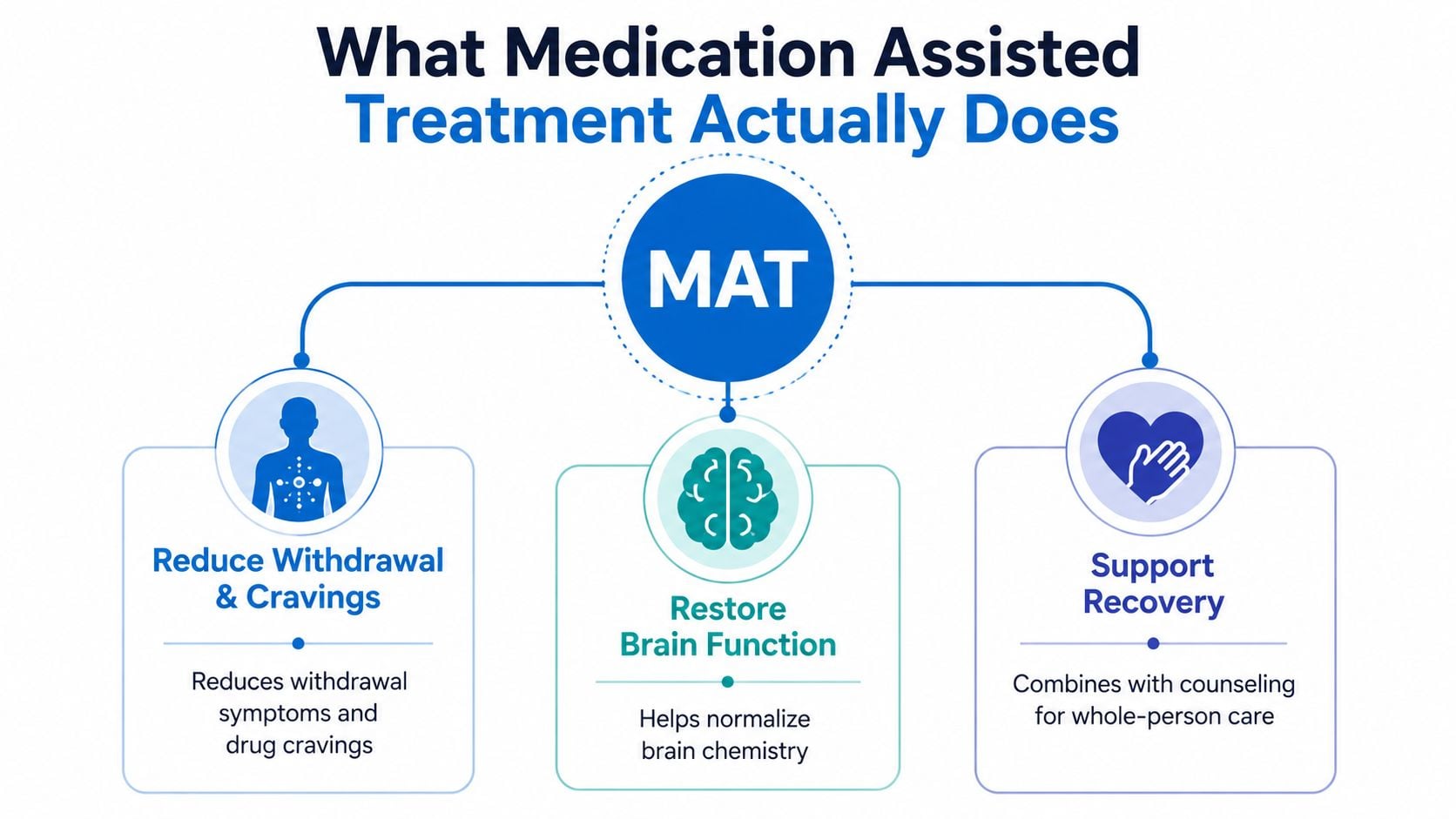
Medication assisted treatment, or MAT, combines an FDA-approved medication with counseling and behavioral support for substance use disorder. The medication isn't a reward for stopping. It addresses the physical part of opioid use disorder so the patient can make decisions, sleep, attend appointments, and participate in therapy without spending every hour managing withdrawal or cravings.
The clinical aims are easier to understand when separated:
- Reduce withdrawal and cravings. Medication occupies opioid receptors in a controlled way, which can calm the physical alarm system that produces sweating, nausea, muscle aches, agitation, and intense urges to use.
- Reduce the effect of illicit opioids. Some treatment medications occupy receptors tightly enough to limit the effect of other opioids, although no medication removes overdose risk.
- Create stability for recovery work. A steadier biological state gives counseling, housing support, mental health treatment, and family repair a better chance to take hold.
Three medications, three mechanisms
Buprenorphine is a partial opioid agonist. Think of it as a key that fits the receptor lock and turns it enough to reduce withdrawal, but doesn't open the door as fully as a full opioid agonist. Its partial activity creates a ceiling effect for some opioid effects, which is one reason clinicians titrate it carefully rather than treating it like an ordinary pain medicine.
Methadone is a full opioid agonist provided in a structured treatment setting. It activates opioid receptors more fully, but the clinic controls the dose and monitors the patient's response. That steady administration can replace the repeated highs and crashes associated with uncontrolled opioid use.
Naltrexone is an opioid antagonist. Instead of activating the receptor, it blocks opioid effects. Because it doesn't treat active opioid withdrawal in the same way as buprenorphine or methadone, the patient must complete an opioid-free period before starting it.
MAT isn't “one drug replacing another.” The clinical difference lies in the medication's receptor action, prescribed dose, route, monitoring, and purpose. The treatment team uses these elements to reduce harm and support functioning, not to produce intoxication. For another patient-friendly explanation, see this overview of medication assisted treatment effectiveness.
Buprenorphine Methadone and Naltrexone Compared
Walking into a MAT clinic, a patient may first ask, “Which medication fits my health, schedule, and recovery goals?” The answer depends on withdrawal timing, medical history, pregnancy considerations, transportation, daily responsibilities, and personal preferences. Someone who needs office-based care may have different needs from someone who benefits from observed dosing in a highly structured opioid treatment program.
| Medication | Type | Typical Dose Range | Where Dispensed | Daily Routine | Induction Requirement | Clinic Contact |
|---|---|---|---|---|---|---|
| Buprenorphine | Partial opioid agonist | Often 8 to 16 mg daily, with some patients needing up to 24 mg daily after induction, according to clinical dosing guidelines | Prescription through an office-based provider or opioid treatment program affiliated clinic | Sublingual tablet or film, or another prescribed formulation | Must begin when the patient has an appropriate level of opioid withdrawal | Frequent early follow-up, with take-home medication based on clinical stability and program policy |
| Methadone | Full opioid agonist | Common maintenance range 60 to 120 mg per day, per the guideline cited above | Federally certified opioid treatment program | Usually a clinic-dispensed daily dose early in treatment | Careful induction and observation because effects can build over time | Often frequent or daily observed dosing at first |
| Naltrexone | Opioid antagonist | 50 mg oral daily or 380 mg extended-release intramuscular injection every 4 weeks, with the prescriber selecting the appropriate formulation | Prescribing clinician or treatment program | Oral or extended-release injection, depending on the plan | Requires an opioid-free interval before initiation | Periodic medication visits, with monitoring for suitability and adherence |
How the choice affects daily life
Buprenorphine may fit a patient who wants medication management connected to ordinary medical care. Clinic policies and local regulations still shape how prescriptions and follow-up work. Methadone offers a consistent routine, although early observed dosing can conflict with work shifts, transportation limits, or distance from an opioid treatment program.
Naltrexone works differently. It blocks opioid effects rather than activating opioid receptors, so it does not produce opioid agonist effects or physical opioid dependence. The patient must complete an opioid-free interval first, which can be difficult for someone still using opioids or someone with a history of severe withdrawal. Families can review this patient guide to naltrexone for addiction before discussing the option with a prescriber.
Dose numbers are only one part of the decision. Pregnancy, liver disease, pain treatment, sedating medications, overdose history, and prior treatment response may change the recommendation. Ask how each medication fits the patient's health, schedule, transportation, and relapse risk. The clinic should also explain where dosing occurs, how often visits happen, and what support is available between appointments.
Intake Induction and Ongoing Monitoring
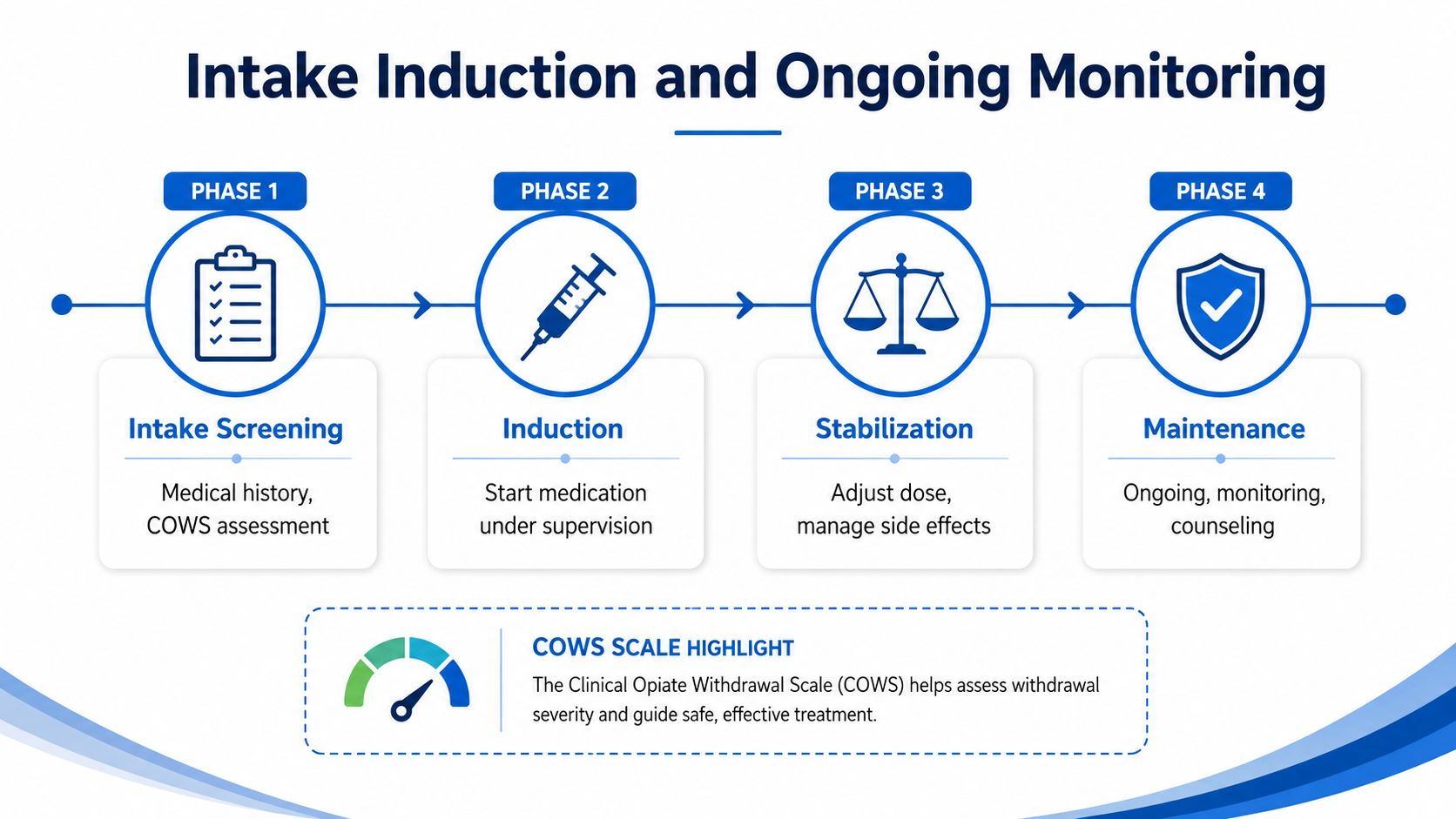
Walking into a MAT clinic can feel like entering a process with unfamiliar terms. The care usually unfolds through four overlapping phases: intake screening, induction, stabilization, and maintenance. Each phase answers a practical question. What does the patient need? How does the first dose affect withdrawal? Does the medication control symptoms through the day? How can treatment remain safe and workable over time?
Phase one, intake screening
The clinician reviews substance use, previous withdrawal, medical conditions, current medications, allergies, pregnancy status when relevant, mental health symptoms, and overdose risk. Laboratory testing or urine drug screening may be included, but a urine result is only one piece of the assessment. Patients can ask what a result means and how it will affect the care plan.
Clinicians may use the Clinical Opiate Withdrawal Scale, or COWS, to estimate withdrawal severity. The assessment can include restlessness, sweating, tremor, stomach discomfort, pupil changes, and anxiety. Timing matters, especially before buprenorphine. If it is started before withdrawal is established, symptoms can worsen suddenly.
Phase two, induction
Induction is the first medication adjustment period, not a prescription handoff. The clinician considers the patient's recent opioid use and COWS findings, then chooses when the first buprenorphine dose is appropriate. Staff may reassess symptoms after dosing and provide additional medication only when the response supports it.
The first day may involve waiting, questions, vital-sign checks, and observation for relief of withdrawal, excessive sleepiness, or other problems. Methadone induction also requires careful observation because the initial response can change as the medication accumulates. The goal is a dose that reduces withdrawal and cravings without creating unsafe sedation. Families can ask what the patient should feel during the visit, who to call after leaving, and which symptoms require urgent help.
Phases three and four, stabilization and maintenance
During stabilization, the team may adjust medication, review cravings and side effects, repeat testing, and revise counseling or recovery supports. The clinic may continue observed dosing before take-home medication becomes appropriate. A missed visit, renewed opioid use, sedation, medication interaction, or worsening mental health symptoms can lead to closer monitoring or a higher level of care.
Administrative technology can make intake easier by organizing forms, reminders, and communication. This overview of the benefits of AI for intake explains how digital tools may reduce paperwork confusion. They do not replace clinical judgment. Qualified healthcare professionals still assess symptoms, set dosing plans, and decide when a change in care is needed.
Retention and Real Outcomes Over Time
The most important question after the first dose isn't whether treatment feels dramatic. It's whether the patient can remain engaged long enough for the medication and support plan to do their work. Detox alone can address an immediate withdrawal episode, but it doesn't automatically provide ongoing protection from cravings, changing tolerance, or relapse risk.
A systematic review of 55 studies found that 12-month retention ranged from 37% to 91%, and longer retention was consistently associated with better outcomes, including lower mortality, as summarized in this systematic review of treatment retention. The same review describes HHS findings that crude mortality, all-cause mortality, and overdose deaths were significantly lower when patients remained in treatment for more than one year.
What the numbers mean for one person
Program statistics describe groups, not guarantees. A patient may notice progress through smaller, practical changes first: fewer urgent cravings, more predictable sleep, fewer crisis visits, improved attendance at work, or the ability to answer a family member's call without being in the middle of a withdrawal cycle.
Washington State's MAT-PDOA clinic project enrolled 532 unique patients over two years, and 51% of enrolled patients remained in treatment for one year or longer, according to the Washington State project report. The same report found that at least 8% of Medicaid patients had an opioid overdose-related hospitalization or emergency-room encounter during the two years before starting MAT, showing that clinics often serve people with serious prior overdose exposure.
There isn't one correct recovery timetable. At an early milestone, the patient may be learning how to attend appointments and manage cravings. Later, the focus may shift toward relationships, employment, physical health, housing, and a long-term medication decision. The clinician should review progress without treating a return of symptoms as moral failure.
How to Choose the Right MAT Clinic
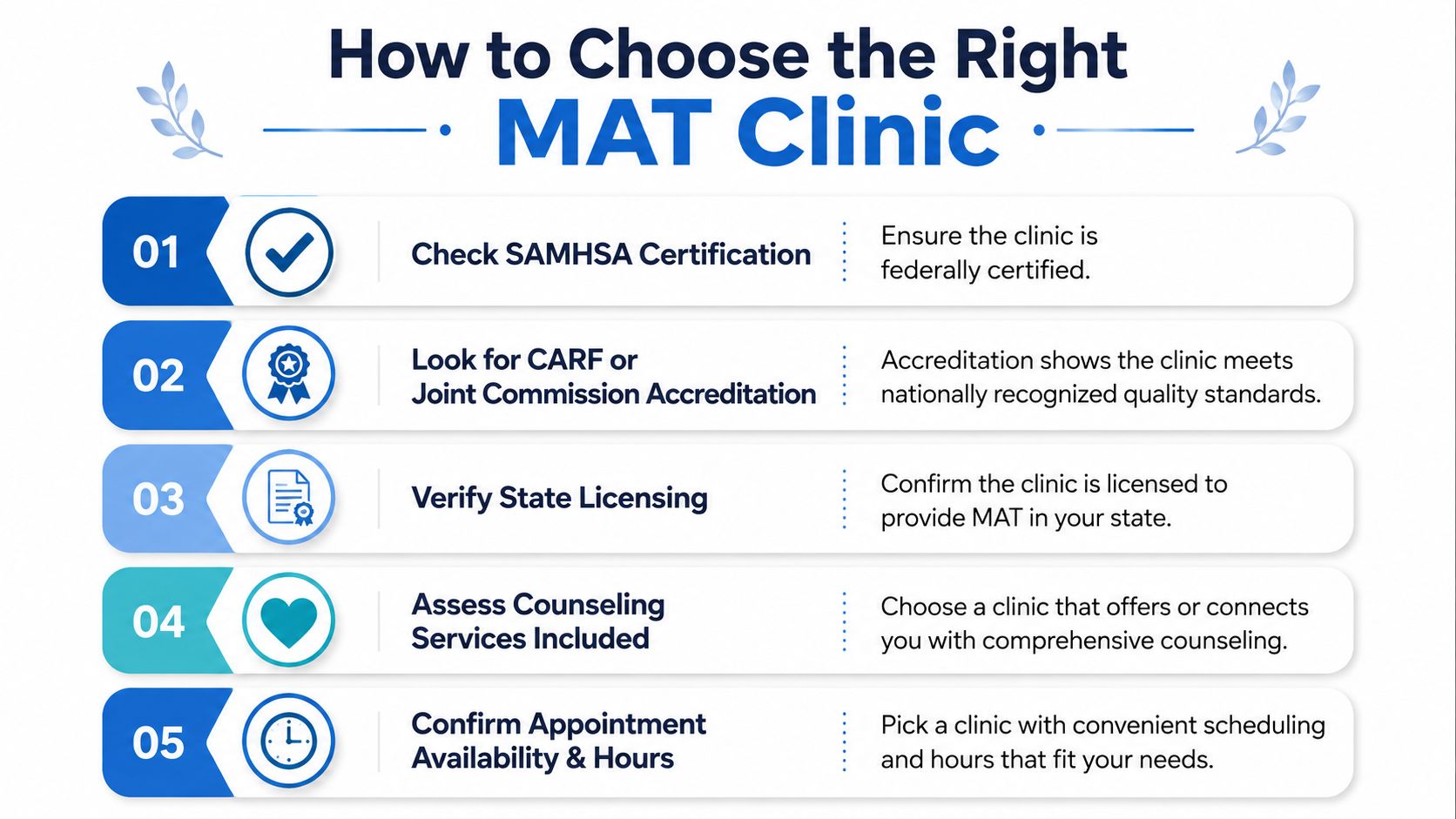
A clinic's location and hours can determine whether treatment continues. Use questions, not advertising language, to compare programs.
Questions to ask before enrolling
- Certification: Is the program properly licensed, and does it have relevant federal certification? For methadone, ask whether it operates as a certified opioid treatment program.
- Medication choice: Does the clinic offer buprenorphine, methadone, and naltrexone, or only one option? A broader menu may support more individualized decisions.
- First appointment: Can the clinic provide same-day or prompt intake when clinically appropriate? Ask what paperwork and identification the patient must bring.
- Schedule: What are the dosing hours, counseling times, weekend policies, and missed-appointment procedures? A clinic that conflicts with work or childcare may not be sustainable.
- Counseling: Is counseling available on site, by telehealth, or through referrals? Ask whether the program addresses trauma, anxiety, depression, housing, and family concerns.
- Take-home policy: What clinical milestones and safety reviews affect take-home medication? Request the policy in writing.
- Costs: Ask for medication, visit, laboratory, counseling, and missed-appointment charges separately.
Signals that deserve caution
A clinic should complete a meaningful medical evaluation. Be cautious about a practice that promises a guaranteed cure, refuses to explain its discharge criteria, requires cash without transparent documentation, or treats counseling and mental health symptoms as irrelevant.
Touring more than one program can reveal differences in privacy, waiting areas, staff communication, and dosing logistics. Ask about counselor caseloads, emergency coverage, coordination with primary care, and what happens after a missed appointment. The best clinic isn't necessarily the most polished. It's the one whose safety standards, services, and schedule make consistent attendance realistic.
Insurance and Tricare Coverage for MAT
Coverage can look straightforward until a family receives a prior authorization request or learns that the chosen clinic is out of network. Most commercial plans and marketplace plans must cover substance use treatment under the Affordable Care Act, but the patient's actual cost and access rules depend on the plan, network, medication, and state requirements. Medicaid also covers approved treatment options, although program rules can differ by state.
| Payer Type | MAT Coverage | Prior Auth | Typical Patient Cost |
|---|---|---|---|
| Commercial insurance | Often covers medication, medical visits, counseling, and related services when plan requirements are met | May apply to medication, laboratory services, or visit types | Depends on deductible, copayment, coinsurance, and network status |
| Medicaid | Covers approved treatment services, subject to state program rules | May apply to specific medications or services | Depends on state Medicaid policy and patient eligibility |
| TRICARE | Coverage depends on beneficiary category, plan type, authorized providers, referrals, and point-of-service rules | May apply to certain services or medications | Depends on Prime or Select enrollment, referrals, network status, and cost-sharing |
The TRICARE questions to ask
TRICARE Prime and TRICARE Select don't work the same way. Ask whether the clinic is TRICARE-authorized, whether a referral is required, and whether the patient must use an authorized opioid treatment program for methadone. Active-duty service members, retirees, and dependents may face different referral and point-of-service rules.
Before the first appointment, give the billing office the clinic's National Provider Identifier, or NPI, and ask them to confirm network status with the insurer rather than relying only on a website directory. Request a written estimate that separates medication, medical visits, counseling, drug screens, and laboratory services.
Confidentiality deserves a direct conversation. Ask how the clinic handles 42 CFR Part 2 records, insurance communications, releases of information, and family updates. If a claim is denied, request the denial in writing and ask whether the plan allows an appeal, reconsideration, or peer-to-peer review. Keep copies of authorization numbers, bills, clinical notes, and every message with the insurer.
Common Questions and Misconceptions About MAT
“Is MAT just trading one addiction for another?”
No. Physical dependence can occur when the body adapts to a prescribed medication, but dependence isn't the same as the compulsive, dangerous pattern that defines addiction. A supervised dose is selected to reduce withdrawal and cravings, not to create a cycle of intoxication and forced seeking.
The retention evidence matters here. Longer treatment participation is associated with better outcomes, and the systematic review discussed earlier reports significantly lower mortality outcomes when patients remain in treatment for more than one year. Medication can be a legitimate long-term treatment, just as medication can be long-term care for other chronic health conditions.
“Do I have to be the most severe case to qualify?”
No. A clinician assesses opioid use disorder across its severity and impact, rather than waiting for a person to lose housing, employment, or family contact. A patient shouldn't need an overdose or hospitalization before asking for care.
“Is methadone or buprenorphine unsafe long term?”
Every medication has risks, interactions, and monitoring requirements. The prescriber reviews sedation, respiratory risk, other substances, pregnancy, pain treatment, and changing medical conditions. Safe treatment means continuing clinical review, not assuming that a fixed dose is suitable forever.
“Can naltrexone work for everyone?”
No. Naltrexone requires an opioid-free period before initiation and may not fit a patient who can't safely complete that interval. The clinician also evaluates medical history and whether the patient can maintain the treatment plan.
“Will my employer, family court, or coworkers find out?”
Patients should ask the clinic how HIPAA and 42 CFR Part 2 apply to their records and when written consent is required. Employment and custody questions can involve separate legal and workplace rules, so the clinic may refer the patient to an appropriate legal or benefits professional. The patient can still request clear explanations about releases, billing statements, employer forms, and communication preferences.
“How long should someone stay on MAT?”
There isn't a universal stop date. The patient and clinician should weigh cravings, withdrawal, overdose risk, mental health, housing, support, medication response, and the risks of tapering. A decision to reduce or stop medication should be planned and monitored, never forced by stigma or an arbitrary deadline.
Addiction Resource Center LLC offers medically supervised detox with MAT, counseling, recovery support, residential rehabilitation through a partner facility, and in-person or telehealth IOP services for adults and families in Northern California. If you want help understanding whether its care model fits your needs, visit Addiction Resource Center LLC to request guidance, schedule a tour, or start a confidential conversation.