Explore sober living homes for men and discover structured environments designed to support your recovery journey with peer support and accountability.


The transition from rehab to everyday life is where most men struggle. Sober living homes for men bridge that gap by providing structure, accountability, and community when you need it most.
At Addiction Resource Center, we’ve seen firsthand how the right environment makes recovery stick. This guide walks you through what to expect and how to find a program that fits your needs.
What Sober Living Homes Actually Are
Sober living homes for men are residential facilities that bridge the gap between inpatient rehab and independent living. They are not treatment centers themselves. Instead, they provide a substance-free environment where men in early recovery practice sobriety while maintaining accountability and building life skills. The core philosophy is straightforward: you manage your sobriety, and the house manages the housing. This separation matters because it forces residents to take ownership of their recovery rather than relying on clinical staff to manage every aspect of their lives. Research shows that men in sober living homes report higher employment rates and better mental health outcomes compared to those who skip this step. The typical resident has completed a 30, 60, or 90-day inpatient program and needs a structured environment to prevent the common pitfall of returning home too quickly, where old triggers and social circles often derail progress.
Structure Isn’t Optional
The structure in sober living homes is the mechanism that makes recovery stick. A typical day includes morning meetings, assigned chores, evening check-ins, and mandatory participation in 12-step programs or mutual aid groups like Alcoholics Anonymous. House rules are non-negotiable: residents must maintain abstinence, pay rent on time, complete assigned responsibilities, and attend house meetings. Many facilities conduct random drug screenings to reinforce accountability. This routine prevents the dangerous gap between treatment discharge and relapse that statistics show happens within weeks for many men.

Clear expectations about curfews, chores, drug testing, and attendance at support meetings are endorsed as best practice by the National Alliance for Recovery Residences. The difference from inpatient rehab is critical: in rehab, clinicians manage your schedule and recovery plan. In sober living, you follow house rules but decide how to spend your free time, find employment, and rebuild relationships. This graduated responsibility mirrors real life more accurately than a treatment facility ever can.
Accountability Through Community
Living with other men in recovery creates natural accountability that individual outpatient therapy cannot replicate. You see peers face the same struggles, make the same mistakes, and celebrate the same wins. Curfews, sign-in procedures, and shared living spaces mean you cannot hide relapse behavior. The cost typically ranges from $500 to $900 per month depending on location and amenities, which is comparable to modest apartment living but includes the built-in support system that living alone does not provide. Residents develop employment skills, rebuild financial responsibility, and practice conflict resolution in a low-stakes environment. Many sober living homes actively help residents find jobs, understanding that employment accelerates reintegration and builds self-esteem. The peer network becomes your early warning system for relapse. When another resident notices you withdrawing or exhibiting old behaviors, someone speaks up. This is not judgment; it is the collective experience of men who have been where you are.
What Happens Next
The first 30 days in a sober living home set the tone for your entire stay. You establish routines, meet your housemates, and begin to understand how the structure supports your recovery. This foundation matters because it determines whether you treat the house as a temporary shelter or as a genuine opportunity to rebuild your life. The next section explores the specific benefits that emerge when you commit to this environment and how peer support transforms your recovery trajectory.
Benefits of Sober Living Homes for Men
Real Outcomes That Matter
Men in sober living homes experience measurable improvements in their recovery outcomes. Research published in Alcohol Treatment Quarterly found that residents showed higher abstinence rates at 18 months, better mental health scores, and significantly higher employment rates compared to those who skipped this step. Sober living removes you from the environment where relapse happens while forcing you to practice the skills you learned in treatment. You face real decisions-waking up on time, showing up to work, handling conflict with housemates-in a controlled setting where mistakes do not cost you your recovery. This graduated responsibility matters more than most men realize when they first arrive.
Why Community Stops Relapse
The communal aspect works because isolation is one of the strongest relapse predictors, and sober living eliminates it completely. You cannot hide. You cannot rationalize. You cannot convince yourself that one slip does not matter when three other men are watching you struggle and calling you out.
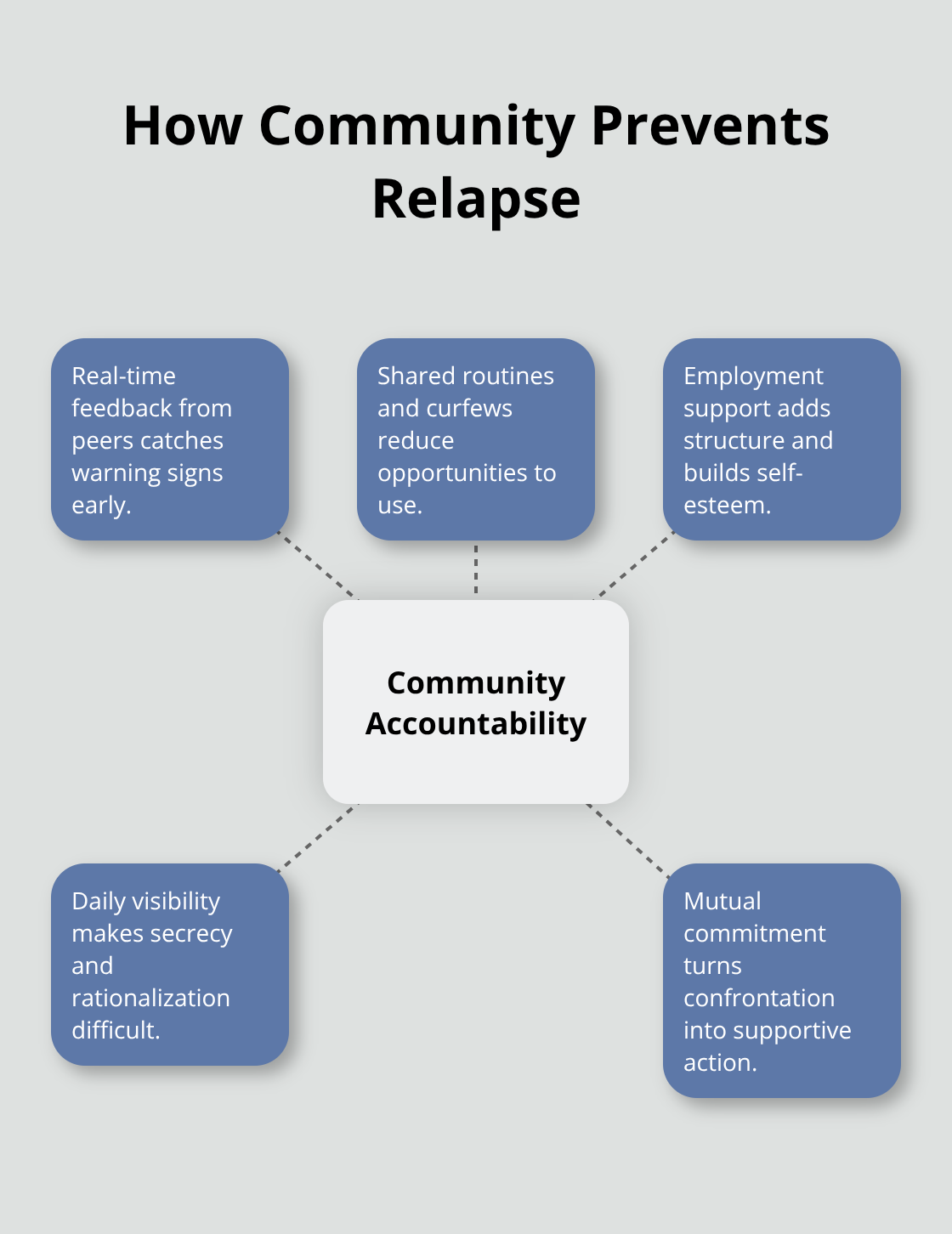
Employment support accelerates this process significantly. Many homes actively help residents find jobs, which builds income, structure, and the self-respect that comes with contributing financially. Within six months, most residents report higher confidence in their ability to stay sober, not because the environment changed but because they changed.
Skills That Last a Lifetime
The practical benefits extend beyond abstinence. You develop budgeting skills by managing rent and household expenses. You learn conflict resolution because you cannot avoid people you live with. You rebuild relationships with family members from a position of stability rather than desperation. House meetings teach communication. Shared chores teach responsibility. Drug screenings teach accountability. These are not theoretical improvements; they are skills you use for the rest of your life.
What You Actually Pay and What You Get
The cost ranges from $500 to $900 monthly depending on location, and this includes peer support, structure, and access to resources that outpatient treatment alone cannot provide. Some programs offer gender-separated housing specifically designed for men’s recovery challenges, addressing issues like anger management and rebuilding male identity in a supportive context. The first 30 days determine whether you treat this as a temporary arrangement or a genuine opportunity to rebuild. Men who commit to the structure-not just follow it, but actually commit to it-see the difference by week three. The routine stops feeling like a burden and starts feeling like the foundation that keeps you standing.
Moving Forward With Purpose
The real test comes when you face the practical question of which program fits your life. Location matters. Staff qualifications matter. House rules matter. The next section walks you through exactly what to evaluate so you choose a program that supports your specific recovery needs rather than settling for whatever has an opening.
Choosing the Right Sober Living Home
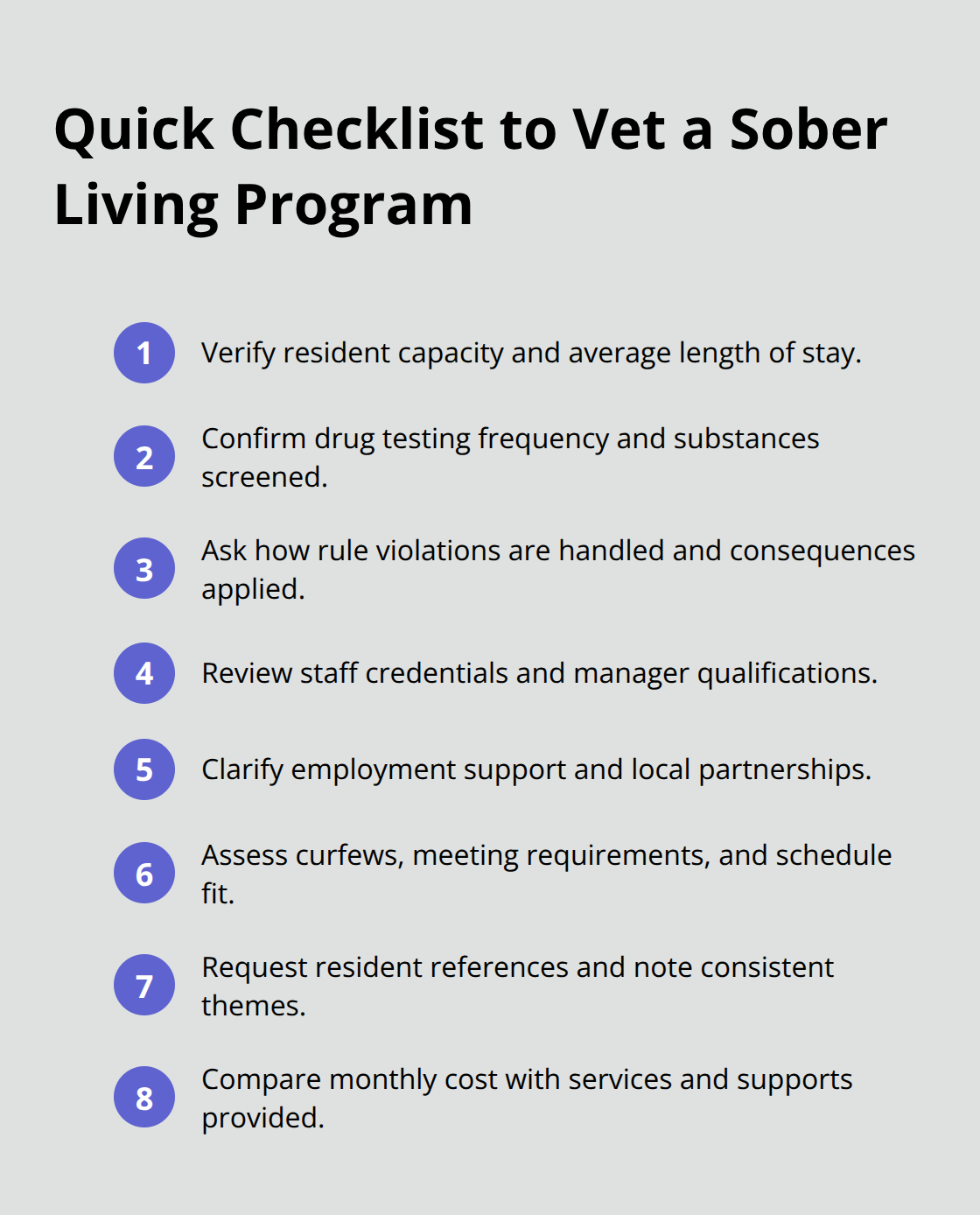
The difference between a sober living home that works and one that fails comes down to asking the right questions before you move in. Most men make this decision too quickly, focused only on availability and cost. That approach almost always backfires. Start by contacting three to five programs in your area and asking specific questions about their structure, staff, and house rules.
Questions That Reveal What a Program Actually Offers
Ask how many residents live in the home, what the average length of stay is, and whether they accept residents actively in outpatient care or only those who have completed inpatient treatment. Ask about drug testing frequency and whether it is random or scheduled. Ask what happens when someone violates house rules-do they get one warning or are they terminated immediately? Programs with clear protocols that offer flexibility on minor violations but maintain zero tolerance for substance use are more realistic than those with rigid enforcement on everything.
Ask whether they help residents find employment and how actively staff engage in that process. Some homes have employment coordinators who actively place residents with local employers; others expect you to figure it out alone. Ask about the qualifications of house managers and whether credentialed addiction counselors are on staff. The National Alliance for Recovery Residences sets standards for Level 3 and Level 4 homes, which means staff have formal training and clinical oversight. A Level 3 home has credentialed professionals on site; a Level 4 home offers clinical services directly. If a program cannot clearly explain their staffing structure or seems evasive about qualifications, move on.
What You Pay and What You Should Receive
Cost matters, but the cheapest option is rarely the best option. Programs charging $500 monthly might cut corners on staffing or fail to enforce rules consistently. Programs charging $900 monthly should offer clear value-perhaps gender-specific housing designed for men’s recovery, employment support, gym access, or peer coaching. Ask for resident references if possible, though understand that programs will provide names of satisfied residents. Listen for what they say about staff responsiveness, whether rules are enforced fairly, and whether they felt the program genuinely invested in their recovery.
House Rules That Enforce Real Accountability
House rules reveal how seriously a program takes accountability. Legitimate programs require abstinence from all substances, mandate participation in 12-step meetings or mutual aid groups, enforce curfews, and conduct regular drug screenings. Programs without clear drug testing protocols are not serious about recovery. Ask specifically about their testing frequency-monthly, weekly, or random-and what substances they screen for.
Ask whether residents must attend 12-step meetings or whether the program offers alternative support structures. Some homes require attendance at AA or NA meetings; others accept SMART Recovery or other evidence-based approaches. Both work, but you need to know what fits your recovery style. Ask about house meeting expectations, whether they are mandatory, and what typically gets discussed. Ask about chore assignments and whether they rotate. Ask what happens if rent is late or if a resident misses a mandatory meeting. Programs should have clear consequences that escalate progressively, not arbitrary decisions made by house managers. Ask whether overnight visitors are allowed and under what conditions, as this reveals how much freedom residents actually have. Ask whether residents can maintain jobs that require evening or overnight work, or whether curfews would conflict with employment. A good program balances structure with the reality that you need to build a life outside the house.
Staff Qualifications and How They Respond to Crisis
The staff members who run these homes make the difference between a program that transforms recovery and one that merely warehouses residents. Ask about house manager qualifications and whether they have personal recovery experience. A house manager who has lived through addiction recovery typically understands relapse warning signs better than someone with only clinical training. Ask whether the program employs peer recovery coaches, who are residents further along in recovery who mentor newer members.
Ask how often residents have access to outside counseling or therapy and whether the program helps coordinate that care. Ask whether the program has partnerships with local employers, vocational training programs, or community colleges. Ask how staff respond when a resident shows early relapse warning signs-do they increase support, involve family members, or move toward termination? Programs that invest in early intervention keep more residents in recovery than those that default to removal. Visit the home in person before committing. Walk through common areas, meet the house manager, and observe how current residents interact. A healthy home feels purposeful, not chaotic. Current residents should seem engaged with the program rather than just passing time. If the house manager seems dismissive of your questions or you feel unwelcome, that tells you everything about the culture. Trust that instinct. For additional support in finding treatment options, contact SAMHSA’s National Helpline, a free, confidential, 24/7 service available in English and Spanish.
Final Thoughts
Sober living homes for men work because they force you to practice recovery in real conditions while maintaining the safety net that prevents catastrophic relapse. The structure, accountability, and community you find in these homes are not luxuries-they are the mechanisms that transform treatment into lasting sobriety. Men who commit to this transition report higher employment rates, better mental health, and genuine confidence in their ability to stay sober long-term.
Contact three to five programs in your area, ask the specific questions outlined in this guide, and visit each home in person. Pay attention to how staff respond to your questions and how current residents interact with each other. Trust your instinct about whether the environment feels purposeful and supportive, and understand that a program charging $500 to $900 monthly should offer clear value through qualified staff, employment support, and consistent enforcement of house rules.
The first 30 days determine everything-men who treat sober living as a genuine opportunity rather than a temporary arrangement see measurable change by week three. We at Addiction Resource Center understand that recovery extends far beyond treatment discharge, and if you need support navigating outpatient addiction treatment, substance abuse counseling, or personalized addiction therapy as part of your recovery plan, our team in Yuba City can help.