Learn how clinicians make consent-first referrals to Addiction Resource Center’s Yuba City IOP and, when indicated, partner Ona’s detox or residential care.


Addiction Resource Center LLC provides individualized adult intensive outpatient programming in Yuba City, with in-person and telehealth options, a 24/7 call and text contact route, and coordinated access to higher levels of care through its partner, Ona Treatment Center in Browns Valley. Learn about Addiction Resource Center LLC’s local services and this referral pathway. Matching an adult patient to the right level of care and coordinating a smooth handoff forms the foundation of a successful addiction treatment referral. In Yuba City, clinicians and community providers use a specific local pathway to connect people with support. Addiction Resource Center LLC provides direct adult intensive outpatient programming, while its partner, Ona Treatment Center in Browns Valley, provides medically supervised detox and residential care. Understanding the boundaries between these services helps referring professionals direct patients to the appropriate facility and set clear expectations.

Start With Safety and Clinical Fit
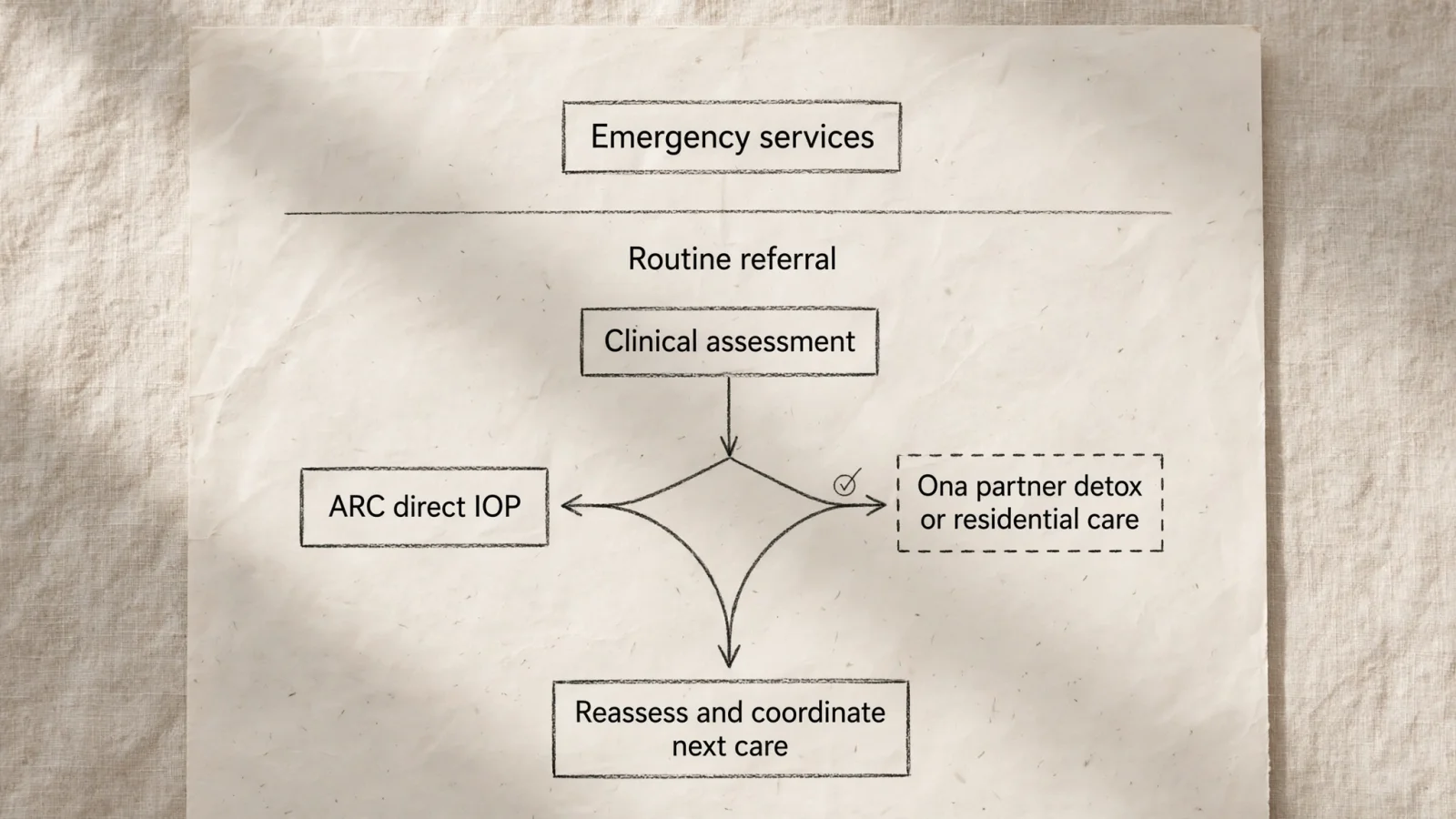
An effective referral process separates suspected opioid overdoses from routine intake requests, because CDC guidance calls for immediate emergency action. When someone shows signs of a suspected opioid overdose, the CDC advises administering naloxone if available, calling 911, and staying with the person until help arrives. This immediate response takes priority over long-term treatment planning.
Alcohol withdrawal presents another acute medical risk. Stopping alcohol after a period of heavy drinking can lead to delirium tremens, which can be life-threatening. MedlinePlus identifies delirium tremens as a medical emergency, with symptoms such as severe confusion, hallucinations, fever, and seizures. For a patient experiencing these symptoms, MedlinePlus advises going to an emergency room or calling 911, so a routine outpatient intake line is not the appropriate next step.
A structured clinical framework helps determine the appropriate care setting. The ASAM Criteria describe a multidimensional assessment that matches a person’s needs to an appropriate level of care. It considers biomedical, psychological, and social needs, as well as the person’s strengths, obstacles, resources, and support structure. Those factors give clinicians a basis for recommending an appropriate level of care across the continuum.
For Addiction Resource Center LLC, the ASAM framework functions as clinical guidance rather than a rigid admission rule. How it is implemented varies by state and insurance payer, meaning a placement recommendation generated by a clinical assessment does not guarantee that a specific facility will accept the patient or that an insurance plan will cover the service. Clinicians use the assessment to target the referral, then verify placement and benefits directly with the chosen program.
Prepare a Focused, Consent-First Handoff
A well-prepared warm handoff gives the receiving clinical team the context they need to evaluate the admission. While sending an unfiltered, hundred-page medical chart might seem thorough, it rarely helps an intake coordinator determine immediate safety or program fit. Instead, a concise summary authorized by the patient accelerates the process and prevents the individual from having to repeat their entire medical history during their first appointment.
What to Include in the Referral
Start by confirming the adult patient’s contact preferences. Document their primary phone number, language requirements, and accessibility needs. Note explicitly whether the patient consents to receiving voicemails or text messages from the treatment center, as many people have strict preferences about how programs contact them at home or work.
Detail the substance use history accurately by listing the specific substances involved, the recent pattern of use, and the date of last use. Flag any current intoxication or withdrawal concerns, and summarize any history of overdose, withdrawal seizures, or delirium. This historical data directly influences whether a program accepts a patient for outpatient care or redirects them to a medically supervised detox facility.
Provide the relevant medical and behavioral health context, because co-occurring mental health conditions, current safety issues, and chronic physical health problems often affect the timing and setting of care. Include a complete current medication list and note any allergies. If the patient currently takes medication for opioid or alcohol use disorder, identify the prescribing clinician and the date the next dose is due.
Summarize the patient’s recent treatment history and identify practical barriers to care. Note any discharge recommendations from previous facilities alongside known relapse risks. Address logistical challenges such as transportation limits, restrictive work schedules, unstable housing, or a lack of reliable internet access for telehealth sessions. Including the patient’s preference regarding family involvement and gathering specific insurance plan details helps streamline the benefits verification process.
Protect Privacy During the Handoff
If this summary is held by a federally assisted program providing substance use disorder diagnosis, treatment, or referral for treatment, its sharing is subject to federal privacy rules. HHS guidelines for 42 CFR Part 2 apply to these programs. The revised requirements took effect on April 16, 2024, and compliance was required by February 16, 2026. These regulations generally limit disclosure of records that identify someone as having, or having had, a substance use disorder, subject to consent requirements and limited exceptions.
A standard medical release form often lacks the specificity needed for these requirements. The updated rule allows a single consent for future treatment, payment, and health care operations disclosures, but this does not constitute blanket permission for every possible use or recipient. Following your organization’s current privacy procedures and using approved secure channels for all communications helps protect patient data.
Check that the patient’s written consent covers the intended recipient and the specific purpose of the disclosure. If you are exploring Is Rehab Confidential? What to Ask Before Enrolling, keep in mind that an authorization to release information to Addiction Resource Center does not automatically cover communications with its partner facility. Families may contact a program to share external observations, but the provider cannot share treatment updates without the patient executing the applicable authorization form.
Consider ARC’s Direct IOP in Yuba City
When a clinical assessment indicates that a person can safely manage their recovery in a scheduled outpatient setting, Addiction Resource Center offers a direct entry point. The facility operates an adult intensive outpatient program in Yuba City, providing services both in person and through telehealth. This level of care fits individuals who require structured clinical support but possess a stable enough living environment to remain at home. Because Addiction Resource Center LLC provides outpatient care directly, its role is distinct from Ona Treatment Center’s detox and residential services, and referrals should reflect that difference.
The Yuba City program centers on individualized treatment planning and regular progress reviews. Patients participate in cognitive behavioral therapy, motivational interviewing, and trauma-informed care sessions. The curriculum includes dedicated relapse-prevention education designed to help individuals identify triggers and develop coping strategies in their daily lives, while recovery mentors provide ongoing support bridging the gap between clinical sessions and community living.
Addiction Resource Center employs licensed addiction counselors, a licensed marriage and family therapist, a registered nurse, and a physician. This clinical team collaborates on outpatient care plans, though the program does not directly prescribe or manage specific medication-assisted treatments internally based solely on this staff list. Referring providers coordinate any specific prescribing capabilities with the intake team during the referral process.
The facility provides a 24/7 call and text contact route at 530-625-7910. You can use this number to initiate contact, coordinate a handoff, or ask questions about the admission process. This line serves as a communication channel rather than a round-the-clock clinical monitoring service or an emergency medical dispatch. Reaching out initiates the conversation but does not guarantee same-day access or automatic admission.
Checking coverage and funding options helps families plan ahead. Addiction Resource Center accepts most major insurance plans and offers a TRICARE-approved intensive outpatient option, so verifying the patient’s specific benefits confirms whether the policy covers the requested level of care at the Yuba City location. Reading Does Insurance Cover IOP for Addiction? provides a helpful baseline, although individual policy terms dictate actual out-of-pocket costs and authorization requirements.
When to Consider Partner Ona’s Detox or Residential Care
Some individuals require more support than a scheduled outpatient program can safely provide, especially if an assessment suggests a need for medically supervised withdrawal management or the continuous structure of a residential setting. Clinicians base this recommendation on clinical risk factors rather than categorical rules regarding the specific substance used, patient convenience, or initial family preferences.
Within this local pathway, Ona Treatment Center serves as the partner provider for these higher levels of care. Located in Browns Valley, Ona operates as a distinct facility separate from Addiction Resource Center, offering round-the-clock medically supervised detox and residential treatment programs. Their team manages withdrawal symptoms in a secure environment staffed 24/7 by clinical personnel.
Ona also provides medication for addiction treatment during the residential stay, which addresses the acute phase of recovery when medication adjustments require close medical observation. While Addiction Resource Center facilitates the connection to this partner, the direct delivery of detox and residential care occurs entirely through Ona.
Families and clinicians confirm clinical suitability, admission criteria, and bed availability directly with the receiving provider. Addiction Resource Center facilitates introductions but cannot promise a bed at Ona, guarantee immediate acceptance, or automatically arrange transportation to the Browns Valley facility. Furthermore, Addiction Resource Center’s accepted insurance networks and TRICARE approval do not establish coverage for Ona, making it necessary to verify benefits for residential and detox services separately with the patient’s payer.

Coordinate the Transition to Ongoing Care
Withdrawal management represents only the initial stage of recovery. Successfully completing a detox protocol stabilizes the patient physically, but long-term recovery requires ongoing clinical support. Transitioning from Ona’s residential care to Addiction Resource Center’s outpatient program involves intentional planning, documented reassessment, and explicit patient consent.
Keep Medication Plans Explicit
For patients with opioid use disorder, the CDC lists buprenorphine, methadone, and naltrexone as FDA-approved medications. The agency advises against detoxification alone without OUD medication because it increases the risks of resuming drug use, overdose, and overdose death. To maintain continuity during a care transition, the handoff should identify who will write ongoing prescriptions and when the patient needs the next dose.
Similar clarity helps individuals with alcohol use disorder. The NIAAA lists naltrexone, acamprosate, and disulfiram as FDA-approved options for ongoing treatment, and these maintenance medications operate differently from the specialized drugs used to prevent seizures during acute alcohol withdrawal. Confirm the specific prescribing arrangements with Ona or the patient’s primary provider before they step down to outpatient care, since Addiction Resource Center’s IOP does not automatically assume management of these prescriptions.
Confirm the Next Appointment and Practical Supports
A secure transition relies on confirmed logistics. The residential facility can assist by transmitting a complete discharge summary that highlights the patient’s progress, follow-up risks, and immediate relapse-prevention needs. Waiting until a patient returns home to schedule their first outpatient appointment can increase the chance they will drop out of care.
Confirm the exact date, time, and format of the first intensive outpatient session before the patient leaves residential treatment. If the patient will attend in person, verify their transportation arrangements. For telehealth options, ensure they have access to a reliable device, a stable internet connection, and a private space in their home.
Financial coordination remains an ongoing step during transitions. If you are helping a patient reviewing Choosing Alcohol Rehab Centers in Northern California, verify network status, required authorizations, and coverage limits separately for both providers. A return to substance use or a change in clinical risk during outpatient care prompts a formal reassessment of the patient’s needs rather than an automatic discharge from the program. The ASAM framework supports moving patients between levels of care as their condition evolves.
Common Questions About Addiction Treatment Referrals
Does Everyone Need Detox Before Starting IOP?
Admission to an intensive outpatient program depends on a clinical assessment of the individual’s current medical stability and withdrawal risk. Some patients can safely cease substance use and begin scheduled outpatient sessions without requiring hospital-level withdrawal management. Intensive outpatient care does not manage acute withdrawal symptoms, so a qualified clinician evaluates the patient to ensure outpatient care is a safe starting point.
Who Provides Detox and Residential Care in This Pathway?
Ona Treatment Center provides medically supervised detox and residential care in Browns Valley, while Addiction Resource Center LLC provides direct adult intensive outpatient care in Yuba City. The two organizations operate as partners within this referral pathway, but they deliver distinct levels of care at different locations. Referring professionals clarify these boundaries to patients and families to set realistic expectations.
How Should Someone Transition From Residential Care to IOP?
The transition requires a planned, consented warm handoff rather than an automatic administrative transfer. The residential provider evaluates the patient’s readiness for step-down care and updates their clinical assessment. With the patient’s authorization, the clinical team shares a discharge summary, confirms medication management plans, and schedules the first outpatient appointment before the residential stay concludes.
Does ARC’s Insurance or TRICARE Information Cover Ona?
Information regarding insurance networks and TRICARE approval advertised by Addiction Resource Center applies strictly to its direct outpatient services. Ona Treatment Center maintains its own payer contracts and billing procedures for detox and residential care. Families and referring clinicians verify network status, out-of-pocket costs, and prior authorization requirements separately for each facility and each specific service.
Can a Family Member Contact ARC or Receive Updates?
Family members can contact the facility to ask general questions about the referral process or to share their own observations regarding a relative’s substance use. Programs welcome this collateral information to help build a complete clinical picture. The treatment provider cannot confirm a patient’s presence, discuss their diagnosis, or share treatment updates without a signed release form that complies with federal privacy regulations. Encouraging the adult patient to specify exactly how and when they want their family involved helps maintain trust and legal compliance.
Addiction Resource Center LLC provides adult intensive outpatient treatment in Yuba City, offering in-person and telehealth options alongside coordinated access to partner detox and residential programs. If you are a clinician making an addiction treatment referral or an individual seeking help, call or text 530-625-7910 to discuss program fit, verify insurance, and coordinate an assessment. Visit Addiction Resource Center to learn more about our local services and partner pathways.