You may be searching for a drug detox timeline because you're thinking about stopping, supporting someone you love, or trying to understand why withdrawal hasn't followed a neat schedule. The uncertainty can feel frightening. One person may develop symptoms within hours, while another doesn't feel the full impact until later. The most important point is …


You may be searching for a drug detox timeline because you're thinking about stopping, supporting someone you love, or trying to understand why withdrawal hasn't followed a neat schedule. The uncertainty can feel frightening. One person may develop symptoms within hours, while another doesn't feel the full impact until later.
The most important point is that detox doesn't have one universal calendar. The substance involved, the person's health, and the level of dependence all shape the experience. Detox is also not a cure for substance use disorder. It's a medically important bridge that helps the body move through acute withdrawal safely and prepares the person for ongoing treatment.
Table of Contents
- Understanding the Basics of Detoxification
- Withdrawal Timelines by Substance Class
- Factors That Influence Detox Duration and Severity
- Recognizing Medical Risks and Emergency Symptoms
- The Role of Medically Supervised Detox and MAT
- Life After Acute Withdrawal and Long-Term Recovery
- Taking the First Step Toward Compassionate Care
Understanding the Basics of Detoxification
Consider someone who has been drinking heavily and decides to stop without medical guidance. At first, they may feel anxious, shaky, nauseated, or unable to sleep. They might assume that getting through the first uncomfortable night means the danger has passed. With alcohol, that assumption can be unsafe because more serious complications may appear later in the withdrawal course.
Detoxification is the process of stopping or reducing substance use while clinicians monitor and manage the body's withdrawal response. It may include observation, symptom assessment, hydration, emotional support, and medication when clinically appropriate. The aim is to help a person reach a safer, more stable condition, not to resolve every physical, psychological, and social factor connected to addiction.
A practical way to think about detox: it clears the immediate medical hurdle so treatment can begin with greater safety and stability.
Detox may reduce acute symptoms, but it doesn't automatically teach someone how to handle cravings, repair relationships, recognize triggers, or build a substance-free routine. Those skills usually require counseling, structured treatment, recovery support, and continuing medical care. A useful patient-oriented explanation of the process is available in this guide to what happens during detox.
Families also sometimes use “detox” to describe general cleansing, dietary changes, or wellness routines. Resources on real cleanse tips and habits may discuss everyday wellness, but those practices aren't a substitute for medical withdrawal management from alcohol, opioids, benzodiazepines, or other substances.
The safest plan starts with an honest clinical assessment. Tell the treatment team what was used, how often it was used, when the last dose or drink occurred, and whether other substances were involved. Accurate information helps clinicians anticipate complications and choose an appropriate level of care without judgment.
Withdrawal Timelines by Substance Class
There isn't one standard drug detox timeline because substances leave the body and affect the nervous system differently. Drug half-life, meaning how quickly the body processes a substance, influences when withdrawal begins and how long symptoms may continue. Short-acting opioids generally produce an earlier and more compressed withdrawal course, while long-acting opioids can create delayed symptoms that continue for substantially longer.
| Substance Class | Symptom Onset | Peak Severity | Acute Duration |
|---|---|---|---|
| Alcohol | 6 to 24 hours after stopping | Usually 36 to 72 hours | About 2 to 10 days; delirium tremens can persist up to 8 days |
| Short-acting opioids, such as heroin | About 6 to 12 hours after the last dose | Around 36 to 72 hours | Roughly 4 to 10 days |
| Long-acting opioids, such as methadone | About 12 to 48 hours after the last dose | The course may build more gradually | About 10 to 20 days |
| Benzodiazepines | Timing varies by medication and dependence pattern | Symptoms may intensify over an extended period | Can last weeks to months |
| Cannabis | Timing varies between individuals | Symptoms often involve sleep, mood, and cravings | About 4 to 14 days |
| Stimulants | Timing varies by substance and use pattern | Fatigue, low mood, and cravings may dominate | The psychological recovery period may extend beyond acute physical symptoms |
| Nicotine | Timing varies by dependence and recent use | Cravings and irritability may be prominent | The experience differs widely between individuals |
The alcohol timeline deserves special caution. According to the National Center for Biotechnology Information's clinical overview of alcohol withdrawal, early symptoms can appear within 6 to 24 hours, symptoms are often most severe between 36 and 72 hours, and delirium tremens typically develops between 48 and 96 hours after cessation. Most acute symptoms last about 2 to 10 days, although severe delirium tremens can persist for up to 8 days.
Short-acting opioid withdrawal often starts around 6 to 12 hours after the final dose. Symptoms commonly peak around 36 to 72 hours and last approximately 4 to 10 days. The experience can include flu-like discomfort, muscle aches, sweating, gastrointestinal symptoms, restlessness, and strong cravings. Although opioid withdrawal is often not medically fatal by itself, severe discomfort can increase the risk of returning to use.
Long-acting opioids follow a different pattern. Methadone withdrawal may not begin until 12 to 48 hours after the last dose and can continue for 10 to 20 days, according to the National Institute on Drug Abuse review of opioids and treatment of opioid dependence. This delayed, longer course is why a person shouldn't judge their expected treatment duration by someone else's heroin withdrawal experience. Additional context is available in this explanation of how long methadone withdrawal can last.
Why some timelines are incomplete
Benzodiazepine withdrawal can last weeks to months, while cannabis withdrawal may last 4 to 14 days, as described in this overview of drug detox timelines. Stimulant withdrawal may be driven less by dangerous physical instability and more by exhaustion, depressed mood, anxiety, sleep changes, impaired concentration, and cravings. Nicotine withdrawal can also involve irritability, restlessness, sleep disruption, and persistent urges, though each person's course is different.
The table provides orientation, not a personal prediction. A clinician may adjust monitoring and treatment as symptoms emerge, especially when more than one substance is involved.
Factors That Influence Detox Duration and Severity
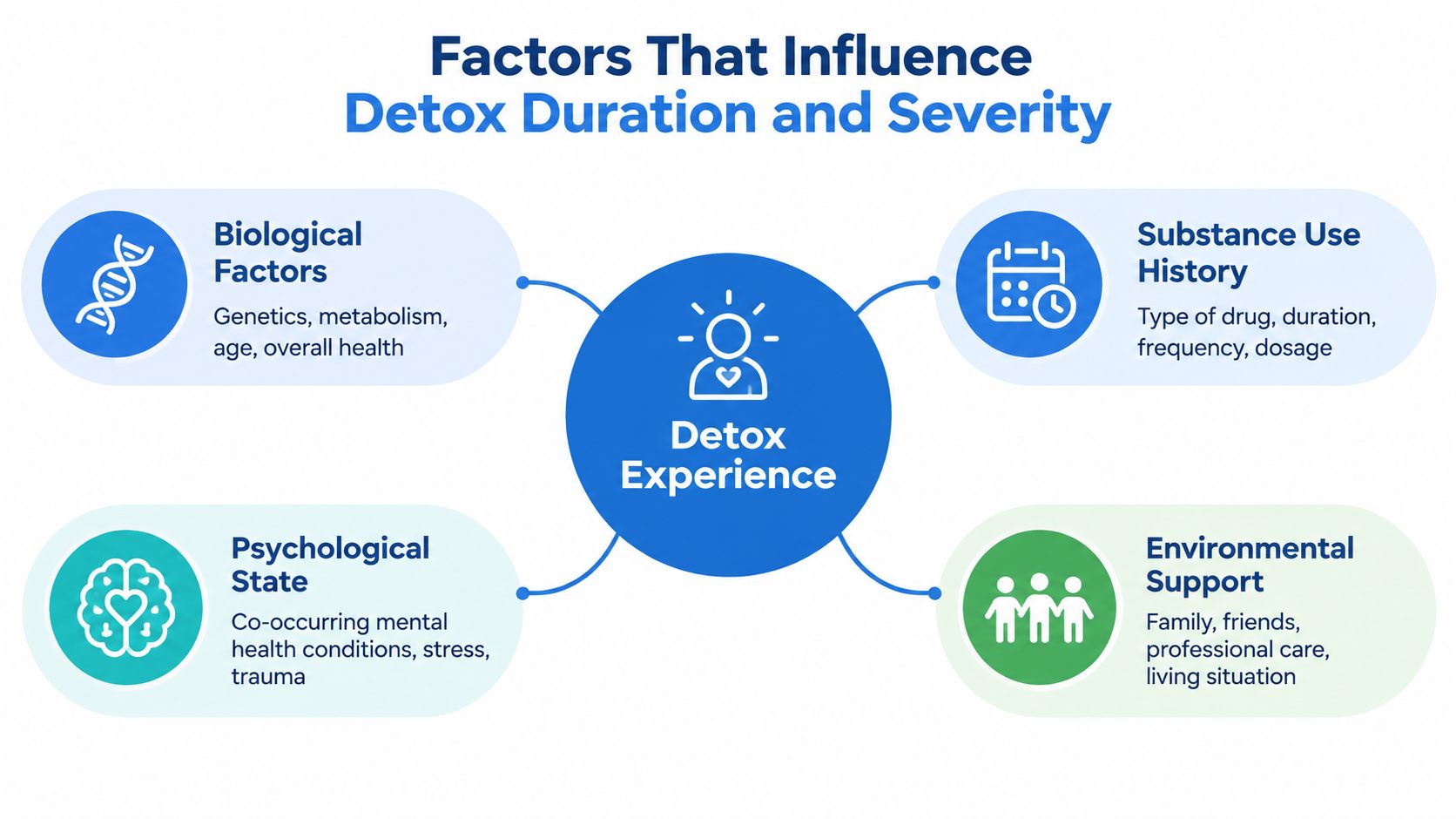
Two people can stop using the same substance and have very different withdrawal experiences. The calendar provides a broad clinical pattern, but it can't account for every factor affecting the brain, heart, liver, sleep, mood, and daily environment.
A person's substance use history matters. Duration of use, frequency, dosage, the specific drug, and whether multiple substances were combined can all affect dependence and withdrawal. The last dose also doesn't tell the whole story. A clinician needs to understand the broader pattern, including previous attempts to stop and any earlier complications.
Health adds another layer. Medical conditions, nutrition, hydration, sleep, age, and the body's ability to process medication can influence how someone responds. Stress, trauma, anxiety, depression, and other co-occurring mental health needs may make cravings and emotional symptoms harder to manage even when the most visible physical symptoms are easing.
The environment changes the practical experience
A quiet, supervised setting can make it easier to rest, receive fluids, take prescribed medication, and report new symptoms. By contrast, a home environment with substance access, conflict, caregiving responsibilities, or limited support may make it difficult to follow a safety plan.
The useful question isn't “How long will detox take for everyone?” It's “What factors could make this person's withdrawal less predictable or more dangerous?”
Clinicians use these details to decide whether someone needs medical detox, residential care, outpatient monitoring, or another level of support. A longer or more difficult course isn't a personal failure. It means the treatment plan needs to match the person rather than forcing the person into a fixed schedule.
Recognizing Medical Risks and Emergency Symptoms
Withdrawal can be uncomfortable without being an emergency, but some symptoms signal a potentially life-threatening complication. The distinction matters most with alcohol and benzodiazepines, where abrupt cessation can lead to seizures, severe confusion, or delirium.
If someone develops a seizure, severe confusion, hallucinations, extreme agitation, loss of consciousness, trouble breathing, chest pain, or signs of a serious medical crisis, call emergency services immediately. Don't leave the person alone, and don't try to restrain them during a seizure. Keep the area clear, note what happened, and tell emergency responders which substances were used and when the last use occurred.

Symptoms that require urgent evaluation
Seek immediate medical help for:
- Seizures: These can occur during severe alcohol or sedative withdrawal and require emergency assessment.
- Delirium or severe confusion: Disorientation, hallucinations, and rapidly changing awareness may indicate a dangerous withdrawal state.
- Breathing or chest symptoms: Difficulty breathing, chest pain, or collapse should never be dismissed as “just withdrawal.”
- Severe vomiting or dehydration: Inability to keep fluids down can worsen medical instability.
- Suicidal thoughts or unsafe behavior: Intense depression, hopelessness, paranoia, or thoughts of self-harm require immediate support.
Some symptoms, including sweating, tremors, nausea, anxiety, insomnia, aches, and cravings, may be managed in a clinical setting when a qualified team is monitoring the person. That doesn't mean they should be ignored. Symptoms can change, and a person who appears stable early in the process may need a higher level of care later.
This short video offers additional general education about withdrawal and treatment considerations:
Never use an online timeline to decide whether abrupt cessation is safe. Contact a medical professional before stopping alcohol, benzodiazepines, or multiple substances, especially if there's a history of seizures, severe withdrawal, or major medical illness.
The Role of Medically Supervised Detox and MAT
Unmanaged withdrawal asks the body to handle a major biological adjustment without professional observation. Medically supervised detox adds assessment, monitoring, symptom management, and a plan for what comes next. The difference isn't about avoiding every uncomfortable sensation. It's about recognizing complications early and reducing preventable suffering.
A clinical team may monitor vital signs, hydration, orientation, sleep, mood, and the progression of withdrawal symptoms. Depending on the substance and the person's medical needs, clinicians may provide fluids, nutrition, and medications for specific symptoms. Alcohol and sedative withdrawal require particular caution because treatment may need to address seizure risk and nervous system instability.
Medication-assisted treatment supports more than detox
For opioid use disorder, medication-assisted treatment, often called MAT, can help control withdrawal and cravings while a person begins recovery. Buprenorphine and methadone are examples of medications used in opioid treatment, while other medications may help reduce particular withdrawal symptoms. These treatments aren't a replacement for recovery. They're medical tools that can support stability and make it more realistic to participate in counseling and daily life.
Alcohol use disorder may also involve medication as part of a broader treatment plan. A clinician considers the person's drinking pattern, health history, withdrawal risk, current medications, and recovery goals before recommending an approach.
Good detox care doesn't stop at physical stabilization. It protects the next decision, whether that's starting MAT, entering residential treatment, or moving into outpatient care.
Counseling remains important because substance use often intersects with grief, trauma, anxiety, depression, family conflict, pain, and housing or employment stress. People looking for complementary emotional and behavioral support may find this discussion of holistic counseling for substance use useful when comparing care options. For a closer look at clinical withdrawal management, see what medically supervised detox involves.
The strongest plan connects medical care with therapy, peer support, practical structure, and follow-up. Detox alone may end the immediate withdrawal episode, but continuing care addresses the conditions that made returning to substance use feel necessary.
Life After Acute Withdrawal and Long-Term Recovery
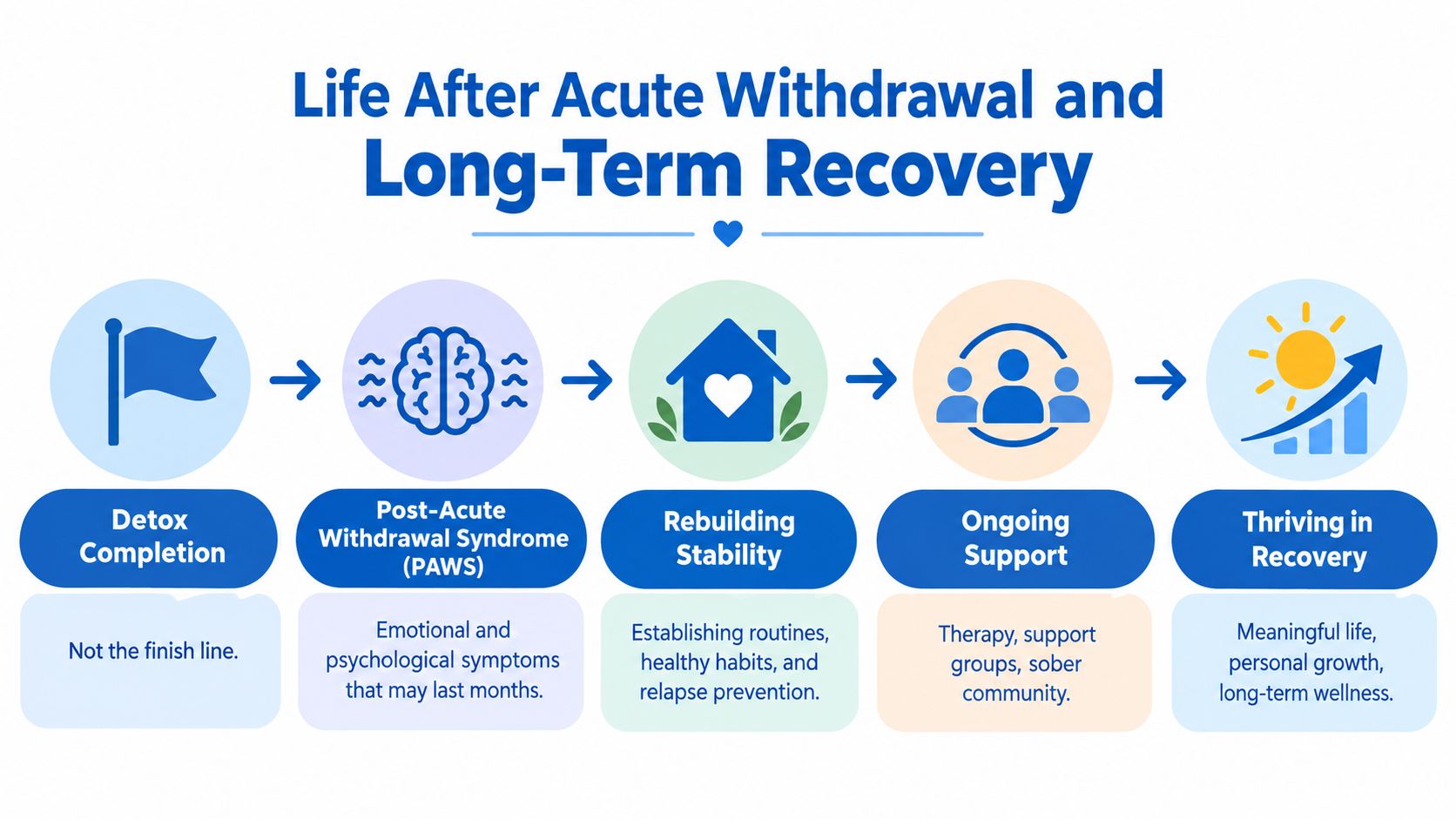
Completing acute withdrawal can bring relief, but it is the beginning of recovery rather than its endpoint. The body may have passed its most intense physical adjustment while the brain, sleep cycle, mood, and stress response remain vulnerable.
Some people develop post-acute withdrawal symptoms, or PAWS. Cravings, disrupted sleep, low mood, irritability, anxiety, reduced concentration, and emotional fluctuations may continue for weeks or months, especially after longer-term substance use. The course differs from person to person, and symptoms do not affect everyone in the same way.
Detox creates an opening for treatment
After acute withdrawal, treatment can continue through residential rehabilitation, a structured outpatient program, individual therapy, group support, or medication management. Medication-assisted treatment may reduce cravings and support stability for some people, while counseling and practical support address the habits and circumstances connected with substance use. The appropriate plan depends on safety, housing, work and family responsibilities, mental health, relapse risk, and clinical recommendations.
Ongoing care can help someone:
- Recognize triggers: Identify people, places, emotions, and situations linked to substance use.
- Practice coping skills: Use healthier responses to stress, cravings, conflict, and uncomfortable emotions.
- Restore routine: Establish regular sleep, meals, appointments, responsibilities, and recovery activities.
- Plan for setbacks: Create a response plan before a craving or lapse becomes a crisis.
- Build connection: Maintain relationships with counselors, recovery mentors, peers, family, or other trusted supports.
Recovery support is a continuing process, and research still has unanswered questions about how long it should last and when medications for opioid use disorder can safely be stopped, as described in this research review on recovery support after detox. Treatment decisions therefore need to reflect the individual rather than follow a fixed endpoint.
Recovery does not require feeling perfect. It requires enough support to keep making safer choices while stability returns.
Taking the First Step Toward Compassionate Care
Calling a treatment provider doesn't commit you to a specific program. It starts a conversation about safety, symptoms, insurance, and the level of care that fits the situation.
Before the call, write down the substance or substances involved, the approximate last use, current symptoms, relevant medical conditions, prescribed medications, and any history of seizures or severe withdrawal. Ask whether the provider offers medical oversight, MAT when appropriate, mental health treatment, residential or outpatient options, and a clear plan after detox.
A reputable intake team should explain what happens next in plain language. That may include a clinical assessment, insurance verification, discussion of available beds or appointments, transportation questions, and coordination with family when the patient gives permission. Ask what happens if symptoms become more serious and whether the program can arrange a higher level of medical care.
For adults in Yuba City and Northern California, Addiction Resource Center LLC provides medically supervised detox with MAT, residential rehabilitation through its partner facility, and an IOP offered in person and through telehealth. Its multidisciplinary team includes medical and nursing staff, licensed counselors, an LMFT, and recovery mentors who help create individualized treatment and aftercare plans.
You don't need to solve the entire recovery journey today. You only need to share enough information for a qualified professional to help you choose a safe next step.
Addiction Resource Center LLC can help adults and families understand the drug detox timeline, arrange an assessment, and connect detox with MAT, residential rehabilitation, or outpatient support. Visit Addiction Resource Center LLC to request guidance and take the first step toward coordinated, compassionate care.