Six hours after the last drink, a person may arrive at the emergency department with trembling hands, a racing heart, sweating, nausea, and rising panic. They may still be answering questions clearly, yet the family wonders whether the symptoms are “bad enough” for hospital care. That uncertainty is common, but alcohol withdrawal can change quickly, …

Six hours after the last drink, a person may arrive at the emergency department with trembling hands, a racing heart, sweating, nausea, and rising panic. They may still be answering questions clearly, yet the family wonders whether the symptoms are “bad enough” for hospital care. That uncertainty is common, but alcohol withdrawal can change quickly, and the safest decision depends on medical risk, not on willpower or how uncomfortable someone appears at triage.
Alcohol withdrawal treatment in hospital combines repeated assessments, medication, fluids, vitamins, and planning for what happens after the acute crisis. The hospital team's job isn't just to give a sedative. It's to identify danger early, treat the overactive nervous system, check for other illnesses, and build a safer transition into ongoing recovery.
Table of Contents
- When Hospital Care Becomes the Safest Option
- How Withdrawal Symptoms Unfold Hour by Hour
- How the CIWA-Ar Score Guides Treatment
- Benzodiazepines as the First-Line Medication
- Adjunctive Medications and ICU-Level Monitoring
- Ruling Out Look-Alike Conditions Before More Sedation
- Planning the Next Step Before Discharge
- Warning Signs That Mean Call 911 Now
When Hospital Care Becomes the Safest Option
The first decision is whether someone can be monitored safely outside the hospital. A patient with a previous withdrawal seizure, delirium tremens, serious medical illness, pregnancy, or a home without reliable supervision may need inpatient care even if the current tremor looks mild. A history of failed outpatient detox also matters because it shows that a less intensive setting hasn't provided enough protection before.
Hospital clinicians also look at the pattern of alcohol use, current vital signs, hydration, nutrition, mental status, and access to support. There isn't one drink count that reliably predicts withdrawal severity for every person. The safest assessment considers the whole clinical picture.
What inpatient care adds
A hospital provides several protections that are difficult to reproduce at home:
- Repeated observation: Nurses reassess symptoms, blood pressure, heart rate, alertness, and orientation at scheduled intervals.
- Rapid medication adjustment: The prescriber can increase, change, or add medication when symptoms worsen instead of waiting for a clinic appointment.
- Treatment for dehydration and deficiency: The team can provide intravenous fluids, thiamine, and other replacement therapy when oral intake is poor.
- Emergency response: Staff can respond immediately to a seizure, dangerous confusion, unstable vital signs, or breathing problems.
- Diagnostic testing: Blood tests, imaging, and other evaluations can identify infection, bleeding, low blood sugar, or another condition that resembles withdrawal.
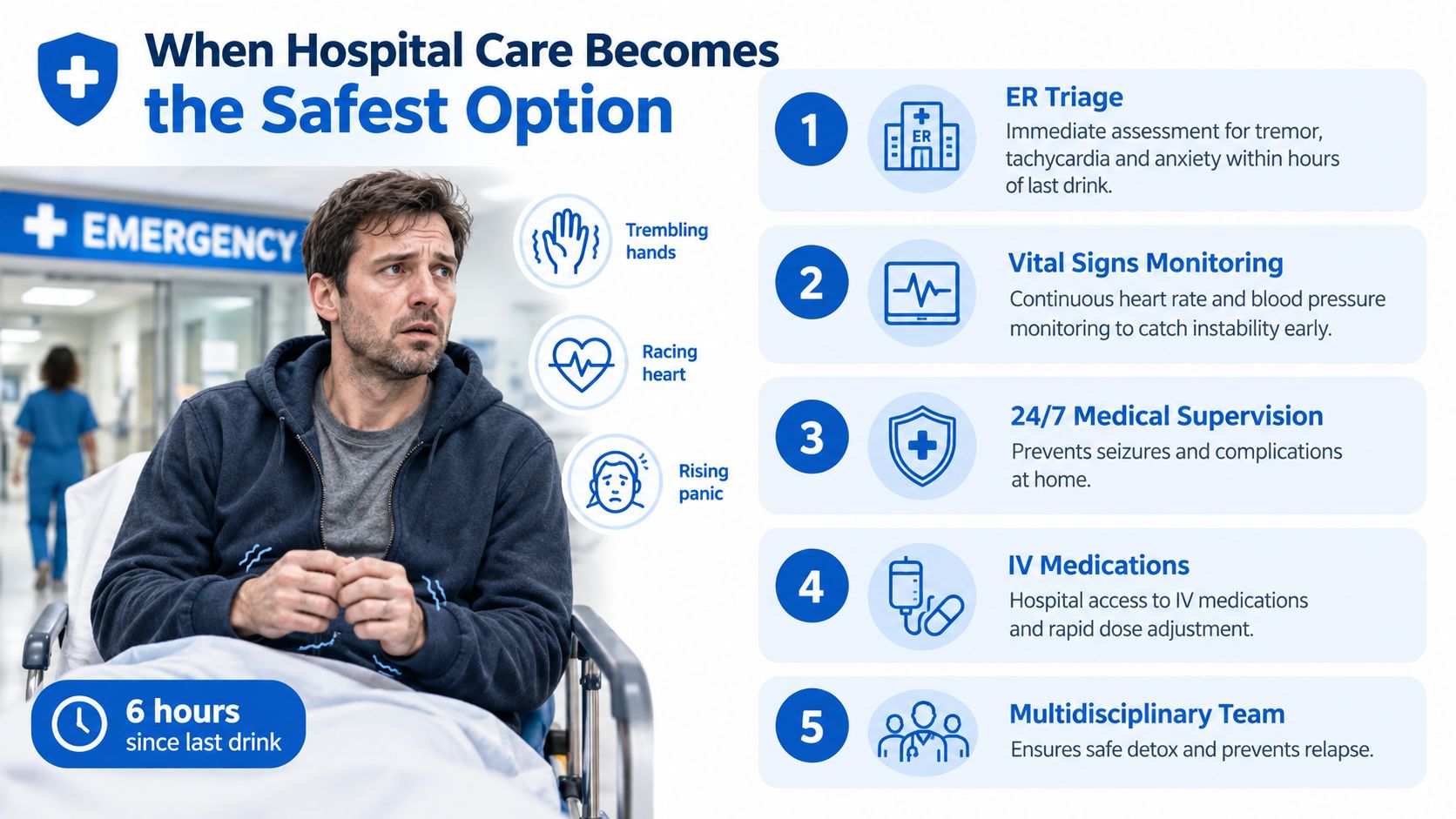
Practical rule: Choosing inpatient care isn't an admission of failure. It's a clinical decision to place a potentially unstable condition where trained staff, medication, monitoring, and emergency support are available.
Outpatient detox may be appropriate for carefully selected people with mild symptoms, stable health, dependable supervision, and rapid access to clinicians. It isn't the same as trying to stop drinking alone. A person who is unsure which setting is appropriate can review what medically supervised detox involves or ask an emergency clinician for an assessment. For people seeking a structured withdrawal setting, Cedar Hill Behavioral Health detox is another resource to discuss with a qualified professional.
How Withdrawal Symptoms Unfold Hour by Hour
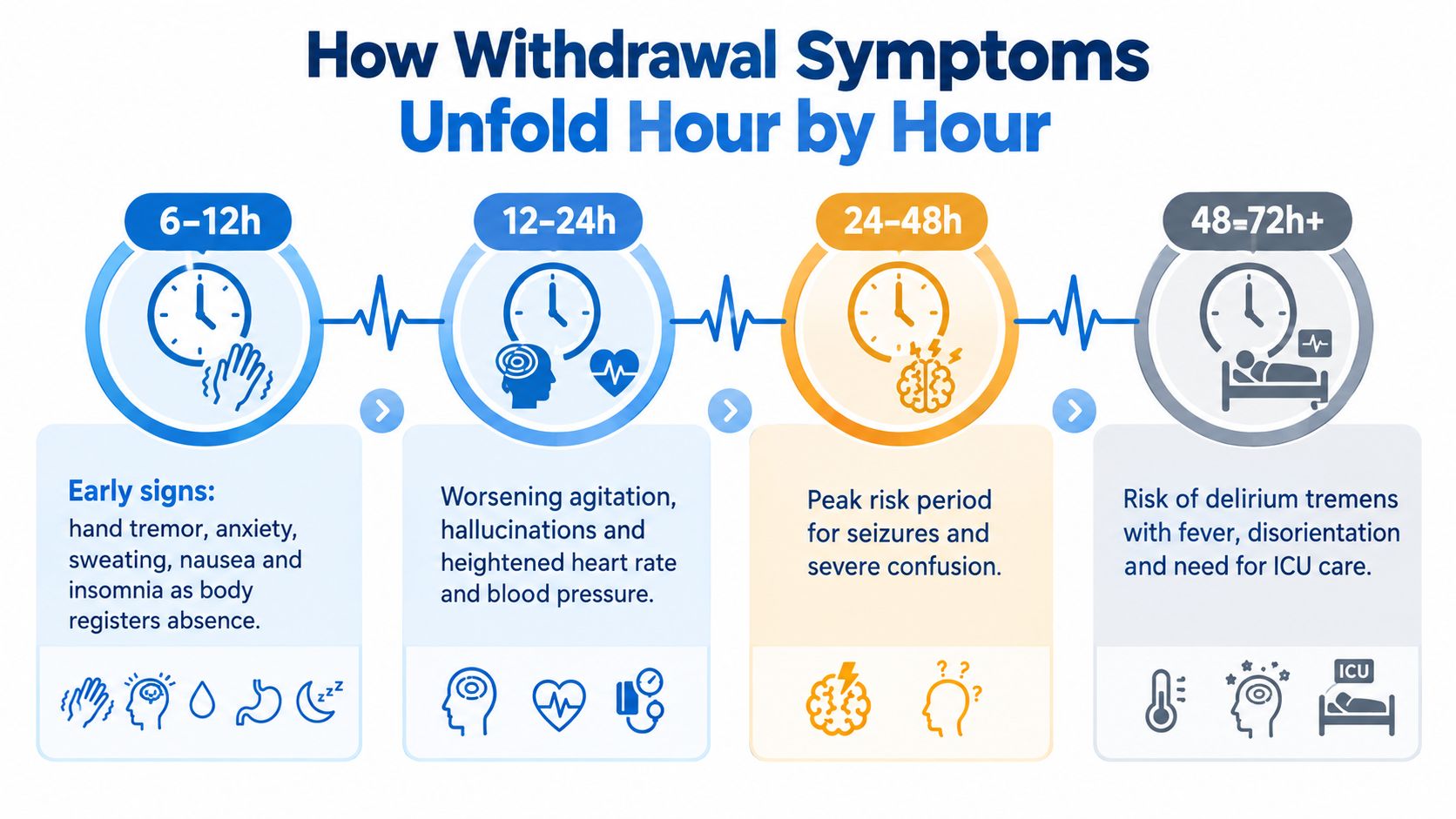
Withdrawal follows a recognizable pattern, but the clock isn't identical for everyone. The time since the last drink helps clinicians anticipate risk, while symptoms and vital signs determine what treatment a patient needs.
During roughly 6 to 12 hours, early symptoms can include hand tremor, anxiety, sweating, nausea, headache, and insomnia. A patient may struggle to hold a coffee cup steady or feel unable to sit still. These symptoms often reflect the nervous system becoming overactive as alcohol's depressant effect fades.
In the next window, around 12 to 24 hours, agitation, sweating, fast heart rate, and high blood pressure may intensify. Some people develop alcoholic hallucinosis, such as flashing lights, voices, or a sensation of insects crawling on the skin, while remaining relatively aware of their surroundings. Hallucinations require medical assessment because they can overlap with other emergencies.
The high-risk windows
The 24-to-48-hour period is a particularly important seizure-risk window. A generalized withdrawal seizure can occur while a patient is still able to answer questions before or after the event. That's why a calm conversation doesn't eliminate the need for monitoring.
By approximately days 2 to 4, delirium tremens may emerge. Warning features include severe confusion, fluctuating consciousness, fever, marked sweating, shaking, hallucinations, and dangerous changes in heart rate or blood pressure. This condition can require intensive monitoring and rapid medication escalation.
The timeline explains why early symptoms shouldn't be dismissed as “just anxiety.” It also explains why a hospital uses scheduled reassessments rather than checking only when a patient presses the call button. For a plain-language symptom overview, see this guide to alcohol detox symptoms.
The course can be shorter, longer, milder, or more severe than this general sequence. A prior seizure or delirium tremens episode, heavy daily use, coexisting illness, dehydration, and electrolyte problems can increase concern. Hospital monitoring exists because clinicians can't predict the entire course from the first symptom alone.
How the CIWA-Ar Score Guides Treatment
The Clinical Institute Withdrawal Assessment for Alcohol, Revised, commonly called CIWA-Ar, gives nurses and prescribers a shared way to describe withdrawal severity. It doesn't replace clinical judgment, and it may be unreliable in a patient who is delirious, intubated, unable to communicate, or experiencing another condition that affects the score.
The tool examines ten areas:
- Nausea and vomiting
- Tremor
- Paroxysmal sweats
- Anxiety
- Agitation
- Tactile disturbances
- Auditory disturbances
- Visual disturbances
- Headache
- Orientation and clouding of sensorium
Each item receives a graded score, commonly from 0 to 7, although the available range varies by item. The nurse adds the items to create a total that can guide symptom-triggered medication. A patient with tremor scored at 3, sweats at 3, anxiety at 2, and mild nausea at 1 has a total of 9. That sits just below a commonly used treatment threshold of 10, although the prescriber may treat sooner if the clinical picture warrants it.
A practical scoring table
| Item | Score range | What it measures | Score threshold | Typical action |
|---|---|---|---|---|
| Nausea and vomiting | 0 to 7 | Stomach upset and vomiting | Rising score | Treat symptoms, assess hydration, and consider withdrawal medication |
| Tremor | 0 to 7 | Visible or felt shaking | Persistent or worsening score | Reassess and consider symptom-triggered medication |
| Sweats | 0 to 7 | Sweating not explained by the room or activity | Increasing score | Check vital signs and repeat assessment |
| Anxiety | 0 to 7 | Patient-reported nervousness or panic | Moderate score | Provide reassurance and evaluate medication need |
| Agitation | 0 to 7 | Restlessness and inability to remain calm | Moderate to high score | Increase observation and consider escalation |
| Tactile, auditory, and visual disturbances | 0 to 7 each | Abnormal sensations, sounds, or sights | Any concerning change | Rule out delirium and other causes, then treat |
| Headache | 0 to 7 | Withdrawal-related head pain | Moderate or severe score | Assess for neurologic warning signs |
| Orientation | 0 to 4 in common versions | Awareness of person, place, and time | Any decline | Treat confusion as a potential emergency |
A score above 18 often prompts more aggressive dosing and consideration of a higher-monitoring bed. A downward trend supports less frequent medication and eventual tapering. A nurse may reassess every 1 to 4 hours during the first day when medication is required, then every 4 to 8 hours after stabilization, as described in hospital withdrawal monitoring guidance.
The important point is that CIWA-Ar isn't a grade that a patient passes or fails. It's a communication tool. The bedside nurse records what changed, the prescriber responds to the pattern, and the team can see whether treatment is calming the nervous system or whether a different diagnosis needs attention.
Benzodiazepines as the First-Line Medication
Benzodiazepines are the usual first-line medication because they strengthen gamma-aminobutyric acid, or GABA, the brain's main inhibitory signaling system. Long-term alcohol exposure disrupts the balance between inhibition and excitation. When alcohol stops abruptly, the brain can become overactive, producing tremor, agitation, high blood pressure, hallucinations, and seizures. Benzodiazepines help restore inhibitory control and reduce the risk of severe complications.
The choice of medication depends on liver function, age, frailty, respiratory status, prior response, and hospital protocol. Lorazepam and oxazepam are often selected when liver impairment makes accumulation of active metabolites a concern. Diazepam and chlordiazepoxide may provide smoother coverage in otherwise healthy adults because their effects last longer.
| Medication | Onset | Duration | Preferred when |
|---|---|---|---|
| Lorazepam | Relatively prompt | Intermediate | Liver impairment, frailty, or a need for predictable metabolism |
| Oxazepam | Slower than some alternatives | Intermediate | Liver impairment and less urgent symptom control |
| Diazepam | Rapid | Long | Front-loading or smooth control in suitable adults |
| Chlordiazepoxide | Moderate | Long | Fixed-schedule or symptom-triggered treatment when prolonged coverage is appropriate |
Why the dose can change quickly
In a symptom-triggered regimen, a nurse might assess a patient, calculate a CIWA-Ar score, give the ordered dose when the score crosses the protocol threshold, and reassess after the specified interval. If the score remains high, the prescriber may authorize another dose or a larger dose. If the score falls, the next dose may be delayed or omitted.
Front-loading uses larger early doses for severe withdrawal, aiming to stabilize the patient before the nervous system escalates further. A fixed-dose taper follows a planned schedule, sometimes with additional medication available for breakthrough symptoms. Hospitals may combine fixed and symptom-triggered approaches when the patient's history or symptoms make a single strategy less suitable.
Benzodiazepines can cause sleepiness, poor coordination, low blood pressure, and slowed breathing. That's why monitoring continues even when medication is given orally. Alcohol, opioids, sleep medicines, and other sedatives can increase respiratory risk.
Clinicians and nurses who want deeper medication education may find nursing CE on substance use useful as a professional learning resource. Patients shouldn't change a benzodiazepine dose or create a home taper without direct medical instructions.
Adjunctive Medications and ICU-Level Monitoring
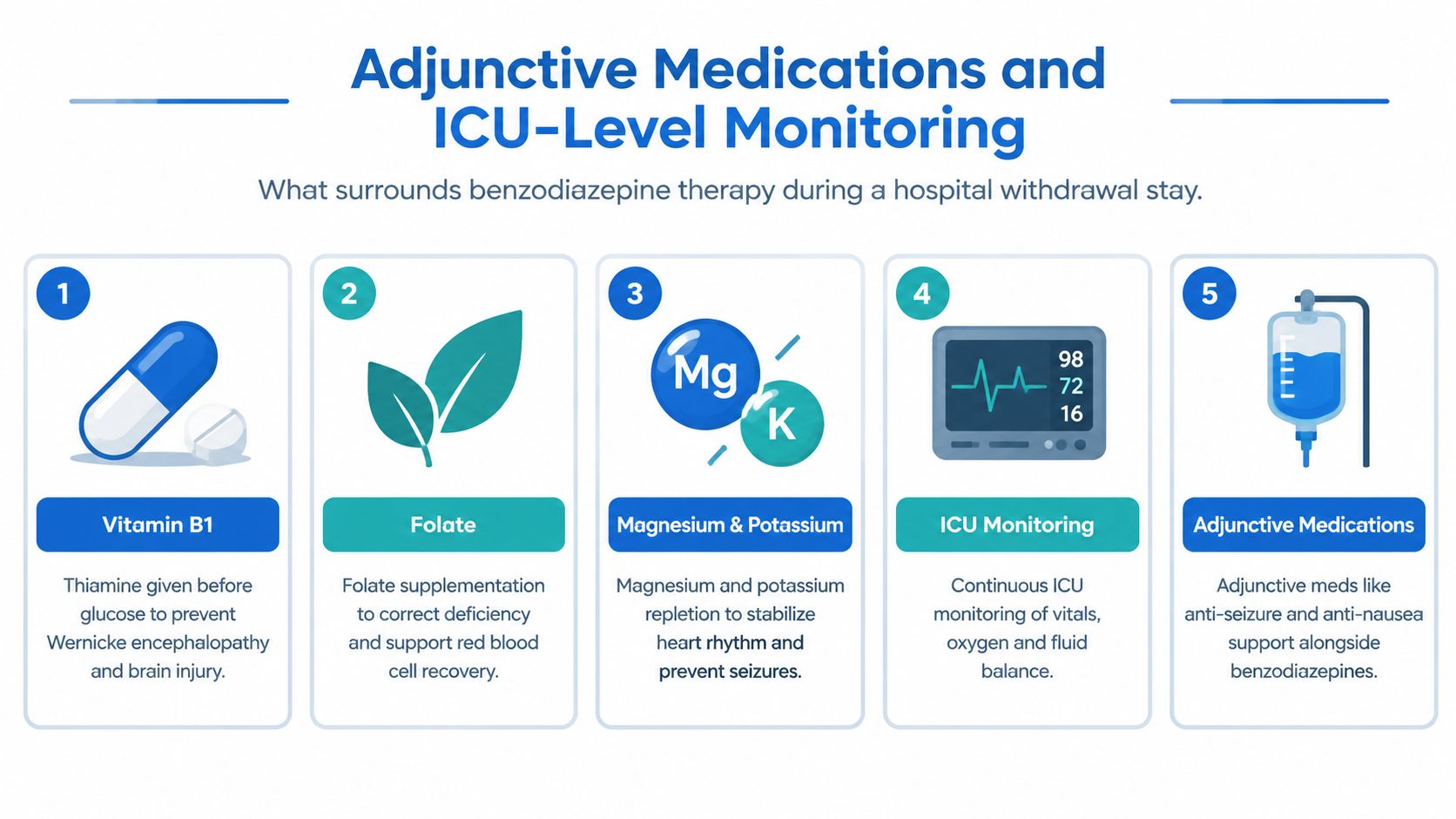
Benzodiazepines are only one part of hospital care. A patient who has eaten poorly or vomited may need fluids and electrolyte correction, while a person with prolonged heavy alcohol use may need nutritional support. Expert guidance recommends thiamine 100 mg daily, folic acid 1 mg daily, and a multivitamin during withdrawal care, alongside attention to fluids and electrolytes, as summarized in clinical alcohol withdrawal treatment guidance.
Thiamine is commonly given before glucose when deficiency is a concern because glucose metabolism increases the brain's demand for thiamine. The team may also replace magnesium and potassium when laboratory results show deficiency or when the clinical situation makes correction important. These measures support the brain, muscles, and heart. They don't replace medication for withdrawal itself.
Routine support versus escalation
An antiemetic may help nausea, and fluids may correct dehydration. Clonidine can reduce some persistent autonomic symptoms, such as sweating or high blood pressure, but it doesn't provide the same seizure protection as a benzodiazepine. Antipsychotics may be used cautiously for hallucinations or severe agitation that doesn't respond adequately to benzodiazepines, because they can affect seizure threshold and heart rhythm.
Phenobarbital may be added when benzodiazepines aren't controlling severe symptoms or when the clinical team uses a monitored phenobarbital pathway. Its use is rising, but it requires careful patient selection, dosing, and respiratory observation. Recent multicenter data reported phenobarbital use in 11.5% of 245,271 hospitalized AWS patients within five days of admission. The study abstract also highlights that practice patterns are changing rather than settled.
A monitored medical bed may be enough for frequent assessments and oxygen monitoring. ICU care becomes more likely with respiratory compromise, intractable delirium tremens, continuous seizure activity, or a need for sedative infusions such as propofol or dexmedetomidine. ICU transfer signals the level of monitoring required, not a personal failure or punishment.
Ruling Out Look-Alike Conditions Before More Sedation
A heavy drinker with tremor and confusion may have alcohol withdrawal, but the symptoms can also reflect another emergency. Treating every episode of agitation with more sedative medication can delay the correct diagnosis or create excessive sedation in someone who needs a different intervention.
The hospital team may consider:
- Intracranial bleeding: Especially after a fall, head injury, severe headache, unequal pupils, or a focal neurologic change.
- Meningitis or sepsis: Fever, neck stiffness, rash, low blood pressure, or a toxic appearance require urgent evaluation.
- Low blood sugar: Hypoglycemia can cause sweating, tremor, confusion, and behavior changes.
- Hepatic encephalopathy: Liver dysfunction can contribute to altered mental status and needs a different treatment approach.
- Medication or substance withdrawal: Dependence on benzodiazepines, opioids, or other substances may overlap with alcohol withdrawal.
- Intoxication: Alcohol or another drug may still be affecting consciousness, coordination, or breathing.
Tests that clarify the picture
A head CT may be appropriate after trauma, with focal findings, or when bleeding is a concern. Fever with neck stiffness can lead clinicians to consider a lumbar puncture after initial stabilization. Blood tests may evaluate glucose, electrolytes, liver function, infection markers, and other contributors to confusion. A medication history and toxicology testing can identify sedatives, stimulants, opioids, or combinations that alter the risk of respiratory depression.
Biomarkers can challenge the initial assumption. A 2025 retrospective study found that 31% of encounters in which alcohol withdrawal pharmacotherapy was given had PEth values at or below 200 ng/mL, a result the investigators described as inconsistent with heavy alcohol use. The finding doesn't prove that every treated patient was misdiagnosed, and PEth interpretation requires clinical context. It does show why hospitals may need better differential diagnosis and shouldn't treat every tremor or agitated episode reflexively. The PubMed record provides the study details.
The safest sedation plan begins with the right diagnosis. More medication may be appropriate, but only after the team checks whether another emergency explains the symptoms.
Planning the Next Step Before Discharge
A safe discharge begins before the final dose of withdrawal medication. The team should document the patient's most recent CIWA-Ar result, confirm that symptoms are stable, explain any remaining medication plan, and make sure the patient understands which symptoms require a return to emergency care.
A practical handoff includes:
- Medication reconciliation: Staff compare the hospital medication list with the patient's home medicines, alcohol use, opioid exposure, and sedatives. This helps identify interactions and prevents duplicate therapy.
- A clear taper or stop plan: If a benzodiazepine is still prescribed, the instructions must state the dose, timing, duration, and who will supervise the next step. Patients shouldn't improvise a taper.
- Vitamin continuation: The discharge plan may continue thiamine, folate, or other supplements when clinically appropriate.
- Medication for alcohol use disorder: Naltrexone or acamprosate may be considered after reviewing liver function, kidney function, opioid use, current symptoms, and the patient's recovery goals.
- A warm referral: The hospital should contact a residential program, intensive outpatient program, addiction clinician, therapist, peer recovery group, or primary care office rather than handing over an unverified phone number.
Turning discharge into continuity
A social worker or addiction counselor can meet with the patient and family before departure. That conversation should identify triggers, coping actions, transportation needs, medication pickup, and reachable supports. A written plan might name three people or services the patient can contact, explain what to do after a craving, and list the warning signs that require emergency help.
The first days after discharge deserve particular attention because the patient is moving from structured observation to an environment with access to alcohol and fewer clinical barriers. Coordinating transportation, filling prescriptions before departure, and arranging prompt phone contact can reduce gaps in care. The hospital should also confirm where the patient will sleep and whether someone safe can be present.
For teams building individualized documentation, specialty-specific workflow notes for care plans can help organize responsibilities and follow-up details. Patients and families can also review level-of-care determination resources when deciding whether residential care, intensive outpatient treatment, or another setting fits the next phase.
A discharge summary should state who is responsible for follow-up and how to reach that person. Recovery doesn't begin after the paperwork ends. It becomes more realistic when the next appointment, prescription, ride, and support contact are already arranged.
Warning Signs That Mean Call 911 Now
Alcohol withdrawal can worsen faster than a family expects. Call 911 immediately for a new seizure, a second seizure within 24 hours, loss of consciousness, new one-sided weakness, severe confusion, or a person who can't be awakened normally. Don't restrain someone during a seizure and don't place anything in their mouth. Move nearby objects away, protect the head, and turn the person on their side when possible.
Neurologic and perceptual emergencies
Frightening visual or tactile hallucinations require urgent assessment, especially when the person is disoriented or unable to distinguish what's real. Command voices telling someone to harm themselves or another person are an emergency. Suicidal thoughts with a plan also require 911 activation or immediate emergency evaluation.
Cardiac, respiratory, and autonomic danger
Call for chest pain, severe palpitations with dizziness, fainting, difficulty breathing, or a sustained heart rate above 130. Fever above 101°F with sweating, severe shaking, confusion, or a rapidly worsening mental state can indicate dangerous withdrawal or another medical emergency.
Gastrointestinal and hydration concerns
Vomiting blood, severe abdominal pain, or an inability to keep fluids down for 12 hours requires emergency care. Dehydration can worsen weakness, confusion, electrolyte problems, and cardiovascular strain. Don't give alcohol, someone else's medication, or extra sedatives while waiting for help.
Mild tremor, low-level anxiety, and intact hydration may sometimes be handled through a scheduled outpatient assessment, but only when a clinician has already determined that outpatient care is appropriate. Symptoms that are worsening, spreading into confusion or hallucinations, or occurring in someone with a seizure or delirium tremens history shouldn't wait for the next appointment.
Tell the dispatcher the person's last known drink, usual drinking pattern, current symptoms, seizure history, medical conditions, medications, and any opioids or sedatives involved. Bring identification, medication bottles or a current list, and discharge papers if the person has recently left a hospital. Don't delay emergency care to collect belongings.
Addiction Resource Center LLC offers medically supervised detox, medication-assisted treatment, residential rehabilitation through its partner facility, and intensive outpatient care in person or through telehealth. If you or a loved one needs help planning alcohol withdrawal treatment and the next stage of recovery, visit Addiction Resource Center LLC to request guidance or connect with the care team.