Healthy boundaries in recovery are not walls. They're operational tools that reduce exposure to triggers, cue-induced craving, and stress, protecting sobriety while keeping supportive relationships available. You may be facing a familiar scene: a relative calls to argue, a friend sends a message inviting you somewhere risky, or a coworker expects you to stay late …

Healthy boundaries in recovery are not walls. They're operational tools that reduce exposure to triggers, cue-induced craving, and stress, protecting sobriety while keeping supportive relationships available.
You may be facing a familiar scene: a relative calls to argue, a friend sends a message inviting you somewhere risky, or a coworker expects you to stay late on the evening you planned for treatment. You want connection, employment, and family in your life, but you also know that saying yes automatically can leave you exhausted, resentful, or exposed to situations that threaten your recovery.
The answer isn't cutting everyone off. It's learning which access supports your goals, which access creates risk, and what you'll do when someone ignores a clearly stated limit. Healthy boundaries in recovery create structure around relationships, time, privacy, communication, and safety.
SAMHSA reports that 50.2 million U.S. adults considered themselves to be in recovery from substance use and/or mental health problems, including 2 in 3 adults who ever had a mental health problem and 7 in 10 adults who ever had a substance use problem. That scale matters. Recovery isn't a niche concern, and boundaries aren't a sign that you're difficult. They're part of protecting a sustained public-health reality. SAMHSA boundary-setting guidance also describes a free, confidential, 24/7, 365-day National Helpline, underscoring why privacy, clear roles, and structured support matter.
Table of Contents
- Why Boundaries Are Your First Line of Defense
- The Four Essential Types of Recovery Boundaries
- Scripts for Setting Limits With Loved Ones and Employers
- How to Build and Maintain Boundaries Without Isolating
- Navigating Digital Boundaries in the Telehealth Era
- Integrating Boundaries Into Your Aftercare Plan
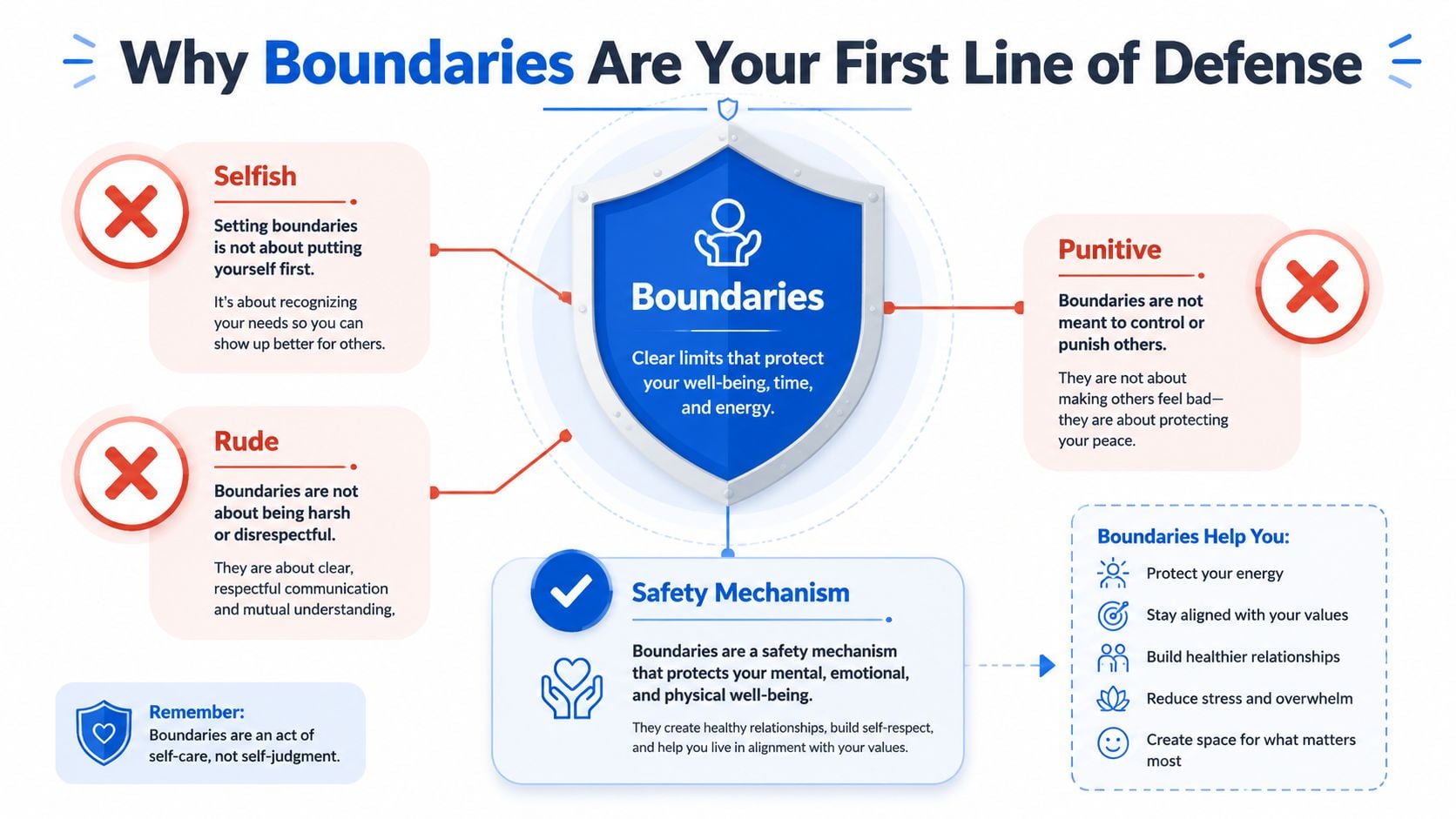
Why Boundaries Are Your First Line of Defense
A client once agreed to “just stop by” a friend's gathering. The plan sounded harmless because the client intended to leave early and had no intention of using. But the friend's home was full of familiar cues, the conversation became tense, and the client stayed longer than planned to avoid appearing rude. By the time the client left, the original recovery plan had been replaced by exhaustion, shame, and intense cravings.
The failure wasn't a lack of motivation. The client had no operational boundary. “I'll be careful” described an intention, not a protective action. A stronger plan would have identified the setting as risky, stated a specific limit, arranged transportation, and included a consequence such as leaving immediately if substances appeared.
Boundaries reduce exposure before a crisis
Peer-recovery guidance defines boundaries as formal and informal understandings about how people interact. The University of Kentucky guidance describes them as limits that support safe, effective, and appropriate interactions, including warnings against romantic or sexual relationships, exchanging money or gifts, and sharing personal contact information in peer-support roles. University of Wisconsin's recovery boundaries transcript reflects the same principle: boundaries protect both people and keep support focused on recovery rather than dependency or role confusion.
In daily life, the risk may be less obvious than an invitation to use. A critical family member can raise emotional stress. A partner may demand constant reassurance. A former using peer may repeatedly call late at night. A workplace may normalize drinking after shifts. These situations can increase stress load and expose you to cues associated with substance use.
A boundary doesn't punish another person. It identifies what you will participate in and what action you'll take to protect yourself.
Practical rule: A boundary is strongest when someone can observe it. “I won't discuss recovery while we're yelling” is clearer than “I need more respect.”
Replace reaction with a planned response
Start by identifying the person, place, behavior, or communication pattern that destabilizes you. Then write the limit as an action you control:
- Trigger: A friend talks about buying drugs.
- Boundary: “If drug use comes up, I'll end the conversation.”
- Follow-through: Hang up, leave, or stop replying.
If codependent patterns make it hard to separate care from over-responsibility, the guide to codependency in recovery can help you examine where support ends and rescuing begins. For providers building structured systems around privacy and client communication, a Recepta.ai mental health solution may also be worth evaluating alongside clinical policies and human oversight.
The Four Essential Types of Recovery Boundaries
People often say, “I need better boundaries,” without identifying the category of risk. That makes the limit difficult to communicate and even harder to enforce. Emotional, physical, digital, and financial boundaries cover many of the situations that destabilize recovery.

Emotional boundaries
Emotional boundaries keep you from absorbing responsibility for another adult's feelings, choices, or crisis. They also protect you from conversations that repeatedly produce panic, shame, or rage.
Try:
“I care about you, but I won't continue this conversation while I'm being insulted. We can talk tomorrow if we're both calm.”
That statement doesn't demand that the other person feel differently. It defines your participation. If the insults continue, you end the call or leave the room.
Emotional boundaries also apply to recovery disclosure. You can decide which details you share, with whom, and when. Privacy isn't deception. It gives you room to discuss sensitive information with appropriate clinicians or trusted supports instead of managing everyone else's reactions.
Physical boundaries
Physical boundaries cover personal space, touch, living arrangements, and access to environments where you sleep or recover. A practical limit might be:
“No alcohol or drugs can be brought into my home. If that happens, the visit ends.”
The boundary becomes meaningful when you know the consequence in advance. You might also limit visits to public locations, decline hugs, or ask someone not to enter your bedroom or recovery workspace.
Digital boundaries
Digital contact can create a constant sense of obligation. Set expectations around response times, message topics, group chats, and social media exposure:
- Response window: “I check messages after treatment and in the morning. I may not reply immediately.”
- Urgent needs: “If you're in immediate danger, contact emergency services or a crisis resource instead of waiting for my reply.”
- Trigger control: Mute accounts, leave chats, or block content that glorifies use.
- Visibility: Don't share your location, treatment schedule, or private recovery information publicly.
Digital limits are especially important when a sponsor, peer, family member, or clinician's role becomes unclear.
Financial boundaries
Money can quickly create pressure, resentment, or conflict. Don't lend money to support substance use, cover repeated consequences, or purchase items that place your recovery at risk.
A direct script sounds like this:
“I'm not lending money or paying for expenses connected to substance use. I can help you find a professional resource, but I won't finance this situation.”
Keep financial arrangements written when possible, separate shared expenses clearly, and avoid using gifts or payments to control another person's recovery. In peer-support settings, guidance specifically warns against exchanging money or gifts because financial ties can blur roles and create conflicts of interest.
Scripts for Setting Limits With Loved Ones and Employers
A boundary conversation becomes clearer when you name the situation, state your limit, explain the action you will take, and close calmly. You do not need to prove that the limit is reasonable. State it plainly enough to follow through.
With a partner
A partner may seek closeness through monitoring, accusations, or repeated checking. Support can become surveillance when privacy and treatment time disappear.
Try:
“I want us to stay connected, but I won't share private treatment messages or answer repeated questions while I'm in a session. We can have a planned check-in after treatment.”
If you share a home, agree on substance use in the house, visitors, medication privacy, sleep, conflict, and what happens after a relapse warning sign. Questions about expectations before living together can expose disagreements early. The LoveCheck guide on cohabiting offers prompts for discussing responsibilities and compatibility.
With family
Relatives may demand updates, criticize treatment, or expect immediate access because they are frightened. Concern does not excuse blame, shouting, or pressure.
“I'll share general progress, but I won't discuss confidential treatment details. If the conversation turns into blame or shouting, I'll end it and try again later.”
Follow through without adding a long defense. Repeating the same sentence often works better than supplying new explanations. For recurring arguments, this resource on handling family conflict provides practical guidance.
With an employer
You can protect treatment time while limiting disclosure of medical information:
“I have a recurring health appointment and need a consistent schedule for it. I can discuss coverage and work responsibilities, but I'm not comfortable sharing private medical details.”
Prepare a coverage plan before speaking with your employer. State the hours you need, identify tasks that must be completed, and document agreed arrangements through the appropriate workplace process. A workplace boundary is a professional request tied to maintaining treatment and performing reliably. Colleagues do not need your full recovery history to plan around your schedule.
With peers
If a peer suggests a risky activity, answer once and offer a safer alternative:
“I'm not going to a bar or using with anyone. If you want to meet, we can walk or get coffee. If that doesn't work, I'm leaving.”
Some relationships will change when substance use no longer organizes the connection. Keep people who can respect safer plans, and set contact on terms that protect recovery without cutting off supportive relationships. Recovery research summarized in the peer recovery support evidence links social support with better recovery outcomes and low support with earlier relapse. Selective access preserves the connections that matter most to recovery.
How to Build and Maintain Boundaries Without Isolating
A wall blocks everyone. A gate controls access. Healthy boundaries in recovery should function more like gates, allowing supportive people to stay close while restricting behaviors, settings, and communication patterns that increase risk.
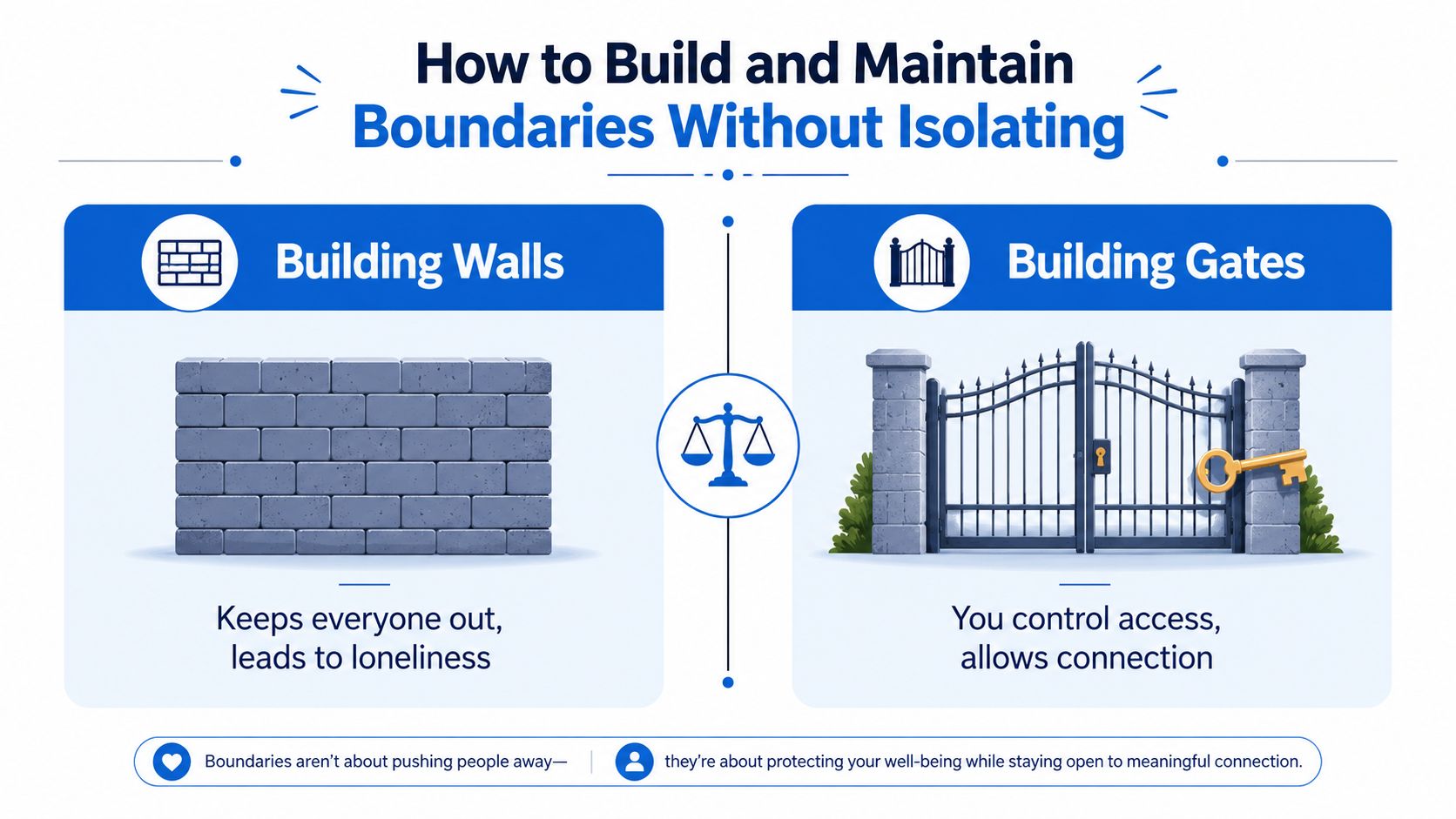
Use a graduated response
You don't have to choose between unlimited access and permanent cutoff. Sort relationships by behavior and adjust access accordingly:
- Preserve supportive contact. Keep people who respect your recovery, listen without controlling, and support substance-free activities in your life.
- Add structure to uncertain relationships. Meet in public, choose daytime contact, use scheduled calls, or include another trusted person.
- Limit unsafe behavior. End conversations involving threats, intoxication, drug offers, harassment, or repeated pressure.
- Escalate protection when needed. Block contact, change living arrangements, or seek professional and legal support when someone becomes abusive or dangerous.
This approach preserves connection without asking you to tolerate exposure. It also gives people an opportunity to demonstrate whether they can respect the new terms.
Make support specific
“Call me anytime” can sound caring but create exhaustion and dependence. A more sustainable arrangement might specify one scheduled check-in, the topics that require a professional, and what happens outside the agreed window.
The same principle applies to mutual-aid groups, family, and peers. Ask: Does this person support abstinence? Do they respect privacy? Can they hear “no” without retaliation? Do I feel steadier after contact, or more activated?
Social support isn't merely a matter of having people around. The quality, role, and timing of support matter. Peer-recovery frameworks distinguish between support approaches, settings, activities, and recovery milestones, so your boundaries may need to change as your role and stability change.
Connection should be structured enough to protect recovery, but flexible enough to leave room for trust.
Review without apologizing
A boundary that worked during early recovery may become unnecessarily restrictive later. Another limit may need to become firmer after a relapse warning sign, conflict, or major life change. Review your boundaries during treatment check-ins and ask whether each one is reducing risk, preserving healthy connection, or accidentally keeping safe people away.
Navigating Digital Boundaries in the Telehealth Era
Your phone can connect you to treatment, peer support, family, and crisis resources. It can also deliver triggering posts, create pressure to answer immediately, and make private recovery information feel permanently exposed.
Telehealth and digital peer support require the same role clarity as in-person care. A peer specialist isn't a physician, diagnostician, counseling therapist, or twelve-step sponsor just because messages arrive outside an appointment. SAMHSA-aligned peer guidance emphasizes those role limits, which means you should know who provides clinical care, who offers peer support, and who handles urgent safety concerns.
Set communication rules before stress rises
Tell your support network what to expect:
- Availability: “I respond during agreed hours, not continuously.”
- Urgency: “Texting isn't a crisis service. Use the designated emergency or crisis pathway when immediate help is needed.”
- Frequency: “We'll have one planned check-in rather than repeated requests for proof that I'm okay.”
- Content: “Please don't send photos, stories, or invitations connected to substance use.”
- Privacy: “Don't forward my messages or post about my treatment without asking.”
These limits prevent support from becoming surveillance. They also reduce the emotional pressure created by ambiguous expectations.
Control your digital environment
Mute social accounts that display substance use, leave group chats that normalize risky behavior, and turn off non-urgent notifications during sleep and treatment. Keep treatment links, appointment details, and recovery notes in private systems rather than public posts.
If you participate in virtual treatment, ask how the provider protects confidentiality and handles messages, records, and access. Resources addressing encryption safeguards for patient data can help you form informed questions, although your treatment provider should explain its own practices directly.
An online program still needs a schedule, a private setting, and a plan for what happens if technology fails or distress escalates. A telehealth Intensive Outpatient Program can be useful when it includes clear clinical roles, attendance expectations, and communication channels rather than relying on unlimited informal messaging.
Integrating Boundaries Into Your Aftercare Plan
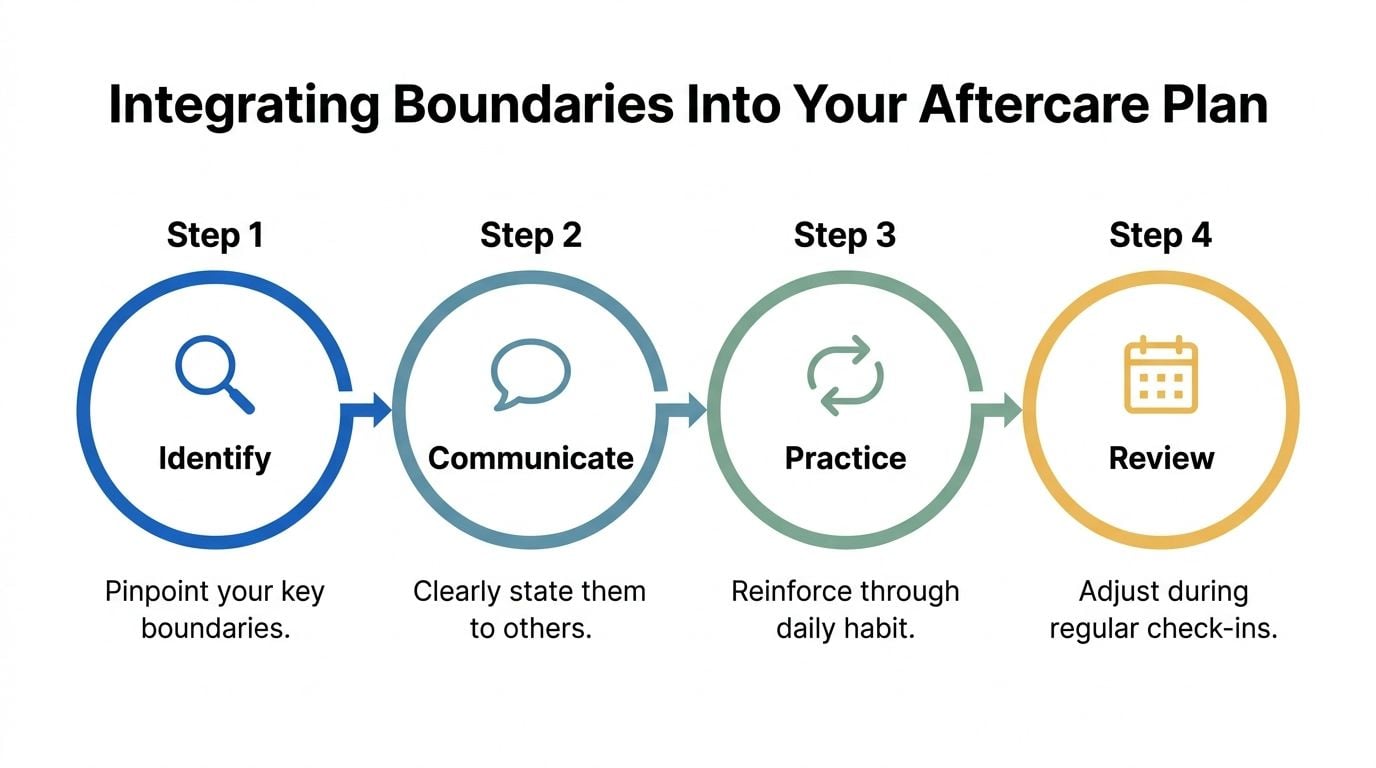
Boundaries belong in aftercare because relapse prevention depends on repeated decisions, not one courageous conversation. Write each important limit into your plan with the trigger, the exact wording, the consequence, and the person you'll contact if enforcement becomes difficult.
Keep the plan active
Review your boundaries during clinical appointments, peer-support meetings, or scheduled family check-ins. Change a limit when your environment changes, but don't relax it just because someone pressures you or because enforcing it feels uncomfortable.
Bring in a clinician when a person threatens you, controls access to medication or money, stalks or harasses you, repeatedly exposes you to substances, or causes cravings that you can't manage alone. Seek immediate emergency help when you face imminent danger, overdose risk, or thoughts of harming yourself or someone else.
Addiction Resource Center LLC provides medically supervised detox with medication-assisted treatment, residential rehabilitation through Ona Treatment Center in Browns Valley, California, and an Intensive Outpatient Program offered in person and through telehealth. Its multidisciplinary team includes medical and nursing professionals, licensed counselors, a licensed marriage and family therapist, and recovery mentors who can help connect boundaries with relapse prevention and aftercare planning. Visit Addiction Resource Center LLC to explore treatment options, arrange a tour, or request guidance for yourself or a loved one.