A loved one's drinking can shift slowly enough that it's hard to name what's wrong. One week it's “just weekends,” the next it's morning drinks, missed plans, hidden bottles, or a short fuse that seems to come from nowhere. If you're asking whether this is still social drinking or something more serious, you're already noticing …

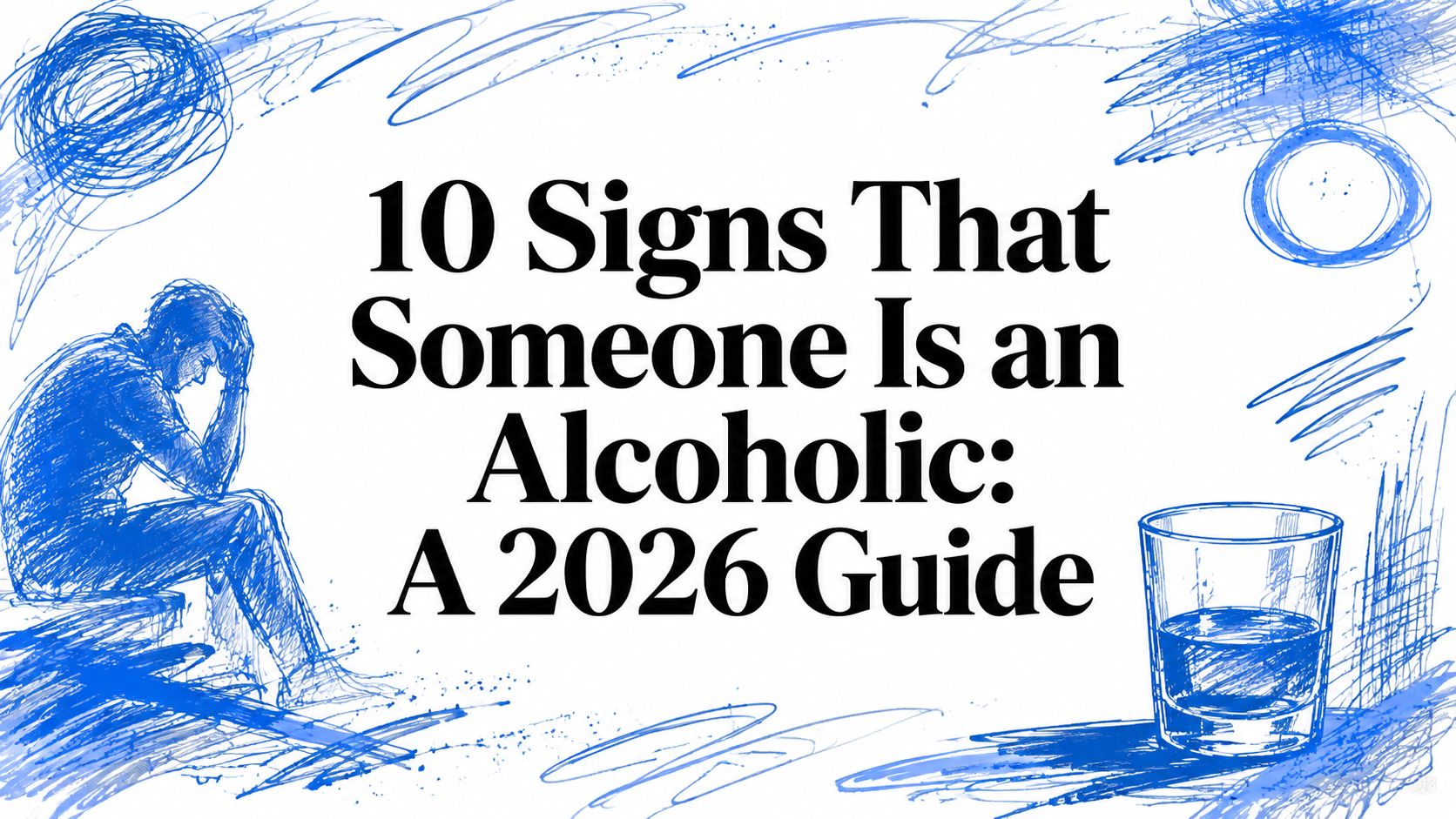
A loved one's drinking can shift slowly enough that it's hard to name what's wrong. One week it's “just weekends,” the next it's morning drinks, missed plans, hidden bottles, or a short fuse that seems to come from nowhere. If you're asking whether this is still social drinking or something more serious, you're already noticing the right signals.
Alcohol use disorder, or AUD, is a medical condition, not a moral flaw, and clinicians use concrete criteria to recognize it. The National Institute on Alcohol Abuse and Alcoholism describes AUD as a pattern of drinking that causes clinically significant impairment or distress, with warning signs that include drinking more or longer than intended, craving alcohol, spending a lot of time obtaining or recovering from alcohol, failing to meet obligations, and developing tolerance or withdrawal symptoms (NIAAA overview of alcohol use disorder). That framework matters because it separates a passing concern from a pattern that deserves a real assessment.
The hard part is that someone can look “functional” and still be in trouble. The signs below connect what you're seeing at home, at work, or in a relationship to the clinical meaning behind it, and each one points to a next step that helps. If you're local to Northern California, a treatment provider like Addiction Resource Center in Yuba City can help you think through detox, medication-assisted treatment, residential care, or outpatient support without judgment.
Table of Contents
- 1. Increased Tolerance and Escalating Consumption
- 2. Withdrawal Symptoms When Not Drinking
- 3. Failed Attempts to Control or Cut Back on Drinking
- 4. Neglecting Responsibilities and Life Roles
- 5. Continued Drinking Despite Negative Consequences
- 6. Spending Excessive Time on Alcohol-Related Activities
- 7. Social Withdrawal and Isolation From Non-Drinking Relationships
- 8. Dishonesty and Secretive Behavior About Drinking
- 9. Physical and Cognitive Health Deterioration
- 10. Mood Disturbances and Mental Health Deterioration
- Comparison of 10 Alcoholism Warning Signs
- From Recognition to Recovery Your Next Steps
1. Increased Tolerance and Escalating Consumption
A person who needs more alcohol to feel the same effect is often showing one of the earliest signs that drinking has moved beyond social use. Tolerance can look subtle at first, a couple of drinks become four, four become six, and the person starts describing heavier drinking as “normal” because their body has adapted to it. In clinical terms, tolerance is one of the common AUD criteria listed by NIAAA, and it's part of the reason the condition is treated as a medical syndrome rather than a simple habit problem (NIAAA AUD diagnosis and recovery).
That change often shows up in everyday life before anything dramatic happens. A weekend drinker may start drinking daily, a person who once felt relaxed after a glass of wine may now need a full bottle, or a social drinker may begin ordering doubles without thinking twice. Friends sometimes notice this before the person does, because tolerance tends to develop gradually and then normalize itself inside the household.
What to do if you're seeing it
- Track the pattern. Write down what, when, and how much is being consumed for a few weeks. A journal or app works, but only if the entries are honest.
- Compare current use with the past. A change over 6 to 12 months often tells you more than a single rough weekend.
- Listen when others notice. If friends or family comment that drinking has ramped up, treat that as useful information, not criticism.
- Reach out early. If tolerance is climbing, a local team such as Addiction Resource Center can help you decide whether an assessment, detox, or outpatient support makes sense.
Practical rule: Rising tolerance is not “holding liquor better.” It can be the first sign that the brain and body are adapting in a way that makes control harder later.
2. Withdrawal Symptoms When Not Drinking
Withdrawal is one of the clearest signs that drinking has crossed into physical dependence. A person may tremble in the morning, feel shaky when alcohol isn't available, struggle to sleep without a drink, or become sweaty, anxious, and unable to settle down. In more severe cases, withdrawal can escalate to seizures or delirium tremens, which is why stopping suddenly can be dangerous for a heavy drinker.
The exact timing and severity vary, but the clinical point stays the same. If the body starts signaling distress when alcohol is removed, the problem is no longer only about choice, it's about dependence. A person may frame this as “I just need one to calm down,” but that statement often reflects the body trying to avoid withdrawal rather than a casual preference.

If someone is shaking, panicking, or drinking to stop withdrawal, don't treat it like a home project. Medical supervision matters here, and a detox plan should be built around safety, not willpower. The basics of detox can be reviewed in this overview of how long detox takes, but if symptoms are already showing up, the next call should be to a medical professional or detox program rather than a calendar.
What works here is clinical support. Medication-assisted treatment can help manage withdrawal symptoms safely, and that support often makes it possible for the person to engage in the next phase of care instead of white-knuckling through a dangerous process.
If withdrawal has started, contact a treatment team right away. Addiction Resource Center's 24/7 line at 530-625-7910 can help you figure out the safest next step.
3. Failed Attempts to Control or Cut Back on Drinking
Repeatedly trying to cut back and failing is one of the most important signs that someone may have alcohol use disorder. The person may promise they'll only drink on weekends, only have one glass, or take a month off, then fall back into the same pattern within days or weeks. That loss of control is not a character defect. It's one of the central clinical markers clinicians use to identify AUD, and NIAAA lists unsuccessful efforts to cut down as part of the diagnostic framework (NIAAA alcohol use disorder risk, diagnosis, and recovery).
You'll often hear bargaining language around this sign. Someone may switch from liquor to beer, from bars to home drinking, or from weekdays to “just evenings,” then end up drinking just as much or more. The container changes, but the pattern doesn't. That's because the issue is often control, not the beverage category.
A grounded way to respond
- Document the failed attempts. Write down each promise, lapse, and relapse pattern so the story is clear for a clinician.
- Bring in accountability. A trusted family member or friend can help keep the conversation honest without turning it into a fight.
- Stop framing it as willpower alone. Dependence changes the brain's reward and decision-making systems, so discipline by itself usually isn't enough.
- Consider medication support. Medication-assisted treatment for alcohol can reduce cravings and support stability while the person builds recovery skills.
People often wait for a “better time” to try again, but the better time is usually before the person has to prove the problem to themselves a third or fourth time. If the same cycle keeps repeating, professional care is the practical move.
4. Neglecting Responsibilities and Life Roles
When drinking starts displacing work, school, parenting, or basic self-care, it's no longer sitting on the edge of life, it's moving into the center of it. The person may miss shifts because of hangovers, forget school pickups, skip family events, or let bills pile up because drinking has taken priority. This is one of the most visible signs that someone is an alcoholic because the consequences show up in responsibilities that used to be manageable.
Clinically, this fits the AUD criterion of role impairment, which is part of the standard diagnostic picture. In real life, it can look like a teacher calling out repeatedly, a parent missing a child's game, or a worker losing credibility because mornings are unreliable. The person may not be careless in every part of life, which is why loved ones can get confused, but the pattern around drinking becomes increasingly hard to ignore.

Direct guidance: If responsibility slips are becoming routine, don't wait for a job loss, custody crisis, or academic failure before acting.
Speak specifically and without shame. “You missed three school events this month” is more useful than “You're ruining everything.” That kind of language helps the person see a pattern instead of getting stuck in defensiveness. It also gives a treatment provider something concrete to work with, which matters when deciding whether detox, residential rehab, or outpatient support is the right fit.
5. Continued Drinking Despite Negative Consequences
This is one of the clearest dividing lines between unhealthy use and probable AUD. A person may keep drinking after a DUI, after a doctor warns them about liver disease, after a marriage starts fraying, or after drinking becomes tied to self-harm thoughts, yet still feel unable to stop. The defining feature is not ignorance. It's persistence despite consequences.
The Mayo Clinic resource cited in the brief notes that the U.S. records 261 deaths every day from excessive alcohol use, with 80% of those deaths occurring in adults age 35 or older, a reminder that alcohol-related harm is not abstract or rare (Mayo Clinic alcohol use resources cited in the brief). In the clinic, consequences like legal trouble, injury, relationship breakdown, or medical warning signs are taken seriously because they often show the person has moved past casual use and into a cycle that's hard to reverse without help.
If you're supporting someone in this stage, don't argue only about the consequences. Consequences alone rarely change behavior if the person is already dependent. A better approach is to connect the consequences to treatment, for example, “This DUI means we need medical and behavioral support now,” or “Your doctor's warning means this can't wait.” For legal fallout, a specialized resource like the Illinois DUI court hearing guide may help with the court side, but it doesn't replace treatment for the alcohol problem itself.
6. Spending Excessive Time on Alcohol-Related Activities
When drinking starts organizing the day, week, or social calendar, it's a sign that alcohol has become central, not incidental. The person may spend time figuring out where to buy alcohol, how to recover from the last binge, when they can drink without being noticed, or how to structure events around access to alcohol. That kind of time burden is one of the diagnostic signals clinicians look for because it shows the behavior is no longer casual.
The practical clue here is often the hidden time cost. A person may not say, “I'm obsessed with alcohol,” but their schedule says it for them. They may arrive late because they needed to stop for a bottle, cancel plans after a rough night, or spend the next day recovering in bed. Even if they keep their job, the amount of attention alcohol takes can crowd out everything else.
A simple way to test the pattern
- Count the planning time. Include shopping, pre-drinking, drinking, and recovery time, not just the hours spent actively drinking.
- Examine the spending. Many people don't realize how much they're spending until they total it for a week or a month.
- Notice the organizing effect. If vacations, weekends, and even errands are built around drinking opportunities, that's not random.
- Use treatment to reclaim structure. Recovery often frees up both time and money, which is one reason people stick with it once they experience the difference.
This sign matters because it reveals priority. Alcohol doesn't just show up in the background, it starts directing the day.
7. Social Withdrawal and Isolation From Non-Drinking Relationships
Isolation often starts as preference and ends as avoidance. A person may stop attending family dinners, avoid longtime friends who don't drink, or spend more time with people who normalize heavy drinking. Over time, relationships that don't support drinking can feel uncomfortable to them, while alcohol-centered settings start to feel easier. That shift is a major warning sign because the social world begins to shrink around the substance.
This pattern cuts both ways. Drinking can lead to withdrawal from healthy relationships, and isolation can then make drinking harder to interrupt. A parent who skips a child's events, an adult child who stops visiting family, or a person who trades hobbies for bar nights may still seem socially active, but the center of gravity has changed.
Practical rule: Don't interpret isolation as proof that the person wants to be alone. Very often, it means they're protecting the drinking pattern from interruption.
If you're the loved one, stay connected without policing every detail. Invite the person to coffee, a walk, or a meal that doesn't revolve around alcohol. If they're ready for treatment, family therapy and support programs can help rebuild trust and restore relationships that drinking pushed aside. Addiction Resource Center can also help families think through support options that fit the situation at home.
8. Dishonesty and Secretive Behavior About Drinking
Hiding alcohol use usually means the person knows, at some level, that the pattern isn't okay. That secrecy may show up as hidden bottles, minimizing how much was consumed, drinking before an event, or giving a healthcare provider a lower number than what's happening. When someone starts managing information as carefully as they manage drinking, that's a serious red flag.
The behavior can be hard for families because it creates a constant reality check. You may smell alcohol, see slurred speech, or notice missing bottles, then hear a calm explanation that doesn't match what you observed. That gap often produces arguments, but the deeper issue is shame. The person is trying to preserve the image of control while the drinking pattern keeps slipping past their own boundaries.

If you raise the issue, stay anchored to what you saw. “I noticed you seemed intoxicated at dinner” is better than “You're lying about everything.” The first keeps the door open; the second usually closes it. Honest reporting is also essential for medical care, because treatment teams can't choose the right level of support if the drinking pattern is hidden.
In practice, secrecy is not a small problem. It often means the person is already managing their life around alcohol, which is exactly when a clinical assessment becomes useful.
9. Physical and Cognitive Health Deterioration
Alcohol can affect the body and brain in ways that are easy to dismiss at first. Blackouts, memory lapses, trouble concentrating, neuropathy, nutritional problems, and worsening medical issues all suggest that drinking is doing more than changing mood, it's causing real damage. For someone already diagnosed with liver disease or another alcohol-related condition, continuing to drink is an especially serious warning sign.
The best way to think about this category is that the body often tells the truth before the person does. A worker who can't remember meetings, a college student whose grades fall because concentration is shot, or a veteran noticing safety issues and cognitive slowing may all be showing effects that need medical attention, not just behavior coaching. The same is true if a doctor has already raised concerns about liver function, pancreatitis, or cardiovascular strain.
Use medical care proactively here. Keep a symptom journal, be honest with the doctor about alcohol intake, and ask for a full evaluation rather than waiting for the problem to worsen. If alcohol has started affecting memory or thinking, that's the right time to contact a treatment provider and ask about medically supervised care, because the recovery plan may need health monitoring as well as counseling. The broader impact of alcohol on mind, body, and relationships is outlined in this resource on alcohol addiction effects, and long-term brain effects are also discussed in this overview of alcohol's neurological impact.
10. Mood Disturbances and Mental Health Deterioration
Alcohol and mental health often feed each other. A person may drink to quiet anxiety, numb depression, sleep better, or get through social situations, only to find that the symptoms return stronger later. That pattern is common in people who are self-medicating, and it can turn into a cycle where alcohol temporarily relieves discomfort but steadily worsens the underlying condition.
This is one reason mood changes matter so much. Irritability, sudden anger, emotional crashes, anxiety spikes, depression, and suicidal thoughts can all travel with problematic drinking. A veteran using alcohol to blunt PTSD symptoms, a young adult drinking to calm social anxiety, or a person with depression using alcohol at night may all be trapped in a loop that needs dual-diagnosis care, not a single-track answer.
If someone is talking about self-harm or suicidal thoughts, treat that as urgent. Call 988 if there's a crisis, and be direct with a clinician about the mental health piece, because alcohol treatment works better when anxiety, depression, trauma, or suicidality are addressed at the same time. Addiction Resource Center can help with dual-diagnosis support, and it's often the right setting when drinking and mental health have become tangled together.
Comparison of 10 Alcoholism Warning Signs
| Sign / Indicator | Complexity 🔄 | Resources ⚡ | Expected outcomes ⭐📊 | Ideal use cases 💡 | Key advantages ⭐ |
|---|---|---|---|---|---|
| Increased Tolerance and Escalating Consumption | Low–Moderate: measurable but often normalized | Self-monitoring, primary care screening; possible MAT referral | Early detection enables timely intervention and reduced progression 📊 | Primary care or family noticing increased amounts; early screening | Observable early warning; reversible if addressed early |
| Withdrawal Symptoms When Not Drinking | High: medical risk; needs clinical assessment | 24/7 medically supervised detox, MAT, monitoring staff | Symptom stabilization and reduced medical risk when treated promptly ⭐📊 | Acute cessation attempts or signs of tremor, seizures, DTs | Clear medical indicator; protocol-driven care reduces mortality |
| Failed Attempts to Control or Cut Back on Drinking | Moderate: behavioral assessment; needs honest reporting | Outpatient therapy, CBT, IOP, possible residential care | Improved control with structured treatment; relapse risk persists 📊 | Repeated unsuccessful quit attempts or short abstinence periods | Shows motivation for change; directs behavioral interventions |
| Neglecting Responsibilities and Life Roles | Low–Moderate: highly observable but socially complex | Family intervention, IOP/residential, case management, vocational support | Restoration of functioning with treatment; may need legal/occupational repair 📊 | Missed work/school, caregiving failure, financial neglect | Concrete, documentable evidence prompting intervention |
| Continued Drinking Despite Negative Consequences | High: often advanced AUD; comprehensive assessment required | Intensive/residential programs, dual-diagnosis treatment, legal/medical coordination | Requires intensive, often long-term treatment; outcomes improve with comprehensive care ⭐📊 | Ongoing legal, medical, or social harms despite warnings | Definitive marker of severe disorder; guides level-of-care decisions |
| Spending Excessive Time on Alcohol-Related Activities | Moderate: quantifiable but often concealed | Financial counseling, therapy, IOP, peer support | Reduced time/financial burden and improved daily functioning with treatment 📊 | Significant spending/time loss or planning life around drinking | Quantifiable motivation for change; measurable recovery benefits |
| Social Withdrawal and Isolation from Non-Drinking Relationships | Moderate: involves social-network assessment | Group therapy, family therapy, peer support, residential options | Rebuilding support networks reduces relapse risk and improves wellbeing 📊 | Loss of non-drinking friendships or avoidance of family events | Identifies social support needs; informs psychosocial interventions |
| Dishonesty and Secretive Behavior About Drinking | Moderate: requires trust-building assessment | Individual/family therapy, motivational interviewing, support groups | Improved honesty and treatment engagement over time with therapy 📊 | Repeated concealment or lying about consumption | Indicates awareness of problem; therapy addresses shame and trust |
| Physical and Cognitive Health Deterioration | High: medical and neurocognitive evaluation necessary | Medical specialists, labs, cognitive rehab, long-term monitoring | Medical stabilization; some recovery possible but advanced damage may be permanent ⭐📊 | Liver disease, blackouts, memory loss, neuropathy | Objective medical evidence that motivates combined medical/addiction care |
| Mood Disturbances and Mental Health Deterioration | High: requires dual-diagnosis assessment and integrated care | Psychiatric care, psychotherapy, MAT, integrated treatment programs | Best outcomes when co-occurring disorders are treated together; symptom reduction 📊 | Co-occurring anxiety, depression, suicidal ideation with alcohol use | Identifies need for integrated treatment; addresses root causes for sustained recovery |
From Recognition to Recovery Your Next Steps
Recognizing these signs is the first real step toward change. It's often the hardest step, because it asks you to name a problem that may have been minimized, hidden, or normalized for a long time. But naming it doesn't mean you're blaming someone, and it doesn't mean recovery has to start with a crisis. It means you're choosing to respond early, with clarity and compassion.
If you're worried about yourself, the most useful next move is an honest assessment. Compare current drinking to the last 6 to 12 months, note any failed attempts to cut back, and pay attention to withdrawal, secrecy, or neglect of responsibilities. If withdrawal is present, don't try to quit on your own. Medical supervision matters. If mood, trauma, or depression are part of the picture, mention that too, because co-occurring mental health concerns can change the care plan.
If you're worried about a loved one, focus on observable behavior and specific examples. “You missed work three times this month,” “You're drinking before dinner,” and “You've been hiding bottles” are more useful than broad criticism. That kind of conversation gives the person a path to help instead of just a reason to defend themselves.
At Addiction Resource Center in Yuba City, the full continuum of care includes medically supervised detox with MAT, residential rehabilitation through Ona Treatment Center in Browns Valley, and IOP options in person or via telehealth. The team also supports families, dual-diagnosis needs, and aftercare planning, which matters because recovery isn't just about stopping alcohol, it's about rebuilding a stable life around what works.
If you're seeing these signs in yourself or someone you love, don't wait for things to get worse before reaching out. Addiction Resource Center LLC offers compassionate, private care for alcohol use disorder and co-occurring mental health needs, with detox, residential rehab, IOP, and family support built around real-life recovery. Visit Addiction Resource Center LLC today to ask questions, check insurance, or start a treatment conversation that can move things forward.