Rebuild trust after addiction with practical steps to heal family relationships and strengthen bonds that substance abuse has damaged.


Addiction damages family relationships in ways that go far beyond the person struggling with substance use. Broken promises, lies, and betrayal create deep wounds that don’t heal overnight.
At Addiction Resource Center, we know that rebuilding trust after addiction is possible, but it requires real commitment and consistent action. This guide walks you through the concrete steps to repair those relationships and move forward together.
How Addiction Destroys Trust in Families
Addiction doesn’t just harm the person using substances-it systematically dismantles the trust that holds families together. According to SAMHSA, more than 25 million Americans live with a family member struggling with addiction, meaning trust damage happens across millions of households right now. The betrayal starts small: a missed dinner, a borrowed twenty dollars that disappears, a promise to be home by nine that gets broken repeatedly. Over time, these broken commitments stack up until family members stop believing anything the person says. Parents stop trusting their adult children with keys to the house. Spouses stop believing explanations for late nights or missing money. Siblings learn not to confide in their addicted brother or sister because secrets get traded for drugs or forgotten entirely in the fog of substance use. The damage runs deeper than just broken promises-it’s the realization that someone you love chose substances over you, over and over again, without hesitation.
Parents Face Crushing Failure and Loss
Parents often experience a crushing sense of failure, wondering what they did wrong while simultaneously grieving the loss of the child they thought they knew. They replay decades of parenting decisions, searching for the moment they made a mistake that led to addiction. The trust they built with their child-the foundation of safety and unconditional love-collapses when that child lies about drug use, steals from the household, or disappears for days without contact. Parents stop believing promises to attend treatment or stay sober because they’ve heard those same promises broken too many times. The relationship shifts from parent-child to something fractured and uncertain, where the parent becomes a detective searching for evidence of relapse rather than a source of comfort.
Spouses and Partners Experience Financial and Emotional Devastation
Spouses face financial devastation, infidelity, and the terror of wondering if their partner will overdose while they sleep. Money disappears from joint accounts without explanation. The person they married becomes someone they don’t recognize-someone capable of lying directly to their face about where they’ve been or what they’ve done. Trust in the relationship’s future evaporates when the addicted spouse prioritizes substances over family stability, over paying bills, over showing up for important moments. The spouse questions whether they can ever feel safe again in this relationship, whether they can believe anything their partner says about recovery or commitment.
Children Develop Hypervigilance and Loss of Safety
Children develop hypervigilance, constantly monitoring an addicted parent’s behavior and mood, unable to relax because safety feels unpredictable. A child learns to read subtle signs-the parent’s tone of voice, the smell on their breath, the way they move-to predict whether this will be a good day or a dangerous one. Trust in a parent’s protection disappears when that parent’s addiction takes priority over the child’s basic needs. The child stops believing promises about attending school events or keeping them safe because addiction has proven to be a more powerful force than parental love.
Siblings Watch Betrayal and Reality Denial
Siblings watch their addicted brother or sister steal from the family, lie about it, and then deny it happened-creating a reality where facts themselves become negotiable. The addicted sibling claims they didn’t take money when the evidence is undeniable. They promise to repay what they stole and never do. They swear they didn’t use when their behavior screams otherwise. Each lie compounds the previous ones, making siblings increasingly skeptical of any commitment the addicted person makes. The sibling relationship, which should be built on mutual support and honesty, becomes one where trust has been systematically destroyed through repeated deception.
The Predictable Patterns That Destroy Credibility
The patterns of betrayal follow predictable tracks that make family members lose faith in the addicted person’s word entirely. The person promises to get help and doesn’t follow through. They swear they’ll pay back money and it never happens. They claim they didn’t use when evidence proves otherwise. Each broken promise adds another layer of skepticism, making family members increasingly resistant to believing anything the addicted person says about recovery, sobriety, or change.
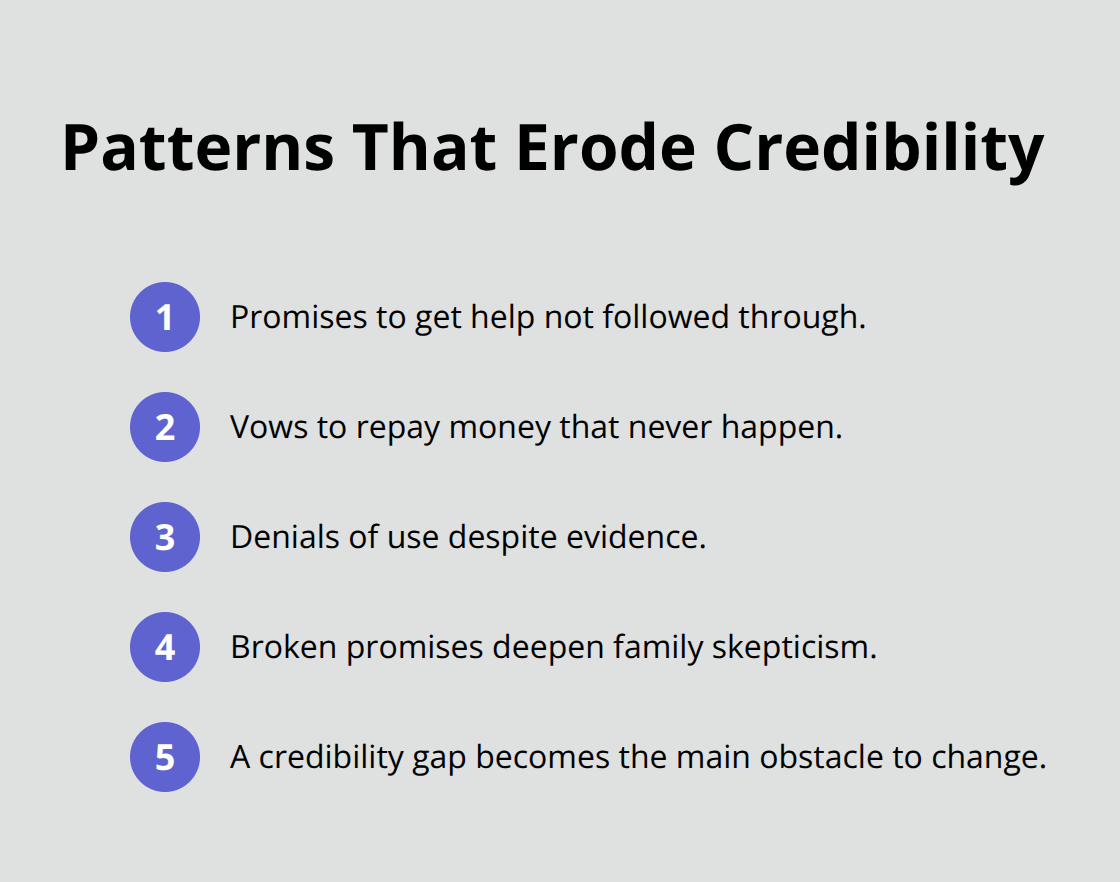
This credibility gap becomes the central obstacle that the addicted person must overcome-not just stopping substance use, but proving through consistent action that their word means something again.
Understanding these specific wounds matters because recovery requires addressing them directly. Taking responsibility and making amends starts with acknowledging exactly what damage addiction caused to each family member and recognizing that trust won’t return through words alone.
Taking Responsibility and Making Amends
State the Harm Clearly Without Excuses
Acknowledging past harm means stating exactly what you did wrong without softening the truth or redirecting blame toward circumstances, stress, or other people’s behavior. This is where most people fail. They apologize for causing pain while simultaneously explaining why addiction wasn’t fully their fault, how their childhood trauma contributed, or how family members enabled them. These explanations are often true, but they undermine accountability. Family members have heard addicted loved ones blame their upbringing, their partner’s nagging, their job stress, or their genetics for years. What they need to hear instead is a clear statement of harm followed by nothing else.
Tell your parent exactly what you stole from them and how your theft affected their financial security and peace of mind. Tell your spouse the specific lies you told about your whereabouts and how those lies destroyed their ability to trust you. Tell your child the promises you broke and what it felt like to them when you prioritized substances over being present. This directness is uncomfortable because it requires you to sit with the full weight of what you did without escape routes.
After you state the harm clearly, stop talking. Do not add context, justification, or softening language. Let the person respond without interruption. Many family members will express anger or hurt, and your job is to listen fully and acknowledge what they say rather than correct their perception or explain your side.
Build a Visible Track Record Through Action
Family involvement significantly predicts successful recovery outcomes for young adults with substance use disorders, and that family involvement works best when the recovering person demonstrates genuine accountability rather than defensive explanations. Actions must come before trust returns because words have been worthless for years.
Start with small commitments that you can absolutely keep. If you promise to call your parent every Sunday at 2 PM, do it without fail for three months. If you commit to attending therapy weekly, show up consistently and let family members know you attended.
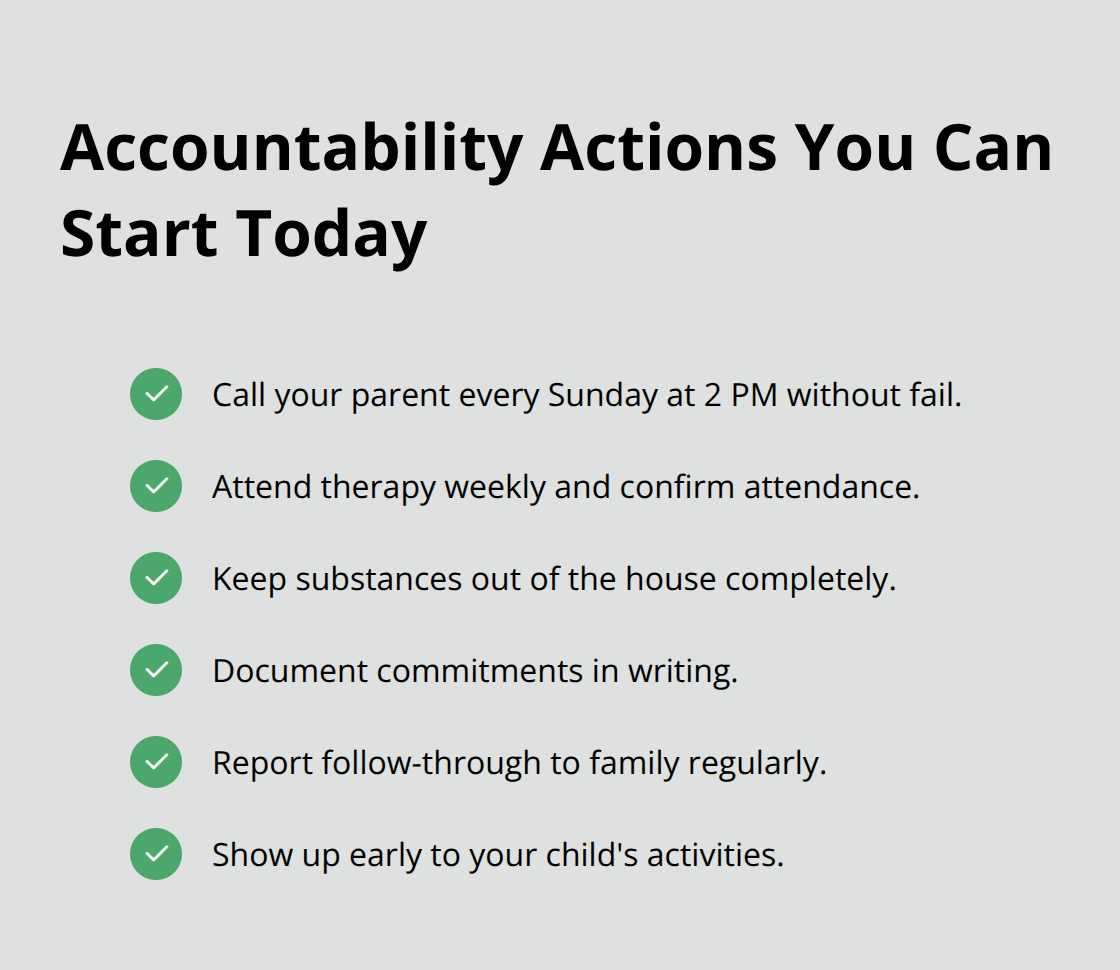
If you say you will not use substances in the house, maintain that boundary without exception. Those with stronger social support networks remain in treatment longer and have better recovery outcomes.
Document your commitments in writing so family members can see them, and report back on whether you followed through. After three months of keeping small commitments, you can make larger ones. Tell your spouse you will handle the household finances responsibly and then do exactly that. Promise your child you will attend their school events and attend every single one. The key is that each commitment you keep adds evidence that you have changed, while each broken commitment confirms that you haven’t.
Understand What Family Members Are Actually Watching For
Family members are watching for patterns, not isolated incidents of good behavior. They need to see sustained change across multiple areas of your life before trust begins to rebuild. One week of sobriety means nothing. Three months of sobriety combined with consistent therapy attendance, reliable financial management, and honest communication means everything. Your family members have learned through painful experience that addiction creates false hope followed by disappointment. They will remain skeptical until your actions prove otherwise over an extended period. This skepticism isn’t punishment-it’s self-protection. They’re protecting themselves from being hurt again, and your job is to prove through sustained effort that protection is no longer necessary. The path forward requires you to move from words to actions, from promises to proof, and from hoping family members will believe you to showing them through months of consistent behavior that you have genuinely changed.
Rebuilding Trust Through Consistent Actions
Sobriety Forms the Foundation for Everything Else
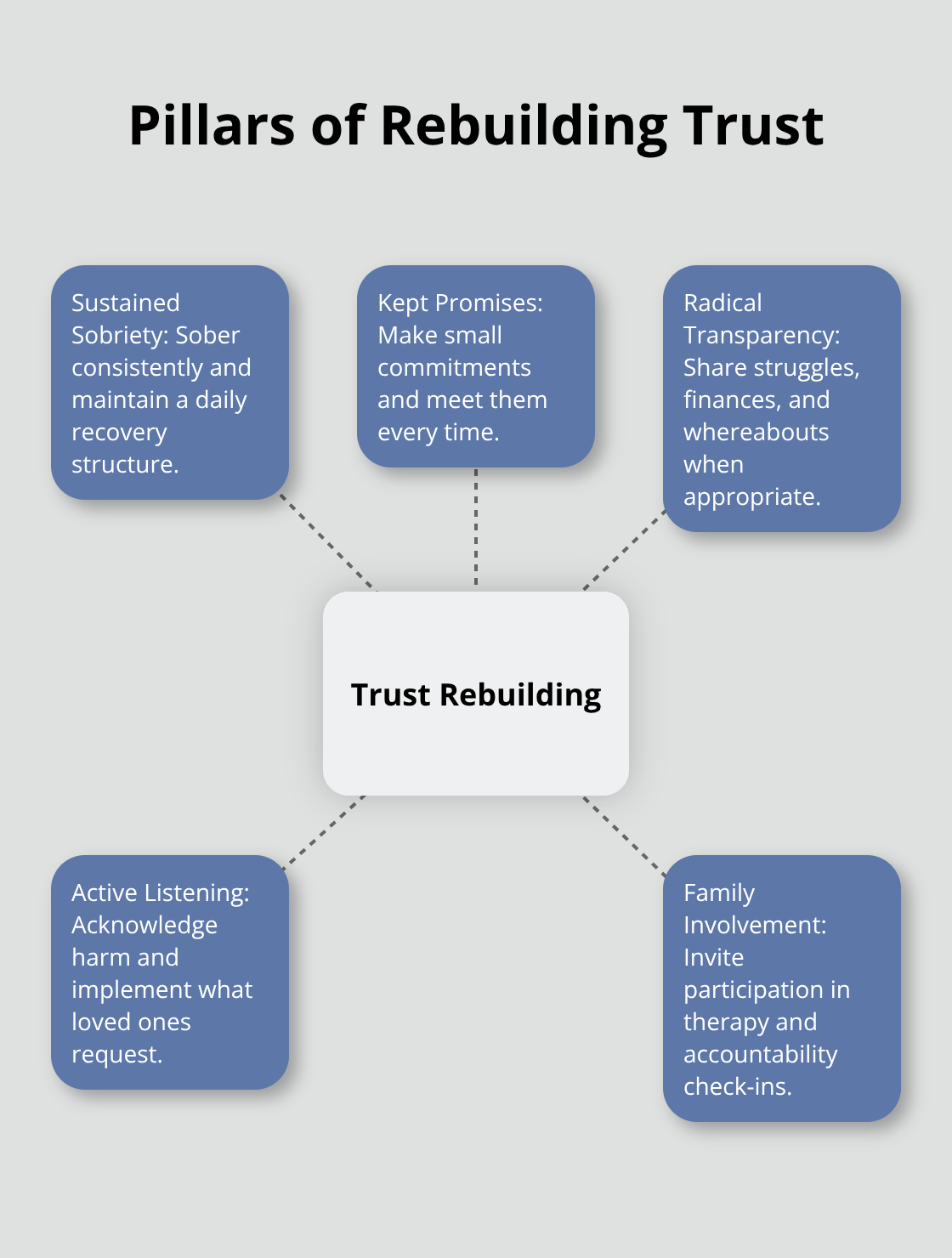
Sobriety alone does not rebuild trust, but it is the non-negotiable foundation that makes everything else possible. You cannot repair family relationships while actively using substances because addiction will always win the priority battle. Your family already knows this from years of watching you choose drugs or alcohol over them repeatedly. What they need to see now is sustained sobriety combined with deliberate action in other areas of your life. This means more than just stopping substance use for a few weeks. You must establish a recovery structure that keeps you accountable every single day. Attend treatment consistently, whether that’s outpatient programs or intensive therapy sessions. Show up to support group meetings without making excuses about scheduling conflicts. Take prescribed medications if they are part of your recovery plan and let family members know you are taking them.
These visible commitments to sobriety give family members concrete evidence that you are serious about change.
Build a Visible Pattern of Kept Promises
After three months of consistent sobriety, add the next layer. Start keeping small promises about finances, attendance, and communication. Tell your spouse you will provide a weekly accounting of where money goes and do exactly that. Promise your parent you will check in every Tuesday evening and call at that exact time. Commit to attending your child’s activities and show up early rather than late. Each kept promise is data that contradicts years of broken promises. Family members will test your consistency because they have learned not to trust easily. They may ask you to repeat commitments or verify that you completed them. This is not punishment-this is them protecting themselves from hope followed by devastation. Your response should be patience and repeated demonstration of follow-through rather than defensiveness about being doubted.
Replace Secrecy With Radical Transparency
Open and honest communication must replace the secrecy and lies that characterized your addiction. This does not mean sharing every feeling or thought you have. It means being transparent about recovery-related struggles, financial decisions that affect the family, and your whereabouts when family members have legitimate reasons to know. If you are struggling with cravings, tell someone rather than white-knuckling it alone. If you made a financial mistake, admit it immediately rather than hoping no one notices. If you relapsed, contact your treatment provider and tell your family member who needs to know rather than trying to hide it. Radical transparency feels vulnerable and uncomfortable because you are accustomed to managing family members’ perceptions through selective truth-telling.
Listen Without Defending Your Position
Healthy communication also means listening to family members’ concerns without becoming defensive or explaining your side immediately. Your spouse says they still feel anxious when you are late coming home from work. Do not respond with why the traffic was bad or why you could not text sooner. Respond with acknowledgment: “I understand that my unreliability in the past makes my lateness feel frightening now. What would help you feel more secure?” Then actually implement what they suggest. Your parent expresses anger about money you stole years ago. Do not explain the circumstances of your addiction at that time. Listen to their anger and say, “I caused real financial harm and I understand why you are still angry about it.” These conversations are not comfortable and they do not resolve immediately. Trust rebuilds through hundreds of these small interactions where you listen more than you speak and follow through on what you commit to. The combination of sustained sobriety, consistent action on specific commitments, and transparent communication creates the conditions where family members can gradually lower their guard and begin to believe that you have genuinely changed.
Long-Term Strategies for Lasting Relationship Healing
Rebuilding trust after addiction requires patience from both you and your family members, and this work continues long after early recovery. The steps you take-acknowledging harm, demonstrating consistent action, and communicating with radical honesty-form the foundation for healing, but they demand months or years of sustained effort. Trust that took years to destroy will not return quickly, and that extended timeline reflects reality rather than failure.
Set realistic expectations for your relationships moving forward. Some family members may never fully trust you again, and that is their right to hold. Others will gradually lower their guard as they witness sustained evidence of change over time. Your responsibility is to keep showing up, keep following through on commitments, and keep being honest even when discomfort arises. Progress appears as a parent who stops asking where you are every hour, a spouse who can sleep without anxiety, or a child who stops monitoring your mood for signs of relapse.
Professional support makes a measurable difference when you struggle to maintain sobriety or rebuild relationships on your own. Family therapy provides structure for difficult conversations and equips you with communication tools that work better than what you have tried before. At Addiction Resource Center, we understand that recovery involves more than stopping substance use-it requires healing your relationships and addressing the whole picture. Our team can help you get started on your path to rebuild trust after addiction.