Rebuild trust and strengthen family bonds after addiction with practical steps for healing and lasting reconciliation.


Addiction tears families apart in ways that go far beyond the person struggling with substance use. When addiction is present, communication breaks down, finances crumble, and trust evaporates.
The good news is that family reconciliation after addiction is possible. At Addiction Resource Center, we’ve seen families rebuild what seemed irreparably broken through intentional effort, professional support, and realistic expectations.
This guide walks you through the concrete steps to repair family relationships and create an environment where recovery can actually stick.
How Addiction Damages Family Relationships
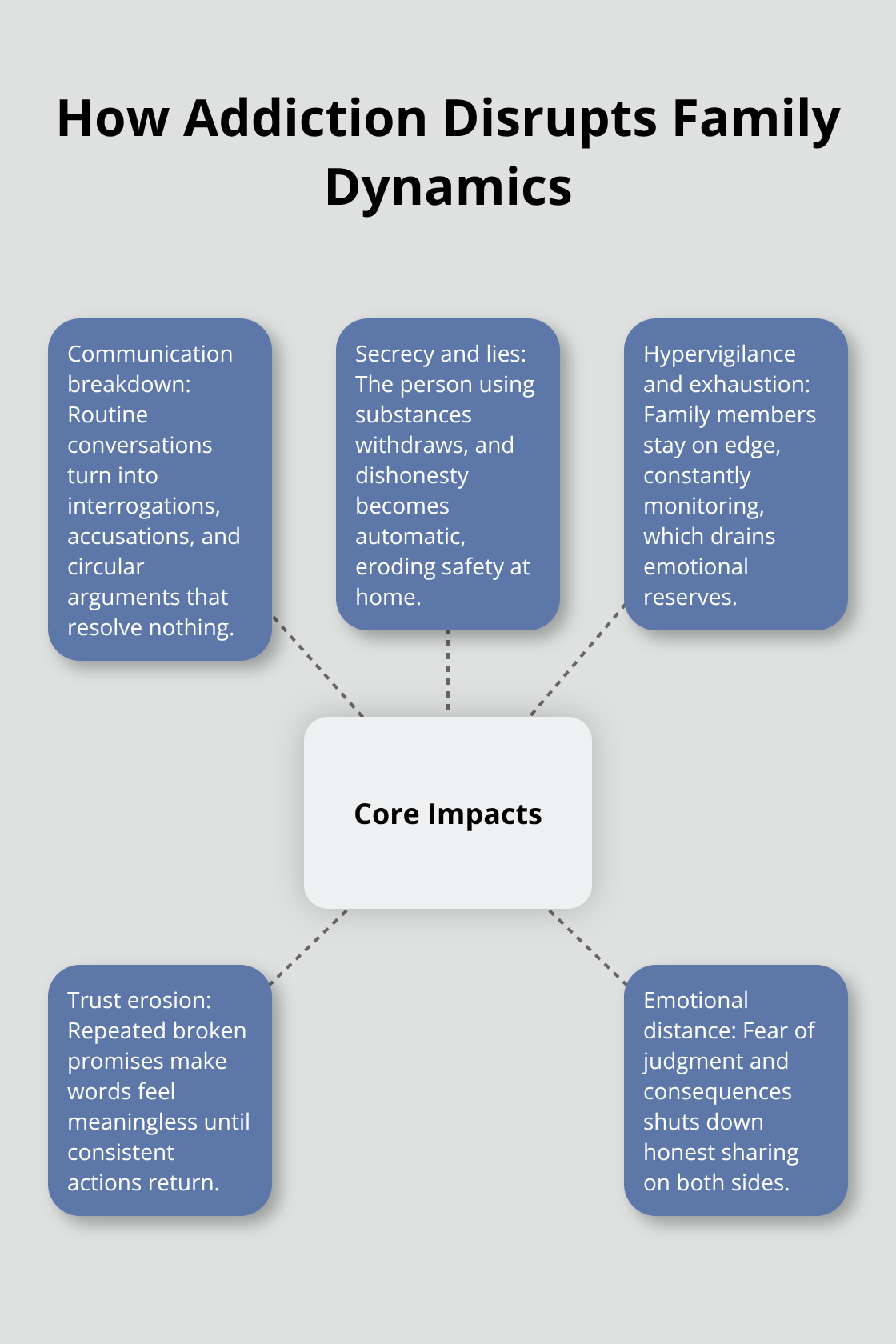
Addiction destroys families in ways that extend far beyond the person using substances. It rewires how families communicate and function. About 1 in 35 children lived in households with at least one parent who had a past year illicit drug use disorder, which means broken promises and emotional distance become the daily reality for millions. When addiction is active, conversations shift from normal dialogue to interrogations about whereabouts, accusations about money, and defensive arguments that lead nowhere. The person struggling with addiction retreats into secrecy, lies become automatic, and family members develop a hypervigilance that exhausts everyone. This pattern destroys communication in both directions-family members stop sharing their own struggles because the house feels unsafe, and the person with addiction stops being honest about their reality because they fear judgment or consequences.
Financial Devastation Compounds the Betrayal
Money disappears in addiction, and families rarely see it coming until accounts are drained or debts surface. The person struggling with addiction may drain savings for substances, take out loans in the family’s name, or neglect bills while prioritizing drug or alcohol costs. This financial devastation creates a secondary layer of trauma because it represents a concrete betrayal. Family members can point to specific amounts, specific lies, and specific moments when trust shattered. Unlike emotional hurt, financial damage carries legal and practical consequences that linger for years. Creditors call, credit scores plummet, and family members may lose their own financial stability trying to cover the damage. The person in recovery later realizes they’ve created a debt that extends far beyond money-they owe their family stability, security, and the ability to plan for the future without fear.
Trust Becomes the Real Casualty
The deepest wound addiction inflicts is the loss of trust, and this wound does not heal on its own. Family members stop believing anything the person says because addiction teaches them that words mean nothing when substances are involved. A parent might promise they’ll attend their child’s soccer game and fail to show up because they’re using. A spouse might swear they’re at work when they’re actually getting high. These broken promises accumulate until family members stop expecting anything, and that numbness is actually more painful than anger. The person in recovery later must rebuild trust by proving through consistent action that they’ve changed. This requires attending every appointment, keeping every commitment, and accepting that one slip might undo months of effort. Family members need to see that recovery is real, and that only happens through time, transparency, and relentless follow-through on small promises before larger ones are even considered.
Why Rebuilding Takes Time
Trust restoration cannot happen overnight, and families who understand this reality make better progress. The damage addiction causes accumulates over months or years, so recovery demands the same extended timeline. Family members carry wounds that run deep (broken promises, financial loss, emotional abandonment), and those wounds require consistent evidence of change before they begin to close. The person in recovery must accept that their family’s skepticism is earned and justified. Small actions matter more than grand gestures-showing up on time for a coffee date, following through on a single commitment, or maintaining honesty about a difficult moment. These actions, repeated over weeks and months, slowly shift the family’s perception from “they’re using again” to “maybe they’re actually changing.” This shift happens gradually, and families who rush the process often face disappointment when progress stalls.
Understanding how addiction damages families sets the stage for the real work ahead. The broken communication, financial wreckage, and shattered trust create obstacles that recovery must address directly. The next section outlines the concrete steps families can take to rebuild what addiction destroyed.
Rebuilding Trust Through Consistent Action
Families often expect recovery to fix everything immediately, and this expectation guarantees disappointment. The National Institute on Drug Abuse notes that consistency over time, not speed, predicts successful relationship repair. This means a person in early recovery who shows up to every family dinner for three months has done more to rebuild trust than someone who promises grand gestures. Set a specific timeline with your family that acknowledges how long the damage took to occur. If addiction was active for five years, trust rebuilding typically requires at least two to three years of consistent behavior before skepticism starts to fade. This is not pessimism; it is mathematical reality. Small commitments matter far more than ambitious ones. A recovering person who calls every Sunday at 6 PM and never misses that call teaches their family something concrete about change. A promise to transform the entire family dynamic by next month teaches them nothing except that recovery talk still sounds like addiction talk.
Write Down Exactly What Consistency Looks Like
Vague promises collapse under pressure. Instead, develop a written agreement between the person in recovery and their family that names exactly what consistency looks like. This agreement should include specific actions (attending family therapy weekly, daily check-ins lasting at least ten minutes, shared meals together, timely phone calls), who is responsible for each action, and how frequently these actions happen. A trust tracker works here: list the action, the person involved, the frequency, and the goal. For example, the recovering person commits to attending family counseling every Thursday at 6 PM with their spouse, or calling their parent every morning before work. When the person follows through, family members see evidence. When they miss one session, the family notices the absence and can address it directly rather than spiraling into assumption.
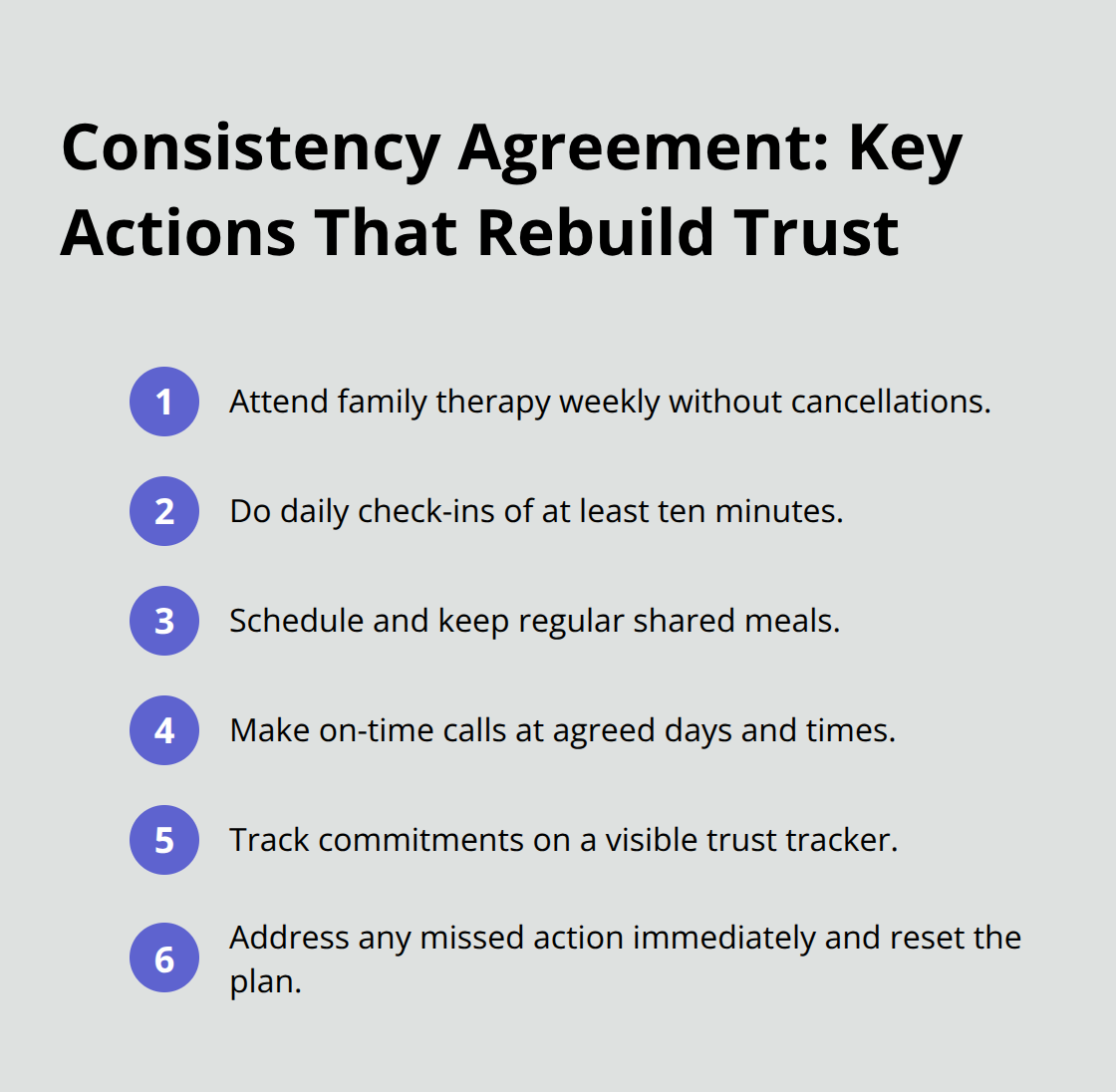
This structure prevents the old pattern where family members interpret silence as relapse and the recovering person feels accused without understanding why.
Protect Everyone With Clear Boundaries
Clear boundaries also protect the person in recovery from enabling behaviors. If the family agrees that no substance use happens in the home and no financial support goes toward drugs, the recovering person knows exactly what the rules are and can plan accordingly. These boundaries (no substance use in the home, mutual respect during disagreements, space for self-care) protect both sides and reduce conflict. The recovering person also establishes their own boundaries: avoiding triggers, staying in therapy, and respecting privacy. When everyone understands what the rules are, fewer misunderstandings occur, and the recovering person can demonstrate commitment through adherence rather than through words alone.
Replace Old Communication Patterns With Honest Dialogue
The family communication that existed during active addiction was interrogation mixed with defensive arguments. Rebuilding requires learning to talk differently. Active listening means fully focusing on what the other person is saying, reflecting back what you heard to confirm understanding, and validating their feelings even if you disagree. A family member might say, “I’m hurt you didn’t show up last week,” and instead of defending or explaining away, the recovering person responds with, “I hear that my absence hurt you, and I understand why you’re frustrated.” This acknowledgment does not require agreement; it requires respect.
Reframe statements to focus on effort rather than judgment. Instead of “you always let us down,” try “I’m hurt you didn’t show up, but I see your effort now.” This distinction matters because it acknowledges progress while holding space for pain. Open, honest communication about setbacks, cravings, and struggles prevents the secrecy that fueled addiction in the first place. When a recovering person tells a family member about a craving instead of hiding it, they demonstrate that recovery includes transparency rather than shame.
Structured Therapy Teaches New Communication Skills
Family therapy creates a structured space where a professional guides these conversations and helps everyone practice new communication skills. Research shows that families are powerful resources for enhancing treatment and recovery success. A therapist can identify which old patterns still surface during conversations and interrupt them in real time. The therapist also validates each family member’s experience, which matters because family members often feel unheard during active addiction. When everyone feels heard and respected in the therapy room, they can transfer those skills to conversations at home.
As families establish these concrete practices and communication patterns, they create the foundation for the next critical phase: building an environment where recovery actually takes root and grows.
Building the Environment Where Recovery Survives
Active addiction thrives in chaos, and recovery dies in the same conditions. Families must deliberately construct an environment where staying sober becomes easier than relapsing. This requires identifying what specifically triggers the person in recovery and then systematically reducing exposure to those triggers. Triggers are not abstract concepts-they are concrete situations, people, places, or emotions that activate the craving to use.
Map Triggers With Precision
A person might relapse when they encounter old using friends at the grocery store, or when financial stress spikes, or when they feel isolated on weekends. The family’s job is to help map these triggers with precision and then develop actual strategies to navigate them. If loneliness triggers use, the family commits to regular contact and shared activities. If specific locations trigger cravings, the person in recovery avoids those places and the family respects those boundaries without judgment. If anger or conflict triggers use, family members learn to de-escalate conversations before they explode.
This is not about removing all stress-that is impossible-but about removing unnecessary exposure to the specific situations that destabilize recovery. The person in recovery also needs professional support beyond family: a therapist or counselor who understands addiction, a support group like Alcoholics Anonymous or Narcotics Anonymous where they hear from others navigating the same battle, and potentially a sponsor or mentor who has already achieved long-term sobriety.
Build Multiple Support Systems
Research from the National Institute on Drug Abuse shows that individuals who engage in multiple support modalities have significantly higher success rates than those relying on family alone. The family cannot be the sole source of accountability or motivation-that expectation burns out everyone involved and sets recovery up to fail. Professional counselors, peer support groups, and mentors each play distinct roles that reinforce one another. This layered approach prevents the person in recovery from becoming overly dependent on any single relationship, which protects both the individual and the family from the pressure of carrying recovery alone.
Recognize and Celebrate Every Milestone
Celebrating progress matters far more than families typically realize, and this is where many families miss a critical opportunity to reinforce recovery. When a person reaches thirty days sober, that is not a small thing-it is a fundamental shift in how their brain functions and how they navigate daily life. The family should acknowledge this milestone explicitly: a special dinner, a note expressing pride, or simply sitting together and naming what thirty days means.
Track progress visibly with a family calendar where milestones get marked. This serves two purposes: it gives the person in recovery concrete evidence that time is passing and change is real, and it reminds family members on difficult days that progress is actually happening. Small wins matter just as much as major milestones.
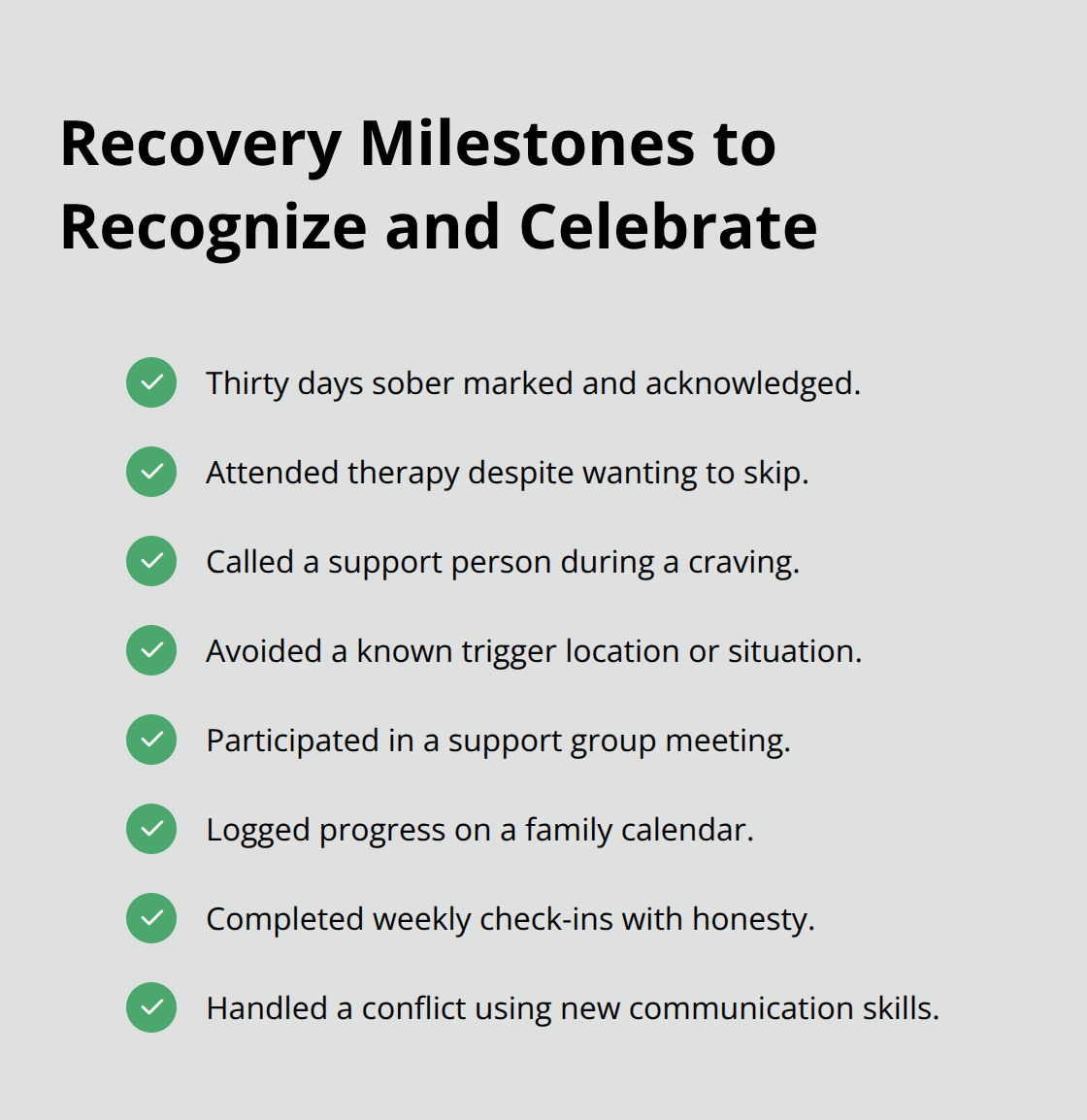
A person who attended therapy after wanting to skip it, or who called when they were struggling instead of isolating, deserves recognition. These moments seem insignificant compared to staying sober, but they are the building blocks of sustained recovery.
Focus on Effort, Not Outcomes
Al-Anon, the peer support organization for families affected by addiction, recommends that family members focus on effort rather than outcomes because effort is what the recovering person controls. Outcomes depend on countless variables, but showing up to a support group, being honest about struggles, or maintaining contact with family-these are direct results of the person’s commitment. When families focus their praise and attention on effort, they reinforce the behaviors that actually predict long-term sobriety rather than waiting for some perfect moment that may never arrive.
Embracing the Journey of Family Reconciliation
Family reconciliation after addiction demands patience and consistency rather than perfection or speed. The families who succeed understand that trust rebuilds through small, repeated actions over months and years, not through dramatic promises or grand gestures. This work tests everyone involved, but the reward-a family that functions with honesty, respect, and genuine connection-makes the effort worthwhile.
What separates families who heal from those who remain fractured is their willingness to act when progress feels invisible and setbacks feel overwhelming. Professional support becomes essential at this point because family members alone cannot carry the weight of recovery. We at Addiction Resource Center provide personalized addiction therapy and substance abuse counseling that addresses the entire family system, not just the individual in recovery. Our outpatient programs allow you to maintain the family connections that sustain long-term sobriety while receiving the professional guidance your situation requires.
If you navigate family reconciliation after addiction, reach out to Addiction Resource Center for professional support. Your family’s healing is possible, and you do not have to figure out the path alone. The consistency, boundaries, and communication skills you build now will sustain your family through recovery and beyond.