Explore intensive outpatient program benefits for addiction recovery, flexible scheduling, and professional support to reclaim your life today.

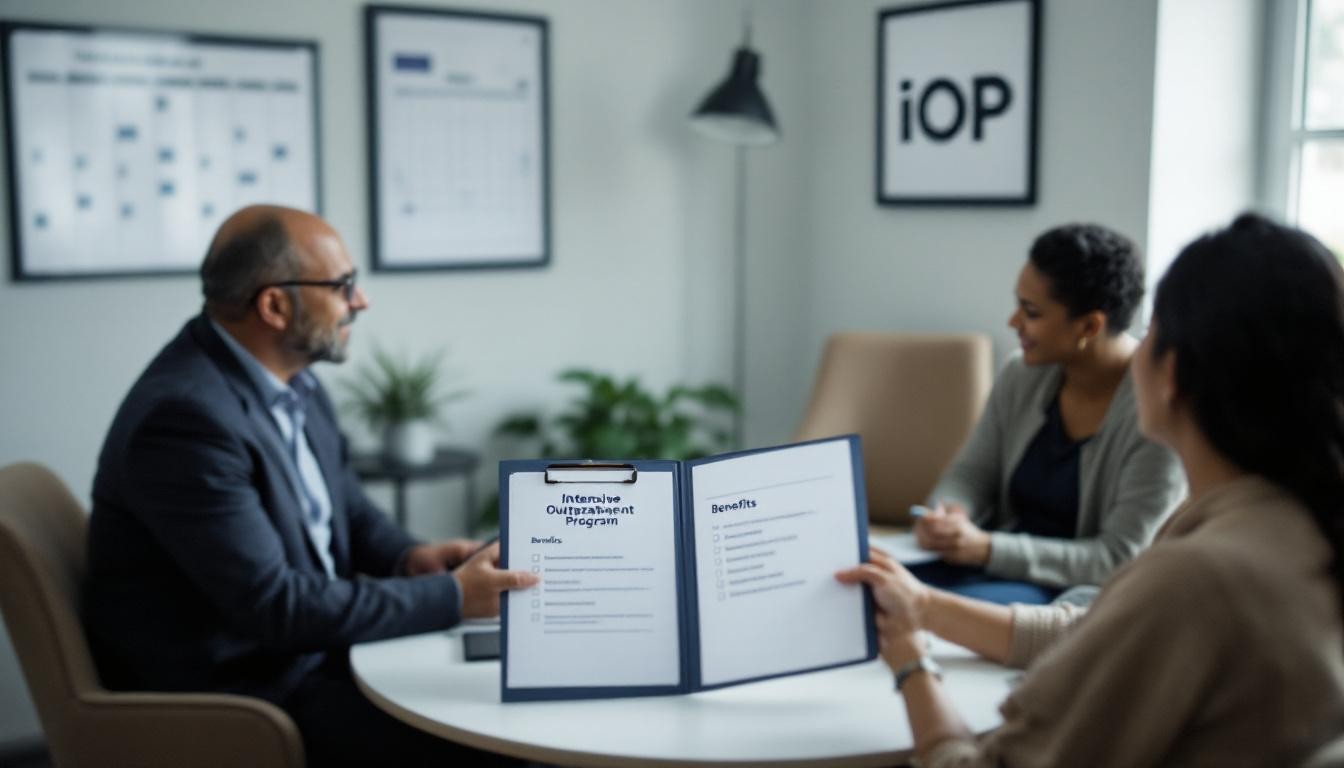
Intensive outpatient programs offer real flexibility for people serious about recovery. You attend treatment sessions while maintaining your job, family responsibilities, and daily life.
At Addiction Resource Center, we’ve seen firsthand how these programs deliver measurable results. This guide walks you through the intensive outpatient program benefits that make a genuine difference in sustained recovery.
How Intensive Outpatient Programs Structure Your Recovery
The Weekly Schedule That Keeps You Moving Forward
Intensive outpatient programs operate on a straightforward schedule that demands commitment without requiring you to abandon your responsibilities. You attend treatment three to five days per week for three to eight weeks, with sessions typically running three to five hours daily. This structure allows you to work, attend school, or manage family obligations while receiving serious therapeutic intervention. The program combines individual therapy sessions where a therapist addresses your specific addiction challenges with group therapy that connects you to others navigating similar recovery paths. Johns Hopkins Bayview Medical Center’s Intensive Outpatient Program for Adults, for example, runs three days weekly from 9:30 am to 12:30 pm with three structured group sessions daily focused on symptom reduction and skill development. You also receive weekly individual psychotherapy and medication reviews from a psychiatrist, creating a comprehensive treatment framework that addresses both substance abuse and underlying mental health conditions.
Evidence-Based Methods That Produce Real Change
The evidence supporting intensive outpatient programs is substantial. Research shows that participants experience reductions in substance use and mental health symptoms, with a high retention rate of 91%. Intensive outpatient programs structure your recovery through descriptions of six commonly used and studied treatment approaches that form the core of treatment for many IOP programs. The treatment approach relies on proven therapies like CBT and Motivational Interviewing woven throughout daily groups covering topics like healthy relationships, healthy thinking, and tolerating distress. This evidence-based foundation matters because it separates programs that genuinely work from those relying on outdated approaches.
Immediate Application in Your Real Life
The flexibility of outpatient care allows you to practice skills immediately in real-life settings-your home, workplace, and relationships-rather than waiting until discharge to apply what you’ve learned. You test new coping strategies the same day you learn them, which accelerates your progress and builds confidence in your ability to handle challenges. Transportation assistance may be available depending on your location, removing another barrier that often prevents people from accessing the help they need. This practical advantage means you don’t sacrifice your recovery to maintain the stability of your daily life; instead, you strengthen both simultaneously.
Do Intensive Outpatient Programs Actually Work
Measurable Results That Prove Effectiveness
Intensive outpatient programs deliver measurable outcomes that inpatient rehab facilities struggle to match. The retention rate for IOP participants reaches 91 percent, meaning nine out of ten people complete their treatment instead of dropping out early. This completion rate matters because it directly correlates with sustained recovery. Johns Hopkins Bayview Medical Center tracks participant progress using the Depression Anxiety Stress Scales-21 assessment and finds consistent reductions in depression, anxiety, and stress across their patient population. Participants also show increased use of healthy coping behaviors and decreased reliance on unhealthy coping mechanisms, measured through the DBT Ways of Coping Checklist. These aren’t theoretical improvements-they’re measurable changes in how people manage their daily lives after leaving treatment.
Real Skills That Transfer to Your Life
The fact that most participants return to their former outpatient therapist upon discharge, empowered with new skills rather than starting from zero, demonstrates the practical foundation these programs build. You apply your new recovery skills immediately in your actual environment-at work, at home, with your family-rather than in an artificial treatment setting. This real-world practice accelerates your ability to handle genuine challenges when they arise. The combination of maintained employment income and immediate skill application creates a recovery model that works within the constraints of real life rather than asking people to put their lives on hold.
Cost Advantages That Remove Financial Barriers
The financial advantage of intensive outpatient treatment removes a significant barrier that prevents many people from seeking help. Inpatient rehab costs substantially more because facilities provide round-the-clock residential care, meals, and overnight supervision. Intensive outpatient programs cost considerably less since you maintain your own housing and daily responsibilities. This cost difference matters most for people without substantial insurance coverage or savings. Transportation assistance available in some locations removes another practical obstacle that might otherwise prevent someone from accessing treatment. The lower expense of IOP means more people can afford the help they need without sacrificing financial stability or employment.
Why IOP Programs Tailor Treatment to Your Specific Needs
Personalized Assessment Shapes Your Recovery Path
Intensive outpatient programs succeed because they reject the one-size-fits-all approach that fails so many people. Your addiction history, mental health challenges, and life circumstances are entirely unique, and your treatment plan reflects this reality. A comprehensive assessment identifies your specific triggers, co-occurring disorders, and recovery goals before treatment even starts. A multidisciplinary team (psychiatrists, therapists, and social workers) collaborates to design your personalized pathway rather than assigning you to a generic program track.
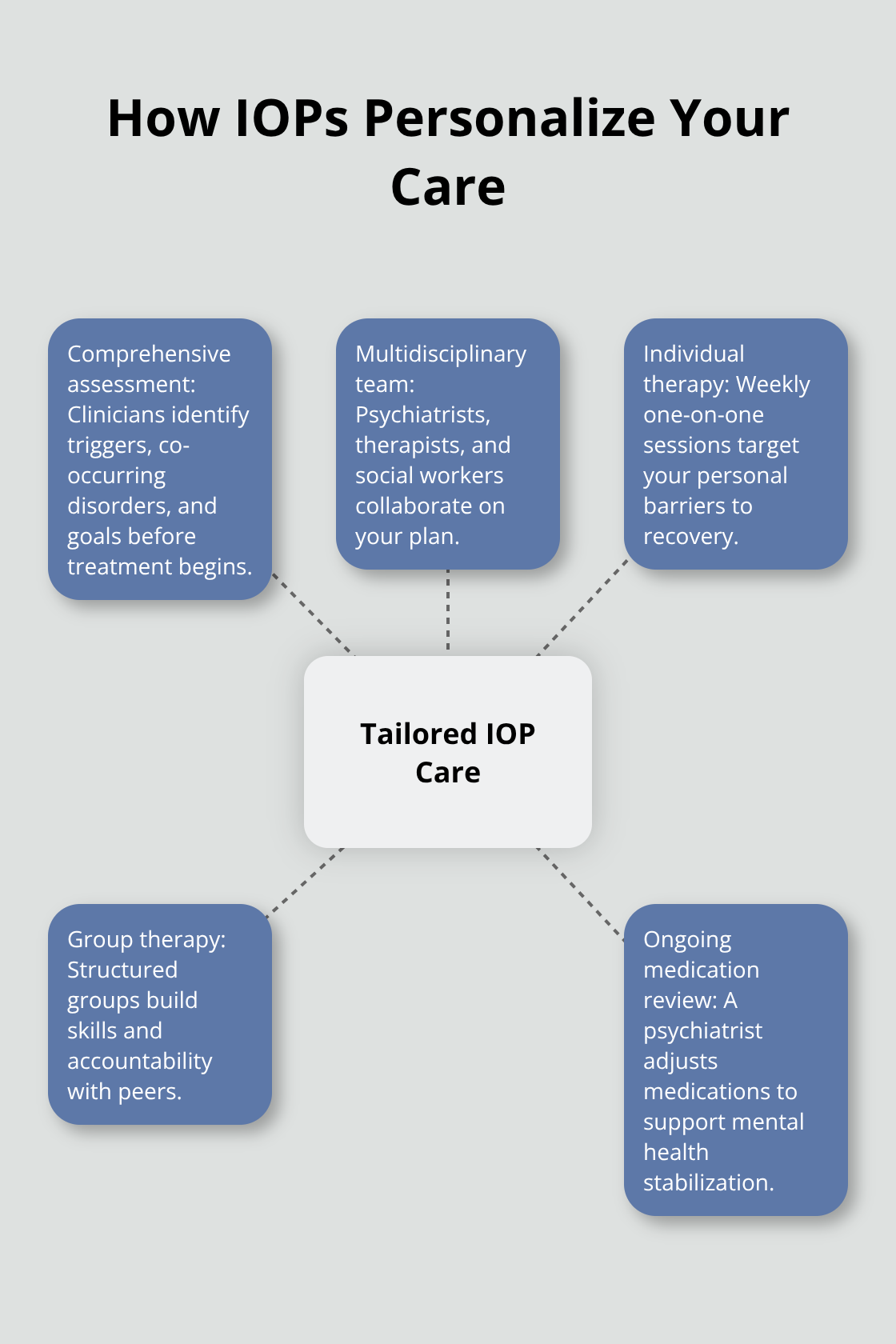
This tailored approach matters because individualized treatment plans produce better outcomes than standardized protocols.
Addressing Root Causes Through Individual and Group Work
Your therapist addresses the root causes driving your substance use, whether that’s untreated depression, anxiety, trauma, or environmental stressors. Group therapy sessions complement individual work by connecting you with others facing similar challenges, creating accountability without judgment. The combination of one-on-one sessions targeting your personal barriers alongside group work that builds community creates a treatment model grounded in your actual circumstances. You receive weekly individual psychotherapy sessions where your therapist works exclusively on your recovery needs, then participate in structured groups where you learn from peers navigating comparable struggles.
Mental Health Integration Prevents Relapse
Mental health integration throughout your IOP treatment prevents the common mistake of treating addiction in isolation. Many people discover during treatment that depression or anxiety fueled their substance use, not the reverse. Your treatment includes daily groups covering healthy thinking and tolerating distress alongside addiction-focused therapy. You receive weekly medication reviews from a psychiatrist who adjusts your treatment based on your response, ensuring your mental health stabilization supports rather than undermines your recovery. This integrated approach means you address both conditions simultaneously instead of completing addiction treatment only to face unmanaged mental health symptoms that trigger relapse.
Experienced Counselors Meet You Where You Are
Compassionate substance abuse counseling from experienced professionals creates the safety necessary for honest recovery work. Your counselor has guided countless people through early recovery and recognizes the resistance, shame, and fear that often accompany this process. They understand that sustainable recovery requires addressing what addiction has cost you emotionally and relationally, not just stopping substance use. Your counselor meets you exactly where you are in your recovery journey, without judgment or pressure to move faster than your circumstances allow.
Final Thoughts
Intensive outpatient program benefits extend far beyond stopping substance use-you maintain employment, support your family, and build recovery skills in the environments where you’ll actually need them. The 91 percent completion rate proves that people finish treatment when programs respect their real-world responsibilities instead of demanding they abandon their lives. You receive evidence-based therapy from experienced professionals who personalize treatment to address your specific addiction and mental health needs, then practice new coping strategies immediately at home and work.
Participants experience reduced depression, anxiety, and stress while developing healthier coping mechanisms that stick because they’ve already tested them in real situations. The cost advantage removes financial barriers that prevent many people from seeking help, making serious treatment accessible regardless of your insurance coverage or savings. You return to your community with concrete skills rather than theoretical knowledge, positioned to sustain recovery because you’ve practiced managing challenges in your actual life.
Contact Addiction Resource Center to discuss your situation with someone who understands addiction recovery and can answer your questions about whether an intensive outpatient program fits your needs right now. We’ll verify your insurance and help you take the first step toward the recovery that works within your real life. Your recovery is possible without putting your life on hold.