Rebuild trust and heal family relationships after addiction with proven strategies for reconnecting and moving forward together.


Addiction tears families apart. It erodes trust, breaks communication, and leaves everyone struggling to understand what went wrong.
The good news is that family reconciliation after addiction is possible. At Addiction Resource Center, we’ve seen families rebuild stronger relationships by taking concrete steps toward healing and learning to support each other through recovery.
How Addiction Breaks Down Family Trust
The Systematic Betrayal of Addiction
Addiction operates like a systematic betrayal. When someone struggles with substance use, they stop showing up consistently, lie about where they’ve been, and prioritize the addiction over the people who depend on them. Over 25 million Americans live with a family member struggling with addiction, according to SAMHSA research from 2021, which means the damage spreads far beyond the person using.
Trust crumbles because promises break repeatedly. A parent misses their child’s school event because they’re using. A spouse finds hidden bottles and realizes everything they were told was false. These aren’t one-time incidents but patterns that repeat until family members stop believing anything the addicted person says.
How Communication Collapses
Communication becomes impossible because conversations turn into arguments about the addiction, accusations, or avoidance. Family members learn to walk on eggshells, monitoring moods and trying to prevent the next crisis. The household becomes reactive instead of stable.
Children in these environments often develop anxiety or depression from the unpredictability. Partners become hypervigilant, checking bank accounts and monitoring behavior. Parents feel shame about their adult child’s addiction and isolate themselves from friends. Every family member adapts by either enabling the behavior or withdrawing emotionally.
The Codependency Trap
Codependency emerges when family members unconsciously support the addiction while thinking they’re helping. A parent covers up their adult child’s mistakes at work to prevent job loss. A spouse calls in sick for their partner when they’re hungover. A sibling lends money without asking what it’s for. These actions feel compassionate in the moment, but they remove the natural consequences that might push someone toward treatment.
The enabling person typically experiences guilt, resentment, and exhaustion from managing the addicted person’s life. Meanwhile, the person with addiction faces no real pressure to change because someone else absorbs the fallout. Codependent family members often struggle with their own mental health, developing anxiety or depression from the constant stress. They lose their identity trying to control someone else’s behavior.
Breaking the Cycle
Setting boundaries feels impossible because family members fear abandonment or believe they’re responsible for the addicted person’s survival. This dynamic keeps everyone trapped. The addicted person doesn’t hit bottom, and the family member doesn’t protect their own wellbeing.
Breaking this cycle requires recognizing that helping someone stay comfortable in addiction isn’t love, it’s harm. Real support means allowing consequences to happen and protecting your own mental health in the process. Once families understand these patterns, they can take the first step toward healing: honest conversations about what happened and why. These conversations form the foundation for everything that comes next in recovery.
Turning Conflict Into Healing
Schedule Honest Conversations About the Past
Honest conversations about the past feel terrifying because family members fear reopening wounds or triggering relapse. But avoiding these conversations keeps everyone trapped in silence and resentment. The key is structure. Instead of ambushing someone with accusations, schedule a dedicated time when everyone is calm and sober. Start by acknowledging that addiction damaged the relationship, then move into specifics about what happened and how it affected each person.
Research shows that early disclosure of setbacks and relapse prevents further damage, which means transparency about past behavior during these conversations actually strengthens recovery rather than threatening it. Each family member should have space to express how the addiction impacted them without interruption. A parent might say, “I felt abandoned when you missed my graduation.” A spouse might explain, “I stopped trusting anything you said because of the lies.” The person in recovery should listen without defending or minimizing. They should acknowledge the pain they caused and explain what they understand about their behavior now. This isn’t about making excuses; it’s about showing they grasp the consequences of their actions.
Establish Clear Boundaries That Protect Everyone
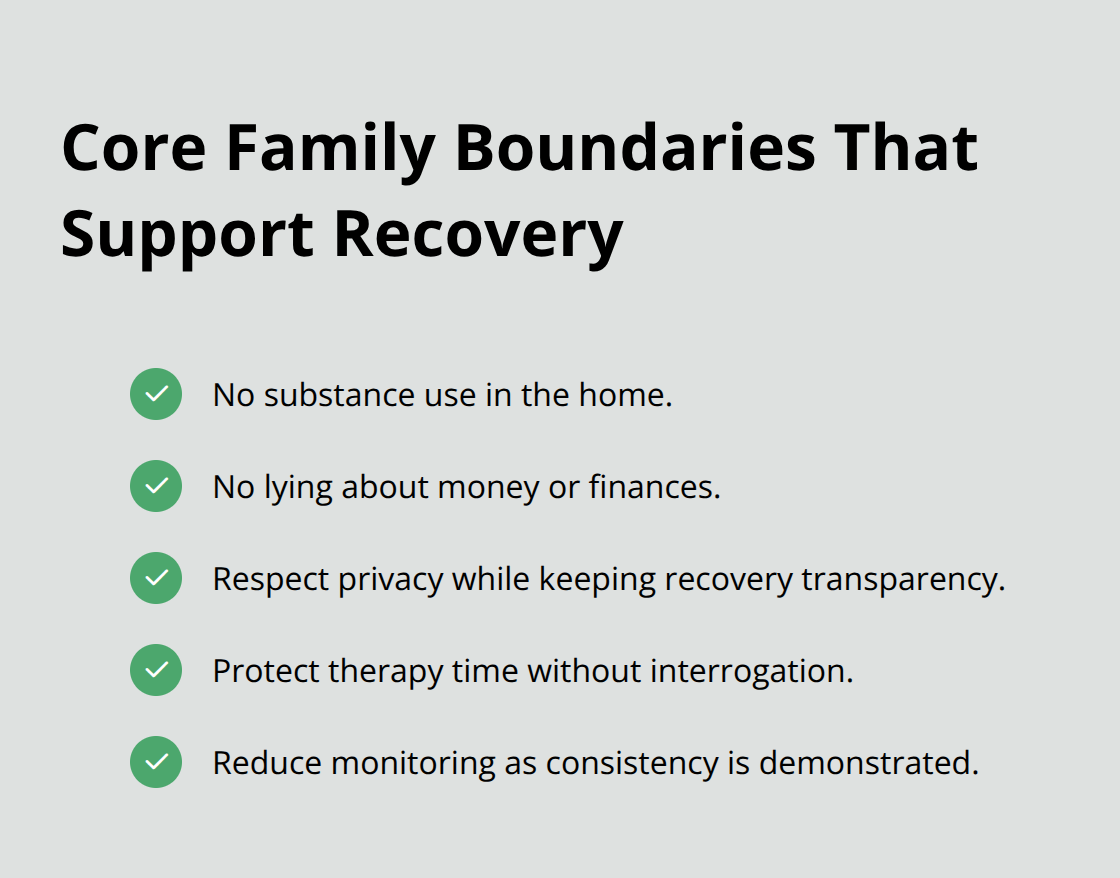
Setting boundaries protects everyone from repeating old patterns, but families often resist because boundaries feel like punishment. They aren’t. Boundaries are agreements about what behavior is acceptable moving forward. No substance use at home is a boundary. No lying about finances is a boundary. Respecting each other’s privacy while still maintaining transparency about recovery activities is a boundary. The person in recovery needs boundaries too, like space to attend therapy without questions or freedom from constant monitoring once they prove consistency.
Research indicates that consistent accountability through regular therapy attendance and treatment plans reassures loved ones more effectively than promises alone. Establish clear consequences when boundaries break, then follow through without anger or lectures. If someone relapses, the consequence might be increased treatment intensity or temporary separation, not shame. Document progress using visual tools like a family calendar marking therapy sessions, 12-step meetings, or sober days.
This transforms abstract trust into concrete evidence.
Use Family Therapy to Build New Communication Patterns
Family therapy accelerates this entire process because a trained therapist identifies dysfunctional communication patterns that family members can’t see themselves. They teach practical skills like pausing before reacting during conflict, validating feelings even when disagreeing, and ending conversations with appreciation rather than resentment. Research shows family-based treatment approaches improve engagement and outcomes, with effects lasting 12 to 18 months post-treatment.
Weekly family sessions combined with individual therapy for the person in recovery create accountability while building new connection patterns. A therapist helps family members move past blame and toward understanding. They facilitate conversations where each person feels heard rather than attacked. Over time, these sessions replace old reactive patterns with intentional communication. The family learns to address problems as they arise instead of letting resentment build. This foundation of honest, structured communication becomes essential as families move forward into the next phase of recovery-creating an environment where long-term healing can actually take root.
Building Long-Term Recovery With Family Support
Create a Relapse Prevention Plan Together
Long-term recovery requires more than individual willpower. It requires a family system that actively supports sustained sobriety while protecting everyone’s wellbeing. The person in recovery needs a concrete relapse prevention plan that family members understand and reinforce. When families know what triggers might threaten sobriety, they can recognize warning signs before a relapse happens.
A relapse prevention plan identifies specific high-risk situations, the emotions or circumstances that precede them, and the exact actions the person will take instead of using. The plan should include contact numbers for therapists or sponsors, alternative activities when cravings hit, and what each family member’s role will be if warning signs appear. Write this plan down and review it together monthly.
Research shows that youth receiving medication-assisted opioid treatment alongside family involvement have significantly higher adherence rates than those in treatment alone. This means families that actively participate in recovery plans don’t just support the person using-they dramatically increase the odds of success.
Engage With Support Groups for Families
Finding the right support group for family members matters more than most families realize. Al-Anon, which specifically serves families affected by someone else’s drinking or drug use, has meetings in virtually every community and online. Support groups for families of people in recovery differ from support groups for people in recovery themselves because they address caregiver burnout, codependency patterns, and how to maintain your own mental health while supporting someone else’s recovery.
Attend these meetings consistently, not occasionally. Families who engage in structured support services report improved relationship satisfaction and better client engagement and retention. Consistency transforms these meetings from optional activities into anchors that stabilize your own emotional health during the recovery process.
Mark Progress With Visible Celebrations
Celebrate concrete milestones together using a visual tracker your family creates. Mark 30 days sober, consistent therapy attendance, completed family therapy sessions, and peaceful family dinners. These celebrations aren’t frivolous-they reinforce that change is real and observable. When the person in recovery sees their family actively acknowledging progress, it strengthens their commitment.
When family members see tangible evidence of change, they release some of the hypervigilance and anxiety that addiction created. Small celebrations (like a favorite meal or a family activity) cost nothing but create powerful reminders that healing is happening. These moments transform abstract trust into lived experience that everyone can feel and remember together.
Final Thoughts
Family reconciliation after addiction requires ongoing commitment long after the initial healing work ends. The families who succeed stop waiting for perfect conditions and start taking action with what they have right now. Consistency matters more than intensity-small reliable actions over months and years rebuild trust far more effectively than grand promises.
Real change happens when the person in recovery demonstrates reliability through showing up on time, following through on commitments, and admitting mistakes instead of hiding them. Family members rebuild trust by releasing their need to control outcomes and instead focusing on their own emotional health and recovery. Keep attending family sessions even when things feel stable, keep marking progress on your calendar, and keep showing up to support group meetings.
We at Addiction Resource Center understand that addiction damages entire families, not just individuals. Our team recognizes that family involvement strengthens treatment outcomes and creates the supportive environment necessary for lasting sobriety. If your family is ready to begin this healing journey, our addiction recovery center offers compassionate, professional support tailored to your specific needs.