Learn what is a sober living home and how it supports recovery with structured housing and peer accountability.


Sober living homes serve as a critical stepping stone for people in recovery. They bridge the gap between intensive treatment programs and fully independent living.
At Addiction Resource Center, we know that understanding what is a sober living home can help you or a loved one make informed decisions about recovery options. This guide walks you through how these homes work, what support they provide, and how to find one that fits your needs.
What Actually Happens in a Sober Living Home
A sober living home is not a treatment facility. It’s a private residence where people in recovery live together while maintaining sobriety and rebuilding their lives. The distinction matters because sober living operates on peer accountability and structure rather than clinical intervention. Most homes are privately owned and operated, meaning they’re not government-licensed like traditional halfway houses. This independence allows them to create their own cultures, rules, and expectations that align with recovery principles.
The Reality of Rules and Daily Accountability
Sober living homes enforce strict rules because structure directly correlates with better outcomes. Research from a longitudinal study tracking 300 individuals over 18 months found that residents in homes with stronger structure and accountability showed significantly better results.
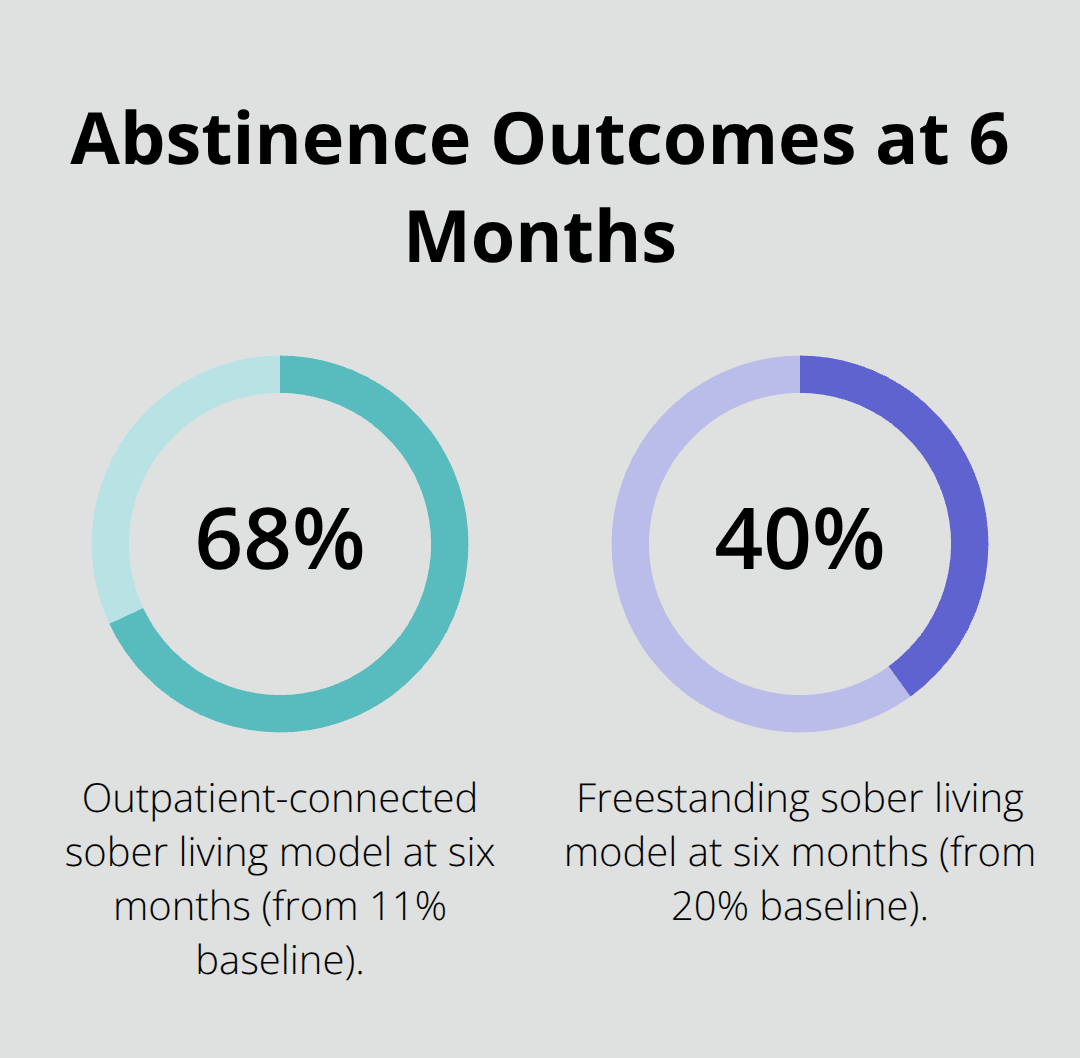
One group connected to outpatient treatment saw abstinence rates jump from 11 percent at baseline to 68 percent at six months. Another freestanding model showed increases from 20 percent to 40 percent in the same timeframe.
The rules that make this possible include mandatory drug testing, curfews, participation in chores, attendance at house meetings, and active involvement in recovery programs like Alcoholics Anonymous. These aren’t arbitrary restrictions. They interrupt the patterns that led to addiction in the first place. A curfew prevents someone from spending nights at bars or with people who use drugs. Mandatory chores develop daily structure and require residents to contribute to a functioning household. Random testing decreases the temptation to use significantly because the consequences are real and immediate.
Peer Support as the Core Mechanism
Living with others in active recovery differs fundamentally from attending treatment three times a week. The same longitudinal study identified that involvement in 12-step groups was a strong predictor of positive outcomes across different sober living models. The peer effect extends deeper than meetings alone.
Residents learn conflict resolution through navigating disagreements with housemates. They develop job-hunting skills from watching others secure employment. They build social networks free from drug use through spending evenings with people committed to sobriety. The average stay in these homes exceeds 90 days, with some residents staying around 166 to 254 days depending on the model. This extended timeframe allows genuine relationships to form and recovery habits to solidify.
Why Length of Stay Matters
Residents don’t remain isolated in their struggles. They see tangible proof that people can stay sober, get jobs, repair relationships, and move forward. That visibility changes how someone perceives their own recovery possibilities. The research showed that most residents left their sober living homes but maintained improvements after departure. At 12 months, 68 percent had left one model and 82 percent had left another, yet most improvements persisted through 18 months. This suggests that the time spent in structured peer environments creates lasting change that extends well beyond the residence itself.
Employment outcomes also improved significantly across both models studied. Residents secured jobs, maintained work schedules, and developed the financial stability needed for independent living. Arrests declined substantially as well across recovery housing models. These concrete improvements demonstrate that sober living homes prepare residents for the practical demands of life outside recovery housing.
The question then becomes: what specific factors should someone evaluate when selecting a sober living home that matches their particular recovery needs and circumstances?
How Sober Living Homes Support Recovery
Sober living homes support recovery through direct, measurable mechanisms rather than theoretical benefits. When someone transitions from a treatment program to a sober living home, they move into an environment where every person around them understands addiction from lived experience. This creates accountability that no therapist in an office can replicate. A resident cannot minimize their struggle or hide relapse signs from people who have walked the same path. Research showed that residents in homes with integrated outpatient services experienced greater likelihood of satisfactory discharge and longer length of stays in outpatient treatment. The difference reflects not just better outcomes but a structural reality: when professional treatment staff and peer support operate in the same space, residents face fewer opportunities to rationalize continued use. They attend counseling sessions in the same building where they sleep, eat, and spend evenings with others in recovery. This proximity eliminates the gap where many people slip back into old patterns between treatment sessions and home life.
The Problem With Rapid Transitions
The transition from intensive treatment to independent living fails for many people because it happens too quickly. A person completes a 30-day program, returns to their apartment alone, and faces the full weight of rebuilding without daily structure or immediate support. Sober living homes compress this transition into manageable increments.
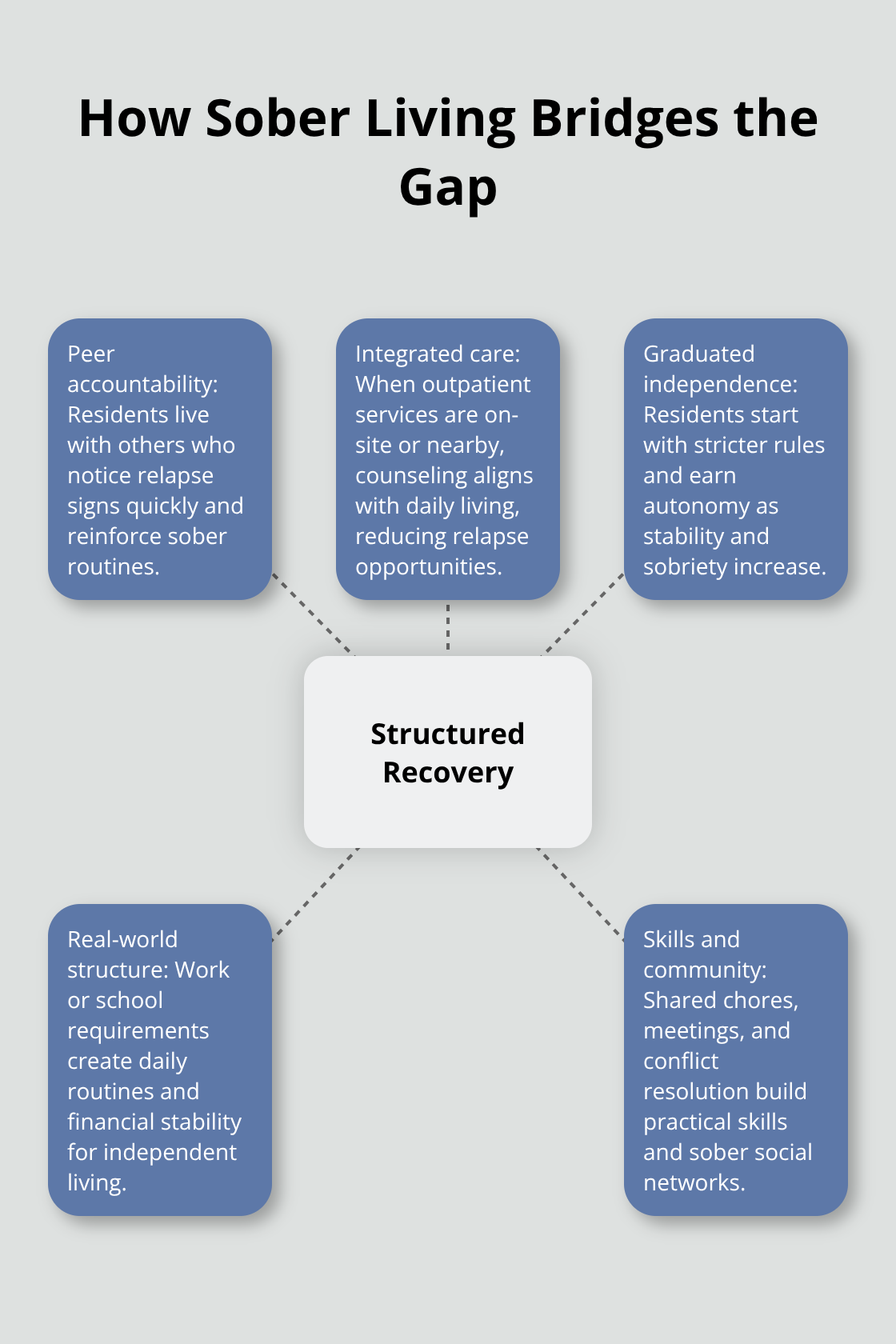
Residents start with rigid rules and constant peer presence, then gradually gain autonomy as they demonstrate stability. Someone might start with a strict curfew and mandatory house meetings, then negotiate later curfews and attend only weekly meetings after three months of sobriety.
How Graduated Independence Works
Employment becomes part of graduated independence in sober living homes. Most homes require residents to work or attend school, which develops the financial foundation and daily routine needed for independent living. Structured daily expectations operate differently than treatment assignments because they mirror real life. Cooking meals for the household, managing money to pay rent, and resolving conflicts with housemates teach practical skills that treatment cannot simulate.
Building Automatic Patterns
A resident learns that sobriety means showing up for work on Monday morning regardless of emotions, that bills get paid before entertainment, and that other people’s needs matter. These lessons solidify through repetition over months, not hours of therapy. Residents who maintain these habits after leaving their homes demonstrate that the time spent in structured peer environments creates lasting change extending well beyond the residence itself.
Research showed that most residents left their sober living homes but maintained improvements after departure. At 12 months, most had left their homes, yet improvements persisted through 18 months. Arrests declined substantially as well across recovery housing models. These concrete improvements demonstrate that sober living homes prepare residents for the practical demands of life outside recovery housing.
The question then becomes: what specific factors should someone evaluate when selecting a sober living home that matches their particular recovery needs and circumstances?
Selecting a Sober Living Home That Matches Your Needs
Verify Accreditation and Operational Standards
Find the right sober living home by evaluating specific operational details rather than accepting surface-level promises. Ask whether the home has formal accreditation through networks like the National Association of Recovery Residences or regional coalitions that verify standards. Homes without accreditation aren’t automatically problematic, but accredited facilities have undergone independent review of their rules, staff qualifications, and resident outcomes.
When you tour a facility, ask directly how staff handle rule violations and what happens if someone relapses. Some homes immediately discharge residents after any positive drug test, while others implement a tiered response that might include increased testing, restricted privileges, or mandatory additional counseling before removal. The difference matters because rigid zero-tolerance policies sometimes push struggling residents onto the street rather than back toward recovery.
Assess Staff Credentials and Mental Health Support
Ask about staff credentials too. Homes staffed by licensed clinical social workers or psychiatric nurses can respond to mental health crises and medication questions, whereas peer-run homes rely entirely on resident knowledge. Neither model is inherently superior, but your choice should align with your mental health needs. If you have depression, anxiety, or trauma alongside addiction, a home with professional staff provides faster intervention during difficult moments.
Evaluate Location and Resource Access
Location and access to resources determine whether you can actually maintain employment and continue treatment. A sober living home in an area with poor public transportation or limited job availability sets you up for failure regardless of how supportive the residents are. Ask whether the home sits near your workplace or realistic job opportunities, whether public transit connects to AA meetings you want to attend, and whether outpatient counseling services are accessible.
Some homes partner directly with treatment providers, meaning counseling happens in the same building or a short distance away. This integration reduces scheduling conflicts and increases the likelihood you’ll attend sessions consistently.
Confirm Compatibility With Your Recovery Philosophy
Verify whether the home requires specific recovery program involvement like AA or NA, or whether staff accept alternative approaches like SMART Recovery or secular meetings. This compatibility with your recovery philosophy prevents constant friction with house rules. Different homes emphasize different recovery methodologies, so alignment matters for your long-term commitment to the program.
Understand Costs and Payment Options
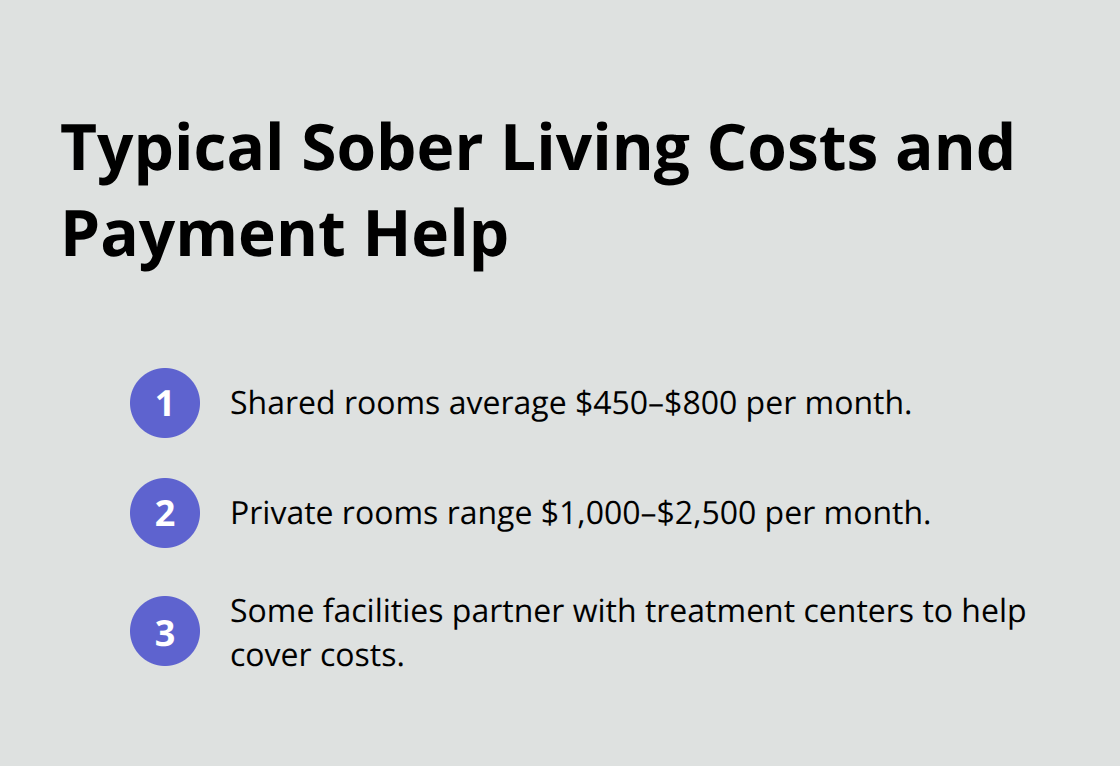
Discuss costs transparently. Sober living homes charge monthly rent with shared rooms averaging $450 to $800 per month, and private rooms ranging from $1,000 to $2,500 depending on location, amenities, and included services. Ask what the base rent includes, whether there are additional fees for counseling or activities, and whether the home accepts insurance or offers sliding scale options. Some facilities work with treatment centers that can help cover costs, reducing your out-of-pocket burden.
Visit multiple homes and speak with current residents about their actual experiences, not just what management tells you. Current residents provide honest feedback about daily life, staff responsiveness, and whether the environment truly supports recovery.
Why Sober Living Is Essential for Long-Term Recovery
Sober living homes work because they replace isolation with accountability and structure with purpose. Understanding what a sober living home is means recognizing it as a practical recovery tool, not a punishment or a permanent solution. The research shows that residents who stay in structured peer environments for 90 days or longer maintain improvements in abstinence, employment, and reduced criminal involvement long after they leave.
These homes matter in long-term recovery because they compress the transition from treatment into manageable stages. You don’t jump from intensive counseling directly to complete independence. Instead, you live with people who understand addiction, follow rules that interrupt old patterns, and gradually gain autonomy as you demonstrate stability. This graduated approach works because residents maintain employment, rebuild relationships, and develop the daily habits that support lasting sobriety.
If you’ve completed a treatment program, ask your counselor about sober living options that align with your recovery philosophy and location. Tour multiple homes, speak with current residents, and verify accreditation through recognized networks. Contact Addiction Resource Center to discuss your recovery options with professionals who understand the full recovery journey.