Discover how long addiction recovery takes and what affects the timeline for lasting sobriety and wellness.


People struggling with addiction often ask: how long does addiction recovery take? The answer isn’t simple because recovery looks different for everyone.
At Addiction Resource Center, we know that timelines depend on the type of addiction, your health, and the quality of treatment you receive. This guide breaks down realistic recovery expectations and what actually helps people stay sober long-term.
What Actually Determines How Long Recovery Takes
The Substance You Use Shapes Your Timeline
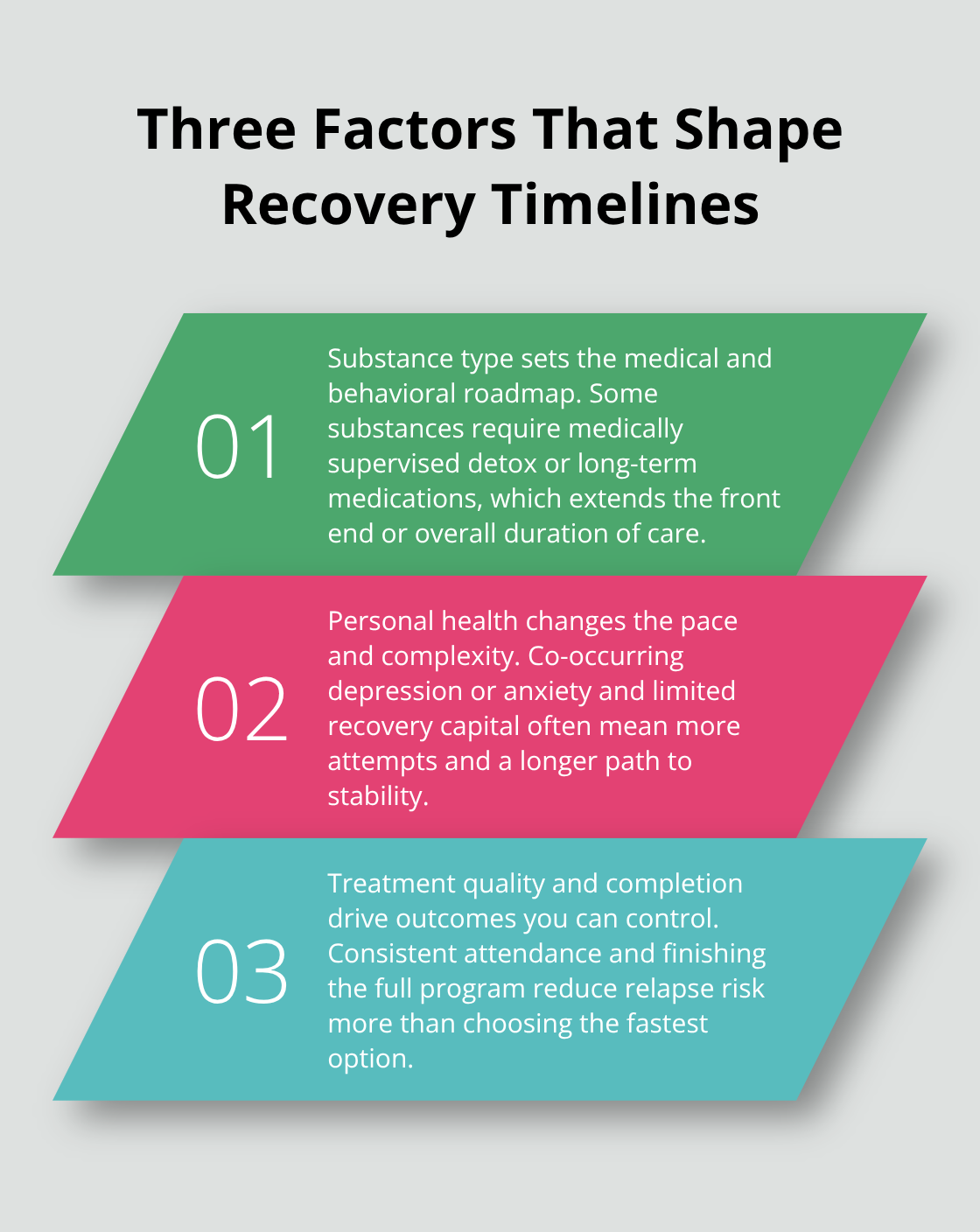
The substance you abuse matters enormously-far more than most people realize. Alcohol and benzodiazepines require medical detoxification because withdrawal can be life-threatening, adding days or weeks to the front end of treatment. Opioids typically demand medication-assisted treatment lasting months or years to prevent relapse, according to research from the National Institute on Drug Abuse. Stimulants like methamphetamine or cocaine have no FDA-approved medications, so treatment focuses purely on behavioral strategies, which extends the timeline differently.
Addiction Severity and Your Personal Health
The severity of your addiction shifts everything about your recovery path. Someone who used daily for fifteen years faces a fundamentally different recovery journey than someone with two years of weekend use. Research from Kelly and colleagues in 2019 found that the median number of serious recovery attempts before resolving an addiction was just two, but the distribution ranged from zero to over one hundred-meaning severity directly predicts how many tries you’ll need.
Your personal health situation acts as the second major lever. Co-occurring mental health conditions like depression or anxiety significantly extend recovery because you treat two conditions simultaneously, not one. The Kelly study showed that people with a history of depressive or anxiety disorders reported more recovery attempts than those without, indicating greater complexity and longer timelines. Your recovery capital-the resources, relationships, and support you can access-matters just as much. Someone with stable housing, employed family members, and a strong social network recovers faster than someone facing homelessness or isolation.
Treatment Quality and Completion
The quality of treatment you receive is the third factor, and it’s the only one you can directly control once you decide to get help. Research shows that ninety days of treatment produces meaningful progress, not the outdated twenty-one-day programs still promoted by some facilities. Medically supervised detoxification reduces relapse risk during withdrawal, while inpatient programs remove you from daily triggers during your most vulnerable phase. Outpatient treatment works if you have stable housing and low immediate relapse risk, but it requires genuine commitment to attend sessions multiple times weekly.
Treatment completion matters far more than treatment speed, so you should choose a program you’ll actually finish rather than chase the fastest option. These three factors-substance type, personal health, and treatment quality-interact to create your unique recovery timeline. Understanding how they work together helps you set realistic expectations and select the right level of care for your situation.
How Long Recovery Takes for Each Addiction Type
Alcohol Addiction Recovery Timelines
Alcohol addiction recovery unfolds over three to six months for early stabilization, but meaningful brain healing extends far longer. Alcohol withdrawal poses genuine medical danger, so the first week demands medical supervision to prevent seizures or worse. Once detox completes, the real work begins: rebuilding neural pathways damaged by years of daily drinking. Research shows alcohol cravings peak around 72 hours, which is why programs lasting under ninety days often fail. Someone who drank heavily for a decade won’t regain stable mood regulation or sleep patterns in weeks; expect six to twelve months before brain chemistry normalizes.
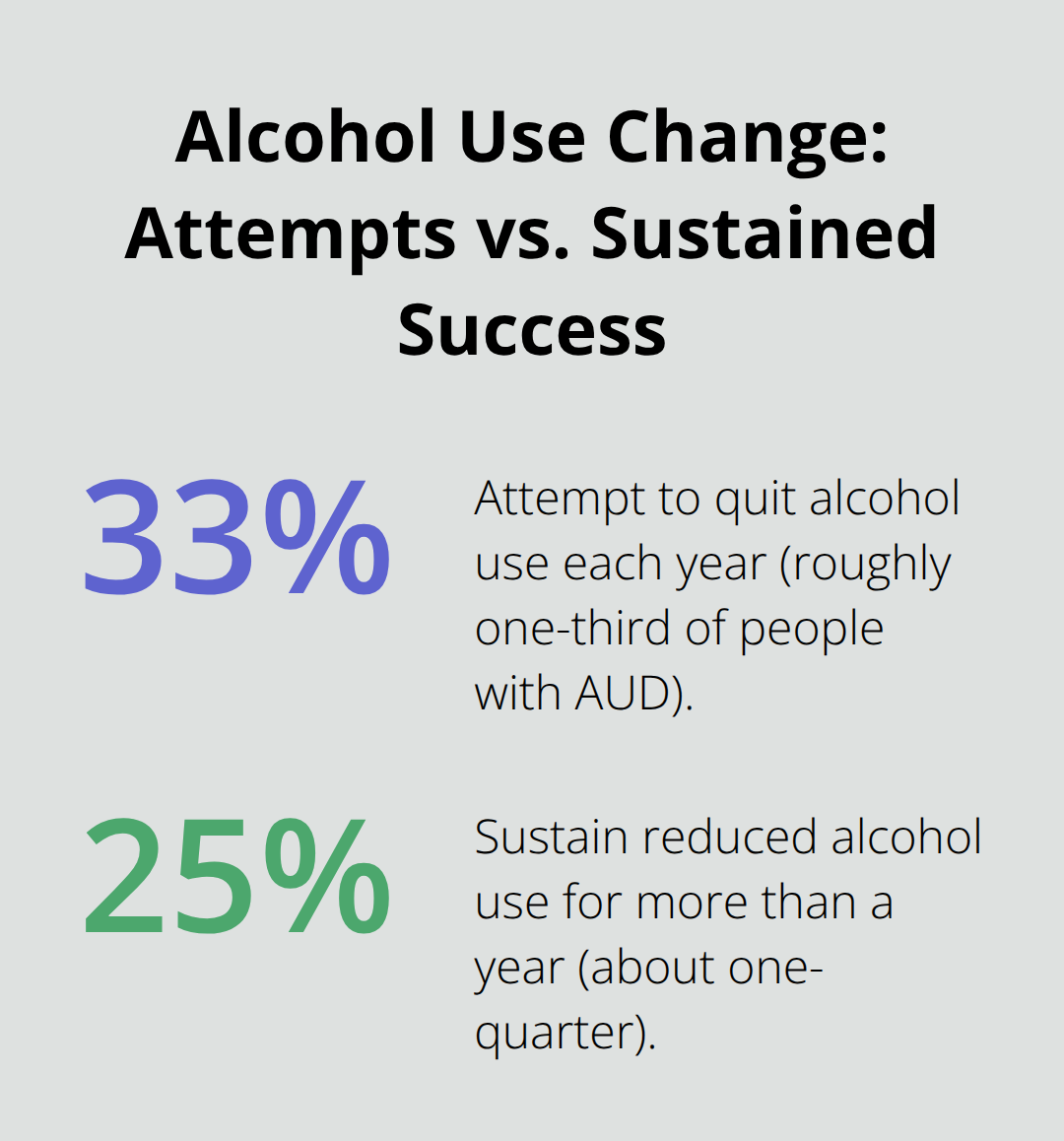
The National Institute on Alcohol Abuse and Alcoholism data shows that roughly one-third of people with alcohol use disorder attempt to quit each year, and only about twenty-five percent succeed at reducing their use for more than a year. This gap exists because most people underestimate how long their brain needs to heal.
Inpatient treatment works best for severe alcohol addiction because home environments contain too many triggers during the critical first thirty days. Outpatient programs suit people with mild-to-moderate alcohol problems and solid home support, but they require honest daily commitment to attending sessions and avoiding old drinking locations.
Opioid Addiction and Medication-Assisted Treatment
Opioid addiction recovery operates on a completely different timeline because medication-assisted treatment forms the backbone of effective care. Methadone or buprenorphine maintenance typically lasts months to years, not weeks, because stopping too quickly triggers unbearable withdrawal and nearly guarantees relapse. The National Institute on Drug Abuse research makes clear that opioid treatment without medication fails far more often than treatment with it. Plan for a minimum of twelve months on medication-assisted treatment, though many people benefit from two to three years or longer.
Stimulant Addiction Recovery Challenges
Stimulant addiction like methamphetamine or cocaine lacks FDA-approved medications, forcing treatment to rely entirely on behavioral strategies, therapy, and environmental changes. This makes stimulant recovery slower and harder in some ways because your brain must rebuild reward pathways without pharmaceutical support. Methamphetamine cravings peak around three months of abstinence, which explains why relapse rates spike sharply in months two through four. Stimulant users need intensive outpatient programming or inpatient treatment for at least sixty to ninety days, followed by ongoing group therapy for six months minimum.
Universal Relapse Risk and Treatment Completion
The highest relapse risk across all substance types occurs in the first ninety days, driven by trigger exposure, stress, and social pressure. Someone addicted to stimulants for five years faces a longer recovery road than someone with two years of use, but intensity of treatment matters more than duration alone. Completing your full recommended course beats rushing through a shorter program, because incomplete treatment sets you up for relapse within months. These timelines vary significantly based on your personal circumstances, which is why the next section examines how to build strategies that actually stick beyond the initial treatment phase.
What Happens After Those First 90 Days
The first ninety days feel like the hardest part, but that’s when most people make their biggest mistake: they think the finish line is near. Research from Kelly and colleagues shows that people with depression or anxiety disorders report significantly more recovery attempts than others, and one critical reason is that they stop doing the work too early. The brain doesn’t finish healing in three months. Alcohol cravings peak around 72 hours into withdrawal, but meaningful neural rewiring takes time. Methamphetamine cravings peak around month three, which is precisely when many people convince themselves they’re fine and stop attending therapy or support groups. This is when relapse happens. We see this pattern repeatedly: people complete treatment, feel better for a few weeks, and then face a crushing wave of cravings or emotional dysregulation that they didn’t anticipate. The solution isn’t willpower or longer initial treatment-it’s understanding that recovery is a staged process requiring different support at each phase.
The Critical First Month After Detox
In the first month after detox ends, your nervous system becomes hypersensitive. Stress that would barely register to someone in stable recovery feels catastrophic. Your sleep fragments, your mood swings without warning, and cravings arrive suddenly without clear triggers. This phase demands structure: attend therapy appointments twice weekly minimum, participate in peer support groups like Narcotics Anonymous or SMART Recovery daily, and schedule regular check-ins with a medical provider if you take medication-assisted treatment. The National Institute on Drug Abuse research is unambiguous that relapse risk peaks in months two through four, so this is when you stop being flexible about your recovery plan and start being rigid. If your therapist recommends attending group therapy three times weekly, attend four times. If your support group meets at 6 p.m., arrive at 5:45 p.m. This isn’t excessive-it’s matching your effort to the actual danger you face.
Building Sustainable Coping Strategies
Months four through twelve demand a different approach: you must build sustainable coping strategies that work in real life, not just in therapy. You need practical tools for specific situations that trigger cravings. NIDA research identifies concrete relapse triggers: environmental cues tied to your using days, stress from relationships or work, lack of social support, and low self-efficacy about your ability to stay sober. Generic advice to avoid triggers doesn’t work because you can’t avoid stress forever. Instead, develop specific responses to each trigger category. If stress triggers cravings, identify exactly which stress situations hit hardest-is it work deadlines, relationship conflicts, or financial pressure?-then create a precise response plan for each one. Write it down. Practice it. If environmental cues trigger you, map out the specific locations, times, and people associated with your using days, then create alternative routines for those exact times and places. If you used after work on Fridays, don’t just avoid your old bar; build a competing behavior for Friday after work: go to the gym, attend group therapy, meet a sober friend for dinner. This replacement activity must be something you actually enjoy, not a punishment disguised as recovery. The reason most people relapse isn’t that they lack willpower-it’s that their coping strategies are vague or uncomfortable. Research from the National Institute on Alcohol Abuse and Alcoholism shows that only about 25 percent of people attempting to reduce alcohol use succeed at maintaining that change for over a year, and the gap between attempts and success correlates directly with the specificity and consistency of your coping strategies.
The Role of Ongoing Support and Aftercare
Ongoing support and aftercare programs form the third pillar, and they’re not optional-they’re the difference between sustained recovery and relapse. The research is clear: completion rates for treatment programs hover below 43 percent, and relapse rates across substance types reach 40 to 60 percent within four years.
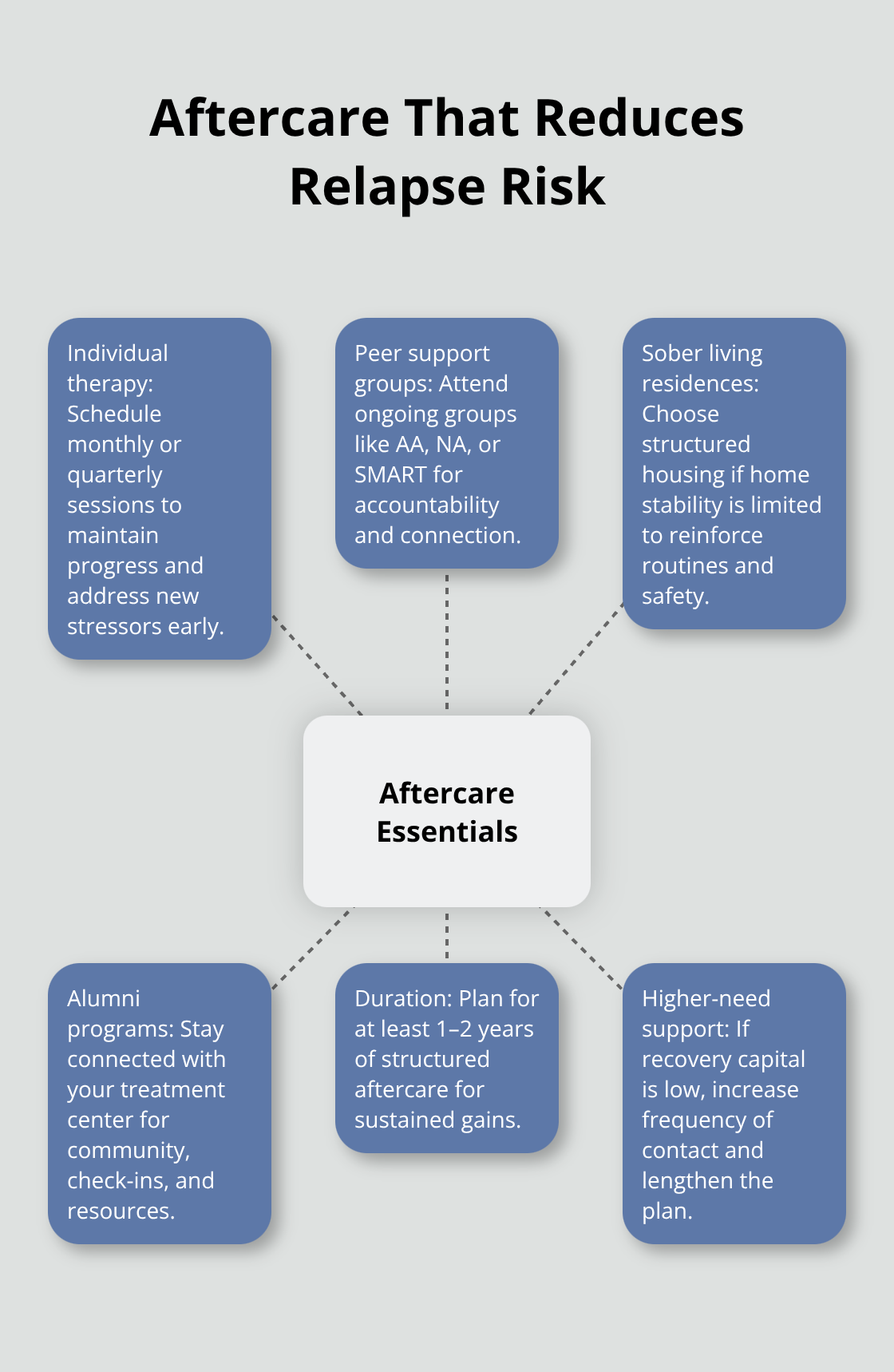
But here’s what matters: people who engage in aftercare reduce relapse risk substantially. Aftercare isn’t therapy for people who failed; it’s maintenance care for people serious about staying sober. Options include individual therapy sessions monthly or quarterly after the intensive phase ends, ongoing group therapy or peer support groups indefinitely, sober living residences for people without stable housing, and alumni programs through your treatment facility. We recommend at least one to two years of structured aftercare minimum, and for many people, ongoing support becomes a permanent part of life-similar to how someone with diabetes manages their condition continuously. The median person needs two serious recovery attempts before resolving their addiction, but that statistic masks enormous variation. People with limited recovery capital (unstable housing, unemployment, family conflict, or isolation) report more recovery attempts and need more intensive support. If that describes your situation, don’t interpret it as personal failure. It means you need a longer aftercare plan and possibly more frequent professional contact, not that recovery is impossible for you.
Embracing a Lifelong Commitment to Recovery
Recovery timelines vary dramatically because addiction severity, health status, and treatment quality interact differently for each person. The research shows that most people achieve sustained recovery after a median of two serious attempts, but some need more depending on their circumstances. How long addiction recovery takes depends on whether you have depression or anxiety disorders, limited housing stability, or weak social connections-these factors demand longer aftercare and more frequent professional contact than someone with strong recovery capital.
The biggest mistake people make is treating recovery as a single event rather than a staged process. You don’t graduate from recovery after completing inpatient treatment; you transition into a different phase requiring different support. A generic ninety-day program fails far more often than a customized plan that extends into months two through twelve with concrete coping strategies and ongoing peer support (addressing both addiction and co-occurring mental health challenges simultaneously).
Personalized treatment plans work because they account for your specific substance, your health history, your living situation, and your support network. If you’re ready to start, contact Addiction Resource Center today to discuss which treatment level matches your situation and build a realistic recovery plan that actually works for your life.