Find the right sober living for men with our guide to choosing safe, supportive facilities that promote lasting recovery.


Choosing the right sober living home is one of the most important decisions you’ll make in recovery. The environment you select can either support your progress or undermine it.
At Addiction Resource Center, we’ve seen firsthand how the right sober living for men transforms lives. This guide walks you through exactly what to evaluate, what questions to ask, and where to find quality options in your area.
What Makes a Sober Living Home Actually Work
A sober living home’s real value shows up in three places: daily structure, the people around you, and access to professional help when you need it. Most men underestimate how much these factors matter until they’re living it. The difference between a facility that supports long-term sobriety and one that doesn’t often comes down to how seriously the home takes these fundamentals.
Structure That Builds Accountability
House rules aren’t punishment-they’re the foundation of stability. The homes that work best have clear expectations about curfews, chores, drug testing, and attendance at support meetings. Real Recovery, which operates 380 beds across seven locations in the Tampa Bay area, emphasizes structure within a sober living model. When you know exactly what’s expected, you eliminate the daily negotiation about whether to stay sober today.
Drug testing should happen regularly and randomly-not as a threat, but as verification that the environment stays clean. Ask directly about testing frequency and consequences. Some homes require five nights per week minimum, which gives you structure without complete restriction. This gradual approach works better than either total freedom or total lockdown. The home should also connect residents to employment or schooling, since about 90% of sober living residents maintain financial independence during their stay. Without this practical push toward work, men often stall in their recovery progress.

Community That Sustains Recovery
The people in your home matter more than the building itself. Research shows that relapse prevention in sober living is significantly supported by long-term recovery support. Sober living nearly doubles your chances of avoiding relapse because you’re surrounded by people fighting the same battle. However, peer support alone isn’t enough. The home needs licensed counselors or therapists available, not just peer meetings.
Ask whether the facility offers individual therapy, group therapy, and psychiatric care for co-occurring mental health conditions. Some programs require 12-step participation; others simply recommend it. Know which applies and whether it matches your approach to recovery. Staff qualifications matter significantly in states where sober living homes aren’t tightly regulated. Inquire about staff training, certifications, and whether the home participates in accreditation networks like the National Alliance for Recovery Residences or regional associations. A home that can’t clearly describe its staff’s qualifications is a red flag.
How the Home Handles Setbacks
The environment should feel genuinely supportive rather than punitive. This means addressing relapse with treatment adjustments, not immediate eviction, though repeated violations require consequences. Ask how the home balances accountability with compassion. A facility that treats every slip as grounds for immediate removal doesn’t understand recovery-but one that ignores violations doesn’t either. The best homes have clear protocols (written down, not vague) that show how they respond to substance use violations. This transparency tells you whether the program prioritizes your success or simply protects its reputation. Understanding these three elements-structure, community, and how the home responds to challenges-positions you to ask the right questions when you evaluate specific facilities.
Questions That Separate Quality Homes From the Rest
The Resident Selection Process Reveals True Priorities
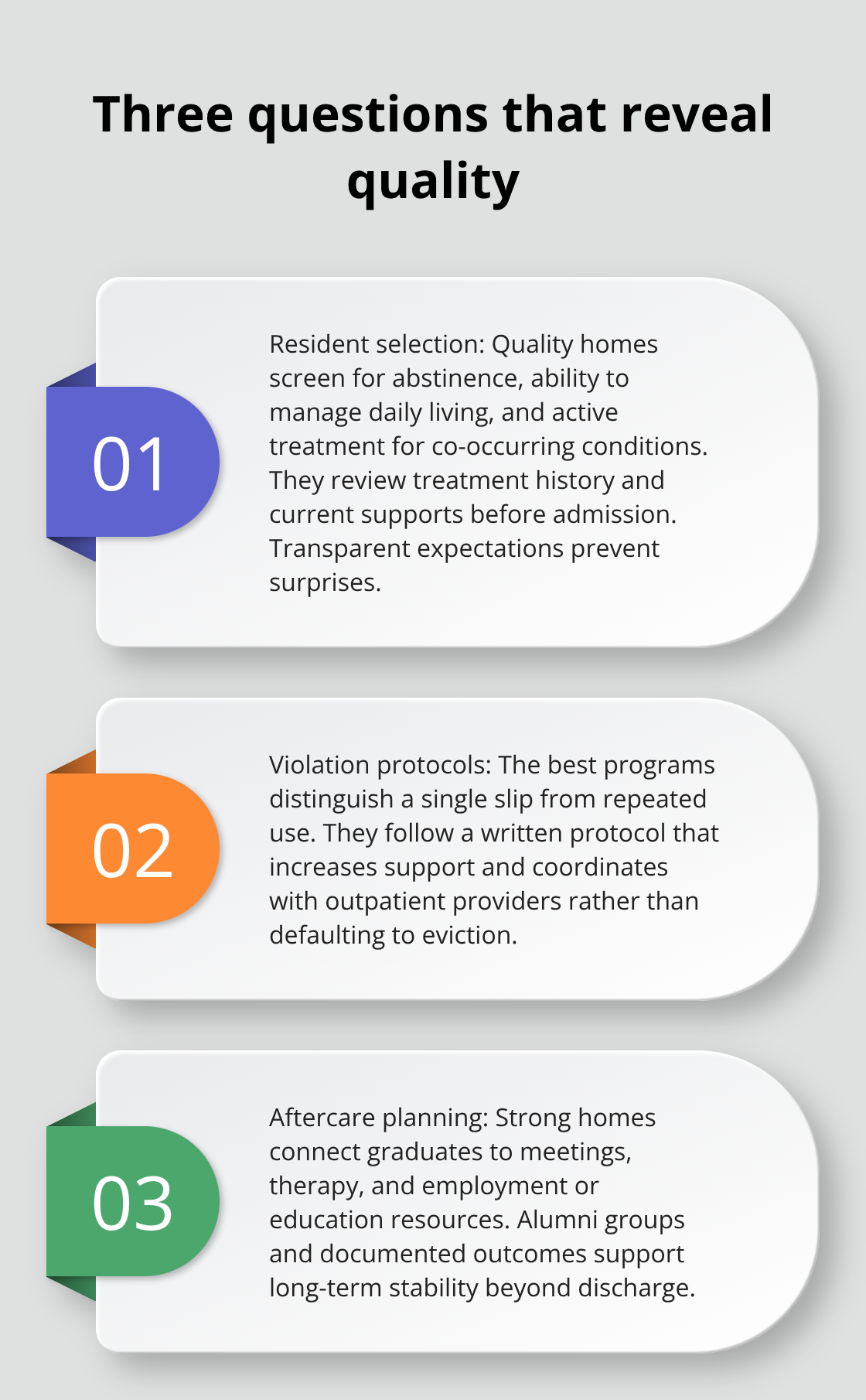
The resident selection process shows whether a home actually cares about your success or just wants to fill beds. Reputable facilities screen for abstinence, ability to manage daily living tasks, and whether you actively address co-occurring mental health conditions with professional care. They ask about your treatment history, current support structure, and mental health diagnoses before admission. If a home accepts anyone without questions or offers to pay your way in, that signals a major problem. Los Angeles County data shows sober living fees typically range from $300 to $1,350 monthly, averaging around $650, so legitimate homes have no reason to offer free stays. They should explain their expectations upfront: some require five nights per week minimum, others have stricter residency demands. Ask specifically whether you need to complete formal treatment first or if outpatient enrollment qualifies. This clarity prevents surprises after you move in.
How Violations Get Handled Matters More Than the Rule Itself
The home’s response to substance use violations tells you whether staff understand recovery or simply operate a business. Request their written protocol, not vague promises. The best facilities distinguish between a single slip and repeated violations, treating the first as a learning moment that triggers increased support or treatment adjustments rather than immediate eviction. Without this graduated response, men often hide problems instead of asking for help. Most homes use regular and random drug testing as standard practice. Clarify the testing frequency, who conducts tests, and what happens after a positive result. Ask whether the home coordinates with your outpatient provider if you relapse, or if they simply remove you.
Real Recovery’s approach in Tampa Bay combines structured oversight with therapeutic accountability, showing that homes can maintain safety without being purely punitive. A facility that cannot articulate this balance chooses reputation protection over actual recovery support.
Aftercare Planning Determines Your Success After Graduation
Many men leave sober living and immediately relapse because no one planned for what comes next. Ask what happens when you graduate: does the home connect you to ongoing 12-step meetings, therapy groups, or continued counseling? Does staff help with employment or education placement after discharge? The National Alliance for Recovery Residences sets standards that include transition planning, though not all homes meet these standards. Without specific aftercare commitments, you face the transition alone. Strong programs document their long-term outcomes and share these numbers. Ask whether the home offers alumni groups, whether staff check in after you leave, and whether they maintain connections to employment resources. A home that treats graduation as goodbye rather than a milestone in ongoing recovery sets you up to fail. These three questions-about selection, violation protocols, and aftercare planning and transition support-form the foundation for evaluating any facility you consider. The next step involves knowing where to actually find quality options in your area.
Finding Quality Sober Living Homes
Accreditation Networks Verify Legitimate Operations
Recovery.com lists 1,702 sober living centers nationwide, so you have substantial options regardless of location. Start by checking accreditation networks like the National Alliance for Recovery Residences, which sets verifiable standards for quality and safety. Regional associations matter too-Florida Association of Recovery Residences accredits facilities in that state, California Association of Addiction Recovery Resources does the same for California, and similar groups exist across the country. These networks separate legitimate operations from predatory ones that prey on desperate families. When you find a facility online, verify it through these accreditation bodies before scheduling a tour. Unaccredited homes aren’t automatically bad, but accreditation signals that someone external has reviewed their operations and found them acceptable.
Treatment Centers and 12-Step Groups Provide Trusted Referrals
Your local treatment center or outpatient program is your fastest path to trustworthy recommendations. Counselors at these facilities work directly with sober living homes and know which ones actually support recovery versus which ones simply collect rent. Ask your current therapist or addiction counselor for three specific recommendations and ask why they recommend each one. Treatment centers often coordinate with sober living homes, creating a continuity of care that matters significantly for your transition. If you’re still in treatment, your program may have preferred partners or direct referrals. Don’t overlook 12-step groups in your area-members have lived experience with local homes and will tell you honestly which ones work and which ones don’t. Attend several meetings and ask directly about sober living experiences.
Insurance Coverage Reality Requires Honest Assessment
Most insurance plans don’t cover sober living, making this primarily a private-pay decision. Los Angeles County data shows monthly costs typically range from $300 to $1,350, averaging around $650. Your actual cost depends entirely on location and amenities.
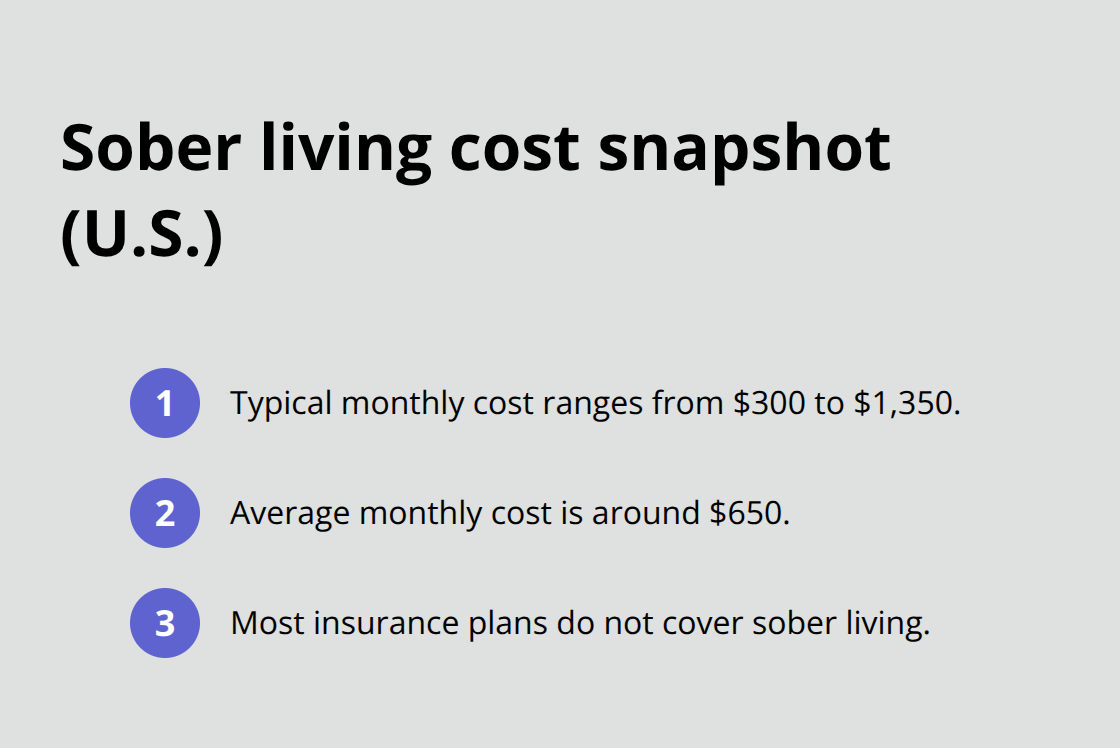
Call your insurance company and ask specifically whether sober living is covered under your plan-don’t rely on the facility’s claims about your coverage. Some centers operate in-network with 75 or more insurers, but this doesn’t guarantee your specific plan covers the service. If insurance covers any portion, the facility’s admissions team should verify your benefits before you move in.
Payment Options and Red Flags
For those without insurance coverage, ask about sliding scale fees based on income or scholarship programs. Some facilities offer financing options that spread costs over time rather than requiring full monthly payment upfront. Established programs often have more flexible payment arrangements than smaller operations. If cost is your primary barrier, this matters-affordability during early recovery prevents the financial stress that triggers relapse. However, avoid any facility offering free stays or claiming they’ll pay your way in. This is the most reliable red flag for fraud and predatory practices that exploit insurance claims or misuse personal information.
Keys to Choosing the Best Sober Living Home for Your Recovery
Finding the right sober living for men requires you to evaluate three core factors: Does the facility provide genuine structure that builds accountability? Will you live among people and staff who understand recovery? Does the home plan for your success after you graduate? The homes that work best combine clear house rules with compassionate responses to setbacks, employ qualified staff beyond peer support, and connect residents to employment and ongoing recovery resources before discharge.
Start your search by contacting your current treatment provider or local 12-step groups, as these sources know which homes actually support recovery in your area. Verify any facility through accreditation networks like the National Alliance for Recovery Residences, ask the three critical questions about resident selection, violation protocols, and aftercare planning, and request tours where you speak directly with current residents. Cost matters but shouldn’t drive your decision-most sober living runs $300 to $1,350 monthly depending on location, and you should verify insurance coverage before moving in or ask about sliding scale options rather than accepting offers that sound too good to be true.
The transition from treatment to independent living is fragile, and sober living for men provides the structured environment and peer accountability that nearly doubles your chances of avoiding relapse. If you’re still in treatment or need support finding the right program, Addiction Resource Center offers personalized addiction therapy and substance abuse counseling to guide your recovery journey. Your next step is making one phone call to your treatment provider or local recovery network.