You might be staring at your phone right now with a dozen tabs open, trying to figure out what kind of help fits your life. Maybe it's for you. Maybe it's for your son, your partner, your parent, or the friend who finally said, “I think I need treatment.” What usually makes this harder isn't …

You might be staring at your phone right now with a dozen tabs open, trying to figure out what kind of help fits your life. Maybe it's for you. Maybe it's for your son, your partner, your parent, or the friend who finally said, “I think I need treatment.” What usually makes this harder isn't just the fear. It's the feeling that every program sounds similar, while your real question stays unanswered: How do I get help without blowing up work, family, or daily life?
That question matters in Reno. Nevada data from 2018 to 2020 showed a drug and opioid-involved overdose rate of 26.4 per 100,000 people, highlighting how important accessible local treatment is in the area, as noted on this Reno treatment overview. If you're searching for drug rehab in Reno, you don't just need a list of facilities. You need a way to sort through choices and find the right level of care for the person's actual situation.
Table of Contents
- Starting the Search for Drug Rehab in Reno
- Understanding Your Treatment Options
- Understanding the Admissions Process
- Paying for Rehab Understanding Insurance and Costs
- Key Questions to Ask Any Reno Rehab Facility
- Finding a Fit for Your Life IOP and Telehealth Options
- Your Next Step on the Path to Recovery
Starting the Search for Drug Rehab in Reno
A lot of people start the same way. They type “drug rehab Reno” into a search bar late at night, then freeze. One site talks about detox. Another pushes residential. Another mentions outpatient but doesn't explain who it's for. After a while, the search itself becomes exhausting.
That confusion makes sense. Treatment isn't one thing. It's a set of options, and the best fit depends on what the person is using, whether withdrawal might be risky, whether they can safely stay at home, and whether they can step away from work or caregiving duties.

One more layer makes the search harder. Many websites are built to attract clicks, not to help you compare levels of care in a practical way. If you're trying to understand why some rehab sites show up first and others don't, this look at strategic SEO for rehab centers can help explain the difference between visibility and clinical fit.
What people usually need first
Most callers don't need perfect answers. They need a calm first step.
- Clarity: What level of care makes sense right now?
- Safety: Is detox needed before therapy starts?
- Logistics: Can treatment work around a job, kids, court dates, or transportation problems?
- Privacy: Who will know about the call, and what happens with insurance?
The best first move usually isn't choosing a facility in five minutes. It's identifying the safest starting level of care.
When you approach the search that way, the process gets less overwhelming. You stop asking, “Which rehab is best?” and start asking, “What kind of treatment can this person start and stick with?”
Understanding Your Treatment Options
People often start with a simple question: “Do we need rehab?” The more useful question is narrower. “What level of care fits this person's safety needs and daily life right now?” In Reno, that difference matters. A person may need strong clinical support, but still have to keep a job, pick up children, or stay close to home.
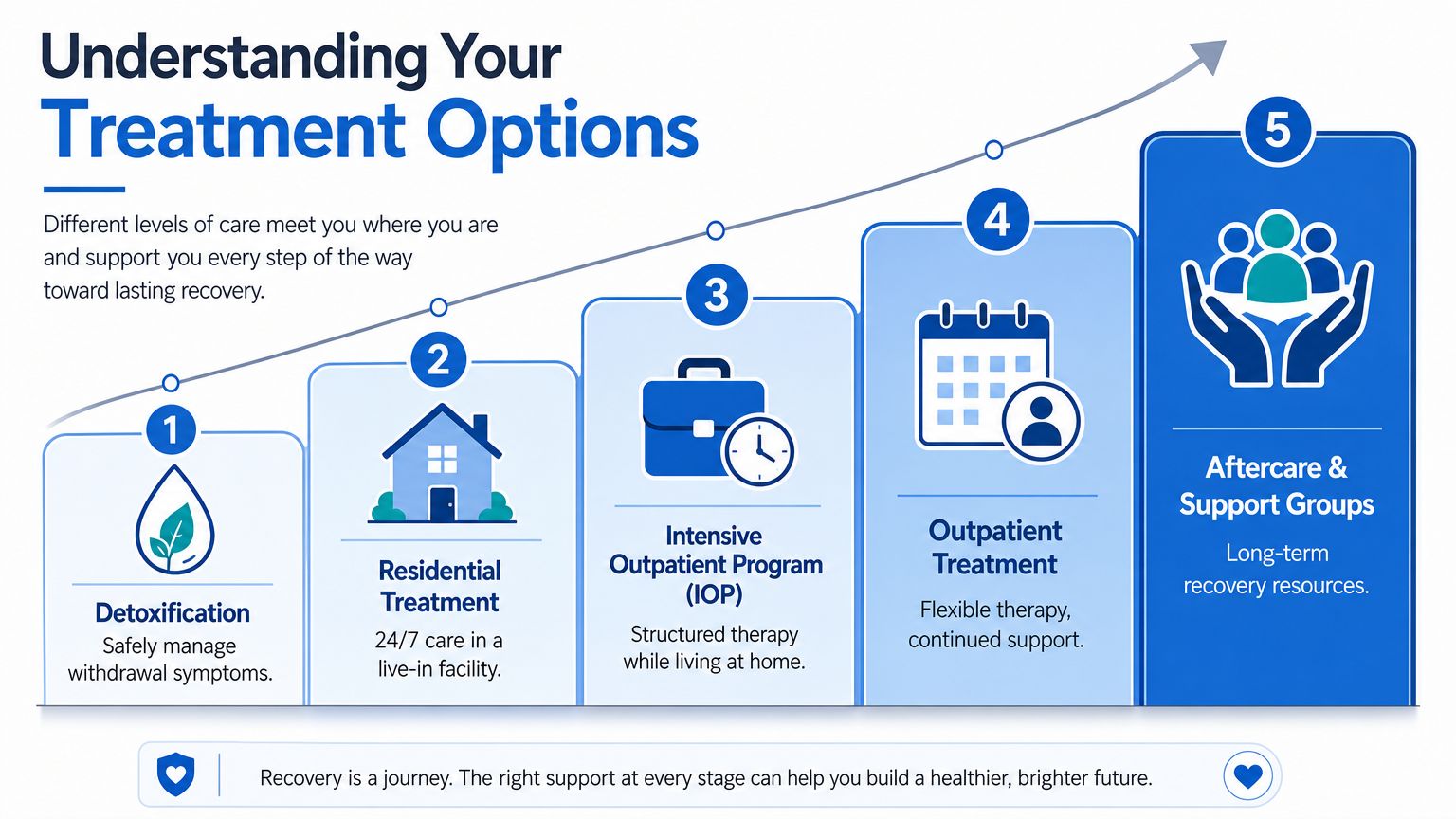
Treatment usually works best as a continuum of care. That means support can become more intensive when risk is high and less intensive as stability improves. Clinical guidance suggests many people need at least 3 months in treatment to significantly reduce or stop drug use, which is why programs often use a full continuum from detox through aftercare, as described in this clinical review of rehab duration and care transitions.
Rehab often works in levels
A staircase is a useful way to picture drug rehab in Reno. Higher steps usually mean more structure, more monitoring, and less time spent managing daily life on your own. Lower steps offer more independence while still keeping treatment in place.
People move between levels for practical reasons, not moral ones. Needing detox or residential care does not mean someone has failed. Starting with IOP or outpatient care does not mean the problem is not serious. The goal is a safe fit.
A lot of treatment staff build long careers in these settings, from detox to outpatient counseling. If you're curious what those roles look like on the workforce side, burnout-friendly substance abuse jobs offers a practical view of the people who often support patients through recovery.
What each level usually looks like
Here is the plain-language version.
| Level of care | Living situation | What it's for | Typical rhythm |
|---|---|---|---|
| Detox | Usually on site | Withdrawal management and medical stabilization | Short-term, highly supervised |
| Residential rehab | Live at the facility | Daily structure when home isn't stable or safe | Full-day treatment with 24/7 support |
| IOP | Live at home | Structured therapy while keeping daily responsibilities | Several treatment sessions each week |
| Outpatient | Live at home | Ongoing counseling and relapse prevention | Fewer visits, more flexibility |
| Aftercare | Live at home or sober setting | Long-term support after formal treatment | Check-ins, therapy, groups, planning |
Detox
Detox focuses on getting through withdrawal safely. For some substances, withdrawal is mainly miserable. For others, it can be medically dangerous. In evidence-based care, programs may combine counseling with medications for addiction treatment (MAT) because medications can reduce withdrawal, lower cravings, block euphoric effects, or substitute a prescribed medication for an illicit drug, according to this NIH overview of treatment approaches and monitoring.
Detox is usually the first stop, not the whole trip.
Residential rehab
Residential care gives someone a protected setting with staff support throughout the day. It often makes sense when home feels chaotic, triggers are everywhere, or repeated attempts to quit have fallen apart quickly. For some families, residential treatment also creates breathing room to stabilize sleep, meals, medications, and routine before the person returns home.
This level can be helpful, but it is not the only serious form of treatment.
Intensive outpatient program
IOP is often the level that best matches real life in Reno. It gives people a structured treatment schedule without requiring them to live at a facility. Someone can attend several sessions each week and still sleep in their own bed, keep working, help with family responsibilities, or stay connected to local support.
That flexibility matters more than many people expect. If a person cannot step away from work for a month or leave children for residential care, IOP may be the option they can start and continue. A good plan that fits real life is usually stronger than an ideal plan that falls apart after three days.
Some programs also pair IOP with telehealth visits. That can reduce transportation problems, missed appointments, and the stress of trying to fit treatment into a packed schedule.
Practical rule: If someone can stay safe at home and attend treatment reliably, IOP may offer a workable middle ground between too little support and too much disruption.
Outpatient and aftercare
Standard outpatient care involves fewer hours each week. It often works well after detox, residential, or IOP, when the person still needs therapy and accountability but no longer needs the same level of structure. Aftercare continues that support through counseling, support groups, medication follow-up, relapse prevention planning, and routines that help recovery hold up under daily stress.
The main idea is simple. Treatment works better when it matches both clinical need and real-life capacity.
Understanding the Admissions Process
A lot of people in Reno reach this point at the same time life is still demanding things from them. A parent is trying to figure out school pickup. Someone else is wondering how many work shifts they can miss without risking their job. The admissions process should help sort that out. It should not add pressure.
The first call is usually a short screening, not an interrogation. A good admissions coordinator is trying to answer two questions at once. What kind of care is safe, and what kind of care can this person realistically attend? That matters because the best program on paper will not help much if it falls apart against work hours, childcare, transportation, or the need to stay close to home.
What usually happens on the first call
The conversation often starts with the basics. The coordinator may ask who is seeking help, what substances are involved, when the last use happened, whether withdrawal is a concern, and whether there are mental health symptoms happening at the same time.
Then come the practical questions that shape the next step. Do you have insurance? Are you working right now? Do you need evening appointments? Is there a safe place to stay tonight? Have you been in treatment before? Those questions are not about judgment. They work like a map. They help the team match care to both medical need and daily life.
Privacy is a fair concern, especially for people calling from work, from home, or on behalf of a family member. You can ask how your information is stored, who can see it, and what the program can share later if a loved one is involved. Clear answers are a good sign.
What the assessment is trying to figure out
An assessment is a sorting process. It helps the clinical team decide where treatment should begin and how much support is needed at the start.
Many programs use counseling, mental health support, and medication when appropriate, so the team needs a clear picture of current use, withdrawal risk, health history, past treatment, and day-to-day functioning. They may also review medications, gather records, and use drug testing or medical screening when needed. The goal is not to label someone. The goal is to place them in a level of care that is safe and realistic.
These are the questions the assessment usually answers:
- Is the person safe right now, or do they need urgent medical support?
- Do they need detox before regular therapy starts?
- Can treatment work while they live at home, or is a higher level of structure needed?
- Are depression, anxiety, trauma, or other mental health concerns part of the picture?
- Who provides the treatment, and how is care coordinated over time?
- If residential care is not possible because of work or family, would IOP, outpatient care, or telehealth still provide enough support?
That last question matters for many people in Reno. Recovery plans need to fit real life. For someone who cannot step away from children, a job, or a dependent family member, flexible care may be the difference between delaying treatment and starting this week.
What a helpful admissions team sounds like
A strong admissions team explains the process in plain language. They tell you what they know, what they still need to confirm, and what happens next. If the program is not the right fit, they should say so and help point you toward a better option.
That is how this process should feel. More like being guided through a difficult decision with a flashlight, less like being rushed into a choice.
If insurance questions come up during admissions, it can help to understand how denials and coverage disputes are handled. This guide for medical practices to appeal denials gives a useful overview of that process from the billing side.
Paying for Rehab Understanding Insurance and Costs
Money concerns stop a lot of people before they even make the first call. Some assume treatment will be out of reach. Others have insurance but don't know what it covers. The terms are confusing, and when you're already stressed, insurance language can sound like another barrier.
What common insurance terms mean
A few definitions make the process easier.
- In-network: The facility has a contract with your insurance plan. Your share of the cost is often lower.
- Out-of-network: The facility may still accept your insurance, but your cost responsibility may be different.
- Deductible: The amount you may need to pay before the plan starts covering certain services.
- Out-of-pocket maximum: A cap on what you may owe during the plan period for covered care.
- HMO and PPO: Plan types with different rules about networks, referrals, and coverage flexibility.
Those definitions won't tell you your exact cost, but they help you ask better questions. If you're dealing with a denied claim or trying to understand how appeals work, this guide for medical practices to appeal denials gives a useful overview of the process from the billing side.
Questions to ask before you commit
When you call your insurance company or a rehab admissions team, keep it simple and direct.
- Coverage question: “Does my plan include substance use treatment for detox, residential, IOP, or outpatient care?”
- Network question: “Is this facility in network, and if not, what are my out-of-network benefits?”
- Authorization question: “Do I need preauthorization before admission?”
- Cost question: “What part of the bill could become my responsibility?”
- Medication question: “Are medications used in treatment covered under my plan?”
- Family logistics question: “If the patient is on a spouse's or parent's plan, what privacy rules apply?”
If you're a veteran or part of a military family, ask specifically about TRICARE coverage and whether the program works with that plan. If you don't have private insurance, ask about private pay arrangements, payment plans, or whether the facility can point you toward state-funded options.
A good billing conversation should leave you with plain answers, not more confusion. If the person on the phone keeps speaking in jargon, slow it down and ask them to explain the next step in everyday language.
Key Questions to Ask Any Reno Rehab Facility
A phone call with a rehab center can feel a little like buying a car in the dark. You know you need help. You may know the general type of care that seems appropriate. But if the answers stay vague, it is hard to tell what you are agreeing to, and that matters even more when work, children, transportation, or housing cannot be put on hold.
Programs can look similar from the outside and operate very differently once treatment starts. A federal review of U.S. treatment facilities found wide differences in accreditation, use of medication treatment, mental health services, family counseling, and recovery supports, according to this review of U.S. treatment facility quality and service gaps. That is why a short, clear set of questions can help you sort out which program fits real life in Reno, not just which one has an opening today.
Ask how the program works in daily life
A good admissions call should help you picture the week ahead. If someone has a job, ask what scheduling options exist. If childcare is tight, ask whether session times are fixed or whether there is any flexibility. If getting across Reno every day is a problem, ask how often in-person attendance is required and whether telehealth is part of the plan.
Those questions are not side issues. They affect whether a person can stay in treatment long enough to benefit from it.
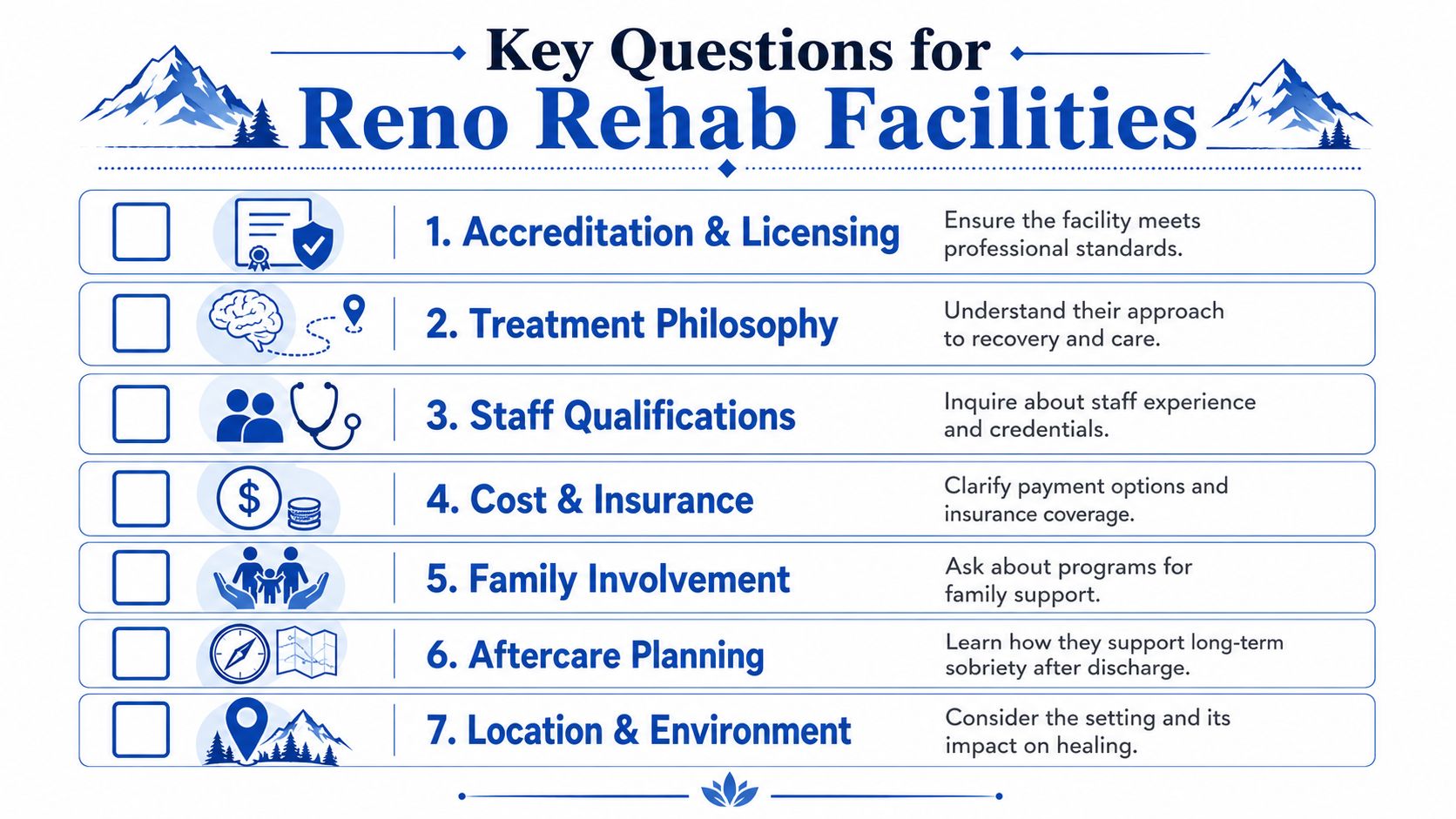
These are the areas worth covering:
- Licensing and accreditation: Is the program licensed, and does an outside accrediting body review it?
- Medical support: Can the team assess withdrawal risk and discuss medication options when appropriate?
- Mental health care: How are depression, anxiety, trauma, or other co-occurring concerns addressed?
- Family involvement: What family education, counseling, or communication support is available?
- Practical supports: Can staff help with transportation problems, work paperwork, or referrals for housing and community services?
- Step-down planning: What is the plan if someone needs more care or less care after the first phase?
A program may offer solid counseling and still be a poor fit if it has no workable plan for job schedules, parenting duties, or the trip across town.
A simple comparison checklist
Write the answers down. After two or three calls, details blur together.
| Question | Why it matters | What to listen for |
|---|---|---|
| Who provides the treatment? | Staff roles differ from one program to another | A clear explanation of medical, counseling, and case management staff |
| How do you decide the level of care? | Placement should match current needs | A structured assessment, not a quick guess |
| What happens if my needs change? | Recovery needs can shift during treatment | A real process for stepping up or stepping down care |
| How are families included? | Home support often affects follow-through | Specific family sessions, education, or updates |
| How do you plan discharge? | Support should continue after the first program ends | Written aftercare planning and concrete referrals |
One practical question often gets overlooked: “How would this work for someone who has to keep up with work or family responsibilities?” The answer should be specific. If the facility cannot explain attendance expectations, schedule options, or how they adjust care over time, keep asking.
One example of a provider that offers multiple pathways is Addiction Resource Center LLC, which provides detox with MAT, residential access through a partner facility, and IOP available in person and by telehealth. That kind of range can help when a person needs treatment that fits around daily obligations rather than a single fixed setting.
Finding a Fit for Your Life IOP and Telehealth Options
It is 6:30 p.m. in Reno. A parent has finished work, picked up the kids, and is sitting in the car wondering whether treatment is even possible without walking away from everything at once. That question comes up often. For many people, the barrier is not caring too little. The barrier is trying to get help while real life keeps moving.
IOP and telehealth matter for that exact reason. They can make treatment possible for adults who need support but still have to keep a job, stay involved at home, or remain close to Reno because daily travel is hard.
Local search results often highlight residential treatment first, but the range of available options is more extensive. Some Reno-area programs offer evening IOP for people who work during the day. Others describe outpatient care that lets patients live at home while attending treatment during the week. Local directories also show a mix of detox, residential, outpatient, IOP, and aftercare rather than a single path, as discussed on Reno Tahoe Recovery's local treatment page.

When residential care is not realistic
Recovery planning works a lot like choosing the right cast for an injury. Some injuries need full immobilization. Others heal with regular support and careful follow-through. Addiction treatment can work the same way.
A person with a high-risk home environment, severe withdrawal, or repeated relapse may need the separation and monitoring of residential care. A person who is medically stable, has a workable home setting, and can attend treatment reliably may do well in IOP. Telehealth can help even more when weather, distance, transportation, or schedule conflicts would otherwise lead to missed sessions.
That does not make flexible care a lesser option. It makes it a better fit for certain situations.
Here is the practical tradeoff:
- Residential offers more structure and fewer outside distractions.
- IOP allows a person to keep more of daily life in place, but it depends on showing up consistently.
- Telehealth reduces travel time and can widen access, but the person still needs privacy, focus, and enough stability to participate fully.
How to tell whether flexible care will be enough
This part can feel confusing, especially for families. Flexibility sounds appealing, but the key question is whether the person will have enough support between sessions.
Start with the home itself. Is it relatively calm, or is it full of conflict, active substance use, or constant triggers? Then look at routine. Can the person protect time for sessions the way they would protect time for dialysis, physical therapy, or a court date? Treatment only works when attendance is steady.
A few questions help clarify the fit:
- Home environment: Is home safe enough for early recovery?
- Daily exposure: Will staying in the same setting make relapse more likely?
- Attendance: Can the person get to sessions, or log in, on a consistent schedule?
- Medical needs: Are withdrawal symptoms or medication needs too complex for an outpatient start?
- Support: Who will notice quickly if things start to slip?
If several answers are uncertain, a higher level of care may make more sense at the beginning. If the person is stable, motivated, and able to participate week after week, IOP or telehealth may be the option that finally makes treatment workable.
That is often a major challenge with drug rehab in Reno. The question is not only which program exists. The question is which level of care can realistically fit the life a person still has to hold together while recovery begins.
Your Next Step on the Path to Recovery
A lot of people stay stuck because they think the next step has to be huge. It doesn't. You don't need to map out the entire recovery journey tonight. You need one concrete action.
If you've read this far, you probably already know the main question to ask: what level of care fits the person's safety needs and daily responsibilities right now? Once you have that question in mind, the process becomes more manageable. Call one facility. Ask whether detox is needed. Ask whether IOP or telehealth is realistic. Ask what insurance they take. Ask what happens next if they aren't the right fit.
Recovery often starts before admission. It starts when someone stops searching in circles and has one honest conversation.
If you're helping a loved one, you don't need the perfect script. A simple opening works: “I'm looking for treatment options and I'm not sure what level of care fits.” That sentence is enough to begin.
The search for drug rehab in Reno feels heavy because it touches fear, guilt, hope, money, logistics, and safety all at once. But the path gets clearer when you break it into pieces. Safety first. Fit second. Financing third. Then action.
If you want a calm place to start, Addiction Resource Center LLC offers confidential guidance on detox, residential placement through its partner program, and intensive outpatient care available in person and by telehealth. You can use that first conversation to ask practical questions about level of care, insurance, TRICARE, scheduling, and what treatment might fit without uprooting your entire life.