You wake up with shaking hands and a racing heart, trying to decide whether you're sick, anxious, or just tired. You may be tempted to drink again to make the symptoms stop, wait for them to pass, or ask a family member to watch you at home. That decision deserves medical guidance because alcohol withdrawal …

You wake up with shaking hands and a racing heart, trying to decide whether you're sick, anxious, or just tired. You may be tempted to drink again to make the symptoms stop, wait for them to pass, or ask a family member to watch you at home. That decision deserves medical guidance because alcohol withdrawal can change quickly, and safe treatment depends on your symptoms, health history, support system, and access to monitoring.
Alcohol withdrawal treatment isn't a test of willpower. It's medical care for a brain and body that have adapted to regular alcohol exposure. The right plan may involve monitored medication, fluids, vitamins, structured symptom assessments, and a clear transition into longer-term treatment for alcohol use disorder.
Table of Contents
- Recognizing When Withdrawal Needs Medical Help
- How Alcohol Withdrawal Affects the Brain and Body
- Medications Used in Alcohol Withdrawal Treatment
- Matching Care Settings to Withdrawal Risk
- Beyond Medication in a Safe Detox
- Warning Signs That Require Emergency Care
- Relapse Prevention After Detox
- Practical Questions Families Ask About Treatment
Recognizing When Withdrawal Needs Medical Help
Maya has stopped drinking before, and the first episode brought anxiety and poor sleep. This morning, after another period of heavy drinking, her hands shake so intensely that she spills her coffee. She is sweating, nauseated, and unsure whether to wait for her scheduled appointment.
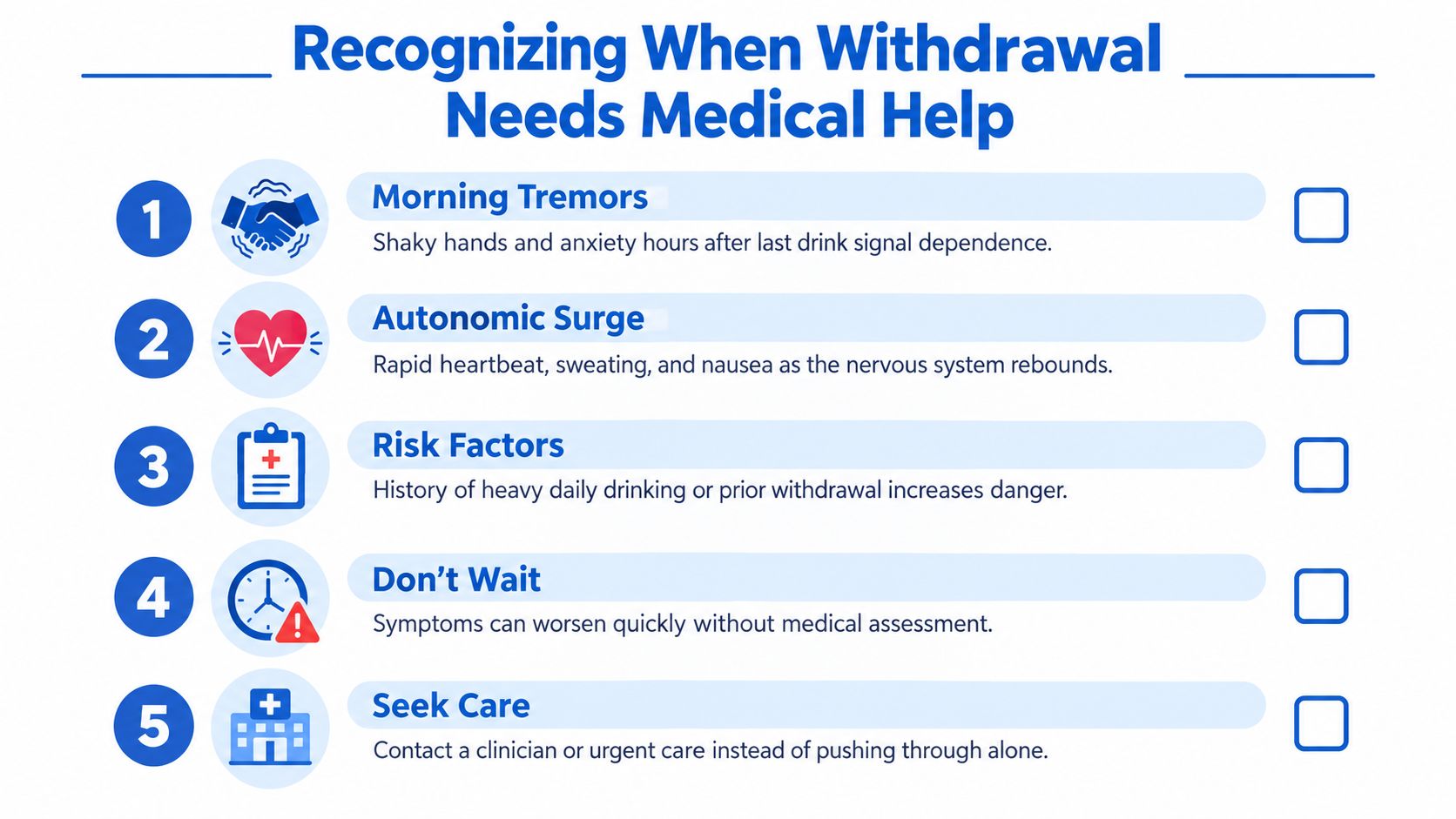
Previous mild withdrawal does not predict a mild repeat episode. Medical supervision deserves early consideration with heavy daily drinking, earlier withdrawal seizures or delirium tremens, significant illness, poor nutrition, pregnancy, or limited support at home. These factors can make a home plan unsafe, especially when nobody can monitor symptoms or reach care quickly.
Early symptoms include anxiety, insomnia, headache, nausea, sweating, tremor, and a fast heartbeat. Seek prompt medical advice when shaking interferes with ordinary tasks, vomiting continues, confusion appears, or symptoms occur alongside a seizure or delirium history. Hospital guidance describes withdrawal syndromes as involving or complicating 4% to 16% of hospital admissions, with untreated severe withdrawal developing in 2% to 9% of cases, according to contemporary clinical guidance.
A calm first decision
Call a clinician, urgent care service, or emergency department for guidance when symptoms are more than mild, particularly if the person is alone. Confusion, fainting, severe shaking, a seizure, or rapidly worsening symptoms calls for emergency help. Do not drive yourself in that condition. A trusted adult can gather medication bottles, medical records, and the approximate time of the last drink while help is arranged.
The alcohol detox symptoms guide may help identify common symptoms, but it cannot assess seizure risk, medical illness, nutrition, or the need for monitored treatment. Use it to prepare questions, not to justify waiting when symptoms are progressing.
Practical rule: A history of withdrawal complications supports arranging supervised care before symptoms become severe. Families do not need to wait for clear proof of danger before calling for medical advice.
How Alcohol Withdrawal Affects the Brain and Body
A person may seem merely restless after the last drink, then develop shaking, sweating, or a racing pulse as the hours pass. The reason is a sudden change in the brain's chemical balance. Alcohol strengthens GABA, a calming system that works like a brake, and alters glutamate, an excitatory system that acts more like an accelerator. With sustained exposure, the brain adjusts by relying less on the brake and preparing for more acceleration.
When alcohol stops, those adjustments remain temporarily. The calming effect drops away before the brain can reset, leaving the nervous system overactive. Tremor, anxiety, nausea, insomnia, agitation, and fast heart rate can follow. Severe withdrawal may cause seizures or delirium.
Symptoms can start within hours of the last drink. Some people have mild discomfort; others progress to hallucinations, confusion, or unstable vital signs. A person who feels manageable at first can worsen as withdrawal intensifies, so early symptoms do not reliably show the final level of risk. Clinicians also consider outpatient safety, available supervision, nutrition, liver disease, pregnancy, and co-occurring medical or psychiatric conditions when deciding whether monitoring is needed.
Two complications families should know
Withdrawal seizures may occur with little warning. Any seizure needs emergency evaluation, even if the person quickly appears normal afterward.
Delirium tremens, also called withdrawal delirium, causes severe confusion, disorientation, agitation, hallucinations, and marked nervous-system activation. Guidance reports a 1% to 8% mortality rate for this complication. Suspected delirium requires emergency or critical care, not home observation.
Wernicke encephalopathy is a separate nutritional emergency linked to thiamine deficiency. Confusion, poor coordination, and abnormal eye movements may occur. Someone does not need to look visibly malnourished for clinicians to consider thiamine prevention.
The following video provides a visual explanation of these brain changes:
Medications Used in Alcohol Withdrawal Treatment
Medication has a specific job during withdrawal. It reduces dangerous overactivity while clinicians monitor breathing, alertness, vital signs, hydration, and symptom progression. It doesn't cure alcohol use disorder, and it shouldn't be borrowed, shared, or adjusted without medical supervision.
Benzodiazepines remain the foundation
Benzodiazepines are the main first-line medicines because they reduce withdrawal discomfort and lower seizure and delirium risk. Long-acting medicines such as chlordiazepoxide or diazepam may provide steadier coverage when liver metabolism is intact. Lorazepam or another shorter-acting option may be considered when liver disease, older age, or oversedation changes the risk calculation.
Clinicians commonly use symptom-triggered treatment, often guided by the CIWA-Ar scale. The patient is reassessed after medication, and another dose is given when symptoms meet the protocol threshold. The World Health Organization's guidance on alcohol withdrawal management notes that most patients with CIWA-Ar scores of 8 or higher benefit from benzodiazepines and recommends daily outpatient monitoring for up to five days after the last drink in lower-risk cases.
A fixed-dose schedule may be safer when symptom reporting is unreliable, the patient can't participate in CIWA-Ar assessment, or the clinical team expects symptoms to escalate. Some hospital protocols use front-loading, giving carefully supervised doses early to control severe withdrawal before it peaks. The exact medicine, dose, timing, and taper must be individualized.
When phenobarbital enters the plan
Phenobarbital may be used as an alternative or add-on when benzodiazepine requirements are high or the response is inadequate. Emergency and critical-care literature describes potential reductions in intensive-care admissions, lorazepam exposure, and continuous benzodiazepine infusion when intravenous phenobarbital is added to lorazepam. However, it has a narrower safety margin, so it's generally used by experienced teams in settings equipped for close monitoring (UIC Drug Information Group review).
Other medicines may support selected cases:
- Antipsychotics: May help refractory hallucinations or agitation, but they don't replace benzodiazepines for seizure prevention.
- Clonidine or beta blockers: Can reduce some adrenergic symptoms, such as sweating or fast heart rate, while clinicians continue treating the underlying withdrawal.
- Gabapentin or carbamazepine: May be considered for selected mild withdrawal or outpatient plans.
- Thiamine and folate: Address nutritional risk and help prevent neurologic complications.
- Fluids and electrolytes: Correct dehydration or abnormalities that can worsen cardiac and neurologic instability.
| Medication | Role in Withdrawal | Key Cautions |
|---|---|---|
| Benzodiazepines | First-line control of withdrawal, seizure prevention, and delirium prevention | Sedation, respiratory depression, falls, liver-related accumulation, and dependence risk |
| Phenobarbital | Alternative or adjunct for severe or benzodiazepine-resistant withdrawal | Narrower safety margin and need for experienced, monitored use |
| Antipsychotics | Adjunct for selected hallucinations or severe agitation | Doesn't provide adequate seizure protection on its own |
| Clonidine or beta blockers | Helps selected autonomic symptoms | Can mask worsening withdrawal or lower blood pressure excessively |
| Gabapentin or carbamazepine | Option for selected mild cases or outpatient care | Suitability depends on seizure risk, comorbidities, and interactions |
| Thiamine and folate | Nutritional and neurologic support | Route and intensity depend on nutritional risk and suspected Wernicke encephalopathy |
Medication lists can become complicated when alcohol withdrawal overlaps with opioids, sleep medicines, psychiatric drugs, or blood thinners. A clinician or pharmacist can use a resource such as the PatientNotes drug interactions guide to identify potential conflicts, but an interaction checker shouldn't replace a full medication review.
Matching Care Settings to Withdrawal Risk
The safest setting is the one that matches the person's risk, not the one that feels most convenient. Clinicians consider current symptoms, CIWA-Ar results, prior seizures or delirium, vital signs, liver and heart disease, pregnancy, psychiatric safety, other substance use, transportation, and whether a reliable adult can monitor the patient.
Medically supervised inpatient detox provides continuous nursing assessment, rapid medication changes, intravenous access when needed, and escalation if seizures, delirium, respiratory problems, or other complications appear. A person with a prior withdrawal seizure, unstable medical illness, severe symptoms, or unreliable support generally needs this level of care.
Residential treatment offers a structured living environment with therapy and recovery support after acute medical instability has been addressed. It may not provide the same emergency medical resources as a hospital, so the program should explain how it handles worsening withdrawal.
Outpatient or intensive outpatient care can suit carefully selected people with mild symptoms, stable vital signs, safe housing, transportation, and dependable daily contact with clinicians. A household member may help observe changes, but shouldn't be expected to manage seizures, delirium, or medication complications alone.
| Setting | Best For | Monitoring Level | Typical Length | Key Limitation |
|---|---|---|---|---|
| Inpatient medical detox | High or uncertain medical risk | Continuous clinical monitoring | Individualized | More disruptive and resource-intensive |
| Residential treatment | Stabilization after acute risk is controlled | Structured on-site support | Individualized | May have limited emergency medical capacity |
| Outpatient or IOP | Lower-risk withdrawal with reliable support | Scheduled visits and check-ins | Individualized | Requires rapid escalation if symptoms worsen |
Placement should be reassessed as symptoms evolve, rather than treated as a permanent decision. Families comparing programs may also need practical information about Florida substance abuse evaluation costs, including what an assessment does and what questions to ask about payment.
For a clearer explanation of hospital-based care, see alcohol withdrawal treatment in the hospital. The central question is simple: can this person remain medically safe between assessments?
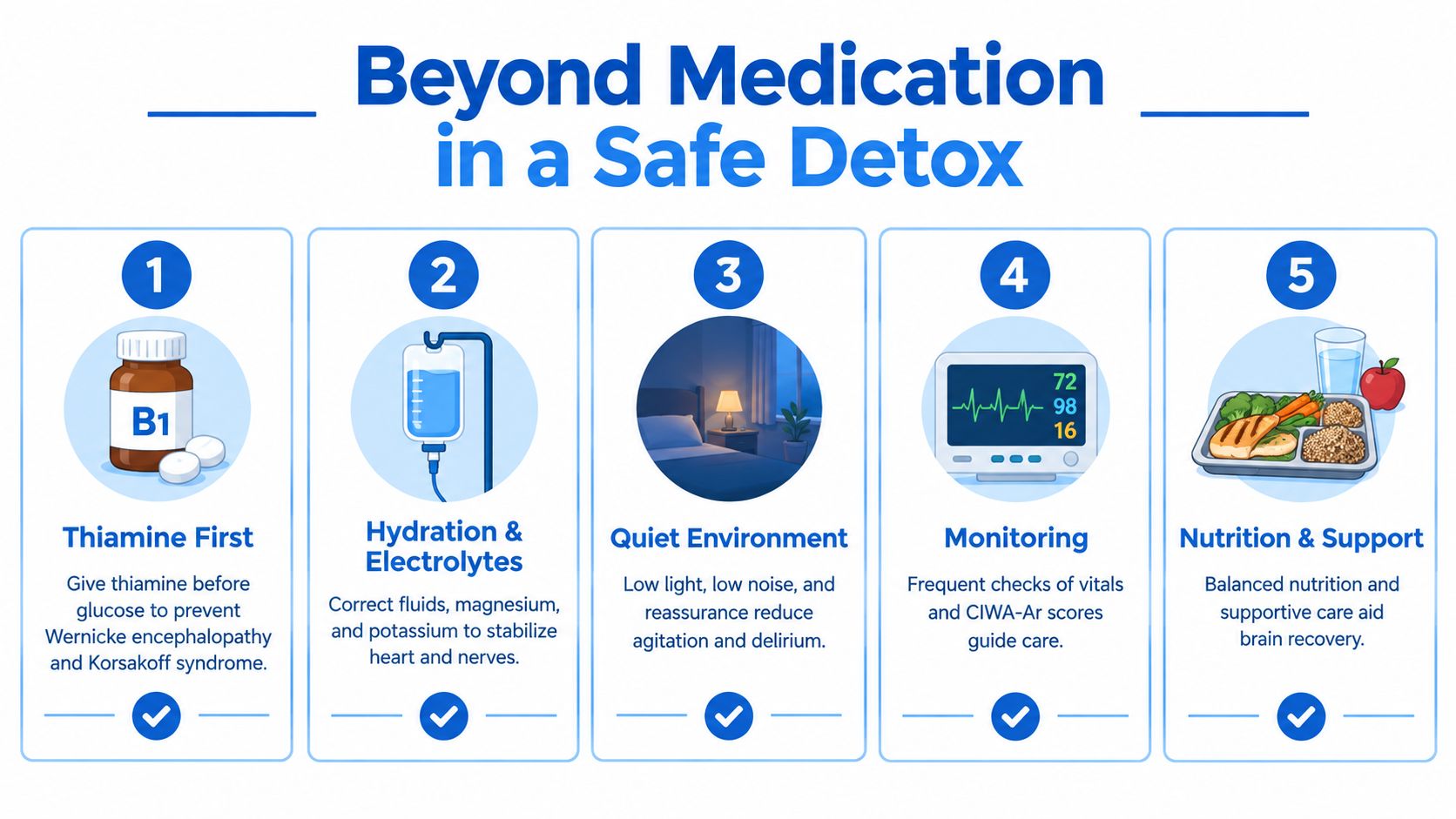
Beyond Medication in a Safe Detox
A medication protocol works best when the rest of the care plan protects the brain and body. Thiamine is especially important because prolonged alcohol use, poor intake, and repeated vomiting can leave a person deficient. WHO guidance recommends oral thiamine for all patients, parenteral thiamine for people at high risk, and twice-daily parenteral treatment for five days when Wernicke encephalopathy is suspected (WHO guidance).
Clinicians commonly give thiamine before a substantial glucose load when deficiency is possible. Glucose increases the body's demand for thiamine, so giving the vitamin first or promptly alongside glucose helps reduce concern about precipitating neurologic injury. The route and duration depend on the person's nutrition, symptoms, ability to absorb medication, and medical findings.
The environment carries clinical weight
Fluids, food, and electrolyte checks support recovery. Vomiting and poor intake can contribute to dehydration and abnormalities involving magnesium or potassium, which may increase nervous-system and heart risks. Nurses also watch sleep, orientation, mobility, skin condition, and the person's ability to eat and take oral medicines.
A quiet room, reduced stimulation, calm explanations, and consistent staff can lower fear and agitation. Trauma-informed care matters because sudden restraints, loud commands, or unexplained procedures may intensify distress and make cooperation harder.
Recovery support should include screening for depression, anxiety, trauma symptoms, suicidal thinking, and other substance use. Treating withdrawal while ignoring these risks leaves the person vulnerable after discharge.
Families should ask whether the program assesses opioid or benzodiazepine exposure, psychiatric symptoms, liver disease, nutrition, and suicide risk. The alcohol withdrawal help resource can support early conversations, but worsening symptoms require direct medical evaluation.
Warning Signs That Require Emergency Care
Families should trust what they can observe. A person may insist they're fine while becoming less steady, less oriented, or less able to keep medicine and fluids down. Don't wait for the person to agree that the situation is serious if the decline is visible.
Call emergency services or go to an emergency department for:
- Severe or rising withdrawal: A CIWA-Ar score above 19 suggests severe withdrawal, while a rapidly rising score also warrants urgent reassessment. The infographic brief may use a lower threshold for escalation, so follow the treating team's protocol rather than relying on one number alone.
- Seizure or loss of consciousness: Any seizure requires immediate emergency care. Move dangerous objects away, protect the head, and don't place anything in the person's mouth.
- Confusion or hallucinations: New hallucinations, paranoid ideas, disorientation, or inability to identify people and place may signal complicated withdrawal or another medical emergency.
- Cardiovascular instability: Chest pain, an irregular heartbeat, severe shortness of breath, or a markedly high blood pressure with headache needs urgent evaluation.
- Uncontrolled vomiting: Persistent vomiting that prevents fluids or prescribed medicine from staying down can rapidly undermine outpatient treatment.
- Possible medical illness: Fever above 100.4°F, jaundice, or sudden severe abdominal pain may point to an illness such as pancreatitis or alcoholic hepatitis rather than withdrawal alone.
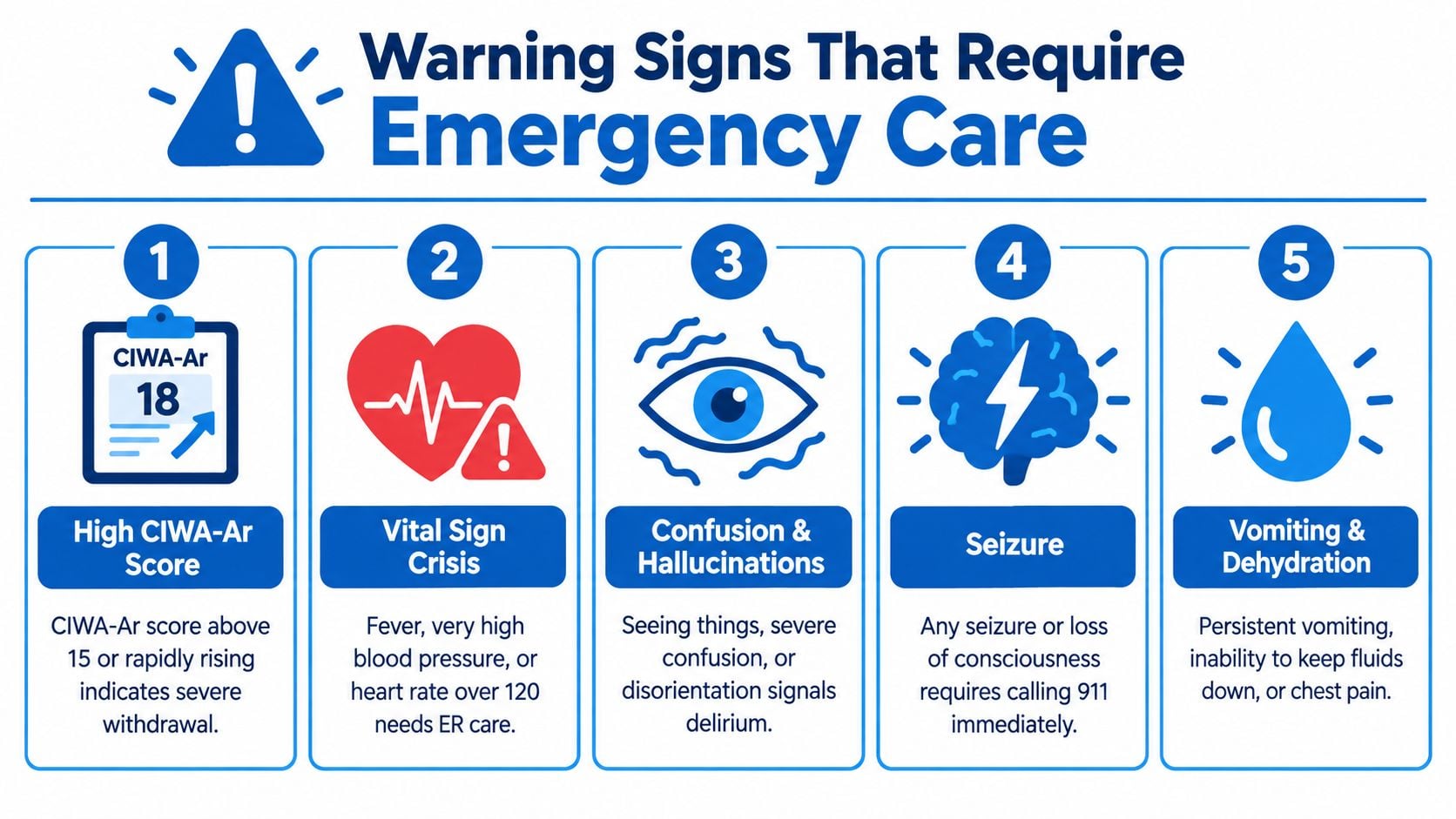
Don't let a scheduled appointment delay care. If the person is confused, seizing, unable to walk safely, or having chest symptoms, call emergency services.
Relapse Prevention After Detox
Finishing acute withdrawal is a transition, not the end of treatment. Once the immediate medical risk has settled, the care team can discuss medications for alcohol use disorder, behavioral treatment, recovery support, and the conditions that made drinking difficult to stop.
Medication choices depend on the person's goals, liver and kidney health, current drinking pattern, opioid exposure, and ability to follow the plan. Common options include:
- Naltrexone: Can reduce the rewarding effects of alcohol and may help decrease heavy drinking. It isn't appropriate for someone using opioids and requires medical review of liver health.
- Extended-release naltrexone injection: Provides a longer-acting formulation for people who prefer not to take a daily tablet and meet the clinical requirements.
- Acamprosate: Helps support abstinence after stopping alcohol and may suit people whose treatment plan focuses on maintaining no alcohol use.
- Disulfiram: Creates an unpleasant reaction if alcohol is consumed, so it works best when motivation is strong and dosing can be supervised.
These medicines work better when paired with a practical therapy plan. Cognitive behavioral therapy helps identify the thought patterns, places, and emotional states that precede drinking. Motivational enhancement therapy helps resolve ambivalence, while contingency management connects agreed recovery behaviors with immediate, structured rewards.
A written plan should name personal triggers, early warning signs, people to call, transportation options, meeting locations, medication instructions, and the action to take after a lapse. Mutual-help groups, sober living environments, family therapy, and regular medical appointments can add structure when motivation fluctuates.
Relapse doesn't erase progress. It signals that the current plan needs adjustment, such as a higher level of support, a medication review, treatment for untreated trauma, or safer housing.
Practical Questions Families Ask About Treatment
A typical inpatient day combines vital-sign checks, withdrawal scoring, medication administration, meals, rest, nursing contact, and medical reviews. Therapy may begin once the person can participate safely. Residential care usually adds scheduled individual or group counseling, recovery education, peer support, and planned family contact, while intensive outpatient care combines scheduled treatment visits with time at home.
Ask the program to explain who assesses withdrawal, which standardized tool it uses, how often clinicians review medication, and where patients go if symptoms become severe. Licensing and accreditation can provide useful safeguards, but families should also ask for the written discharge plan and the name of the clinician responsible for follow-up.
Questions to ask before admission
- Medical oversight: Is a physician or qualified prescriber available, and can the program manage seizures or delirium?
- Protocol: Does the team use CIWA-Ar or another structured withdrawal assessment?
- Medication access: Can the program discuss naltrexone, acamprosate, disulfiram, or other ongoing treatment when clinically appropriate?
- Coverage: What requires insurance preauthorization, and what costs may remain after benefits are checked?
- Communication: How often can families call, visit, or participate in care planning?
- Daily life: What are the rules for phones, work, transportation, personal medication, and leave?
- Discharge: Where will the patient go next, and who will schedule follow-up?
A polished facility can still provide poor care if it pressures families to commit immediately, gives vague answers about medical coverage, avoids discussing discharge, or lacks qualified withdrawal oversight.
Addiction Resource Center LLC offers medically supervised detox with medication-assisted treatment, residential rehabilitation through its partner facility, and an Intensive Outpatient Program available in person or through telehealth. If you or a loved one needs help evaluating alcohol withdrawal treatment and next steps, visit Addiction Resource Center LLC to request guidance or connect with its 24/7 phone and text support.