Stop drinking with practical steps backed by expert guidance. Learn proven strategies to achieve lasting sobriety and reclaim your life today.


Deciding to stop drinking is one of the hardest decisions you’ll make, but it’s also one of the most rewarding. At Addiction Resource Center, we’ve helped thousands of people reclaim their lives from alcohol dependency.
This guide walks you through the concrete steps that actually work-from recognizing the problem to building lasting recovery.
Do You Actually Have a Problem With Alcohol?
Most people don’t wake up and admit they have an alcohol problem. It happens gradually, then all at once. One day you’re drinking socially, and months later you’re drinking alone on a Tuesday night wondering how you got here. The National Institute on Alcohol Abuse and Alcoholism defines heavy drinking as five or more drinks on any day or 15 or more per week for men, and four or more drinks on any day or eight or more per week for women. If you’re hitting these numbers, your body is already paying the price.
But numbers alone don’t capture the real problem. The real problem emerges when alcohol starts controlling your decisions instead of you controlling your drinking. You cancel plans because you need to drink. You drink to handle anxiety or sadness instead of addressing it. People you care about mention your drinking and you get defensive. You wake up with gaps in your memory from the night before. These aren’t gray areas. These are clear signs that alcohol has become a problem.
What Alcohol Actually Does to Your Body and Relationships
Heavy drinking damages your body in ways that aren’t always visible. Your liver bears the brunt of it, developing fatty liver disease, cirrhosis, or hepatitis. Your heart works harder, raising blood pressure and increasing your risk of stroke. Your brain chemistry shifts, making anxiety and depression worse, not better. You sleep poorly even though alcohol made you pass out. You gain weight. Your immune system weakens.
But the physical damage is only half the story. Alcohol destroys relationships because it changes who you are. You become unreliable. You say things you regret. You miss important moments with your kids or partner. You break promises. The people closest to you stop trusting you because your actions prove they shouldn’t.
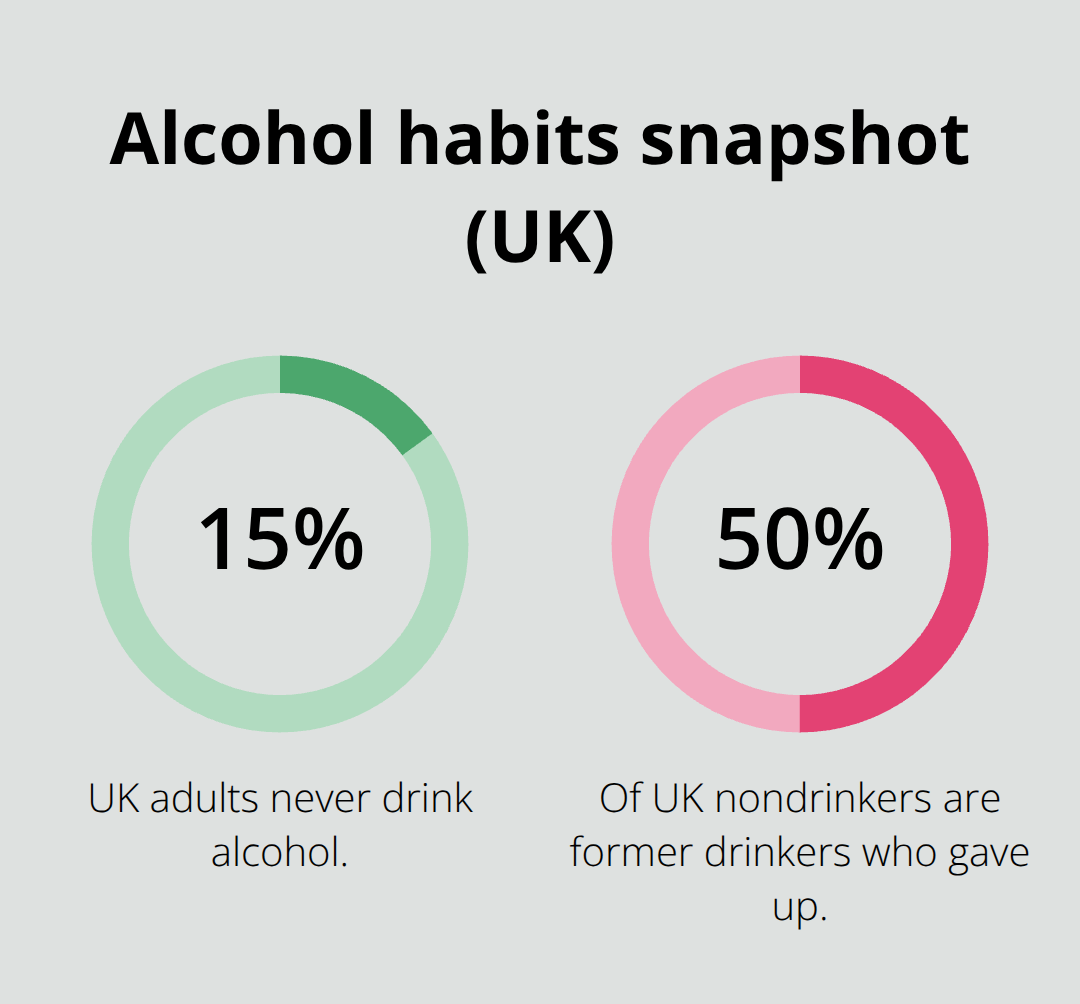
About 15% of UK adults never drink alcohol, and half of them used to drink but gave up, according to Drinkaware research based on YouGov data from 2024. They made a choice. They recognized the problem wasn’t worth the cost.
Starting Now Matters More Than Starting Perfect
Stopping drinking doesn’t require a rock-bottom moment or a perfect plan. It requires a decision followed by action. If you think you might be physically dependent on alcohol, talk to your GP or a health professional before stopping completely, because alcohol withdrawal can be serious and sometimes dangerous. But if you’re not physically dependent, you can stop today.
Write down three concrete reasons why you’re stopping. Not vague reasons like being healthier. Specific reasons like having energy to play with your kids, saving money, or sleeping without waking up at 3 AM. Keep that list somewhere visible. Tell someone you trust about your decision, not to sound virtuous but to create accountability. Clear your home of alcohol. Then fill the gap alcohol occupied with something else. Meet friends at the cinema instead of the pub. Start exercising. Pick up a hobby.
What to Expect in Your First Month
The first week is the hardest. The second week gets easier. The third week you’ll notice you sleep better. After a month, people will comment that you look different. After three months, you’ll barely recognize the person you were when you were drinking regularly.
What happens next depends on your commitment and the support you build around yourself. Professional treatment options exist to help you stay on track, whether you need outpatient counseling, medication support, or a community of people walking the same path.
What Treatment Actually Works for Alcohol Addiction
Evidence Shows Community Support Delivers Real Results
Professional help isn’t optional for everyone, but it’s necessary for most people serious about stopping drinking. The difference between those who stay sober and those who relapse often comes down to whether they got structured support. A Cochrane Database review analyzed Alcoholics Anonymous studies and found that AA produced abstinence more effectively than psychotherapy in most studies. The same research revealed that several studies reported health care cost savings associated with AA participation. This matters because it proves that community-based support isn’t just feel-good talk-it’s measurable recovery.
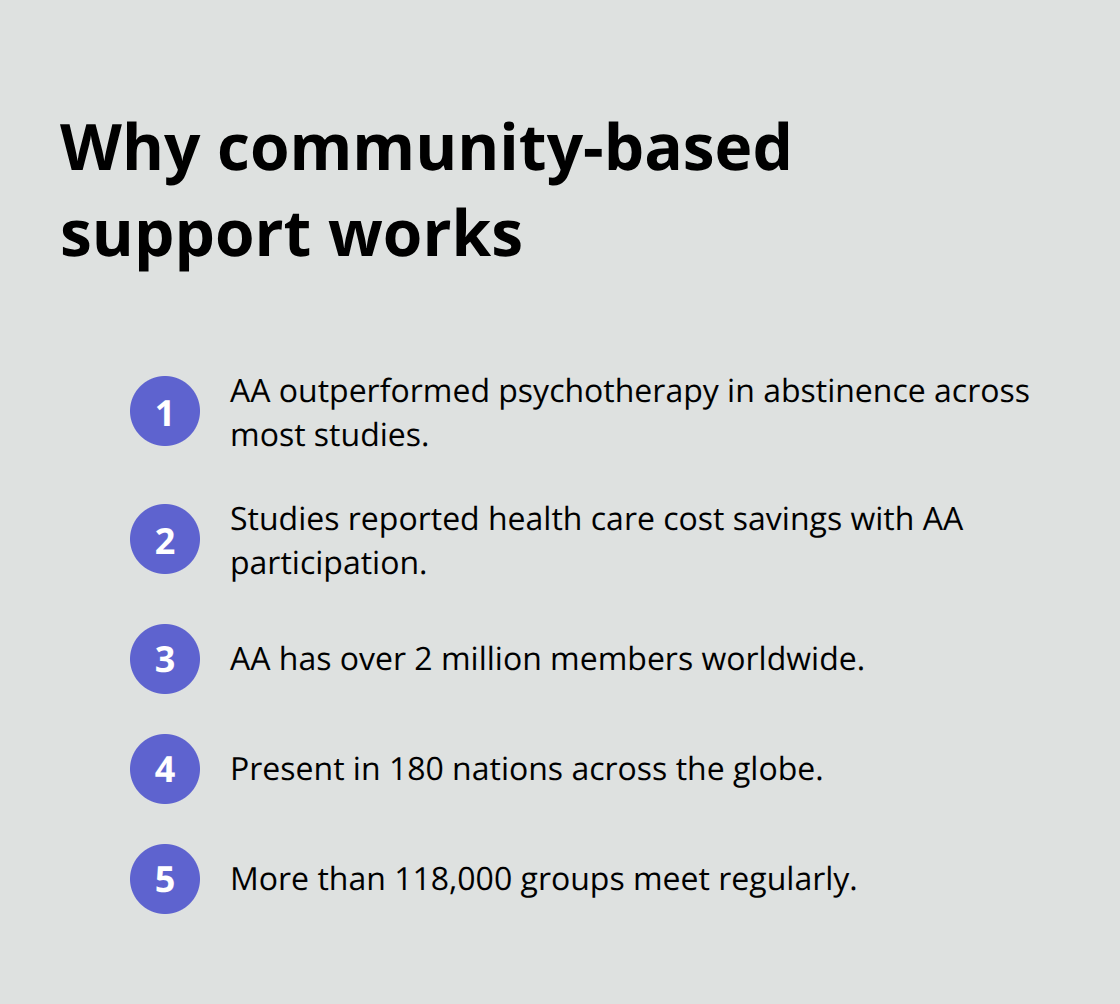
Alcoholics Anonymous now has over 2 million members in 180 nations and more than 118,000 groups. If you’re going to join something, you’re joining something that works at scale.
Outpatient Programs Fit Your Life
Outpatient programs and counseling services give you structure without removing you from your life. These programs work best if you don’t have severe physical dependence and can commit to regular sessions while managing work and family. Your therapist meets with you weekly or twice weekly to address the psychological triggers underneath your drinking. You stay in your home, keep your job, and maintain your relationships while you rebuild your sobriety. This approach requires discipline because you face your triggers in real time rather than in a controlled environment, but it also means you practice recovery in the actual world where you’ll live.
Medication Reduces Cravings and Blocks Reward
Medication-assisted treatment combines drugs like naltrexone or acamprosate with therapy to reduce cravings and block the rewarding effects of alcohol. Your GP can prescribe these medications or refer you to specialist alcohol services that handle the medical side while therapists address the psychological work. Naltrexone blocks opioid receptors in your brain, which reduces the pleasure you get from drinking. Acamprosate helps restore your brain chemistry to its pre-drinking state. These medications work best when combined with counseling because they remove the physical craving while therapy removes the emotional reasons you drank in the first place.
Free Support Services Available Right Now
Support groups go beyond AA and offer immediate access to help. Drinkchat offers free online chat support weekdays from 9am to 2pm, and Drinkline provides a free helpline at 0300 123 1110 (weekdays 9am to 8pm, weekends 11am to 4pm). The UK-wide service finder helps you locate local, free, confidential alcohol support services near you. What matters most is picking one and actually showing up. The specific program matters less than consistency and finding people who’ve walked the same path.
Your Next Step Determines Everything
The treatment option you choose matters far less than the commitment you make to it. Some people thrive in group settings where they hear other people’s stories and feel less alone. Others prefer one-on-one counseling where they can work through personal trauma or mental health issues that fueled their drinking. Some respond well to medication that removes the physical craving, while others want to rebuild their relationship with their body without pharmaceutical support. The right choice is the one you’ll actually stick with. Once you’ve selected your treatment path, the real work begins-building the daily habits and support network that keep you sober when cravings hit and life gets hard.
Building Your Recovery Plan
Map Your Triggers and Create Concrete Alternatives
Your recovery plan isn’t something you create once and forget. It’s a living document that changes as you learn what actually works for you, not what works in theory. Start by identifying the specific situations where you drink. Not vague triggers like stress, but concrete ones: Tuesday nights alone at home, Friday happy hours with coworkers, arguments with your partner, or Sunday mornings when you feel anxious. Write these down. Next to each one, write what you’ll do instead. If Tuesday nights alone trigger drinking, schedule a gym session or call a friend. If Friday happy hours are the problem, suggest meeting at a coffee shop or skip them entirely for the first three months.
This isn’t about willpower; it’s about removing the opportunity for the behavior you’re trying to stop. Track your progress for at least two weeks using a simple journal or notes app. Monitoring your drinking habits and progress supports higher success rates than those who don’t track anything. You’re not looking for perfection. You’re looking for patterns and proof that you’re moving forward.
Build a Support Network That Actually Holds You Accountable
Your support network determines whether you stay sober or relapse. Tell the people closest to you exactly what you’re doing and why, then ask them to hold you accountable. Not in a judgmental way, but in a practical way: if you’re supposed to go to a support group meeting, they can ask if you went. If you’re avoiding certain situations, they can help you stick to that boundary.
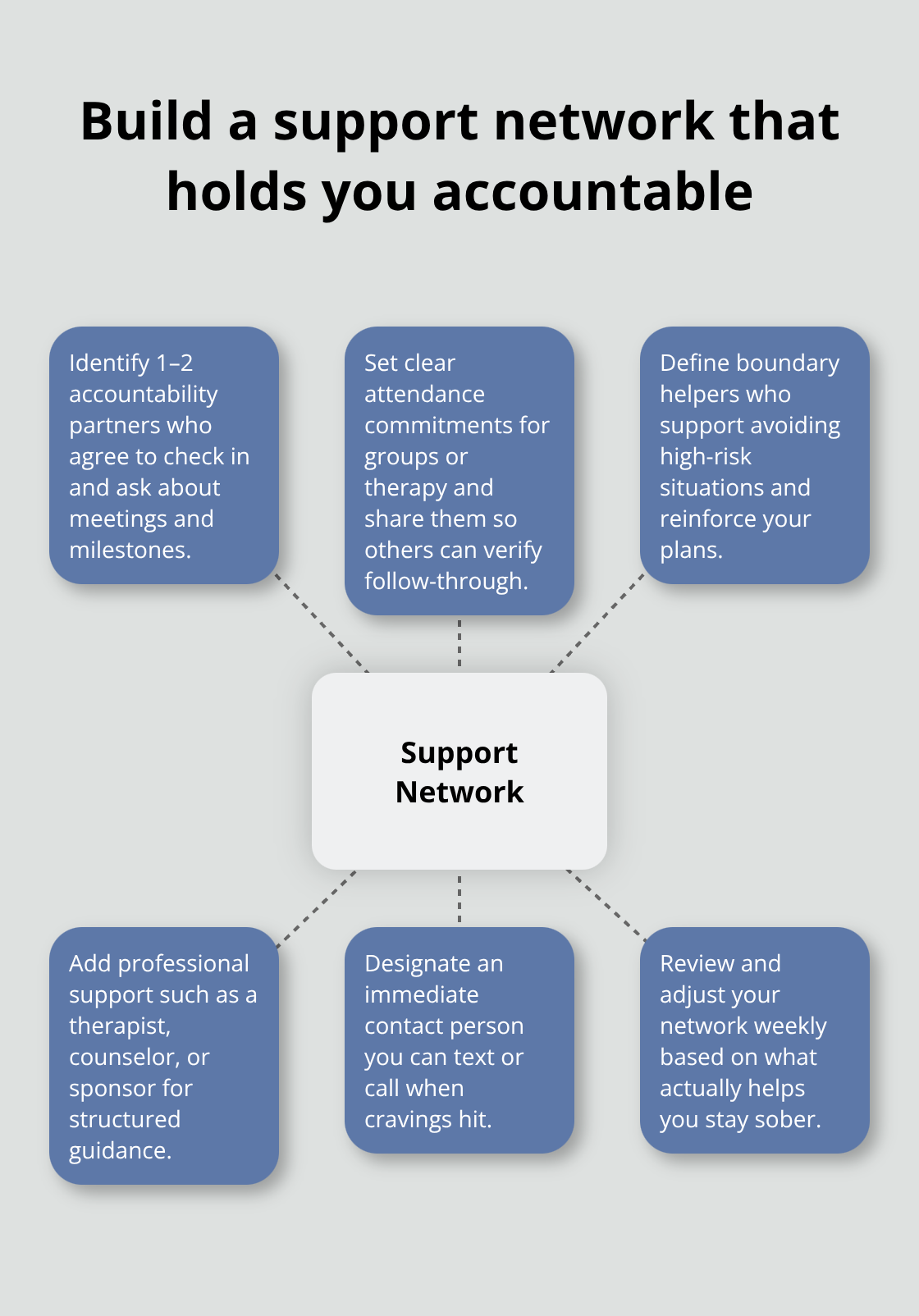
Research shows that people with strong social support and consistent group participation achieve abstinence at higher rates than those trying to quit alone. If you don’t have strong relationships to lean on, build them through support groups or therapy. Your therapist or counselor becomes part of your network, someone you see regularly who understands addiction and won’t judge you for struggling.
Identify Your Most Critical Support Person
Many people find that having one person they can text when cravings hit makes the difference between staying sober and relapsing. That person might be a sponsor from AA, a therapist, or a friend in recovery. The specific relationship matters less than having someone available when you need them most. Set clear boundaries with people who enable your drinking or don’t take your recovery seriously. This might mean limiting time with certain friends or family members during your first three months (when you’re most vulnerable).
Final Thoughts
Your first month will test your commitment because alcohol changed how your brain processes reward and stress, and cravings will hit when you least expect them. If you’ve identified your triggers, built your support network, and committed to a treatment approach, you’ll have concrete tools to respond instead of react. The people who succeed aren’t the ones with the strongest willpower-they’re the ones who removed temptation, showed up to their support group or therapy session even when they didn’t feel like it, and called their sponsor at 2 AM when cravings threatened to break them.
Long-term success comes from treating recovery as a daily practice, not a destination you reach and then forget about. Track your progress, celebrate small wins like completing your first alcohol-free week or month, and reinvest the money you save from not buying alcohol into something meaningful. Notice the health improvements: better sleep, more energy, clearer thinking, weight loss-these aren’t just nice side effects, they’re proof that your body is healing and your decision to stop drinking was right.
If you’re ready to take action, Addiction Resource Center offers personalized substance abuse treatment and addiction therapy programs designed to meet your specific needs. Our experienced team provides compassionate support at every stage of recovery. Recovery is possible, and it starts with the decision you make today.