Explore how art therapy addiction recovery helps people heal through creative expression and emotional release.


Addiction often silences the voice inside you. At Addiction Resource Center, we’ve seen how art therapy addiction recovery programs help people reclaim that voice through creative expression.
When words fail, art speaks. Painting, drawing, and sculpting offer pathways to process emotions and build awareness that traditional talk therapy alone cannot reach.
How Art Therapy Rewires Your Brain During Recovery
The Neuroscience Behind Creative Healing
Art therapy works because it activates different neural pathways than talking alone. When you paint or sculpt, you engage your brain’s visual and motor cortex simultaneously, which creates new connections that bypass the reward circuits damaged by addiction. When you create art, you engage multiple brain regions that support emotional processing and impulse control. This matters because addiction weakens these exact regions. The physical act of creation forces your brain to focus on the present moment instead of cravings or past trauma. You rewire your recovery through your hands, not just through your thoughts.

Why Art Outperforms Talk Therapy Alone
Art provides your emotions a direct outlet without filtering them through language, which means anger, shame, and grief don’t stay trapped inside waiting for the next craving to hit. When you hold a paintbrush instead of reaching for a substance, you make a physical choice that interrupts the automatic response pattern addiction created. Your nervous system begins to associate stress and difficult feelings with creative action rather than substance use. Research supports art therapy as an effective complement to traditional treatment approaches for recovery.
The Timeline for Real Change
This shift doesn’t happen overnight, but it compounds quickly. Within four to six weeks of consistent art therapy sessions, most people report that they reach for art before they reach for old coping mechanisms. The brain’s neuroplasticity (its ability to form new connections) accelerates when you combine creative practice with structured recovery support. Each session strengthens the pathways that lead away from substance use and toward genuine emotional processing. This foundation positions you to explore how qualified professionals can guide your artistic journey forward.
What Does Research Show About Art Therapy Results
Measurable Reductions in Cravings
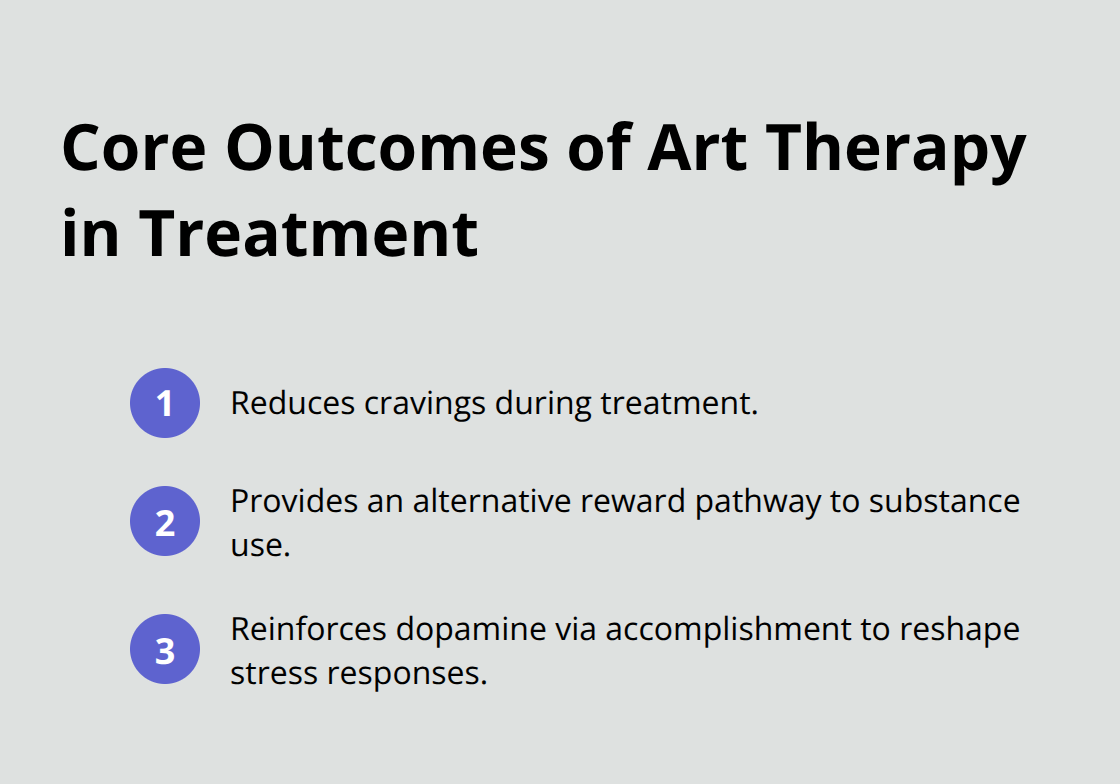
Art therapy produces measurable results that extend far beyond momentary relief. Studies show that patients who incorporate art therapy into their recovery plan experience reductions in cravings during treatment. Cravings drive relapse, and art therapy addresses them directly by offering your brain an alternative reward pathway. When you create art, your brain releases dopamine through accomplishment rather than through substance use, which gradually rewires how your nervous system responds to stress.
Emotional Regulation Within Weeks
Participants report improved emotional regulation within weeks of starting art therapy, meaning they can sit with difficult feelings without acting on them. This translates to real-world stability where anger, anxiety, or boredom no longer automatically trigger the urge to use. You develop the capacity to feel without immediately reaching for substances, which represents a fundamental shift in how you relate to your own mind.
Physical Withdrawal Symptoms Ease Faster
Withdrawal symptoms also respond to creative practice in ways that surprise many people entering recovery. Research shows that art therapy reduces physical withdrawal symptoms like tremors, sleep disruption, and muscle tension because focused creative work calms your nervous system and redirects attention away from bodily discomfort. Your mental health improves alongside physical symptoms because art provides a container for processing trauma, shame, and grief that typically fuel addiction.
Depression and Mental Health Improvements
Studies tracking people in recovery show that those using art therapy demonstrated improvements in depression scores. You gain concrete coping skills during each session that you can use outside the studio, whether that means sketching when anxiety hits or using color and movement to process anger without substances. The combination of neurological change, emotional release, and skill-building makes art therapy fundamentally different from passive treatment approaches.
Building Skills That Transfer Beyond the Studio
These benefits compound when you work with qualified professionals who understand both addiction recovery and creative practice. The next section explores how to find the right art therapist and integrate this powerful tool into a comprehensive treatment plan that addresses your specific recovery needs.
Building Your Art Therapy Recovery Team
Finding Therapists with Dual Expertise
Art therapy only works when a qualified professional guides it-someone who understands both addiction recovery and creative practice. Not all art therapists have training in addiction work, and not all addiction counselors understand how to facilitate therapeutic art. You need credentials in both areas.
Look for therapists with Art Therapy Credentials Board certification combined with specific training in substance abuse treatment. The ATCB requires a master’s degree, 1,500 hours of supervised clinical experience, and passage of a rigorous exam. When you contact a potential therapist, ask directly about their experience with addiction populations. Ask how many clients they’ve worked with in recovery, what their average session looks like, and whether they’ve trained in trauma-informed care (since addiction and trauma almost always occur together).

The American Art Therapy Association directory filtered by specialization provides the most reliable way to find qualified professionals. Your recovery program should integrate art therapy alongside medication management, individual counseling, and group therapy rather than positioning it as a standalone treatment. Research published in the Journal of Substance Abuse Treatment shows that multimodal treatment combining art therapy with cognitive behavioral therapy produces stronger outcomes than either approach alone.
If your current treatment provider doesn’t offer art therapy, address this directly with them. The best recovery programs treat art therapy as essential infrastructure, not an optional add-on.
Designing Your Creative Space
Art therapy doesn’t require expensive studios or high-end materials. What it requires is privacy, consistency, and access to basic supplies like paint, clay, markers, and paper. Your therapist should maintain a dedicated space where you feel safe making mistakes without judgment. Many people enter recovery after years of perfectionism and shame, so a studio environment that explicitly welcomes messy, rough, unfinished work becomes part of the healing itself.
Ask your therapist about their studio setup and what supplies are available. Some facilities rotate themes or prompts for sessions, while others let you choose your direction entirely. Both approaches work, but you should know what to expect. If you work with a therapist outside a formal treatment center, confirm that materials are provided or clarify what you need to bring.
Establishing Consistent Sessions
Consistency matters significantly for your nervous system. Scheduling the same day and time each week trains your brain to anticipate creative work as a reliable coping mechanism. If your schedule shifts every session, you lose that neurological benefit.
Sessions typically run 45 to 60 minutes, which provides enough time for meaningful creative work without overwhelming your recovery capacity. Some therapists encourage home art practice between sessions while others recommend keeping creative work contained to the therapy space. Clarify this expectation upfront so you understand how to use art in your daily life outside treatment.
Final Thoughts
Art therapy addiction recovery works because it addresses what traditional treatment alone cannot reach. The creative process rewires your brain, regulates your emotions, and builds coping skills that last long after you leave the studio. You’ve learned how art bypasses the language centers that addiction damages, how research documents measurable reductions in cravings and withdrawal symptoms, and how to find qualified professionals who understand both creative practice and recovery.
The real power emerges over months and years as people who commit to art therapy reclaim parts of themselves that addiction buried. They develop a relationship with their own emotions that doesn’t require substances and build confidence through creating something tangible when everything else feels uncertain. These benefits compound because each session strengthens neural pathways that lead away from substance use and toward genuine healing.
Starting art therapy requires one decision: to reach for a paintbrush instead of waiting for the next crisis. You don’t need artistic talent or previous experience-you need a qualified therapist, a consistent schedule, and willingness to let your hands express what your words cannot. If you’re ready to explore how art therapy can support your recovery journey, visit Addiction Resource Center to learn how our personalized addiction therapy programs can help you begin your expressive path to healing.