Explore how poetry supports addiction recovery with practical techniques, emotional healing strategies, and real examples for lasting change.

Addiction recovery demands more than willpower—it requires ways to process grief, shame, fear, and trauma when ordinary conversation feels too blunt or too exposed. This guide explains how to use poems for overcoming addiction recovery through three practical paths: poems about drug abuse that help you face what happened, short poems for reflection during difficult moments, and recovery-focused poems that put language around hope, sobriety, and healing.
At Addiction Resource Center, we’ve seen people respond best when poetry is treated as a tool, not a literary assignment. Some readers need a few honest lines they can return to during a craving. Others need longer recovery poems for addiction that help them name loss, regret, or relief. We also know prevention-oriented poems have a different job entirely: they speak to classrooms, families, and communities that need clear, memorable language before substance use turns into a crisis.
How We Chose the Poem Types and Examples in This Guide
We built this guide around real recovery use cases rather than literary prestige. The poem types below were selected or created to match common moments people face in addiction recovery: looking back at active use without glamorizing it, finding words for early sobriety, and needing a short line to hold onto during stress, shame, or cravings. We favored concise formats because a short poem on drug abuse is easier to reread in a waiting room, save in a phone note, or bring into group work.
We also separated recovery poems from prevention poems on purpose. In our review, those two categories often get mixed together online, but they serve different needs. A recovery poem helps someone already doing the work of sobriety. A prevention poem is usually aimed at schools, parents, youth groups, or community awareness. That distinction matters because the tone, language, and emotional goal are different.
Finally, we prioritized emotional clarity over polish. A useful addiction poem does not need perfect rhyme or advanced technique. It needs to be honest, specific, and safe to use alongside evidence-informed support such as counseling, group therapy, or trauma-informed care. That is why the examples here are brief, direct, and designed to be used in real life rather than admired from a distance.
How Poetry Processes Emotion and Trauma in Recovery
Poetry can serve different purposes depending on where someone is in the recovery process. A poem about drug abuse can help readers confront denial, consequences, and the reality of what substance use took from them. Poems written during recovery tend to focus on grief, accountability, resilience, and rebuilding trust. Short verses or single lines can serve a different function altogether: they work as quick grounding tools during cravings, flashbacks, or moments when a person cannot manage a long journal entry.
Those formats matter because people use them differently. Someone carrying shame may need a poem that names the wreckage without excusing it. Someone in early sobriety may need language for exhaustion, hope, or the plain fact of getting through one more day. We’ve also seen brief lines work well in support settings because they are easier to remember under stress; a short sentence on a note card can sometimes do more in the moment than a polished page of writing.
Poetry Confronts What Talk Therapy Misses
Poetry forces you to confront what you’ve been avoiding. When traditional talk therapy feels too linear or structured, poetry strips away the need for perfect explanations and lets raw emotion exist on the page. A 2021 study found that poetry reading and writing activities reduced fear, sadness, anger, worry, and fatigue. That same mechanism works in addiction recovery: poetry creates space for feelings that don’t fit into neat sentences or logical arguments.
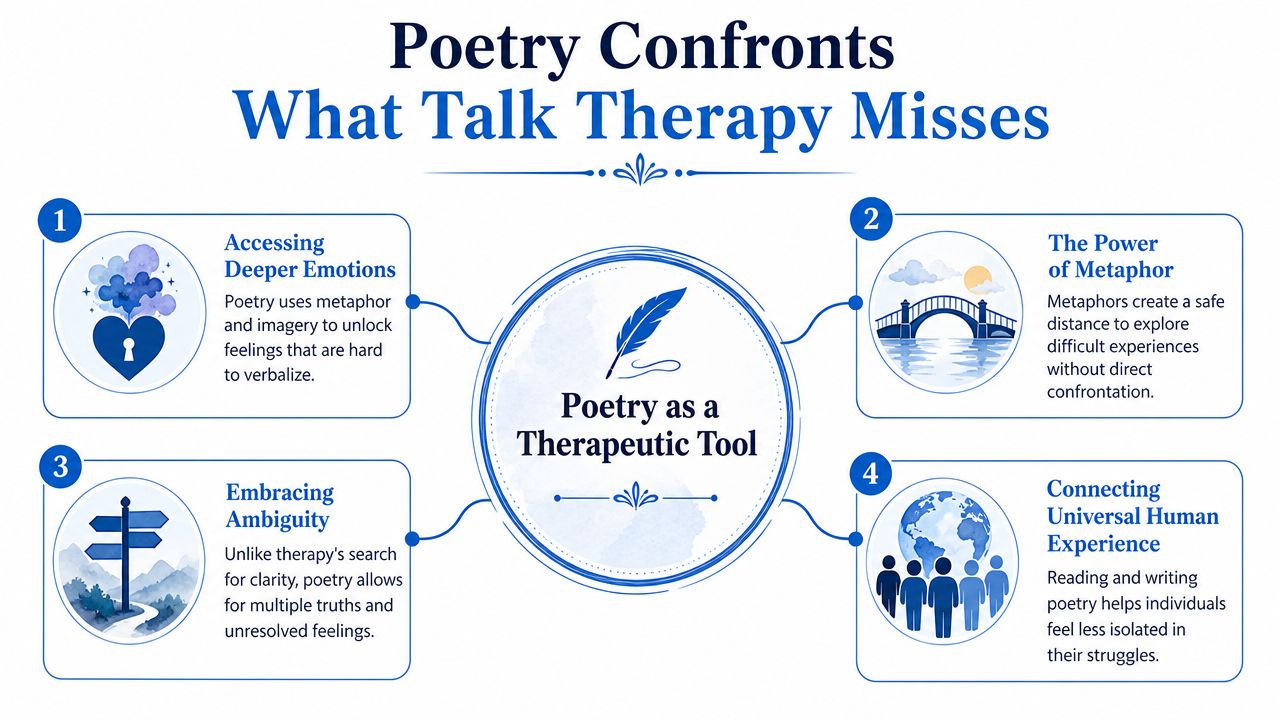
Writing your own verses about cravings, shame, or loss gives those emotions a form you can examine without judgment. Reading poems written by others in recovery shows you that your internal experience isn’t unique or broken—it’s part of a shared human struggle. The Betty Ford Center integrated poetry into its recovery programs precisely because creative expression reaches parts of trauma that conventional counseling sometimes misses.
How Poetry Rewires Memory and Trauma Processing
When you write about the moment addiction took control or the person you want to become, you actively rewire how your brain processes those memories. A 2015 study of stroke patients found that reading poetry improved cognitive function and helped people cope with stress, while the experience itself was cathartic for processing sadness and loss.
Poetry therapy combines bibliotherapy with therapeutic techniques to facilitate emotional expression. It prompts reflection on triggers and behavioral patterns through carefully chosen language and imagery. The act of selecting specific words to describe a craving or a moment of weakness forces your brain to analyze that moment differently than it would in a therapy session.
Expressive writing research points in the same direction: structured emotional writing can help people organize distressing experiences into a coherent narrative, which is one reason clinicians often use writing exercises alongside treatment. For readers working through trauma as part of recovery, this kind of support is safest when it is paired with appropriate clinical care, especially if the writing brings up flashbacks, panic, or dissociation. A helpful overview of that approach is this guide to trauma-informed mental health care from Integrative Psychiatry of America.
The Neuroscience of Translating Emotion Into Words
You’re not just reporting what happened—you’re translating it into metaphor, rhythm, and imagery. This translation process builds self-awareness and insight. A 2018 paper on chronic pain found that writing poetry helps people explore their personal narratives and fosters self-empathy, while also improving memory recall of coping strategies.
That memory improvement matters directly for your recovery: when you can recall the specific words you wrote about handling a trigger, you have a portable tool to access during difficult moments. The portability of poetry means you can pull up a verse you wrote or a poem that resonates with you anywhere, anytime—in your car before a meeting, in bed when cravings hit, or in a waiting room before a counseling appointment. We’ve found that people are more likely to use poetry in those moments when the language is short and plain enough to remember without effort.
Moving From Understanding to Action
Understanding how poetry works in your brain sets the stage for using it. Concrete examples move theory into practice so you can choose the kind of poem that fits your situation right now: reflection on drug abuse, hope-centered recovery writing, or prevention-focused messaging for school and community settings.
Start Writing and Reading Poetry Today
Most readers come to this topic for one of three reasons. They want a poem about drug abuse that helps them face the damage. They want a recovery poem that offers hope without sounding fake. Or they want a short, direct poem that says no to drugs in a way that works for a school, family, or community message. The easiest way to start is to pick the type that matches your immediate need instead of trying to write one poem that does everything.
Short Poems for Drug Abuse Reflection
Use this kind of poem when you need immediate honesty and don’t have the energy for a full journal entry. Short reflective poems work well after a relapse scare, after an argument, or when you are trying to name the cost of substance use without spiraling.
Example:
I called it relief.
It emptied the room.
I called it control.
It decided for me.
Or even shorter:
What I used to escape
became what I could not escape.
These lines work because they stay concrete and accountable. They do not romanticize getting high, and they do not hide behind vague language. The most useful short poems on drug abuse usually do one job well: they name the lie, the loss, or the turning point. If you want to write your own, start with one contrast: what you thought the drug would do, and what it did.
Because substance use affects so many families and communities, even brief awareness poems can carry weight when they are clear and specific. In 2023, 70.5 million Americans age 12 and older had used illegal drugs or misused prescription drugs in the last year, according to the National Institute on Drug Abuse. That is one reason concise, memorable language can matter in recovery groups, school discussions, and community education.
Recovery Poems for Addiction That Focus on Healing
Choose this type when you are in sobriety and need language for persistence, grief, repair, or self-respect. Recovery poems for addiction do not have to sound triumphant. Often the strongest ones are quieter and more believable.
Example:
Today I was not fearless.
I was steady.
I drank water, answered one call,
and stayed for my own life.
Another option:
My hands still shake some mornings,
but they are learning gentleness.
The value here is emotional precision. A good recovery poem can hold two truths at once: healing is possible, and healing is not easy. We’ve seen group participants respond especially well to poems that describe ordinary victories—making a meeting, telling the truth, getting through the night—because those victories feel reachable. If you are writing your own, focus on one real action from the last 24 hours that supported sobriety. That keeps the poem grounded instead of inspirational for its own sake.
If you prefer reading before writing, look for recovery poems that emphasize accountability, gratitude, or rebuilding trust rather than instant transformation. Then copy one line that stays with you into your phone or notebook. That line can become a grounding quote for drug addicts in recovery: not a slogan that fixes everything, but a sentence that helps you pause before acting on impulse.
Prevention and “Say No” Poems for Schools or Community Use
Prevention poems have a different audience and tone. They are usually meant for young people, classrooms, awareness events, or family conversations. Their job is not to describe sobriety from the inside. Their job is to make consequences visible and refusal memorable.
Example:
One choice can borrow your name,
your peace,
your plans.
Say no before the silence answers for you.
Or a shorter community-facing version:
Choose your future.
Not the needle.
Not the pill.
Not the smoke.
This format works best when the message is simple enough to repeat aloud. For school or prevention campaigns, keep the language direct, avoid glamorized detail, and end with a clear value: health, freedom, family, or future. I’d rather see a plain four-line prevention poem on a classroom wall than a dramatic piece that students will not remember five minutes later.
If you need say no to drugs poems or a slogan for drug abuse prevention, brevity wins. Lines such as “Choose your future, not your addiction” or “One hard no can protect a whole life” are more usable than abstract wording. For a single short line of drug abuse reflection, try something even simpler: “What numbs me now may cost me later.”
Find Poems That Resonate With Your Experience
Finding poems written by others in recovery gives you permission to feel what you’re feeling. Search Family Friend Poems for addiction recovery verses, or read examples such as Drug Abuse to study how direct language can warn without glorifying use. Gravy by Raymond Carver emphasizes gratitude for sobriety and has resonated with countless people in recovery. Love After Love by Derek Walcott speaks directly to self-identity and self-love, which are central to rebuilding yourself after addiction.
Read one poem per day for two weeks and write down which lines stick with you and why. This practice trains your brain to recognize language that speaks to your specific struggles. The repeated exposure to recovery-focused verses reinforces hope and normalizes the emotions you experience during your healing journey.
Join a Poetry Community for Accountability
Join a poetry circle or recovery group that incorporates creative expression. The National Association for Poetry Therapy lists certified practitioners who facilitate groups specifically designed for processing addiction and trauma. Group poetry work builds community in ways that individual therapy cannot—hearing others read their verses about similar struggles removes the isolation that addiction creates.
Virtual poetry workshops helped participants form meaningful social relationships and a sense of belonging. If in-person groups aren’t available in your area, online poetry workshops designed for recovery can still be useful. The combination of writing your own work, reading what resonates, and sharing in community creates accountability and momentum that sustains long-term recovery. This foundation of peer support and creative expression positions you to explore evidence-based poetry therapy programs that can deepen your healing work.
Where to Find Poetry Therapy Programs That Actually Work
Access Certified Poetry Therapists in Your Area
The Betty Ford Center integrated poetry into its recovery programs because evidence showed it works, and now you can access similar approaches without waiting for a luxury treatment facility. Poetry therapy is a recognized field in the United States, with the National Association for Poetry Therapy certifying practitioners who specialize in using creative expression for healing. When you search for a program, look specifically for therapists or counselors who list poetry therapy or creative expression as core treatment methods, not just supplementary activities.
Many addiction treatment centers offer poetry circles or creative writing groups, but certified poetry therapists have specialized training in how to use language, imagery, and personal narrative to process trauma and build resilience. Check the National Association for Poetry Therapy directory to find certified practitioners near you or offering virtual sessions. Some insurance plans cover poetry therapy when a licensed mental health professional delivers it, so contact your provider directly before assuming you’ll pay out of pocket.
Explore Online Poetry Workshops for Recovery
Online poetry workshops designed specifically for addiction recovery have grown significantly, with virtual platforms making these programs accessible regardless of your location. A 2020 study published in the Journal of Medical Humanities found that virtual poetry workshops helped participants form meaningful social relationships and a sense of belonging—outcomes that directly support long-term sobriety. Search for recovery-focused poetry communities on platforms like Insight Timer or specialized addiction recovery apps that incorporate creative writing modules.
The advantage of online programs is flexibility: you can participate when cravings hit or on your schedule around work and other commitments. These platforms remove geographical barriers that prevent people in rural areas from accessing specialized treatment.
Choose Therapists Who Integrate Poetry With Evidence-Based Care
Choosing a therapist who uses poetry means finding someone trained in trauma-informed care who understands how creative expression complements evidence-based treatments like cognitive behavioral therapy or dialectical behavior therapy. Don’t assume all therapists understand poetry’s therapeutic value; ask directly how they incorporate creative expression into treatment and whether they have specific training in poetry therapy.
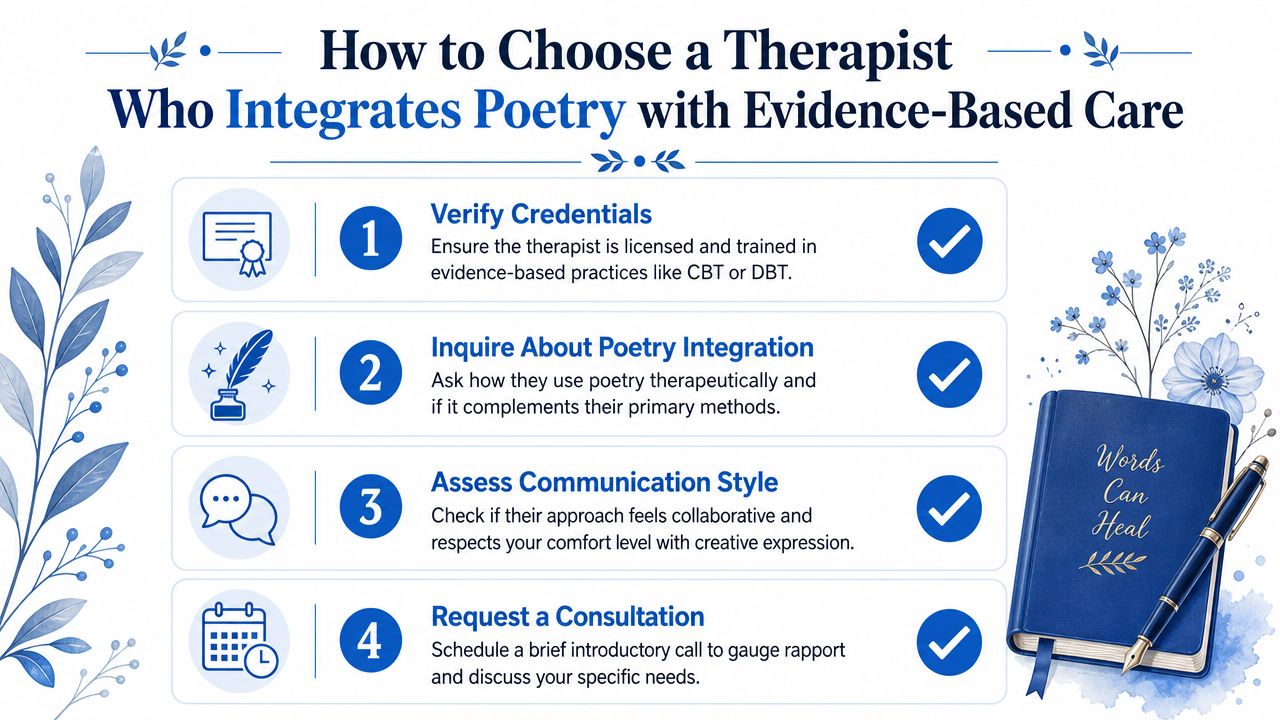
The strongest recovery outcomes happen when poetry work reinforces what you learn in traditional counseling, not when it replaces professional treatment entirely. Poetry therapy works best as a complementary tool that deepens your healing alongside other evidence-based approaches. A therapist who combines both modalities helps you process emotions through creative expression while maintaining the structure and accountability that traditional therapy provides.
Frequently Asked Questions
What is an addiction poem?
An addiction poem is a poem that explores substance use, cravings, relapse, consequences, sobriety, or the emotional aftermath of addiction. Some addiction poems focus on active drug abuse and its damage. Others focus on recovery, grief, accountability, or hope. The most useful ones are usually specific and honest rather than decorative.
Can short lines actually help during cravings or reflection?
Yes. Short lines are easier to remember and repeat when stress is high. A brief line such as “Pause before the urge becomes a plan” can work like a grounding cue: it interrupts momentum and gives you a second to choose a safer action. In our experience, short lines help most when they are personal, plain, and tied to a next step like texting a sponsor, drinking water, or leaving a triggering setting.
What is a good quote for drug addicts in recovery?
A good quote is one that feels believable in the moment you need it. For early recovery, try: “I do not have to win today; I have to stay today.” For someone rebuilding after relapse, try: “Truth is still progress.” The best quote is not necessarily the most poetic one. It is the one you will use before making a harmful choice.
How are prevention poems different from recovery poems?
Prevention poems are written to discourage substance use before it starts or escalates. They are often meant for students, families, or public awareness. Recovery poems speak to people already living with addiction or sobriety and usually focus on healing, accountability, craving, or rebuilding life. Prevention poetry tends to be more direct and cautionary; recovery poetry is usually more personal and emotionally layered.
What makes a good short line about drug abuse?
A good short line is clear, memorable, and grounded in consequence or choice. It should avoid glamorizing use and avoid sounding like a lecture. Examples include “What promised escape took my freedom” or “One decision can become a long fight back.” If you are writing your own, use one concrete contrast: relief versus loss, impulse versus consequence, or secrecy versus truth.
What is a good slogan for drug abuse prevention?
A good slogan is brief enough to remember and strong enough to repeat out loud. Examples include “Choose your future, not the high,” “One no can save a life,” and “Protect your mind before you need to rebuild it.” For schools or community events, simple language usually works better than clever wording.
Integrating Poetry into Your Long-Term Recovery Journey
If you are deciding where to start, use this simple split. Choose a drug-abuse reflection poem when you need to face consequences and put into words what substance use did. Choose a recovery or hope-centered poem when you need steadiness, self-respect, or a believable reminder that sobriety is built one action at a time. Choose a prevention poem when the goal is to communicate clearly with students, families, or a community audience before harm deepens.
From our perspective, the most effective poems in early recovery are rarely the most polished. They are short, emotionally direct, and specific enough to feel true. We’ve seen four plain lines help someone open up in group faster than a page of abstract writing, and we’ve seen a single remembered sentence interrupt the slide from urge to action. That is what an addiction poem can be at its best: not performance, but a usable piece of language.
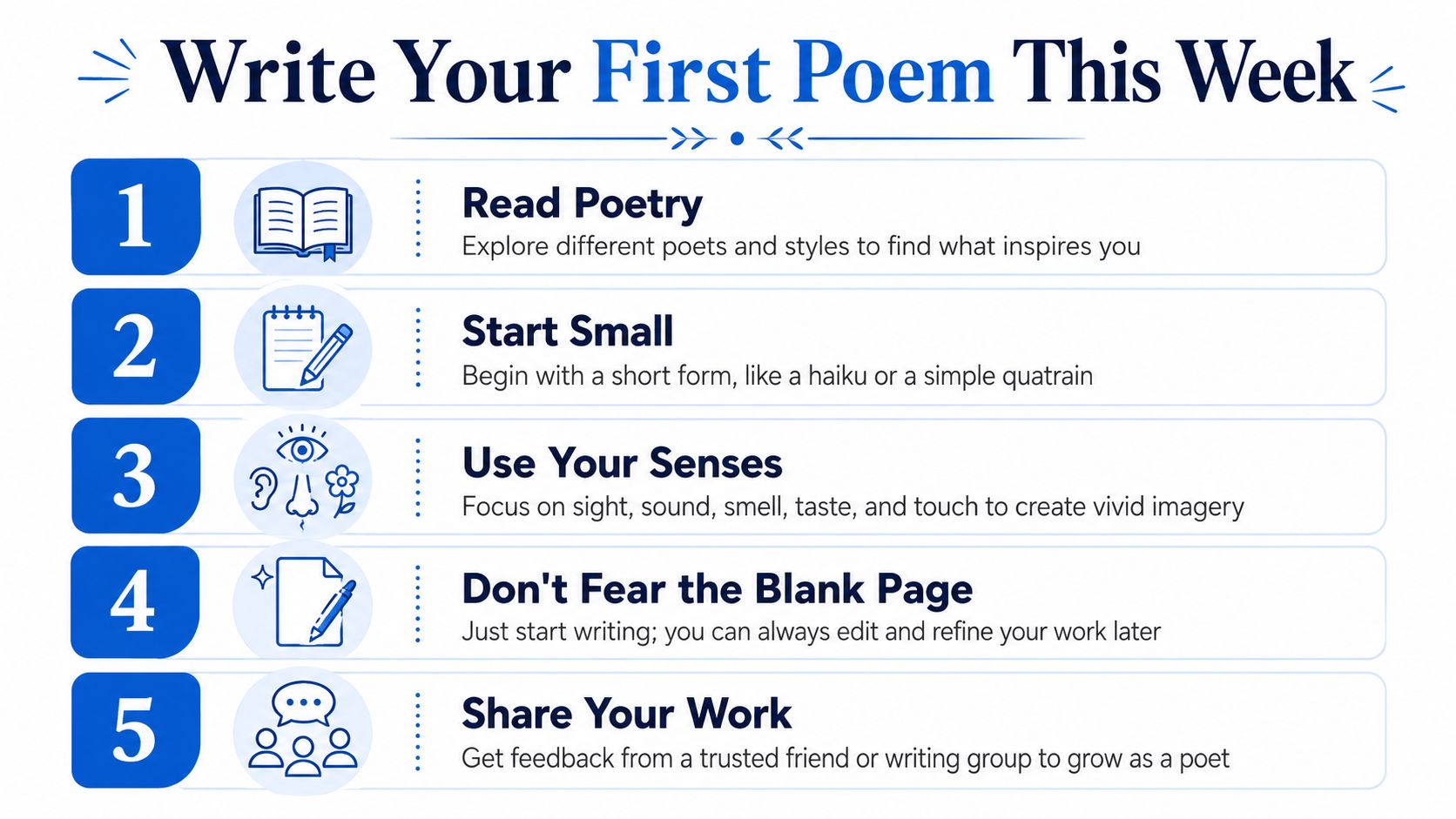
Read one short poem today, then write four lines of your own—one about what addiction took, one about what recovery is asking of you, one about what you want back, and one about what you will do next.