You wake up with a dry mouth, a pounding sense of regret, and then something worse. There's a tight, burning, or squeezing feeling in your chest. Now your mind starts racing. Is it heartburn? Anxiety? A hangover? Or something dangerous? That fear is understandable. Chest pain after drinking is one of those symptoms you should …

You wake up with a dry mouth, a pounding sense of regret, and then something worse. There's a tight, burning, or squeezing feeling in your chest. Now your mind starts racing. Is it heartburn? Anxiety? A hangover? Or something dangerous?
That fear is understandable. Chest pain after drinking is one of those symptoms you should never brush off. The good news is that it often isn't a heart attack. The hard truth is that you can't safely assume that on your own.
Alcohol can irritate more than one body system at the same time. It can affect the heart and blood vessels, and it can also affect the esophagus and stomach. That's why the same symptom can feel confusing. A burning pain after lying down may point toward reflux. A pressure-like pain with pounding heartbeat, shortness of breath, or clamminess is a very different story.
The morning-after version can be especially misleading. Many people think, “If it were serious, it would've happened while I was drinking.” That's not always true. Some chest symptoms show up later, when your body is dealing with dehydration, poor sleep, palpitations, low blood sugar, inflammation, or the early stress response that can happen as alcohol wears off.
Table of Contents
- That Frightening Ache Understanding Chest Pain and Alcohol
- When to Call 911 Immediate Action Red Flags
- Why Alcohol Can Cause Heart-Related Chest Pain
- Common Non-Cardiac Reasons for Chest Pain From Alcohol
- The Morning After Why Pain Occurs During Hangovers and Withdrawal
- How Doctors Diagnose the Cause of Chest Pain
- Breaking the Cycle Treatment for Alcohol Use in Yuba City
That Frightening Ache Understanding Chest Pain and Alcohol
A common story in the ER goes like this. Someone had a few drinks, maybe more than a few, went to bed, and woke up with chest discomfort. They waited, searched online, drank water, paced the room, and hoped it would pass. By the time they came in, they were less worried about embarrassment than about whether they had ignored something serious.
That reaction makes sense. Chest pain grabs your attention because your brain immediately links it to the heart. Sometimes that fear is out of proportion to the cause. Sometimes it isn't.
Alcohol doesn't cause one single kind of chest pain. It can trigger symptoms through two broad pathways:
- Heart-related causes such as blood pressure changes, irregular rhythms, changes in blood flow, or long-term strain on the heart
- Non-heart causes such as acid reflux, irritation in the esophagus, stomach inflammation, or muscle tension
Don't try to diagnose chest pain by intensity alone. Mild pain can still be important, and severe burning can still come from the esophagus.
One reason people get confused is that the chest doesn't give very precise signals. Burning behind the breastbone can come from acid. Pressure can come from the heart. But symptoms often overlap. Some people with reflux describe “pressure.” Some people with heart rhythm problems describe “fluttering” or “tightness” rather than pain.
Another point matters. The timing doesn't always help as much as people think. Some symptoms start during drinking. Others show up later, especially overnight or the next morning.
So if you're reading this because your chest hurts after alcohol, take the symptom seriously. Stay calm, but don't minimize it. The first question isn't “What's the most likely cause?” The first question is, “Could this be dangerous right now?”
When to Call 911 Immediate Action Red Flags
If chest pain comes with classic emergency warning signs, stop reading and get help. Don't drive yourself if you feel faint, weak, or short of breath. Call 911.
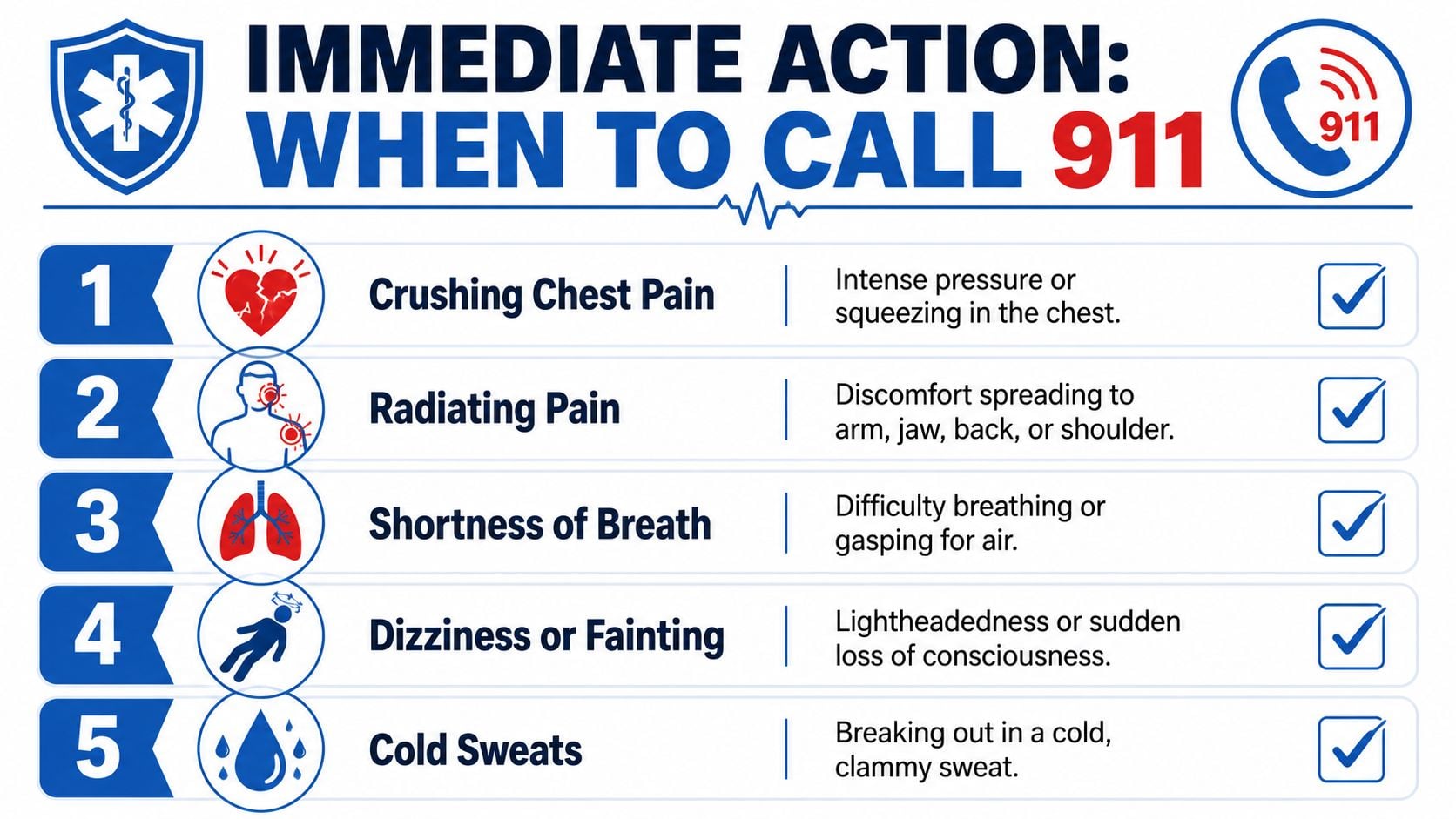
Red flags that need immediate action
- Crushing or squeezing chest pain that feels heavy, intense, or like pressure sitting on the chest
- Pain that spreads to the arm, jaw, back, or shoulder
- Shortness of breath or trouble catching your breath
- Dizziness, near-fainting, or fainting
- Cold, clammy sweating
- Nausea with chest pain
- A racing, pounding, or irregular heartbeat with chest pain
- New symptoms in someone with known heart disease or high blood pressure
Practical rule: If chest pain after drinking includes shortness of breath, radiating pain, clamminess, or faintness, treat it like a medical emergency until a clinician tells you otherwise.
Alcohol can create real cardiovascular stress. It can raise blood pressure, trigger irregular rhythms, and alter blood flow to the heart. A large U.S. analysis of 14,538 adults in the REGARDS cohort found that drinking was associated with higher odds of stage 1 hypertension among men who consumed 7–13 drinks per week and women who consumed 4–6 drinks per week, compared with abstainers, as summarized in Medical News Today's review of alcohol-related chest pain.
That doesn't mean every person with chest pain after alcohol is having a cardiac emergency. It does mean alcohol can push the heart and circulation in the wrong direction, even when someone thinks they were “only” drinking socially.
When not to wait it out
People often try to bargain with symptoms. “I'm probably dehydrated.” “I just need food.” “It's probably anxiety.” Maybe. But if you're having persistent chest pain plus any of the signs above, this is not the moment for self-testing.
A few common delays I see:
- Waiting for antacids to work while symptoms are getting worse
- Trying to sleep it off even though breathing feels harder
- Assuming age protects you because you're “too young” for a heart issue
- Blaming a panic attack before ruling out a medical cause
If you're unsure, get checked. Uncertainty is not reassurance.
Why Alcohol Can Cause Heart-Related Chest Pain
A lot of people expect alcohol to irritate the stomach. Fewer realize it can also irritate the heart.
Alcohol affects the cardiovascular system through three main pathways. It can disrupt the heart's electrical timing, push blood pressure and heart rate upward, and, with repeated heavy use, weaken the heart muscle itself. That combination is why chest pain after drinking deserves careful attention, especially if the pain comes with a racing, fluttering, or irregular heartbeat.
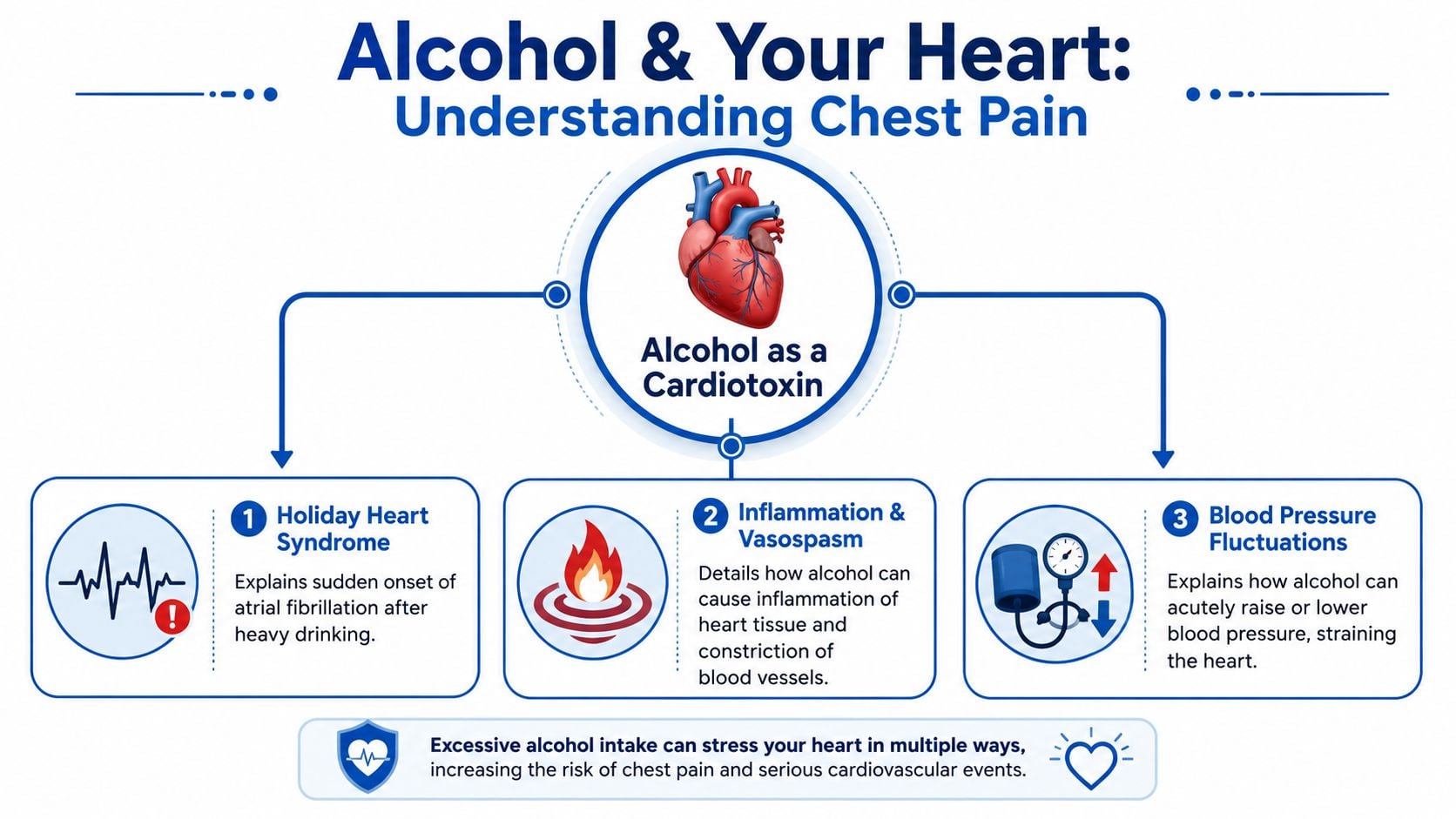
Arrhythmias and the “my heart feels off” pattern
Your heart runs on an electrical signal. It works like a metronome that keeps each beat in order. Alcohol can disturb that timing, sometimes after a binge, sometimes even after an amount a person thought was manageable.
This is one of the most important distinctions patients often miss. Heartburn usually burns. Rhythm problems often feel strange instead. People describe pounding, fluttering, skipped beats, a chest thump, or a feeling that the heart is not beating evenly. The discomfort may be paired with lightheadedness, shortness of breath, or a sense of unease that is hard to explain but clearly different from simple indigestion.
The American Heart Association has identified alcohol as a modifiable risk factor for atrial fibrillation. In plain language, alcohol can trigger an abnormal rhythm in some people, and that rhythm can cause chest discomfort even when the problem is not a heart attack.
Blood pressure, vessel strain, and the pressure-type pain
Alcohol can also raise heart rate and blood pressure for a period of time. If the heart has to pump against more pressure, some people feel that as tightness, squeezing, or central chest pressure.
This can be confusing because the symptoms are not always dramatic. A person may still be talking normally and walking around, but notice that their chest feels heavy, their pulse feels unusually forceful, or they get winded doing something easy. In the ER, those quieter symptoms still get taken seriously.
One detail that helps sort this out from reflux is timing and quality. Reflux often tracks with meals, lying down, a sour taste, or burning behind the breastbone. Heart-related symptoms are more concerning when they come with exertional shortness of breath, palpitations, dizziness, or pressure that does not behave like typical acid irritation.
Long-term heavy use and heart muscle damage
Repeated heavy drinking can injure the heart muscle over time. The medical term is alcohol-induced cardiomyopathy. The heart becomes stretched and weaker, so it cannot pump as efficiently.
According to Cornerstone SoCal's review of chest pain after drinking alcohol, chronic heavy alcohol exposure is linked to this form of heart damage. When that happens, chest discomfort may show up alongside reduced exercise tolerance, swelling, palpitations, or shortness of breath when lying flat.
If chest pain after drinking keeps happening, the question is not only “Was this heartburn?” It is also “Has alcohol started putting real strain on my heart?” That is an important difference, because the morning-after symptoms many people dismiss as a hangover can sometimes reflect ongoing stress on the cardiovascular system.
Common Non-Cardiac Reasons for Chest Pain From Alcohol
The most common non-cardiac cause of chest pain after drinking is reflux. Alcohol relaxes the valve between the esophagus and stomach, which allows acid to move upward. That can create burning pain behind the breastbone that feels alarmingly similar to heart pain.
Alcohol can lower lower-esophageal-sphincter pressure by about 33%, promoting acid reflux and causing retrosternal chest pain that can mimic cardiac ischemia, according to The Villa Treatment Center's explanation of alcohol-related chest pain. This pattern fits best when symptoms worsen after lying down or improve with antacids.
What reflux pain often feels like
Many people describe GI-related chest pain as:
- Burning behind the breastbone
- A sour taste or acid coming up into the throat
- Worse after lying flat
- Triggered by a large meal, spicy food, or coffee along with alcohol
- Partly relieved by sitting up or taking an antacid
That said, reflux doesn't always read like a textbook. Some people feel pressure, fullness, or a painful lump-like sensation in the lower chest.
Why it's so easy to mistake for heart pain
The esophagus sits in the chest, not the belly. So when acid irritates it, the brain can interpret that signal as chest pain rather than “stomach trouble.” That's why patients often say, “I thought it was my heart.”
Here's a practical side-by-side comparison.
Cardiac vs Non-Cardiac Chest Pain Symptoms
| Symptom Feature | Often Suggests Cardiac Pain | Often Suggests Non-Cardiac (GI) Pain |
|---|---|---|
| Sensation | Pressure, squeezing, heaviness, tightness | Burning, acidic, sharp irritation behind the breastbone |
| Timing | May occur with exertion, stress, or at rest | Often after drinking, eating, or lying down |
| Breathing impact | May come with shortness of breath | May feel uncomfortable but often tracks more with reflux than breathing |
| Radiation | May spread to arm, jaw, back, or shoulder | Usually stays central, though overlap happens |
| Heart rhythm symptoms | Palpitations, pounding, skipped beats may be present | Usually absent unless anxiety is layered on top |
| Response to antacids | Not reliably helpful | May improve |
| Body position | Often not clearly changed by position | Often worse lying flat, better upright |
If pain improves with antacids or sitting up, reflux becomes more likely. It does not become guaranteed.
Other non-cardiac possibilities include irritation of the stomach lining, spasm in the esophagus, and chest wall muscle tension from vomiting, coughing, or poor sleep posture. Those causes are real, but they are diagnoses made after dangerous causes are considered, not before.
The Morning After Why Pain Occurs During Hangovers and Withdrawal
For many people, the oddest part of chest pain after drinking is the delay. They were fine while drinking, or at least they thought they were. Then they woke up with chest tightness, palpitations, soreness, or a burning ache and wondered why it showed up later.
The morning-after pattern matters because it may reflect your body's rebound response as alcohol wears off. Hangover physiology can include dehydration, low blood sugar, inflammation, muscle tightness, and palpitations that feel like chest pain, as described in UKAT's guide to understanding chest pain after drinking.
Hangover symptoms can land in the chest
A hangover isn't just a headache and nausea. It can create a whole-body stress response.
A few common ways that can show up in the chest:
- Dehydration can leave you feeling weak, shaky, and aware of every heartbeat
- Poor sleep can amplify anxiety, tension, and the sense that something is wrong
- Low blood sugar can make you sweaty, trembly, and uncomfortable
- Muscle tightness in the chest wall, neck, or upper back can mimic internal chest pain
- Palpitations can feel like pressure, fluttering, or an empty dropping sensation in the chest
When it may be more than a simple hangover
This is the part many articles skip. Repeated morning-after chest symptoms should not be normalized. They may reflect autonomic stress, an abnormal rhythm, or an underlying alcohol-use problem that deserves medical assessment.
In plain language, your nervous system may be overreacting as alcohol leaves your body. For some people, especially those with heavier or repeated drinking patterns, that rebound can feel like anxiety plus a pounding heart plus chest discomfort. That can overlap with early withdrawal rather than simple intoxication recovery.
Repeated “hangover chest pain” is a clue. Your body may be telling you it's no longer handling alcohol safely.
Questions worth asking yourself
If chest pain tends to show up the next morning, pay attention to patterns:
- Does it happen after most drinking episodes, or only after binges?
- Does it come with shakiness, sweating, palpitations, or panic?
- Is it becoming more frequent?
- Are you drinking again to calm it down?
That last pattern is especially important. If someone starts using alcohol to relieve the symptoms alcohol helped create, they can get trapped in a dangerous loop.
How Doctors Diagnose the Cause of Chest Pain
If you go to urgent care or the ER with chest pain after drinking, the clinical team's job is to sort out what is dangerous first, then work backward to the less dangerous causes. Chest pain is a symptom, not a diagnosis. It can come from the esophagus, the chest wall, the stomach, the lungs, or the heart, and alcohol can stir up more than one of those at the same time.
That is why the evaluation often feels so specific.
What your evaluation usually starts with
A doctor or clinician will usually begin by pinning down the pattern of the pain. The details matter more than many people expect.
We usually ask:
- What does it feel like? Burning, pressure, squeezing, sharp pain, tightness, fluttering, or a pounding sensation
- Exactly when did it start? While drinking, after a large meal, after lying down, during the night, or the morning after
- What else happened with it? Shortness of breath, dizziness, sweating, nausea, vomiting, a racing pulse, or pain going into the arm, jaw, back, or upper belly
Then come the basics. We check blood pressure, heart rate, oxygen level, and temperature. We listen to the heart and lungs. We press on the chest wall to see whether movement or touch reproduces the pain.
That first step helps us answer a question many patients are already asking in their head. Does this sound more like acid coming up from the stomach, or like the heart's electrical system and blood supply need urgent attention?
How doctors tell heartburn from a rhythm problem
This distinction gets missed in a lot of articles, and it matters.
Alcohol-related heartburn often causes a burning feeling behind the breastbone, a sour taste, belching, or pain that gets worse after lying flat. It may show up after drinks plus a heavy meal. Some people notice relief with sitting upright or with an antacid, though relief does not prove the heart is uninvolved.
A heart rhythm problem often feels less like burning and more like the chest is fluttering, pounding, skipping, or beating out of sync. The pain may be paired with lightheadedness, unusual shortness of breath, near-fainting, or a sense that something is very wrong. Some people describe it as chest discomfort plus a chaotic heartbeat rather than straightforward pain.
The hard part is that symptoms can overlap. Reflux can cause chest pressure. An abnormal rhythm can feel like indigestion. Anxiety can sit on top of both and blur the picture further. That is exactly why self-diagnosis is unreliable here.
Tests that help separate the causes
A typical workup may include:
- ECG or EKG to check the heart's electrical pattern and look for rhythm problems or signs of strain
- Blood tests to look for heart injury and other problems that can trigger symptoms
- Cardiac monitoring if the heartbeat feels irregular or the symptoms come and go
- Chest X-ray or other imaging when lung problems, vomiting-related complications, or another chest condition is possible
- A careful alcohol history including how much you drank, how often this happens, and whether you have ever had withdrawal symptoms before
Doctors may also ask about caffeine, energy drinks, stimulants, dehydration, poor sleep, or not eating. Those factors can act like lighter fluid on an already irritated system.
Why the morning-after timing matters
Pain that appears the next morning deserves more respect than people often give it. It is easy to label it a hangover and move on. Sometimes that is exactly what people should not do.
As alcohol wears off, the body can rebound with a surge in stress hormones and nervous system activity. That can push the heart rate up, raise blood pressure, and make rhythm symptoms more likely in susceptible people. In someone who drinks heavily or regularly, morning chest pain with shakiness, sweating, anxiety, or a racing heart can point to early withdrawal stress rather than simple dehydration or heartburn.
That timing changes the medical picture. A one-time burning pain after cocktails and pizza is not the same pattern as repeated chest discomfort that shows up the morning after drinking, especially if it comes with a pounding or irregular heartbeat.
Why doctors ask detailed questions about drinking
Some people tense up when alcohol becomes part of the history. In good medical care, the goal is not judgment. The goal is accuracy.
Your drinking pattern changes what doctors worry about. Binge drinking raises concern for reflux, dehydration, vomiting-related irritation, and rhythm disturbances. Repeated episodes, especially morning-after episodes, raise concern for withdrawal physiology, recurrent arrhythmias, and a drinking pattern that is putting ongoing stress on the heart and nervous system.
A better question than “Is it just heartburn?” is “Have the dangerous causes been ruled out?”
If this keeps happening, bring notes. Write down what you drank, how much, what time the symptoms started, whether the pain burned or pressed, whether your heartbeat felt irregular, and whether the pain improved when you sat up or took an antacid. Small details can make the diagnosis much clearer.
Breaking the Cycle Treatment for Alcohol Use in Yuba City
A common pattern in the ER goes like this. Someone has chest pain after drinking, gets scared, rests for a day or two, then tries to convince themselves it was only reflux, stress, or a rough night. When the pain comes back, especially with morning shakiness, sweating, anxiety, or a racing heartbeat, the question changes. It is no longer only "What caused this episode?" It becomes "Is alcohol now driving a cycle that keeps putting strain on my heart and nervous system?"
That is the point where treatment starts to matter.

Some people need a medical evaluation and a realistic plan to cut back safely. Others need a higher level of support because they are dealing with cravings, withdrawal symptoms, repeated failed attempts to stop, or drinking again the next day to quiet chest discomfort, panic, or tremors. That pattern can become self-reinforcing very quickly. Alcohol briefly relieves symptoms, then sets up the next round.
What treatment can look like
Good alcohol treatment is not one fixed program. It should match the person in front of you, including withdrawal risk, medical history, mental health symptoms, home support, and whether chest pain has become part of the pattern.
Options may include:
- Medically supervised detox with MAT when withdrawal risk is a concern
- Residential rehabilitation for a more stable, highly structured setting
- Intensive Outpatient Program for people who need treatment while continuing daily responsibilities
- Telehealth support when access or transportation is a barrier
- Counseling for co-occurring mental health needs such as anxiety, trauma, or depression
For people in Yuba City and Northern California, Addiction Resource Center LLC offers that kind of full continuum of care. The program serves adults 18+ and includes medically supervised detox with medication-assisted treatment, residential rehabilitation through Ona Treatment Center in Browns Valley, and an Intensive Outpatient Program available in person and via telehealth.
Care is provided by a multidisciplinary team that includes a medical doctor, registered nurse, CADC counselors, an LMFT, and recovery mentors. The program also offers 24/7 wellness monitoring, individualized treatment planning, education, relapse prevention, and aftercare planning. That mix matters because alcohol-related chest symptoms rarely happen by themselves. They often show up alongside poor sleep, panic, family strain, and fear about what stopping alcohol might feel like.
If you want a closer look at the setting and approach, this short video helps:
When to think beyond self-care
You should strongly consider addiction treatment support if any of these sound familiar:
- You keep having chest pain after drinking and it's becoming a pattern
- You wake up shaky, sweaty, panicky, or with palpitations
- You drink again the next day to steady yourself
- You've tried to stop but feel too sick, anxious, or restless
- Family members are worried about your drinking
- You're hiding how much you drink because you know it's becoming a problem
One point is especially important here. If chest pain tends to hit the morning after drinking, do not dismiss it as a standard hangover. That timing can fit withdrawal-related stress, dehydration, poor sleep, acid irritation, or an abnormal heart rhythm. A treatment program can help sort out which symptoms need urgent medical evaluation and which ones reflect alcohol dependence that now needs direct care.
Treatment is not punishment. It is a structured way to stop the repeat cycle of drinking, withdrawal, and more symptoms. The goal is safety first, then stability.
For local access, Addiction Resource Center LLC is located at 1002 Live Oak Blvd., Suite A, Yuba City, CA, with a 24/7 phone/text line at 530-625-7910. The center accepts most major insurance plans and welcomes Tricare beneficiaries, which makes getting started simpler for many individuals and families.
If chest pain after drinking has become a recurring part of your life, don't wait for the next scare to get help. Addiction Resource Center LLC offers compassionate alcohol treatment in Yuba City, including medically supervised detox, MAT, residential rehab through its partner program, and in-person or telehealth IOP. You can call or text 530-625-7910 any time, or visit them at 1002 Live Oak Blvd., Suite A, Yuba City, CA to ask questions, verify insurance, schedule a tour, or get guidance for yourself or someone you love.